Head to Head
4iiii Precision vs Favero Assioma
A bonded crank arm against a pair of pedals. Both claim ±1%, both claims are credible, and they describe different things. Here is which one your bike, your pedals and your budget actually point to.
The short answer
Quick picks
| # | Product | Best for | Score | Price |
|---|---|---|---|---|
| 1 | 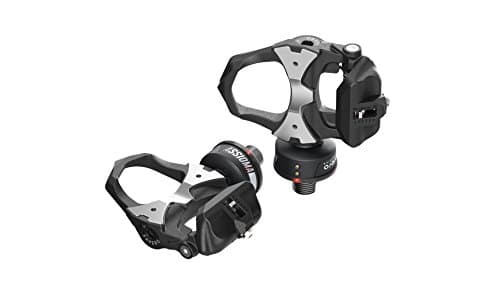 Favero Assioma Duo The honest top pick: dual-sided ±1% with no compatibility homework, if you can live with Look Keo cleats and a charger. | Best if you want both legs measured | 9.09.0 out of 10 | $539.93 · View on Amazon #ad We may earn a commission · Price as of October 21, 2026 |
| 2 | 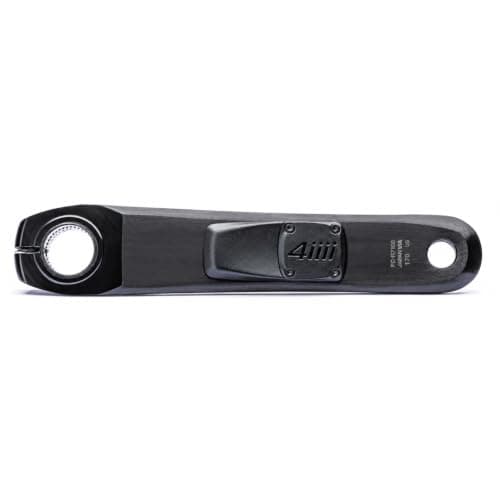 4iiii Precision 3+ The value answer: ±1% on one leg, nine grams, hundreds of hours on a coin cell — provided your crankset is on the supported list. | Best value, and best if your pedals are settled | 8.68.6 out of 10 | $437.49 · View on Amazon #ad We may earn a commission · Price as of October 21, 2026 |
| 3 | 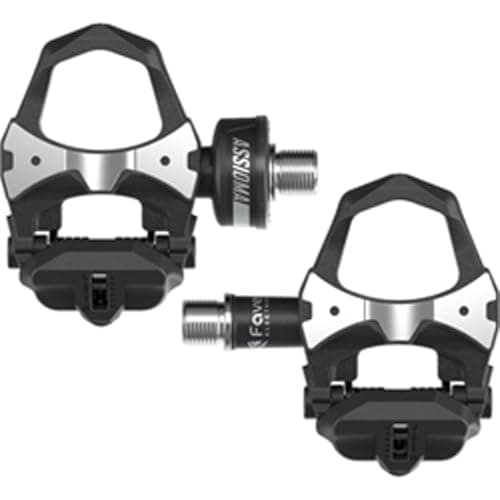 Favero Assioma Uno The single-sided Favero: the same half-measurement as the 4iiii, with transferability and an upgrade path, for more money. | The like-for-like Favero comparison | 8.58.5 out of 10 | $381.22 · View on Amazon #ad We may earn a commission · Price as of October 21, 2026 |
| 4 | 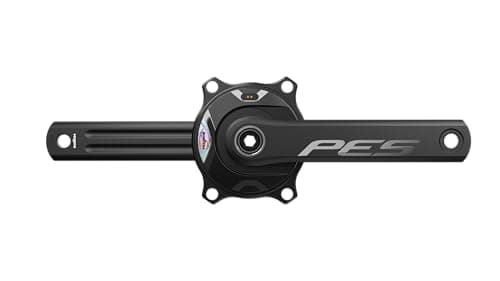 Magene PES P505 The escape hatch when you like the crank-based idea but 4iiii does not support your crankset. | If the crank format appeals but your crank is not supported | 8.08.0 out of 10 | $299.99 · View on Amazon #ad We may earn a commission · Price as of October 21, 2026 |
This comparison turns on one sentence that both brands write in the same way and mean differently. 4iiii claims ±1%. Favero claims ±1%. The 4iiii figure describes the torque measured at your left crank arm; your total power is that measurement doubled. The Assioma Duo figure describes power measured at both pedals. Same words, different statements.
What the ±1% claim actually covers
On a single-sided meter — the 4iiii Precision 3+, the Assioma Uno, most budget crank meters — the instrument reads one leg and multiplies by two. If your legs are perfectly balanced, your total is accurate to roughly the claimed figure. If you produce, say, 52% on the left, your total reads about 4% high, every ride, consistently.
That consistency is why single-sided meters are perfectly usable training tools: FTP, interval targets and season-on-season comparisons are all measures of change, and a consistent offset does not corrupt a change. What it does corrupt is any comparison against someone else's numbers, and any attempt to diagnose an imbalance. Single vs dual-sided power meters goes through this properly, and how accurate are power meters covers what the claims mean generally.
| Power meter | Format | Sided | Claimed accuracy | Battery | Transfers to another bike? |
|---|---|---|---|---|---|
| Favero Assioma Duo | Pedals | Dual-sided | ±1% of total | Rechargeable, magnetic | Yes — pedal wrench |
| 4iiii Precision 3+ | Bonded crank arm | Single (left), doubled | ±1% of measured torque | CR2032, up to 800 h | No — bonded to that crankset |
| Favero Assioma Uno | Pedals | Single (left), doubled | ±1% of measured torque | Rechargeable, magnetic | Yes — pedal wrench |
| Magene PES P505 | Complete crankset | Total with balance | ±1.5% (base P505) | Replaceable | No — stays with the bike |
The battery difference is bigger than the accuracy difference
4iiii claims up to 800 hours from a CR2032. That is the best battery story in power meters, and for a pain cave it is a real behavioral advantage: nothing to charge, nothing to remember, no session canceled because you forgot. Favero's pedals are rechargeable with a magnetic connector, which is well implemented but is still a habit you have to keep.
If you ride mostly indoors, a coin cell is worth more than a fast charger. If you ride long unsupported days outdoors, it is worth even more, because a spare CR2032 lives in a saddle bag and a USB cable does not help you at hour nine.
The compatibility homework is the real cost of the 4iiii
A pedal fits any bike with standard pedal threads. A bonded crank arm has to be the correct arm for your exact crankset model and your crank length, and crank length is a fit decision rather than a shopping preference. If your crankset is unusual, old, or simply not on the supported list, this purchase does not work — which is exactly when the Magene P505, as a complete crankset, becomes the sensible alternative.
The flip side is protection. A crank-arm meter sits inboard, sheltered from the crashes and rock strikes that a pedal takes. On a road bike that barely matters; on a gravel or mountain bike it matters a lot, which is why our gravel power meter page weighs it differently.
So which one?
Two bikes, or a dedicated trainer bike plus a road bike: pedals, because the meter can be the same instrument in both places and you avoid two sets of numbers.
One bike, settled pedals, tight budget: 4iiii, and spend the difference on something that makes you ride more — a decent fan does more for session completion than a second power sensor.
You want to see balance: Assioma Duo. It is the only pick here that actually measures both legs rather than estimating or doubling.
Your crankset is not supported: Magene P505, or go back to pedals.
Want the whole category ranked?
See the full power meter rankingsThe full reviews
Head to head
#1 · Best if you want both legs measured
Favero Assioma Duo
9.09.0 out of 10#ad We may earn a commission · Price as of October 21, 2026
The honest top pick: dual-sided ±1% with no compatibility homework, if you can live with Look Keo cleats and a charger.
- Type
- Dual-sided power meter pedals
- Claimed accuracy
- ±1%
- Cleat system
- Look Keo compatible
- Power
- Rechargeable, magnetic charging
- Connectivity
- Bluetooth and ANT+
- Install time
- Minutes, with a pedal wrench
What we'd praise
- The only pick here that measures both legs, so the ±1% claim describes your total rather than one side of it
- Real left/right balance and pedaling-smoothness data
- Transfers between bikes in minutes with a pedal wrench — no part numbers, no crank matching
- No compatibility research required before you buy
What we'd flag
- Roughly a third more than the 4iiii in list terms
- Look Keo cleats, so SPD-SL riders need new shoes or new cleats
- Rechargeable, so it is a thing you have to remember
- The electronics sit out on the pedal where crashes and rock strikes find them
The reason the Duo wins this comparison is not that it is more accurate per gauge — both products claim ±1% and both claims are credible. It is that the Duo's claim describes your totalpower, because it measures both legs. The 4iiii's ±1% describes the torque passing through your left crank arm, which is then doubled. Those are different statements about different numbers.
The second reason is compatibility: you do not have to know anything about your crankset to buy a pedal. No arm part number, no crank length to match, no supported-models list to check. And when you buy a second bike, the meter comes with you. Our Assioma Duo review covers the product, and power meter pedals vs cranks is the format argument in full.
#2 · Best value, and best if your pedals are settled
4iiii Precision 3+
8.68.6 out of 10#ad We may earn a commission · Price as of October 21, 2026
The value answer: ±1% on one leg, nine grams, hundreds of hours on a coin cell — provided your crankset is on the supported list.
- Type
- Non-drive-side crank arm
- Claimed accuracy
- ±1% of measured torque
- Battery
- CR2032, up to 800 hours claimed
- Weight added
- 9 g
- Power range
- 0 - 4,000 W
- Connectivity
- ANT+ and Bluetooth Smart
What we'd praise
- Up to 800 claimed hours on a supermarket CR2032 — the best battery story in power meters, and the Assioma cannot match it
- Adds 9 g and hides inside the crank arm, out of the way of crashes
- Your pedals, cleats and shoes are untouched, which for many riders is a settled decision worth protecting
- Cheapest route to a credible power number of anything in this comparison
What we'd flag
- Single-sided: the ±1% describes the left arm, and your total is that figure doubled
- No left/right balance and no smoothness data at all
- You must order the arm that matches your exact crankset and crank length
- Bonded to that crankset, so it does not follow you to a second bike
The Precision 3+ is a strain gauge bonded to the inside of a non-drive-side crank arm, adding 9 g, reading 0 to 4,000 W, claiming ±1% for the torque it measures and running up to 800 hours on a CR2032. The battery figure is not a rounding difference — it is two or three seasons on a cell you can buy anywhere, against a rechargeable pedal you have to plug in. For indoor riders especially, a meter that never needs charging never cancels a session.
The two honest costs are sidedness and compatibility. Your total power is the left leg doubled, so any imbalance you carry is baked into the number — consistently, which is what matters for training, but it is still not a measurement of both legs. And the whole purchase hinges on ordering the right arm for your crankset model and crank length. Independent reviews of the 3+ Pro from BikeRadar and Cycling Weekly cover the data quality and the Apple Find My integration on the higher-specified variant; our 4iiii Precision review has the detail.
#3 · The like-for-like Favero comparison
Favero Assioma Uno
8.58.5 out of 10#ad We may earn a commission · Price as of October 21, 2026
The single-sided Favero: the same half-measurement as the 4iiii, with transferability and an upgrade path, for more money.
- Type
- Pedal-based, single-sided
- Claimed accuracy
- ±1%
- Fitting
- Pedal wrench, five minutes
- Cleat system
- Look Keo compatible
- Upgrade path
- Add the second pedal for dual-sided
- Connectivity
- ANT+, Bluetooth
What we'd praise
- The fairest comparison with the 4iiii: both are single-sided, both claim ±1% on the leg they read
- Unlike the 4iiii, it upgrades to dual-sided later by adding one pedal
- Still moves between bikes on a pedal wrench
- No crankset compatibility research required
What we'd flag
- Costs more than the 4iiii for the same single-sided measurement
- Rechargeable, so the 4iiii's coin cell still wins on convenience
- Look Keo cleats
- No balance data, same as the 4iiii
Most "4iiii vs Favero" comparisons are unfair, because they put a single-sided crank arm against a dual-sided pedal. The Uno is the like-for-like version of the question: one sensor, one leg, doubled, ±1% claimed on the leg it reads, from both brands.
Read that way, the choice is clean. The 4iiii is cheaper and runs for hundreds of hours on a coin cell. The Uno costs more but needs no compatibility research, moves to another bike in five minutes, and can become a Duo later by adding the right-hand pedal. Assioma Duo vs Uno covers that upgrade maths.
#4 · If the crank format appeals but your crank is not supported
Magene PES P505
8.08.0 out of 10#ad We may earn a commission · Price as of October 21, 2026
The escape hatch when you like the crank-based idea but 4iiii does not support your crankset.
- Type
- Complete crankset with integrated meter
- Claimed accuracy
- ±1.5% (P505 base); ±1% for the P515 spider
- Weight
- 650 g average
- Power range
- 0 - 2,500 W
- Data
- Power, cadence, L/R balance, pedaling smoothness
- Connectivity
- ANT+ and Bluetooth, IPX7
What we'd praise
- Arrives as a complete crankset, so there is no supported-arm list to satisfy
- Reports L/R balance and pedaling smoothness, which the 4iiii cannot
- Keeps the electronics inboard like the 4iiii does
- Cheaper than either Favero pedal
What we'd flag
- ±1.5% claimed for the base P505, wider than both other claims here
- Replacing a working crankset is a lot of parts to change for one sensor
- Bottom bracket standard and chainring choice become part of the purchase
- Does not transfer between bikes
The single biggest reason a 4iiii purchase falls over is that the buyer's crankset is not on the supported list, or the crank length they need is not available. The P505 solves that by being a whole crankset: Magene publishes ±1.5% for the base version, 650 g average, 0 to 2,500 W, L/R balance, pedaling smoothness, ANT+, Bluetooth and IPX7.
The cost is a wider accuracy claim and a bigger parts change — bottom bracket standard and chainring sizes become part of the decision. Best crank power meters ranks this whole format properly.
Good questions
Frequently asked questions
Is the 4iiii Precision as accurate as a Favero Assioma?
Both claim plus/minus 1%, but the claims cover different numbers. 4iiii's figure describes the torque it measures at your left crank arm, and your total power is that figure doubled, so any left/right imbalance carries into it. The Assioma Duo measures both legs, so its claim describes your total. Against the single-sided Assioma Uno, the two are directly comparable.
Should I buy a crank arm power meter or power meter pedals?
Pedals if you have more than one bike, if you want both legs measured, or if you would rather not research crankset compatibility. A bonded crank arm if your pedals are already chosen, your crankset is on the supported list, you want coin-cell battery life, and you want the electronics sheltered from crashes and rock strikes.
How long does the 4iiii Precision 3+ battery last?
Up to 800 hours from a standard CR2032 coin cell, which is two or three seasons for most riders. It is the longest claimed runtime in the category by a wide margin, and replacement cells are cheap and available everywhere. Favero's Assioma pedals are rechargeable instead, with a magnetic charger.
Will a 4iiii Precision fit my bike?
Only if 4iiii makes an arm for your exact crankset model in your crank length. That is the whole compatibility question, and it is the most common reason this purchase falls through. If your crankset is not supported, a complete crankset such as the Magene PES P505, or a pedal-based meter, are the two ways around it.
Is a single-sided power meter accurate enough?
For training, yes. It doubles one leg, so any imbalance appears as a consistent offset, and every number you train to — FTP, interval targets, season-on-season progress — measures change rather than absolute truth. Where single-sided falls short is comparing your watts with other riders' and diagnosing a left/right imbalance.
Does the 4iiii Precision measure left/right balance?
No. It has one sensor, on the non-drive-side crank arm, so there is no second measurement to compare against and no balance or pedaling-smoothness data. If balance data is the reason you are buying a power meter, you need a dual-sided meter such as the Favero Assioma Duo or a total-power crankset that reports balance.
How we sourced this
- 4iiii — PRECISION 3+ powermeter specifications (manufacturer)
- 4iiii — complete guide to the PRECISION 3+ powermeter (manufacturer)
- 4iiii Precision 3+ Pro power meter review (BikeRadar)
- 4iiii Precision 3+ Pro review — data and Find My integration (Cycling Weekly)
- Favero — Assioma DUO specifications (manufacturer)
- Favero — Assioma road range: DUO, UNO and DUO-Shi (manufacturer)
- Magene — PES P505 base power meter specifications (manufacturer)
Keep going
Read these next
- Review4iiii Precision 3+ Review
- ReviewFavero Assioma Duo Review
- ComparisonPower Meter Pedals vs Cranks
- Power MetersSingle vs Dual-Sided Power Meters
- Power MetersThe Best Crank Power Meters, Ranked
- Power MetersThe Best Budget Power Meters
- ComparisonMagene P715 vs Favero Assioma
- GuidesHow Accurate Are Power Meters?