Power Meters
The Best Dual-Sided Power Meters
Two sensors, two real numbers, no doubling. Here is which dual-sided meter to buy, what the second sensor actually costs now, and the one question that decides whether you need it.
The short answer
Quick picks
| # | Product | Best for | Score | Price |
|---|---|---|---|---|
| 1 | 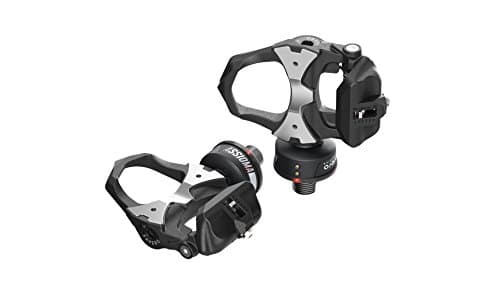 Favero Assioma Duo The default dual-sided buy: genuine two-sided measurement, a ±1% claim with a decade of independent scrutiny behind it, and the lowest price of any pedal here that does not use pods as a cost-saving. | Best dual-sided power meter overall | 9.29.2 out of 10 | |
| 2 | 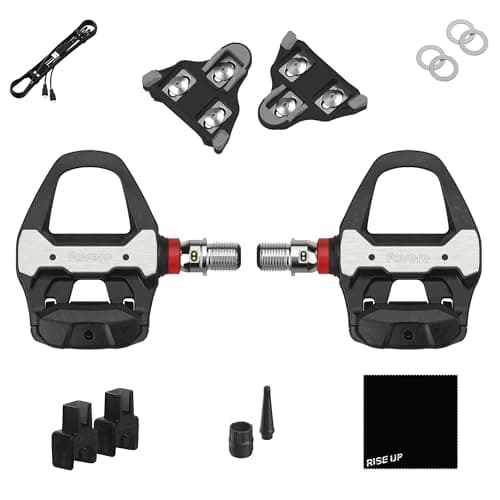 Favero Assioma Pro RS-2 The Assioma argument brought up to date: same ±1% claim, no pods, triple the battery life and Shimano cleats — for more money than the Duo you may not need to spend. | Best for Shimano SPD-SL cleats | 9.09.0 out of 10 | $809.99 · View on Amazon #ad We may earn a commission · Price as of October 22, 2026 |
| 3 | 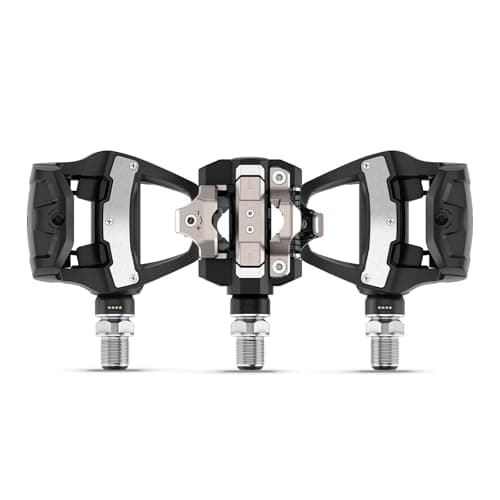 Garmin Rally RS210 The best-engineered dual-sided pedal, and the only one here you can switch cleat systems on without selling it — if the premium over a Favero is worth that option to you. | Best if you might change pedal systems later | 8.88.8 out of 10 | $899.99 · View on Amazon $1,199.99Save 25% #ad We may earn a commission · Price as of October 22, 2026 |
| 4 | 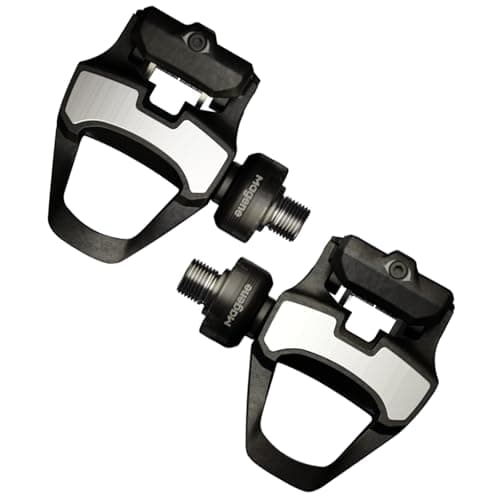 Magene P715 S The cheapest honest route to dual-sided power on Shimano cleats. What you give up is pod-free styling and a thick independent testing record, not the claim itself. | Cheapest dual-sided pedal on Shimano cleats | 8.48.4 out of 10 | $499.99 · View on Amazon #ad We may earn a commission · Price as of October 22, 2026 |
| 5 | 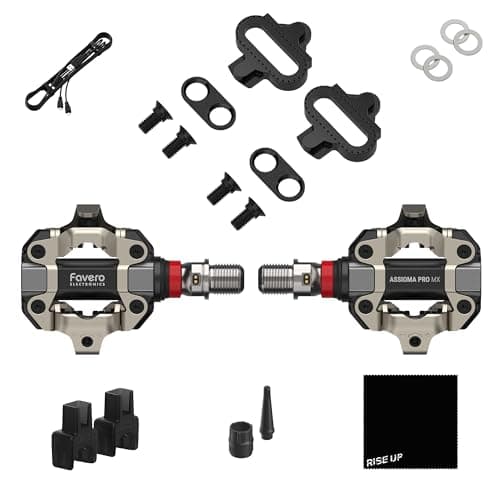 Favero Assioma Pro MX-2 The dual-sided answer for anyone whose shoes take two-bolt cleats — and the one pick here that belongs on a bike that goes off the pavement. | Best dual-sided meter for off-road and two-bolt shoes | 8.68.6 out of 10 | $804.99 · View on Amazon #ad We may earn a commission · Price as of October 22, 2026 |
| 6 | 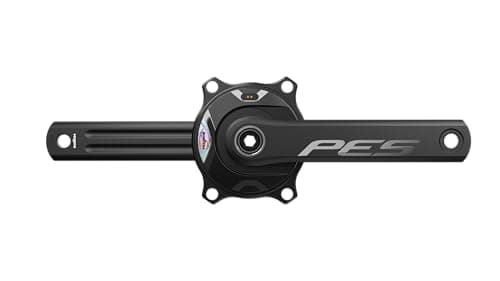 Magene PES P505 The budget escape hatch: real left/right balance for less than any pedal here, as long as you are willing to change a crankset and accept a wider tolerance. | Cheapest dual-sided measurement of any kind | 7.97.9 out of 10 | $299.99 · View on Amazon #ad We may earn a commission · Price as of October 22, 2026 |
A dual-sided power meter puts a sensor on each leg and adds the two numbers together. A single-sided meter measures one leg and doubles it. That is the entire difference, and everything worth saying about this category follows from one question: what do you actually do with the second number?
The answer for most riders is “nothing, yet” — and the reason to buy dual-sided anyway has changed. It used to be that two sensors cost roughly double. It no longer does. The cheapest dual-sided pedal on this page now undercuts several single-sided units we recommend, which turns a question about data into a question about price brackets. If you can have both legs measured for the money you were going to spend on one, there is no argument left to have.
How we ranked these
Criteria first, picks second. We do not do our own instrumented accuracy testing, so nothing on this page is ranked on a number we generated. It is ranked on four things we can check.
1. A published tolerance, from the manufacturer. Favero, Garmin and Magene all publish a figure for every unit here. Five of the six claim ±1%; the Magene PES P505 claims ±1.5%. Where a manufacturer does not publish a tolerance, we treat it as unknown rather than assuming the category norm — which is why some units on our main power meter ranking sit lower than their marketing suggests.
2. The weight of independent evidence behind that claim. A published ±1% is a claim, not a result. The Assioma Duo has been measured against trainers, cranks and other pedals by more testers over more years than anything else in the category. The Magene P715 S has a thinner and noisier record. Both claim ±1%. Those two facts are not equal, and we rank on the second one as well as the first.
3. Battery life, as published. This is the most under-weighted specification in the category, and the spread here is enormous: about 50 hours for the Assioma Duo, 90 for the Garmin Rally 210, 120 for the Magene P715 S and up to 160 for the Assioma Pro RS-2. For a rider doing four structured indoor sessions a week, that is the difference between charging monthly and charging twice a season. Our power meter battery life guide lists every published figure side by side.
4. Whether it fits the shoes you already own. Cleat system is the single most common reason a power meter purchase goes wrong. Look Keo, Shimano SPD-SL and two-bolt SPD are not interchangeable, and a pedal that needs new shoes is more expensive than its price tag. Power meter pedals and cleat compatibility maps the whole field before the specification sheet matters.
| Pick | Where it mounts | Claimed accuracy | Published battery life |
|---|---|---|---|
| Favero Assioma Duo | Pedals (Look Keo) | ±1% | About 50 h |
| Favero Assioma Pro RS-2 | Pedals (Shimano SPD-SL) | ±1% | Up to 160 h |
| Garmin Rally RS210 | Pedals (SPD-SL, convertible) | ±1% | Up to 90 h |
| Magene P715 S | Pedals (Shimano SPD-SL) | ±1% | Up to 120 h |
| Favero Assioma Pro MX-2 | Pedals (two-bolt SPD) | ±1% | Not published here |
| Magene PES P505 | Complete crankset | ±1.5% | Rechargeable, not published |
What the second sensor actually buys you
Three things, and only one of them is used by most riders who pay for it.
A total that is measured rather than estimated. This is the real one. A single-sided meter reports your left leg times two. If you are 50/50, that is correct. If you are 48/52, it reads about 4% low — and the figure drifts with fatigue, cadence, gradient and whether you are out of the saddle. A dual-sided meter has no such offset, which is why it is the only sensible choice when your numbers have to travel: to a coach, into a race category, or across to a different device.
A balance figure. Useful in exactly two situations — returning from an injury or a surgery on one leg, and chasing down a bike fit problem that only shows up under load. Outside those, most riders look at it for a month and then never again. It is a diagnostic, not a training metric, and nobody has ever got faster by staring at it.
The advanced pedaling metrics. Torque effectiveness, pedaling smoothness, power phase, platform center offset. These are genuinely interesting and almost entirely unactionable without a coach who asks for them. Do not let them decide the purchase.
When single-sided is still the right call
If you ride indoors, train to your own numbers, and compare this week to last week, a single-sided meter is internally consistent and the doubling error is invisible to you — because it is the same error every time. That is the whole case for the category, and we make it properly in best single-sided power meters and single vs dual-sided power meters.
There is also a budget argument that still holds in one direction. If your choice is between a single-sided pedal from a maker with a long record and a dual-sided pedal from one without, buy the record. Two sensors measuring to an unproven standard are not better than one sensor measuring to a proven one.
And if you already own a current smart trainer, be honest about what you are solving. The trainer measures power indoors already. A pedal meter earns its money by following you outdoors and acting as the reference your trainer gets checked against — the argument we run in smart trainer vs power meter. If you never ride outside, that argument is weak and the money is better spent on the trainer itself.
Pedals or cranks?
Five of the six picks here are pedals, and that is not an accident: pedals are the only format where dual-sided is both easy and portable. Two sensing pedals move between bikes with a 15 mm wrench, and you can be riding power on a second bike in five minutes.
Dual-sided crank measurement is harder and rarer. A left-arm meter can only ever measure one leg, so a crank-based dual-sided meter means either a complete crankset with gauges on both arms (the Magene PES P505 here) or a spider meter that measures total power without splitting it. The crankset route is cheaper and completely protected from curbs and bike racks; it just cannot move, and it pulls your bottom bracket into the decision. Power meter pedals vs cranks is the full version of that argument.
Before you order
Check the cleat system against your shoes, not against the picture. Look Keo and Shimano SPD-SL look similar in a product shot and are not compatible.
Check whether cleats are included. Favero supplies compatible cleats with the Duo and the Pro RS-2. Magene does not supply them with the P715 S.
Check crank clearance and Favero's fitting limits. Favero publishes restrictions — no pedal extenders, no shorteners, a crank thread-length ceiling. They exist for a reason and they are easy to read before you buy and expensive to discover afterwards.
Plan the first calibration. Every meter on this page wants a zero offset after fitting, and after any big temperature change. Our calibration guide covers it in about two minutes, and connecting a power meter to Zwift covers the part that goes wrong most often on a first indoor ride.
Not sure dual-sided is the right format?
See every power meter rankedThe full reviews
Every pick, in detail
#1 · Best dual-sided power meter overall
Favero Assioma Duo
9.29.2 out of 10The default dual-sided buy: genuine two-sided measurement, a ±1% claim with a decade of independent scrutiny behind it, and the lowest price of any pedal here that does not use pods as a cost-saving.
- Type
- Pedal-based, dual-sided
- Claimed accuracy
- ±1% (IAV Power System)
- Cleat system
- Look Keo compatible, cleats supplied
- Battery
- Sealed rechargeable, about 50 h
- Connectivity
- ANT+ and Bluetooth
- Water rating
- IP67
What we'd praise
- The longest independent testing record of any dual-sided pedal we cover — this is the unit other meters get checked against
- Both pedals sense, so left/right balance is a measurement rather than an assumption
- Moves between bikes with a 15 mm pedal wrench, so one meter covers the road bike and the trainer bike
- Cleats are in the box, which is not true of the Magene pedals below
- Sealed rechargeable spindles and an IP67 rating — no battery door to cross-thread
What we'd flag
- About 50 hours per charge is the shortest run time on this page by a wide margin
- Look Keo pattern only: Shimano SPD-SL riders need different shoes or a different pedal
- The external pods are the oldest-looking part of the design, and Favero's own Pro range has moved past them
- No convertible bodies — if you change cleat systems later, you are selling the meter
The Assioma Duo is the reason this category is affordable at all. Favero put the measurement in both spindles, published a ±1% claim, priced it below Garmin and then left it alone long enough that it became the reference other meters are tested against. When a review says a new pedal read 2% low, the thing it read low against is usually one of these.
For a rider buying dual-sided for the first time, the practical argument is that nothing about it is a compromise except the battery. Both pedals sense. Balance, torque effectiveness and pedaling smoothness are real numbers rather than halves doubled. The cleats are Look Keo pattern and they come in the box. It swaps between bikes in minutes, which matters more than it sounds if your pain cave has a dedicated trainer bike in it.
The battery is the honest objection. Favero quotes about 50 hours, against 90 for the Garmin Rally 210 and 120 for the Magene P715 S. In practice that is a charge every few weeks of indoor training, and the magnetic cable makes it a one-minute job — but if you are the kind of rider who discovers a flat power meter the morning of an event, buy something with more headroom. If you want the same measurement without the pods, read Assioma Duo vs Pro RS-2.
#2 · Best for Shimano SPD-SL cleats
Favero Assioma Pro RS-2
9.09.0 out of 10#ad We may earn a commission · Price as of October 22, 2026
The Assioma argument brought up to date: same ±1% claim, no pods, triple the battery life and Shimano cleats — for more money than the Duo you may not need to spend.
- Type
- Pedal-based, dual-sensing
- Claimed accuracy
- ±1% (IAV Power System), 0-3,000 W
- Cleat system
- Shimano SPD-SL, compatible cleats supplied
- Weight
- 124.8 g per pedal (Favero)
- Stack / Q-factor
- 10.5 mm / +53 mm
- Battery
- Sealed rechargeable, up to 160 h since firmware 7.11
What we'd praise
- The pods are gone — the electronics are inside the spindle, so the pedal looks and measures like a pedal
- Up to 160 hours claimed, more than three times the Assioma Duo and the longest of any rechargeable pedal here
- The lowest published weight and the lowest stack height on this page
- Shimano SPD-SL cleats are supplied, so most road riders can fit it without changing shoes
- Favero publishes its fitting restrictions in detail, which makes a bad order much less likely
What we'd flag
- Costs meaningfully more than the Assioma Duo for the same ±1% claim and the same measurement principle
- Shorter independent testing record than the Duo simply because it is newer
- Favero publishes hard fitting limits — no pedal extenders, no shorteners, and a crank thread-length ceiling you have to check
- Still no convertible bodies: SPD-SL is the system you are buying into
The Pro RS-2 is what the Assioma looks like when Favero stops working around the pods. The strain gauges, electronics and battery move inside the spindle, which drops the published weight to 124.8 g per pedal, the stack height to 10.5 mm, and removes the one part of the old design people objected to on sight.
The specification that should actually move you, though, is battery life. Favero quotes up to 160 hours since firmware 7.11 — more than three times what the Duo manages. For an indoor rider doing structured work four or five times a week, that is a charge a season rather than a charge a month.
Two things keep it off the top spot. It costs more than the Duo for an identical accuracy claim, and Favero publishes real fitting restrictions: no pedal extenders, no shorteners, and a limit on how much crank thread the spindle can take. Read those before ordering, and read our power meter pedal and cleat compatibility guide if your shoes are not already set up for SPD-SL.
#3 · Best if you might change pedal systems later
Garmin Rally RS210
8.88.8 out of 10$1,199.99Save 25%
#ad We may earn a commission · Price as of October 22, 2026
The best-engineered dual-sided pedal, and the only one here you can switch cleat systems on without selling it — if the premium over a Favero is worth that option to you.
- Type
- Dual-sensing pedal power meter
- Claimed accuracy
- ±1%
- Cleat system
- Shimano SPD-SL (RS body)
- Battery
- Sealed rechargeable, up to 90 h
- Weight
- 312 g the pair
- Convertible
- Universal spindle — RS, RK and XC bodies
What we'd praise
- The spindle is the power meter, so a body kit converts it to Look Keo or two-bolt SPD later
- Sealed rechargeable spindle with a magnetic charge clip — Garmin quotes 90 hours, and 15 minutes for roughly 12 hours of riding
- Pedal IQ tells you when a zero offset is genuinely needed instead of leaving it to memory
- The full cycling-dynamics set, and the tightest possible integration with a Garmin Edge
- IPX7 rated, with the threaded battery door of the 200 series deliberately deleted
What we'd flag
- The most expensive pick on this page, against two pedals that claim the same ±1%
- Pedal IQ alerts want a recent Garmin Edge, so part of what you pay for is locked to the ecosystem
- Heavier than either Favero at 312 g the pair
- Conversion kits are an extra purchase, so the convertibility is a cost as well as a feature
Garmin sells the Rally 210 as one spindle in three bodies — RS for Shimano SPD-SL, RK for Look Keo, XC for two-bolt SPD. Because the measuring hardware lives in the axle, the cleat decision is not permanent. If you have ever sold a working power meter because you changed pedal systems, that is the specific problem this range charges you to avoid. We list the SPD-SL version because it is the more common road standard in the US; the Garmin Rally RK210 is the identical meter in a Look Keo body, at the same price.
The 210 generation also closed the battery door for good. The old threaded, sealed door was the most complained-about part of the Rally and Vector designs; the 210 spindle is sealed and charges through a magnetic clip, with Garmin quoting up to 90 hours and a 15-minute charge worth roughly 12 hours of riding.
What keeps it third is price. It claims the same ±1% as both Faveros and costs more than either. Buy it for the convertible bodies, for Pedal IQ, or because your training already runs through a Garmin head unit — not because the number is better. The full breakdown is in our Garmin Rally RS210 review, and Favero Assioma vs Garmin Rally runs the price argument properly.
#4 · Cheapest dual-sided pedal on Shimano cleats
Magene P715 S
8.48.4 out of 10#ad We may earn a commission · Price as of October 22, 2026
The cheapest honest route to dual-sided power on Shimano cleats. What you give up is pod-free styling and a thick independent testing record, not the claim itself.
- Type
- Pedal-based, dual-sided
- Claimed accuracy
- ±1%, over 0-2,500 W and 20-240 rpm
- Cleat system
- Shimano SPD-SL (cleats not supplied)
- Weight
- 159 g per pedal, 318 g the pair (Magene)
- Battery
- Rechargeable, up to 120 h, magnetic charge in about 3 h
- Water rating
- IPX7, -20 to 50 °C operating range
What we'd praise
- Dual-sided measurement at a price that normally buys a single-sided meter
- Magene claims 120 hours per charge, more than the Garmin Rally 210 and far more than the Assioma Duo
- Reports the full advanced set — balance, torque effectiveness, pedaling smoothness, power phase
- Magnetic charging, an IPX7 rating and an 8 mm hex fitting that takes a couple of minutes
What we'd flag
- Independent accuracy findings do not all agree: Cyclists Hub measured it roughly 2.5% below a Wahoo Kickr v5 indoors, and the5krunner's first look saw 4-5% gaps against a 4iiii crank arm and a Magene P505
- Electronics still live in external pods on the spindle — the design Favero's Pro range moved away from
- No cleats in the box, and Magene's specification lists one Bluetooth connection at a time against Favero's three on the Pro range
- No Platform Center Offset, and no published crank-thickness limit, so unusual cranks are a question you have to ask before ordering
The P715 S exists to answer one question: what is the least you can pay for two sensing pedals? Magene publishes ±1% over 0-2,500 W and 20-240 rpm, 159 g per pedal, IPX7, and 120 hours per charge — a specification sheet that reads like a pedal costing considerably more.
We rank it fourth on evidence rather than on specification. Two independent testers have published gaps: Cyclists Hub measured it roughly 2.5% below a Kickr v5 indoors, and the5krunner saw 4-5% differences against a 4iiii crank arm and a Magene P505 in a first look. GPLama's April 2026 review judged the data solid and within spec. That spread is not a verdict against the pedal, but it is a thinner and noisier record than Favero has, and on a page about buying the second sensor for accuracy reasons, the record matters.
Budget for cleats, which are not included, and check your crank arms, because Magene does not publish a thickness limit the way Favero does. Our full Magene P715 review has the detail, and Magene P715 vs Favero Assioma is the head-to-head most buyers at this price are actually running.
#5 · Best dual-sided meter for off-road and two-bolt shoes
Favero Assioma Pro MX-2
8.68.6 out of 10#ad We may earn a commission · Price as of October 22, 2026
The dual-sided answer for anyone whose shoes take two-bolt cleats — and the one pick here that belongs on a bike that goes off the pavement.
- Type
- Pedal-based, dual-sided
- Claimed accuracy
- ±1% (IAV Power System)
- Cleat system
- Shimano SPD (two-bolt)
- Weight
- 199 g per pedal with sensor
- Stack height
- 11.2 mm
- Q-factor
- 54 mm
What we'd praise
- Two sensing pedals in an SPD body, so gravel and mountain bike riders stop having to choose between balance data and the shoes they own
- Same IAV measurement principle and same ±1% claim as the road Assiomas
- Sealed, pod-free spindle construction, which matters more off-road than on it
- Favero sells the sensing pedals individually, so a damaged pedal is not a new power meter
What we'd flag
- You are paying road-pedal money for a pedal that will meet rocks, so expect to replace bodies
- Overkill for a rider who only ever trains indoors — an SPD pedal buys you nothing on a trainer
- The MX-1 is the same product with one sensor, and for many riders it is the smarter buy
- Two-bolt shoes and road shoes are not interchangeable, so this is a commitment to one wardrobe
Every other pedal on this page is a road pedal. The Pro MX-2 is the dual-sided meter for riders whose shoes take two-bolt SPD cleats, which includes most gravel riders, most mountain bikers and a surprising number of people who commute in the same shoes they train in. Favero publishes 199 g per pedal with the sensor, an 11.2 mm stack and a 54 mm Q-factor.
The measurement is the same IAV system and the same ±1% claim as the road range, so you are not trading accuracy for a tread you can walk on. What you are trading is exposure: a pedal on a gravel bike meets things road pedals do not, and the sensible way to think about the cost is bodies-over-time rather than a one-off.
Before buying this specifically, read Assioma Pro MX-1 vs MX-2. The MX-1 is the identical pedal with one sensor, and Favero sells the second sensing pedal separately — which makes starting at the MX-1 the lower-risk way into this part of the range. Our gravel power meter roundup covers the rest of the off-road field.
#6 · Cheapest dual-sided measurement of any kind
Magene PES P505
7.97.9 out of 10#ad We may earn a commission · Price as of October 22, 2026
The budget escape hatch: real left/right balance for less than any pedal here, as long as you are willing to change a crankset and accept a wider tolerance.
- Type
- Complete crankset with integrated meter
- Claimed accuracy
- ±1.5% (P505 base)
- Weight
- 650 g average
- Power range
- 0 - 2,500 W
- Data
- Power, cadence, L/R balance, pedaling smoothness
- Connectivity
- ANT+ and Bluetooth, IPX7
What we'd praise
- Cheapest way to get genuine two-sided measurement, by a wide margin
- Arrives as a complete crankset, so there is no supported-crank-arm list to satisfy
- The electronics sit inboard where nothing can hit them — no pods, no exposed pedal sensor
- Lets you keep whatever pedals and cleats you already own
What we'd flag
- ±1.5% claimed, wider than every ±1% pick above it
- Replacing a working crankset is a lot of parts to change for one sensor
- Bottom bracket standard and chainring choice become part of the purchase
- Does not transfer between bikes — this is a one-bike decision
A complete crankset carries gauges on both arms, which makes the P505 a dual-sided meter that happens not to be a pedal. Magene publishes ±1.5%, 0-2,500 W, a 650 g average weight, and the usual advanced data set including real left/right balance.
The appeal is price. This is the cheapest genuine two-sided measurement we can point at, and it leaves your pedals and cleats alone entirely — which is worth a lot if you ride something unusual, or if you have just spent money on shoes.
The cost is twofold. The tolerance is wider than everything above it, and a crankset swap drags your bottom bracket standard and chainring choice into the purchase. If that reads as more project than you want, buy the Assioma Duo. If the crank-based idea appeals, best crank power meters ranks that whole field, and power meter pedals vs cranks argues the format out properly.
Good questions
Frequently asked questions
What is the best dual-sided power meter?
The Favero Assioma Duo. Both pedals sense, Favero publishes a plus or minus 1% claim, and that claim has been checked by more independent testers over more years than anything else in the category. It also costs less than any other dual-sensing pedal we recommend. The Favero Assioma Pro RS-2 is the pick if your shoes take Shimano SPD-SL cleats, and the Garmin Rally RS210 is the pick if you want the option to change cleat systems later.
Is a dual-sided power meter worth the extra money?
It depends on what the numbers are for. A dual-sided meter measures both legs, so the total is measured rather than estimated by doubling — which matters when your data has to travel to a coach, a race category or a different device. If you only train to your own numbers indoors, a single-sided meter is internally consistent and the saving is real. The gap has narrowed, though: the cheapest dual-sided pedals now undercut some single-sided units, in which case there is no reason to choose one sensor.
How much more accurate is a dual-sided power meter?
There is no single figure, because the difference is a property of the rider rather than the product. A perfectly balanced rider loses nothing to single-sided measurement. A rider at 48/52 reads roughly 4% low, and that offset shifts with fatigue, cadence and effort. A dual-sided meter removes the offset entirely; it does not improve on the manufacturer's stated tolerance, which is plus or minus 1% for five of the six units on this page.
Do I need dual-sided power for Zwift?
No. Zwift records whatever power source you pair, and a single-sided meter or a smart trainer both work. Dual-sided matters on Zwift only if you race in a category where your numbers are scrutinized, or if you want your indoor power to line up with an outdoor file. Our best power meters for Zwift page ranks on broadcast protocol and connection limits, which cause far more indoor problems than sidedness ever does.
What is the cheapest dual-sided power meter?
The Magene PES P505 crankset is the cheapest way to get genuine two-sided measurement, because a complete crankset carries gauges on both arms — but it claims plus or minus 1.5% rather than 1%, and it means replacing your crankset. For pedals, the Magene P715 S is the cheapest dual-sided option, at a price that normally buys a single-sided meter.
Can you upgrade a single-sided power meter to dual-sided?
Sometimes, and only in the pedal format. The Favero Assioma Uno becomes a Duo when you add the second sensing pedal, the Favero Assioma Pro MX-1 becomes an MX-2 the same way, and the Garmin Rally 110 series upgrades by buying a measuring right-side spindle. Crank-arm meters cannot be upgraded at all — adding the second side means buying a different product.
Does a dual-sided power meter need calibrating more often?
No. A dual-sided meter wants the same zero offset as a single-sided one: after fitting, after a big temperature change, and occasionally as a sanity check. Garmin's Pedal IQ on the Rally 210 range will tell you when it thinks one is genuinely needed, which is the only meaningful difference between these units on calibration.
How we sourced this
- Favero — Assioma Duo specifications (manufacturer)
- Favero — Assioma Pro RS specifications and fitting restrictions (manufacturer)
- Favero — Assioma Pro MX specifications (manufacturer)
- Garmin — Rally 110 and 210 power meter press release (manufacturer)
- Garmin — Rally 110/210 owner's manual specifications (manufacturer)
- Magene — power meter specifications (manufacturer)
- Garmin Rally RS210 review and weight measurement (road.cc)
Keep going
Read these next
- Power MetersSingle vs Dual-Sided Power Meters
- Power MetersThe Best Single-Sided Power Meters
- Power MetersThe Best Power Meter Pedals
- Power MetersThe Best Power Meters
- Power MetersFavero Assioma Duo vs Pro RS-2
- Power MetersMagene P715 vs Favero Assioma
- GuidesPower Meter Pedals and Cleat Compatibility
- GuidesHow Long Do Power Meter Batteries Last?