Power Meter Review
Shimano Ultegra Power Meter Review: The FC-R8100-P
Shimano's own dual-sided crankset measures both legs with 24 strain gauges and runs for 300+ hours a charge. The catch is a wider published tolerance than its rivals — and a listing that does not include chainrings.
The short answer
Quick picks
| # | Product | Best for | Score | Price |
|---|---|---|---|---|
| 1 | 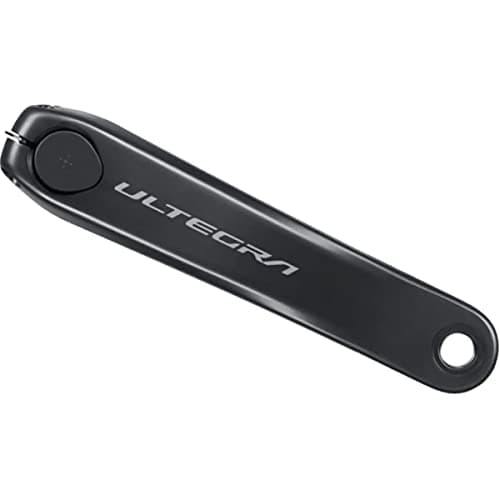 Shimano Ultegra FC-R8100-P The cleanest dual-sided power you can fit to a Shimano 12-speed bike, with by far the best battery life in the category — at the widest published tolerance of the serious options and a real hidden cost in chainrings. | The subject of this review: dual-sided power inside a Shimano drivetrain | 8.28.2 out of 10 | $899.00 · View on Amazon #ad We may earn a commission · Price as of October 27, 2026 |
| 2 | 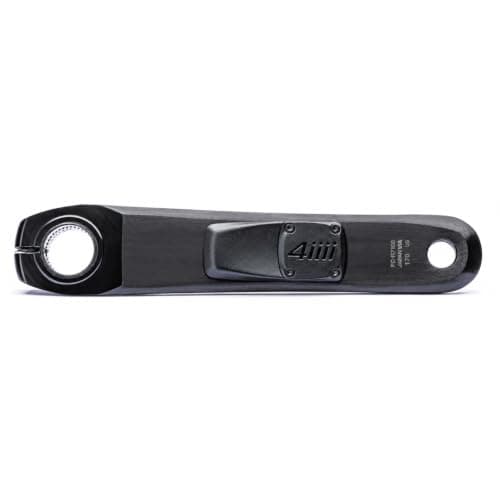 4iiii Precision 3+ (Shimano 105 FC-R7100) The pick if the Ultegra unit's total cost has made you pause: a tighter accuracy claim, a far cheaper price, and one leg instead of two. | The cheap Shimano route, if you can live with one leg measured | 8.48.4 out of 10 | $437.49 · View on Amazon #ad We may earn a commission · Price as of October 27, 2026 |
| 3 | 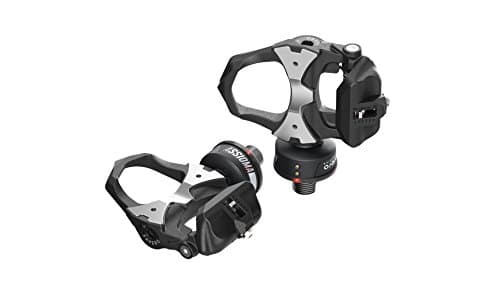 Favero Assioma Duo The reason to think hard before buying the Shimano: the same dual-sided data to a tighter claim, for less, on any bike you own. | The dual-sided alternative that moves between bikes | 9.09.0 out of 10 | |
| 4 | 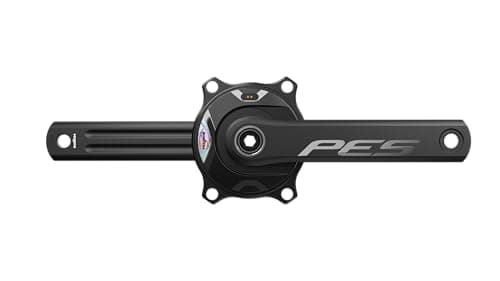 Magene PES P505 The budget version of this idea: dual-sided crank measurement at the same published tolerance as Shimano's, for a fraction of the money and none of the integration. | The cheapest complete dual-sided crankset | 7.97.9 out of 10 | $299.99 · View on Amazon #ad We may earn a commission · Price as of October 27, 2026 |
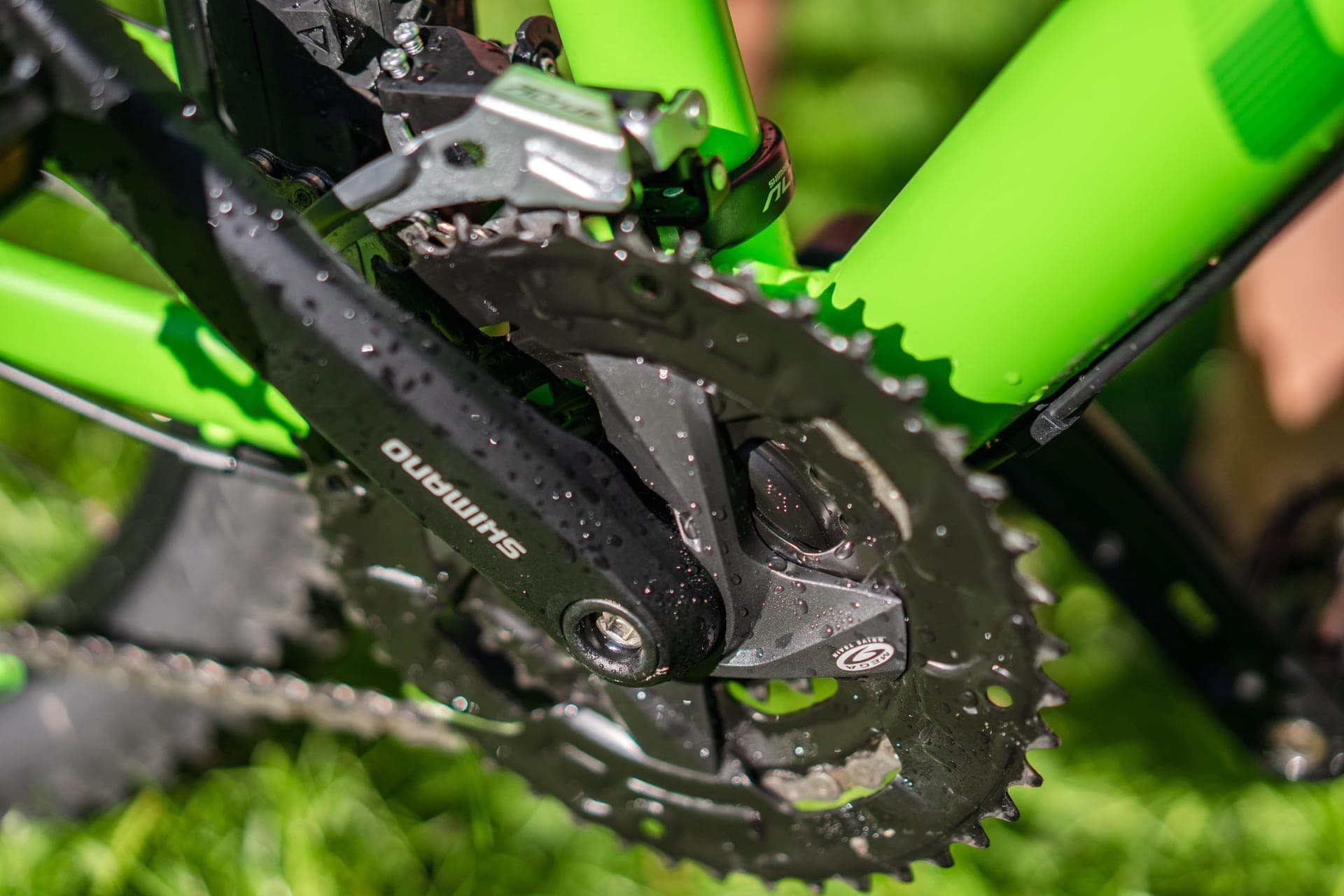
Most power meters are something you add to a bike. Shimano's is something the bike came as. The FC-R8100-P is an Ultegra R8100 crankset with the measuring hardware designed in: no pod bonded to an arm, no sensor in a pedal spindle, nothing hanging off the outside of the drivetrain. For a rider whose bike is already Shimano, that is the pitch, and it is a good one.
It is also the most expensive route to power in our crank power meter ranking, and the published tolerance is wider than three cheaper rivals. This review is about whether the integration is worth that.
The specifications, as published
| Specification | Figure |
|---|---|
| Measurement | Dual-sided — both crank arms |
| Strain gauges | 24 total, 12 per arm |
| Published tolerance | ±1.5% |
| Battery | Integrated Li-ion in the spider control unit |
| Claimed battery life | 300+ hours |
| Charging time | About 2.5 hours |
| Charging cable | EW-EC300 — the same cable as Ultegra Di2 |
| Crank lengths | 165, 170, 172.5, 175 mm |
| Chainring gradations | 34-50 and 36-52 |
| Chainrings included | No — sold without chainrings |
| Bolt circle | 110 mm, 4-arm asymmetrical |
| Chainline | 44.5 mm |
| Q-factor | 148 mm |
| Bottom bracket | SM-BBR60 or SM-BB72-41B Press Fit, not included |
| Connectivity | ANT+ and Bluetooth |
| Environment | Waterproof construction; -10 to +50 °C with temperature compensation |
What 24 strain gauges actually buy you
Twelve gauges per arm is a lot. Most single-sided meters use a small array on one crank, and pedal meters measure deflection in a spindle. More gauges spread across the arm means the measurement is less sensitive to exactly where and how force is applied, which is the engineering reason a crankset can be a better place to measure than a bonded pod.
The practical consequence is simple: both legs are measured independently, so left/right balance, pedaling smoothness and torque effectiveness are real numbers. A single-sided meter measures one leg and doubles it — a figure that is wrong by however asymmetric you are that day, and that drifts with fatigue and cadence. We go through exactly what that costs in single vs dual-sided power meters.
One quirk worth knowing: pedaling smoothness and torque effectiveness are not transmitted over Bluetooth, only over ANT+. If you train on an Apple TV, which is Bluetooth-only, those advanced metrics will not reach it. Power, cadence and balance do. ANT+ vs Bluetooth for Zwift explains the protocol split, and a USB ANT+ adapter is the fix on a computer.
The tolerance question, answered honestly
Shimano publishes ±1.5%. Favero, Garmin and 4iiii all publish ±1%. That is not a rounding difference — it is the manufacturer telling you how much confidence to have, and Shimano is claiming less.
How much should that bother you? Less than it looks, with one exception. For training, what matters is repeatability: the same meter reading the same way every session makes your intervals, zones and FTP testvalid regardless of a half-percent of absolute offset. Where it matters is when your numbers travel — a coach reading your file against someone else's, or a race category. Our power meter accuracy guide draws that line.
The thing worth noticing is that the Magene PES P505 publishes the same ±1.5% for a fraction of the money. So if the tolerance number is what you are buying, this is not the crankset to buy — a ±1% pedal is. If the integration is what you are buying, read on, because that is where this unit is genuinely unmatched.
Battery life is the real headline
300+ hours. Set that against the rest of the category: Favero quotes about 50 hours for the Assioma Duo and up to 160 for the Pro RS-2, Garmin quotes up to 90 for the Rally 210 range, Magene quotes 120 for the P715 S. Only a coin-cell meter like the 4iiii Precision 3+, at a claimed 800 hours, beats it.
For an indoor rider doing four structured sessions a week, 300 hours is most of a year. And because it charges with the EW-EC300 cable, an Ultegra Di2 bike needs no new cable at all — the thing you already use for the groupset charges the power meter. That is the kind of detail that only comes from a manufacturer building both halves. Our battery life guide lists every published figure side by side.
The cost nobody quotes
This is the most useful paragraph on the page. The listing is crank arms, without chainrings. Shimano lists 34-50 and 36-52 gradations on a 110 mm 4-arm asymmetrical bolt circle, and you buy those separately. You also need a compatible bottom bracket — Shimano recommends the SM-BBR60 or the SM-BB72-41B press fit — and that is not included either.
So the real cost of a working FC-R8100-P is the crank arms plus chainrings plus, potentially, a bottom bracket. Against a pedal meter where the price you see includes everything and the cleats are in the box, that gap is wider than the listings suggest. None of this is hidden — it is on the spec sheet — but it is routinely left out of comparisons, and it is the reason a lot of buyers end up on pedals instead.
Check the crank length before ordering, too. Each listing is a single length, and crank length is not something you can adjust afterwards. How to install a power meter has the published torque figures for when it arrives.
Who should buy it
Buy the FC-R8100-P if: your bike is a Shimano 12-speed road build; you want measured left/right balance rather than a doubled figure; you want the electronics inboard where a curb cannot reach them; you are replacing or upgrading a crankset anyway, which removes the chainring objection; or you simply never want to think about charging a power meter again.
Buy something else if: value is the priority (the 4iiii Precision 3+ publishes a tighter ±1% for far less, one leg); you own more than one bike (a pedal meter follows you, a crankset does not); you want the tightest published dual-sided claim (the Favero Assioma Duo); or your bike is SRAM, in which case see best power meters for SRAM bikes.
And if you train indoors only, be honest about what you are solving. Your smart trainer already measures power. A crankset meter earns its money by following you outdoors and acting as the reference your trainer gets checked against — the argument in smart trainer vs power meter. If you never ride outside, a better trainer is the smarter purchase.
Shopping the whole Shimano field?
See every power meter for a Shimano bikeThe full reviews
Every pick, in detail
#1 · The subject of this review: dual-sided power inside a Shimano drivetrain
Shimano Ultegra FC-R8100-P
8.28.2 out of 10#ad We may earn a commission · Price as of October 27, 2026
The cleanest dual-sided power you can fit to a Shimano 12-speed bike, with by far the best battery life in the category — at the widest published tolerance of the serious options and a real hidden cost in chainrings.
- Type
- Dual-sided power meter crankset
- Strain gauges
- 24 total — 12 per crank arm
- Published tolerance
- ±1.5%
- Battery
- Integrated Li-ion in the spider control unit, 300+ hours claimed
- Charging
- About 2.5 hours, same EW-EC300 cable as Ultegra Di2
- Crank lengths
- 165, 170, 172.5, 175 mm
- Chainrings
- 34-50 and 36-52 gradations; sold without chainrings
- Bolt circle / chainline / Q-factor
- 110 mm 4-arm asymmetrical / 44.5 mm / 148 mm
- Connectivity
- ANT+ and Bluetooth
- Environment
- Waterproof construction, -10 to +50 °C with temperature compensation
What we'd praise
- Genuine dual-sided measurement: 24 strain gauges, 12 in each arm, so left/right balance is measured rather than doubled from one leg
- 300+ hours claimed from the integrated battery, which is longer than any pedal power meter we cover
- Charges with the same EW-EC300 cable as an Ultegra Di2 groupset, so a Di2 bike needs no new cable
- Made by the company that made your drivetrain — chainline, Q-factor and shifting were designed together
- Active temperature compensation across a -10 to +50 °C range, with waterproof construction
- Nothing bonded to the arm and no pods on a pedal spindle: the electronics live inboard where nothing can hit them
What we'd flag
- ±1.5% published, wider than the ±1% that Favero, Garmin and 4iiii all claim
- The listing is crank arms sold WITHOUT chainrings — budget for a chainring set on top of the price you see
- Needs a compatible bottom bracket (Shimano recommends SM-BBR60 or SM-BB72-41B) and it is not included
- Locked to a Shimano 12-speed road drivetrain — no use on a SRAM bike or an older Shimano build
- Does not transfer between bikes: this is a permanent fitting on one frame
- Pedaling smoothness and torque effectiveness are not transmitted over Bluetooth, only ANT+
- Each listing is a single crank length, so ordering the wrong arm length is an expensive mistake
The FC-R8100-P is Shimano's own power meter, built into an Ultegra R8100 crankset rather than bolted onto one. Shimano puts 24 strain gauges in it — twelve in each arm — so both legs are measured and the balance figure is a measurement rather than an assumption. The published tolerance is ±1.5%.
The specification that should get your attention, though, is the battery: 300+ hours claimed from an integrated lithium-ion cell in the control unit on the spider, charged in about two and a half hours with the same EW-EC300 cable an Ultegra Di2 groupset already uses. No pedal power meter we cover comes close to that.
The two honest problems are the price of entry and the tolerance. The Amazon listing is crank arms without chainrings, so the number you see is not the finished cost, and you will need a compatible bottom bracket as well. And every serious rival publishes ±1%.
#2 · The cheap Shimano route, if you can live with one leg measured
4iiii Precision 3+ (Shimano 105 FC-R7100)
8.48.4 out of 10#ad We may earn a commission · Price as of October 27, 2026
The pick if the Ultegra unit's total cost has made you pause: a tighter accuracy claim, a far cheaper price, and one leg instead of two.
- Type
- Non-drive-side crank arm, bonded sensor
- Claimed accuracy
- ±1%
- Battery
- CR2032, up to 800 hours claimed
- Weight added
- 9 g
- Base crank
- Shimano 105 FC-R7100 as listed
- Connectivity
- ANT+ and Bluetooth Smart
What we'd praise
- A tighter published tolerance than the Ultegra unit at a fraction of the price — ±1% against ±1.5%
- Up to 800 hours from a coin cell, so there is nothing to charge at all
- Arrives as a complete 105 crank arm, so there is no bonding service to arrange
- Adds 9 g and sits almost flush, so it is invisible on the bike
What we'd flag
- Single-sided: it measures your left leg and doubles it, so there is no real balance figure
- Built on 105 rather than Ultegra, so you are mixing groupset tiers if your bike is Ultegra
- Must match your crank model and length exactly — the main reason these orders go wrong
- No upgrade path to dual-sided measurement
This is the uncomfortable comparison for the Ultegra crankset. 4iiii bonds a sensor to a Shimano crank arm, publishes ±1%, claims up to 800 hours from a CR2032, adds 9 g, and costs a fraction of the Shimano. It is single-sided, which is the whole trade.
Whether that trade is right depends on one question: will you act on the balance number? If the answer is no — and for most riders it is — this is where the money should go. Our best single-sided power meters page makes that case properly, and 4iiii Precision 3+ review covers this unit in full.
#3 · The dual-sided alternative that moves between bikes
Favero Assioma Duo
9.09.0 out of 10The reason to think hard before buying the Shimano: the same dual-sided data to a tighter claim, for less, on any bike you own.
- Type
- Pedal-based, dual-sided
- Claimed accuracy
- ±1% (IAV Power System)
- Cleat system
- Look Keo compatible, cleats supplied
- Battery
- Sealed rechargeable, about 50 h
- Water rating
- IP67
- Transfers
- Yes — pedals swap bikes in minutes
What we'd praise
- Dual-sided like the Ultegra crankset, but claims ±1% rather than ±1.5%
- Completely drivetrain-agnostic: no groupset, bottom bracket or chainring question at all
- Moves between bikes with a 15 mm pedal wrench, so one meter covers the road bike and the trainer bike
- Cleats are in the box, and the total cost is the price you see
- The longest independent testing record of any power meter we cover
What we'd flag
- About 50 hours per charge against the Ultegra unit's 300+ — the worst battery life in this comparison by a wide margin
- Look Keo pattern only, so Shimano SPD-SL riders need different shoes or a different pedal
- A pedal is the most exposed part of the bike: curbs, racks and car trunks all find them
- External pods on the spindle, a design Favero's own Pro range has moved past
If dual-sided measurement is the thing you want, pedals are the cheaper and more flexible way to get it. The Assioma Duo claims ±1%, measures both legs, supplies its own cleats, and has no relationship with your drivetrain whatsoever.
Two reasons to buy the Shimano instead. The battery, where 300+ hours against roughly 50 is not a close contest. And the cleat, because the Assioma is Look Keo and a great many Shimano riders are set up for SPD-SL. Our best dual-sided power meters roundup ranks the whole field, and power meter pedals vs cranks argues the format out.
#4 · The cheapest complete dual-sided crankset
Magene PES P505
7.97.9 out of 10#ad We may earn a commission · Price as of October 27, 2026
The budget version of this idea: dual-sided crank measurement at the same published tolerance as Shimano's, for a fraction of the money and none of the integration.
- Type
- Complete crankset with integrated meter
- Claimed accuracy
- ±1.5% (P505 base)
- Weight
- 650 g average
- Power range
- 0 - 2,500 W
- Data
- Power, cadence, L/R balance, pedaling smoothness
- Connectivity
- ANT+ and Bluetooth, IPX7
What we'd praise
- The cheapest genuine two-sided measurement of any kind, by a wide margin
- Arrives as a complete crankset, so there is no supported-arm list to satisfy
- Keeps the electronics inboard, like the Shimano, where nothing can strike them
- Lets you keep whatever pedals and cleats you already own
What we'd flag
- ±1.5% claimed — the same published tolerance as the Shimano, from a maker with a far thinner testing record
- You are replacing a Shimano crankset with a third-party one, which is exactly what buying the Ultegra unit avoids
- Bottom bracket standard and chainring choice become part of the purchase
- Does not transfer between bikes
The P505 does the same job as the Ultegra crankset — gauges on both arms, real balance data, electronics inboard — at a published ±1.5%, which is the same figure Shimano publishes.
What you give up is precisely the thing the Shimano is for. A Shimano crankset in a Shimano drivetrain is a known quantity: chainline, Q-factor, chainring profiles and shifting were designed as one system. Swapping in a third-party crankset is where chainline and shifting quality become your problem rather than Shimano's. Our best crank power meters page ranks both routes side by side.
Good questions
Frequently asked questions
Is the Shimano Ultegra power meter accurate?
Shimano publishes a tolerance of plus or minus 1.5% for the FC-R8100-P, measured by 24 strain gauges, twelve in each crank arm, with active temperature compensation across a -10 to +50 degrees C range. That is a wider claim than the plus or minus 1% published by Favero, Garmin and 4iiii. For training it makes no practical difference, because repeatability rather than absolute accuracy is what intervals and FTP testing depend on. It matters if your numbers have to be compared with another rider's data.
Is the Shimano Ultegra FC-R8100-P dual-sided?
Yes. It carries 24 strain gauges, twelve per crank arm, so each leg is measured independently. That means left/right balance, pedaling smoothness and torque effectiveness are measurements rather than figures estimated by doubling one leg. One caveat: pedaling smoothness and torque effectiveness are transmitted over ANT+ only, not over Bluetooth.
Does the Shimano Ultegra power meter come with chainrings?
No. The crankset is sold as crank arms without chainrings, on a 110 mm 4-arm asymmetrical bolt circle with 34-50 and 36-52 gradations available. A compatible bottom bracket is also not included — Shimano recommends the SM-BBR60 or the SM-BB72-41B press fit. Budget for both on top of the listed price, which is the single most common surprise with this unit.
How long does the Shimano Ultegra power meter battery last?
Shimano claims 300+ hours of ride time from the integrated lithium-ion battery in the control unit on the crank spider, with a full charge taking about 2.5 hours. It charges with the EW-EC300 cable, the same one used by Ultegra Di2, so a Di2 bike needs no additional cable. That is the longest claimed life of any rechargeable power meter we cover.
Shimano Ultegra power meter or Favero Assioma Duo?
The Favero is the better value and the Shimano is the better integration. Both measure both legs, but Favero publishes plus or minus 1% against Shimano's 1.5%, costs less, includes cleats, and moves between bikes in minutes. The Shimano wins on battery life — 300+ hours against roughly 50 — on having nothing exposed to curbs or bike racks, and on being made by the company that made your drivetrain. If you ride Shimano SPD-SL cleats, note that the Assioma Duo is Look Keo pattern.
Will the Shimano Ultegra power meter fit my bike?
Only if it is a Shimano 12-speed road drivetrain. The crankset uses a 110 mm 4-arm asymmetrical bolt circle, a 44.5 mm chainline and a 148 mm Q-factor, and it needs a compatible Shimano bottom bracket. It is no use on a SRAM bike or an older Shimano build. Crank lengths offered are 165, 170, 172.5 and 175 mm, and each listing is a single length, so check your current crank arm before ordering.
How we sourced this
- Shimano — Ultegra FC-R8100-P power meter crank: published specification sheet as carried by bike-components (accuracy, 24 strain gauges, battery, charging, crank lengths, chainline, Q-factor, bottom bracket)
- Shimano — Ultegra R8100 series component overview (manufacturer)
- 4iiii — Precision 3+ specifications and crank compatibility (manufacturer, cross-shop)
- Favero — Assioma Duo specifications (manufacturer, cross-shop)
- Magene — power meter specifications (manufacturer, cross-shop)
Keep going
Read these next
- Power MetersThe Best Power Meters for Shimano Bikes
- Power MetersThe Best Crank Power Meters
- Power MetersThe Best Dual-Sided Power Meters
- Power Meters4iiii Precision 3+ Review
- Power MetersFavero Assioma Duo Review
- Power MetersPower Meter Pedals vs Cranks
- GuidesHow Long Do Power Meter Batteries Last?
- GuidesHow to Install a Power Meter