Indoor Trainers
The Best Smart Trainers for Mountain Bikes
A mountain bike fails on a trainer for three reasons — the axle, the freehub and the tire. Here is which trainers solve each one on the maker's own compatibility page, and which leave you buying parts.
The short answer
Quick picks
| # | Product | Best for | Score | Price |
|---|---|---|---|---|
| 1 | 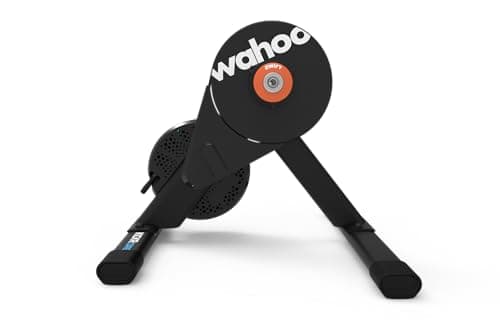 Wahoo Kickr Core 2 Boost adapters in the box, a measured power number, and a documented path for both SRAM Eagle and Shimano 12-speed — the safest direct-drive choice for a mountain bike. | Best overall for a mountain bike | 8.88.8 out of 10 | $548.99 · View on Amazon #ad We may earn a commission · Price as of September 18, 2026 |
| 2 | 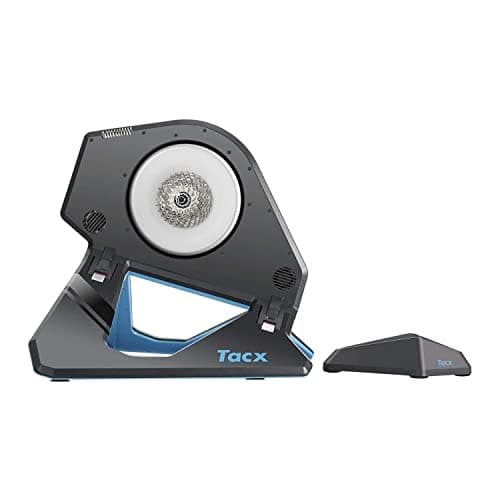 Garmin Tacx Neo 2T The trainer to buy if you are near the weight limit of everything else, or if you want ±1% measured power under a mountain bike. | Best for heavier riders and big-tire bikes | 8.68.6 out of 10 | $899.99 · View on Amazon $1,099.99Save 18% #ad We may earn a commission · Price as of September 18, 2026 |
| 3 | 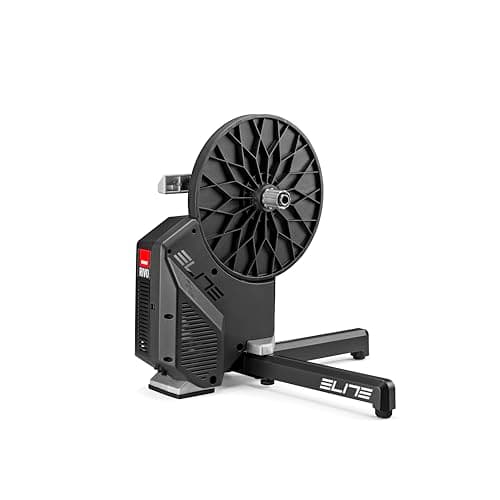 Elite Rivo Shimano 12-speed mountain bike, no interest in swapping cassettes? Elite lists the Micro Spline body nobody else does — accept an estimated power number to get it. | Best budget direct drive with a Micro Spline option | 8.28.2 out of 10 | $549.99 · View on Amazon #ad We may earn a commission · Price as of September 18, 2026 |
| 4 | 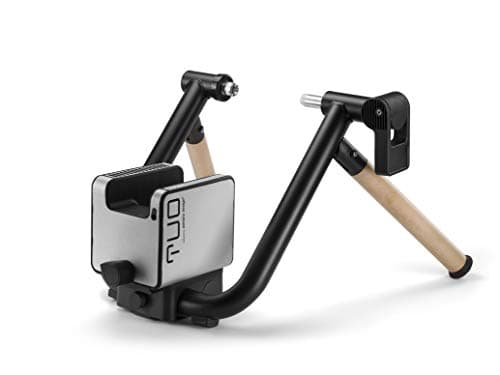 Elite Tuo Sidesteps every cassette and freehub problem by leaving the wheel on — as long as you fit a slick trainer tire and accept a loose power number. | Best wheel-on for 26 to 29 in wheels | 7.67.6 out of 10 | |
| 5 | 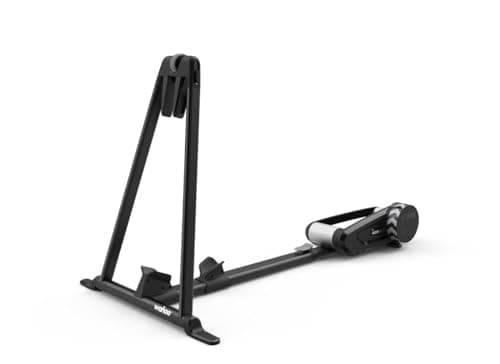 Wahoo Kickr Rollr The right answer for a cross-country bike on 2.1 in tires and a rider who already owns a power meter; the wrong answer for a trail bike on 2.5s. | Best if the bike must go on in seconds | 7.27.2 out of 10 | $699.99 · View on Amazon #ad We may earn a commission · Price as of September 18, 2026 |
Every general smart trainer roundup, including our own best smart trainers, is quietly written around a road bike: 700c wheels, a 142 mm thru-axle or a 130 mm quick release, and an 11 or 12-speed road cassette. A mountain bike breaks every one of those assumptions at once. The rear hub is 148 mm Boost or, on some bikes, 157 mm Super Boost. The cassette is a 10-51 or 10-52 tooth 12-speed on a freehub body — SRAM XD or Shimano Micro Spline — that most trainers do not ship with. The tire is 2.3 inches wide and knobbly, and the wheel might be 27.5 inches rather than 29.
None of that is a reason not to train indoors on a mountain bike. It is a reason to check three things before you buy, in the right order, against what the manufacturer actually publishes rather than what a forum thread remembers. This page does that for the five trainers in our registry that fit the brief. We have not bench-tested any of them; every compatibility claim below is taken from the maker's own specification or support page, and the sources are listed at the bottom.
Problem one: the rear axle
A direct-drive trainer replaces your rear wheel, so it has to accept your frame's dropout spacing and axle. Modern mountain bikes are almost all 12 x 148 mm Boost; older ones are 12 x 142 mm or 135 mm quick release; a handful of downhill and plus-size bikes use 12 x 157 mm Super Boost. The question is not whether the trainer supports your standard — it is whether the adapter is in the box.
Wahoo's frame compatibility article for the Core and Core 2 lists 12 x 148 as supported using adapter C and hub spacer E, both included, and lists 12 x 157 Super Boost and 12 x 135 as explicitly incompatible. Garmin ships the Neo 2T with a 142 and 148 mm adapter set. Elite takes the opposite approach on the Rivo: 142 x 12 and quick release are included, while Boost 148 and Super Boost 157 are accessories you order separately. That is not a fault — Elite is the only maker here with a Super Boost option at all — but it is an extra line on the receipt.
Problem two: the freehub and the cassette
This is where most mountain bikers get caught. Direct-drive trainers ship with a Shimano HyperGlide freehub body, which takes an 8 to 12-speed road cassette. A SRAM Eagle cassette needs an XD body; a Shimano 12-speed mountain cassette needs Micro Spline. You cannot fit either on a HyperGlide body, and you cannot run a road cassette with a mountain derailleur and chain without shifting problems — the derailleur cage is built for a 50-tooth low cog and the road cassette stops at 34.
The manufacturer positions are clear once you read the support pages. Wahoo sells an XD/XDR body for the Kickr, Core and Move, and states plainly that Shimano Micro Spline 12-speed "requires an unavailable freehub body" — its published workaround is a SRAM PG-1210 or PG-1230 11-50 cassette, which is built for a HyperGlide body but spaced closely enough to work with a Shimano 12-speed mountain drivetrain. Garmin lists XD/XDR and Campagnolo bodies for the Neo. Elite lists Micro Spline, Campagnolo and XD/XDR bodies for the Rivo and the Avanti. Our trainer cassette guide covers the mechanics of fitting a second cassette; the point here is which trainer gives you the cleanest route to it.
| Kickr Core 2 | Tacx Neo 2T | Elite Rivo | Elite Tuo | Kickr Rollr | |
|---|---|---|---|---|---|
| Boost 148 x 12 | Included | Included | Accessory | Listed | Not applicable |
| Super Boost 157 | Not supported | Not listed | Accessory | Not listed | Not applicable |
| SRAM XD / XDR | Body sold separately | Body sold separately | Body sold separately | Not applicable | Not applicable |
| Shimano Micro Spline | Not supported (cassette workaround) | Not listed | Body sold separately | Not applicable | Not applicable |
| Wheel sizes | 700c / 29 in level | Not applicable | Not applicable | 26-29 in | 950-1100 mm wheelbase |
| Max tire | Not applicable | Not applicable | Not applicable | Slick recommended | 2.1 in |
| Rider limit | 250 lb / 113 kg | 275 lb / 125 kg | 242 lb / 110 kg | Not published | 250 lb / 113 kg |
| Power | Measured, ±2% | Measured, ±1% | Estimated, ±2.5% | Estimated, ±5% | Needs external meter |
Problem three: the tire and the wheel size
On a direct-drive trainer the rear tire is off the bike, so it does not matter. The front wheel does: Wahoo's Core page says 700c and 29 inch bikes sit level, some 27.5 inch bikes need a front wheel riser block, and bikes on 24 inch wheels or smaller should not be mounted at all. A 27.5 hardtail on a Core 2 will sit nose-down until you put something under the front wheel, and that changes your saddle angle enough to notice on a long session.
On a wheel-on trainer the tire is the whole story. A knobby tire on a roller is loud, sheds rubber, and slips under load, and both Elite and Saris recommend a trainer tire. The practical answer is a slick trainer tireon a spare rear wheel so the bike goes from trail to trainer in a wheel swap. The Kickr Rollr is a special case: the rear wheel rides on a drum, and Wahoo quotes tires up to 2.1 inches, which covers cross-country rubber but not the 2.3 to 2.6 inch tires most trail bikes wear.
How we ranked them
MTB fit weighed heaviest: what ships in the box, what the maker lists as an accessory, and what is ruled out. Accuracy second, because the enthusiast who bothers to put a mountain bike on a trainer is usually following a plan, and how accurate a smart trainer is decides whether that plan means anything. Drivetrain options third — how many freehub bodies the maker actually sells. Value last. The Core 2 wins because it has the fewest asterisks; the Rivo places third rather than higher because its Micro Spline advantage comes with an estimated power number and a lower rider limit.
What you still need to buy
Budget for a second cassette or a freehub body on any direct-drive trainer, because a mountain cassette does not move to the trainer without one. Budget for a riser block if your wheels are 27.5. And budget for a proper fan, because the rider who is used to 15 mph of trail air is the one who overheats fastest indoors — our fan roundup is ranked on airflow for exactly that reason. If you are also unsure whether direct drive is the right architecture for a bike that lives outdoors most of the year, direct drive vs wheel-on settles it.
Riding a road bike indoors instead?
See every smart trainer we rank, compared on the specsThe full reviews
Every pick, in detail
#1 · Best overall for a mountain bike
Wahoo Kickr Core 2
8.88.8 out of 10#ad We may earn a commission · Price as of September 18, 2026
Boost adapters in the box, a measured power number, and a documented path for both SRAM Eagle and Shimano 12-speed — the safest direct-drive choice for a mountain bike.
- Type
- Direct drive, electromagnetic
- Boost 148 x 12
- Supported — adapters C and E in the box
- Freehub
- Shimano HG 11 fitted; SRAM XD/XDR body sold separately
- Micro Spline
- Not supported (no freehub body available)
- Wheel sizes
- 700c and 29 in level; some 27.5 in need a riser
- Rider limit
- 250 lb (113 kg)
What we'd praise
- The 12 x 148 mm Boost adapter ships in the box, so most modern hardtails and trail bikes bolt straight on
- Measured power at a claimed ±2%, with WiFi, Bluetooth and ANT+ FE-C — every app and head unit can see it
- Wahoo publishes a real workaround for Shimano 12-speed mountain drivetrains: a SRAM PG-1230 cassette on the stock HG body
- SRAM Eagle riders get an official XD/XDR freehub body from Wahoo
- 5.4 kg flywheel gives more settled inertia than either Elite here
What we'd flag
- Micro Spline is officially not compatible — Wahoo does not make the freehub body
- Super Boost 157 mm and 12 x 135 mm bikes are excluded outright
- 27.5 in wheels may need a front riser block to sit level; 26 in and smaller are not recommended
- A second cassette is almost always an extra purchase for a mountain bike
Wahoo's frame compatibility page lists 12 x 148 mm Boost as a supported standard for the Core and Core 2, using adapter C plus hub spacer E, both of which are in the box. That is the single most important fact for a mountain biker, because the bike goes on without a separate order. The drivetrain side is where the homework lives: the stock freehub is a Shimano HG 11 body, Wahoo sells an XD/XDR body for SRAM Eagle, and for Shimano Micro Spline the official answer is a SRAM PG-1230 cassette on the HG body.
Everything else about the trainer is covered in our Kickr Core 2 review: measured ±2% power, WiFi with Race Mode, and the same 5.4 kg flywheel as the original Core.
#2 · Best for heavier riders and big-tire bikes
Garmin Tacx Neo 2T
8.68.6 out of 10$1,099.99Save 18%
#ad We may earn a commission · Price as of September 18, 2026
The trainer to buy if you are near the weight limit of everything else, or if you want ±1% measured power under a mountain bike.
- Type
- Direct drive, motor-driven
- Boost 148 x 12
- Supported — 142 and 148 adapter set included
- Freehub
- Shimano/SRAM 9-11 fitted; XD/XDR and Campagnolo bodies available
- Claimed accuracy
- ±1%
- Max gradient
- 25%
- Rider limit
- 125 kg (275 lb)
What we'd praise
- Highest published rider limit of any direct-drive trainer here, at 125 kg
- 142 x 12 and 148 x 12 adapters ship in the box, alongside 130 and 135 mm quick release
- ±1% measured power and a 25% gradient ceiling that covers any trail climb Zwift can draw
- No calibration or spin-down, ever, and it works unplugged if the outlet is on the other side of the garage
- Road-feel vibration patterns include gravel and cobbles, which is a small joy on a 2.4 in tire
What we'd flag
- No cassette in the box, and 12-speed SRAM needs the separate XD/XDR freehub body
- No Micro Spline body listed by Garmin either — the Shimano 12-speed workaround is the same cassette swap as Wahoo
- 21.5 kg with no handle and no folding legs — it lives where you put it
- The oldest design in this roundup; the Neo 3M adds motion plates for a lot more money
The Neo 2T's rider limit is 125 kg, which is 275 lb, and that alone puts it on this list: mountain bikers as a population are heavier than road riders and their bikes weigh more too. Garmin ships the 142 and 148 mm thru-axle adapter set with the trainer, so a Boost hardtail is a five-minute job.
The Neo also happens to be the most accurate trainer here and the only one with a motor-driven descent. Our Tacx Neo 2T review covers the ride; the short version for this page is that it fits and it does not care how heavy you are.
#3 · Best budget direct drive with a Micro Spline option
Elite Rivo
8.28.2 out of 10#ad We may earn a commission · Price as of September 18, 2026
Shimano 12-speed mountain bike, no interest in swapping cassettes? Elite lists the Micro Spline body nobody else does — accept an estimated power number to get it.
- Type
- Direct drive, electromagnetic
- Boost 148 x 12
- Adapter available separately (142 x 12 included)
- Freehub
- Shimano/SRAM 9-11 fitted; Micro Spline, XD/XDR, Campagnolo bodies available
- Claimed accuracy
- ±2.5%, estimated power
- Max gradient
- 18%
- Rider limit
- 110 kg (242 lb)
What we'd praise
- The only trainer in this roundup whose maker lists a Shimano Micro Spline freehub body
- Elite also lists Boost 148 and Super Boost 157 adapters, so almost any mountain hub standard has a path
- 10 kg with folding legs and a carry handle — it fits in the corner of a garage between rides
- Onboard WiFi and Zwift Cog and Click support at the cheapest direct-drive price here
- 18% gradient and 2,000 W ceilings, both higher than the Core 2 quotes
What we'd flag
- Power is estimated at ±2.5%, not measured — the loosest claim on this page
- Boost 148 adapter is a separate purchase, unlike the Core 2 and Neo 2T
- Rider limit is 110 kg, the lowest of the direct-drive trainers here
- No ANT+, so an older head unit cannot record the ride
Elite's Rivo specification page lists five freehub bodies: the pre-installed Shimano/SRAM 9-11 body, plus Shimano Micro Spline, Campagnolo and SRAM XD/XDR as accessories. For a rider on a Shimano XT or SLX 12-speed drivetrain, that is the difference between running the correct cassette and living with a SRAM workaround. The thru-axle side is the reverse of the Wahoo story: 142 x 12 is in the box, Boost 148 is an accessory.
The price you pay is the power figure. Elite states ±2.5% estimated, which we work through in the Elite Rivo review and against the Core 2 in Kickr Core 2 vs Elite Rivo.
#4 · Best wheel-on for 26 to 29 in wheels
Elite Tuo
7.67.6 out of 10Sidesteps every cassette and freehub problem by leaving the wheel on — as long as you fit a slick trainer tire and accept a loose power number.
- Type
- Wheel-on, controllable
- Wheel sizes
- 26 in to 29 in
- Axle standards listed
- QR 130-135, 12 x 142, 10/12 x 135, Boost 12 x 148
- Claimed accuracy
- ±5% (Elite spec page)
- Max resistance
- 1,300 W at 40 km/h
- Max gradient
- 10%
What we'd praise
- No cassette, no freehub, no drivetrain question at all — the rear wheel stays on the bike
- Elite explicitly rates it for 26 to 29 in wheels, which covers every mountain bike wheel size
- ANT+ and Bluetooth, so it works with any app and any head unit
- 10.3 kg and folds — the lightest, most portable trainer here
- Cheapest way to get controllable resistance under a mountain bike
What we'd flag
- You need a slick trainer tire: a knobby tire on a roller is loud, wears fast and slips
- Elite states ±5% accuracy and estimated power — fine for Zwift, not for a training plan you trust to the watt
- 1,300 W and 10% are the lowest ceilings on this page
- Elite does not publish a rider weight limit for it
The wheel-on argument is strongest on a mountain bike, because the drivetrain compatibility questions that fill the rest of this page simply do not exist. Elite rates the Tuo for 26 to 29 inch wheels and lists quick release, 142 and Boost 148 axle fittings for the rear clamp. What it does not tolerate is a knobby tire. Fit a slick trainer tire on a spare wheel, or on the bike for the winter, and it is quiet and well behaved.
Accuracy is the compromise: Elite states ±5% and estimated power. Our turbo trainers roundup ranks it against the other wheel-on units.
#5 · Best if the bike must go on in seconds
Wahoo Kickr Rollr
7.27.2 out of 10#ad We may earn a commission · Price as of September 18, 2026
The right answer for a cross-country bike on 2.1 in tires and a rider who already owns a power meter; the wrong answer for a trail bike on 2.5s.
- Type
- Hybrid: front tire clamp, rear wheel on a roller
- Fits
- 950-1100 mm wheelbase, tires up to 2.1 in (53 mm)
- Axle standard
- Irrelevant — nothing attaches to the hub
- Power accuracy
- Within ±1% of an external power meter you supply
- Max resistance
- 1,500 W
- Rider limit
- 250 lb (113 kg)
What we'd praise
- No axle adapters, no cassette, no freehub — the wheel sits on a drum and the front tire is clamped
- Wahoo quotes tires up to 2.1 in, which covers cross-country rubber
- Swapping between a road bike and the mountain bike takes seconds, not a cassette change
- 10.5 lb flywheel and a wide, stable stance
What we'd flag
- Tires wider than 2.1 in are outside Wahoo's fitting window — most trail bikes are on 2.3 to 2.6 in
- Designed around a power meter you supply; its own estimate runs well below a real meter at low output
- A knobby tire on a roller is loud and wears — a slick or a spare wheel is still the sensible plan
- The most expensive trainer here that cannot measure its own watts properly
The Rollr removes the drivetrain problem and the axle problem at once, because nothing attaches to the hub. Wahoo publishes a fitting window of 950 to 1100 mm of wheelbase and tires up to 2.1 inches, and that tire figure is the deciding line for a mountain biker: cross-country bikes clear it, most trail and enduro bikes do not.
Its power number is an estimate designed to be replaced by a pedal or crank meter you already own. We go through that in detail in the Kickr Rollr review.
Good questions
Frequently asked questions
Can you put a mountain bike on a smart trainer?
Yes, provided the trainer supports your rear axle standard (usually 12 x 148 mm Boost) and you can fit a cassette that matches your drivetrain. The Wahoo Kickr Core 2 and Tacx Neo 2T ship with Boost adapters; the Elite Rivo sells one separately. Wheel-on trainers like the Elite Tuo avoid the drivetrain question entirely but need a slick trainer tire.
Do I need a special cassette for a mountain bike on a direct-drive trainer?
Almost always. Trainers ship with a Shimano HyperGlide freehub body, which does not accept SRAM Eagle (XD) or Shimano 12-speed mountain (Micro Spline) cassettes. Wahoo and Garmin sell XD/XDR bodies; Elite lists Micro Spline, XD/XDR and Campagnolo bodies. Wahoo's documented workaround for Shimano 12-speed is a SRAM PG-1210 or PG-1230 cassette on the stock body.
Which smart trainers support Shimano Micro Spline?
Of the trainers in our registry, only Elite lists a Micro Spline freehub body, for the Rivo and Avanti. Wahoo states that Micro Spline drivetrains are not compatible with the Kickr, Core or Move because the body is unavailable, and recommends a SRAM PG-1230 11-50 cassette on the stock HG body instead.
Does a 27.5 inch mountain bike fit on a smart trainer?
It mounts, but it may not sit level. Wahoo says 700c and 29 inch bikes sit level on the Core and Core 2, while some 27.5 inch bikes need a front wheel riser block to bring the front up. Elite rates the Tuo wheel-on trainer for 26 to 29 inch wheels.
Can I use knobby mountain bike tires on a wheel-on trainer?
You can, but you should not. A knobby tire on a roller is loud, wears quickly and slips under hard efforts. Fit a slick trainer tire, ideally on a spare rear wheel so you can swap between trail and trainer without changing tires each time.
What is the rider weight limit for a smart trainer with a mountain bike?
Wahoo publishes 250 lb (113 kg) for the Kickr Core 2 and Kickr Rollr, Garmin publishes 125 kg (275 lb) for the Tacx Neo 2T, and Elite publishes 110 kg (242 lb) for the Rivo. Wahoo's figure for e-bikes is stated as rider plus bike plus battery combined, so treat every limit as including a heavy bike.
Is the Wahoo Kickr Rollr good for a mountain bike?
Only for cross-country bikes. Wahoo's fitting window is a 950 to 1100 mm wheelbase and tires up to 2.1 inches, so most trail and enduro bikes on 2.3 to 2.6 inch tires fall outside it. It also relies on a power meter you supply for accurate watts.
How we sourced this
- Wahoo — Bicycle Frame Compatibility [CORE] (wheel sizes, hub standards, adapters)
- Wahoo — Drivetrain Compatibility for KICKR, CORE and MOVE (XD/XDR body, Micro Spline workaround)
- Wahoo — KICKR ROLLR Product Information & FAQ (250 lb rider limit, 1,500 W)
- Elite — Rivo specifications (axle adapters, freehub bodies, ±2.5%)
- Elite — Tuo specifications (26-29 in wheels, ±5%, 1,300 W)
- Zwift Insider — Tacx Neo 2T review (125 kg limit, adapters, freehub options)
- DC Rainmaker — Wahoo Kickr Core 2 in-depth review (adapters, 250 lb, ±2%)
- DC Rainmaker — Elite Rivo announcement (110 kg rider limit, no ANT+)
Keep going