Indoor Trainers
The Best Turbo Trainers, Ranked
Wheel-on trainers have not disappeared — they have narrowed to a handful of jobs they still do well. Here are the ones worth buying, and the line where you should spend up instead.
The short answer
Quick picks
| # | Product | Best for | Score | Price |
|---|---|---|---|---|
| 1 | 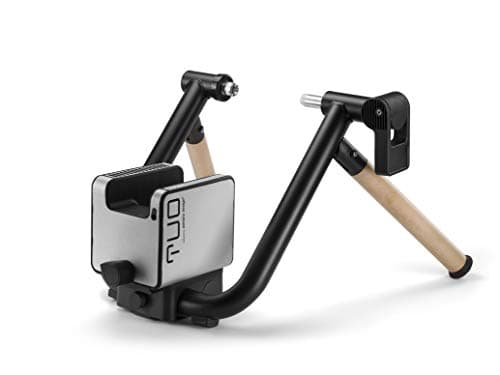 Elite Tuo The only pick here that actually controls its own resistance — the turbo trainer to buy if you want Zwift and ERG to behave like they should. | Best turbo trainer overall | 7.67.6 out of 10 | $149.99 · View on Amazon #ad We may earn a commission · Price as of October 22, 2026 |
| 2 | 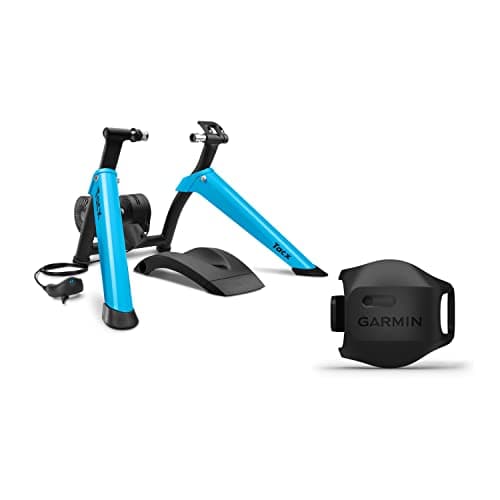 Garmin Tacx Boost Trainer Bundle The cheapest complete route onto Zwift: trainer, sensor and riser in one box, with virtual power instead of measured watts. | Best bundle for Zwift on a budget | 6.96.9 out of 10 | |
| 3 | 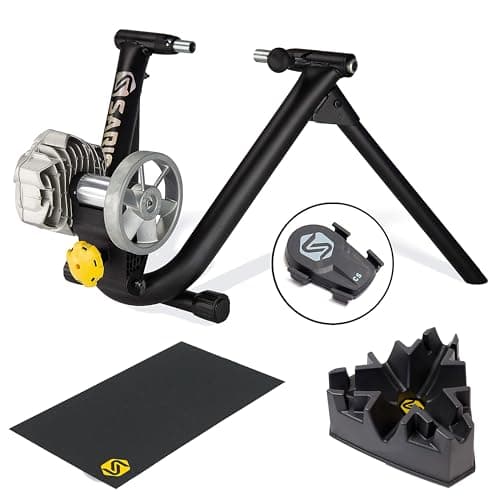 Saris Fluid2 Smart Equipped The best-feeling trainer on this list that isn't controllable — a smooth fluid curve and a frame that doesn't flex under a sprint. | Best road feel for the money | 7.17.1 out of 10 | $199.99 · View on Amazon #ad We may earn a commission · Price as of October 22, 2026 |
| 4 | 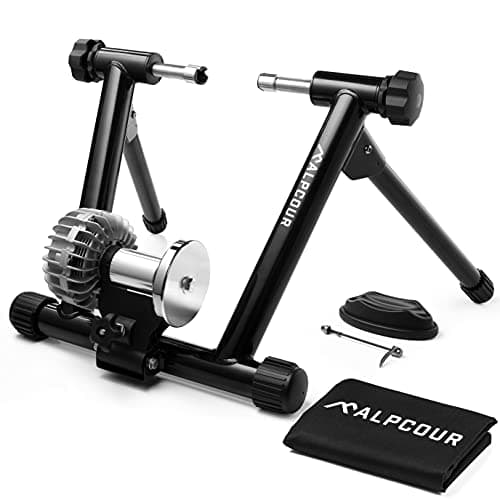 Alpcour Fluid Bike Trainer Stand A quiet, simple fluid trainer that folds away — worth it only if silence and storage matter more to you than the money. | Quietest wheel-on pick | 6.46.4 out of 10 | $189.95 · View on Amazon #ad We may earn a commission · Price as of October 22, 2026 |
| 5 | 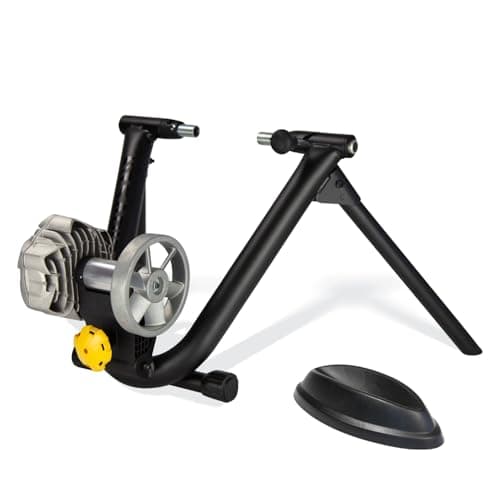 Saris Fluid2 The base Fluid2: identical ride to the Smart Equipped model, minus the speed sensor — cheaper only if you already own one. | Cheapest way in | 6.86.8 out of 10 |
A turbo trainer is a wheel-on trainer: your rear wheel stays on the bike and presses against a resistance roller. It is the oldest shape in indoor cycling and, for most upgrading riders, it has been replaced by direct drive. But "mostly replaced" is not "gone," and there are still four jobs a turbo does better than anything else — the tightest budget, a second bike you don't want to strip, race-day warm-ups, and travel. This roundup ranks the turbo trainers worth owning for those jobs, and tells you plainly where the category runs out of road. If you want the controllable field instead, start with our best smart trainers roundup.
The one distinction that decides everything
Turbo trainers split into two groups, and the split matters far more than brand or price. Controllable turbos — the Elite Tuo is the only one on this list — accept commands from an app. Zwift raises the resistance when the road tilts up, and an ERG workout holds you at a target wattage regardless of your gearing. Non-controllable turbos have a lever or nothing at all. They can still feed Zwift a number if you bolt a speed sensor on, but that number is virtual power: an estimate calculated from wheel speed against a published resistance curve, not a measurement of what your legs did.
Neither is wrong. Virtual power is repeatable enough to chart your own progress if you keep the same tire, the same pressure and the same lever position. It is not comparable to anyone else's numbers and it will drift as your tire wears. Know which one you are buying before you compare prices, because the two groups are not really competing with each other.
Fluid, magnetic or elastogel
Within the non-controllable group, the resistance mechanism sets the feel. Fluid trainers spin an impeller through a sealed chamber; resistance rises progressively with speed, which is the closest thing to real road load you can get without electronics. They are quiet and smooth, and they need a few minutes of warm-up before the curve settles. Magnetic trainers use a magnet against a flywheel, adjusted by a lever. They are cheaper and noisier, and the resistance steps feel more like switches than a curve. Elastogel refers to the roller compound rather than the resistance — it is a gel-coated drum that runs quieter and chews through a tire more slowly than bare steel.
How we ranked them
We do not run a test lab and we say so on our how we review page. What we did instead: pulled the manufacturer spec sheet and manual for every trainer, recorded resistance type, control capability, published maximum resistance and what ships in the box, then scored each on the four things a turbo buyer actually weighs — accuracy, road feel, value and ease of setup. Accuracy scores are deliberately harsh on the virtual-power units, because an estimate is not a measurement and pretending otherwise would be dishonest. Prices are pulled live from Amazon and change constantly, so you will see today's number or "Check price," never a stale one we typed in months ago.
| Trainer | Resistance | App control | Power data | Sensor in box | Best for |
|---|---|---|---|---|---|
| Elite Tuo | Magnetic, electronic | Yes — FE-C / FTMS | Measured, ±2.5% | N/A | Overall |
| Garmin Tacx Boost | Magnetic, 10 levels | No | Virtual power | Yes | Zwift on a budget |
| Saris Fluid2 Smart Equipped | Fluid, progressive | No | Virtual power | Yes | Road feel |
| Alpcour Fluid Bike Trainer Stand | Fluid, progressive | No | None | No | Quiet / folds away |
| Saris Fluid2 | Fluid, progressive | No | None | No | Cheapest way in |
What a turbo trainer costs you beyond the price
Two hidden costs catch people out. The first is tires. A wheel-on trainer grinds a road tire down fast and coats your rim in rubber dust; the fix is a dedicated trainer tire or a cheap sacrificial wheel, which is a real line item. The second is consistency. Because resistance depends on how hard the roller presses into the tire, your numbers move when tire pressure moves. Pump to the same pressure every ride and tighten the roller the same number of turns, or your virtual power will wander week to week and tell you nothing useful.
There is also the noise. A wheel-on trainer is louder than a direct-drive unit at the same effort because you are spinning a knobbly contact patch against a drum. Fluid units and elastogel rollers help; nothing eliminates it. If you live above someone, put a trainer mat under it and expect to be heard anyway.
When to stop reading this page and spend up
Be honest about your use case. If you plan to ride indoors more than a couple of times a week, or you want ERG workouts, or you care whether your FTP number means anything, the money is better spent on a budget direct-drive trainer. The gap between a good turbo and the cheapest direct-drive smart trainer is smaller than it has ever been, and what it buys — measured power, automatic resistance, no tire wear, less noise — is exactly what indoor training is for. Our cost guide lays out what each tier really buys, and best budget smart trainers is the next rung up the ladder.
Buy a turbo when it is genuinely the right tool: a second setup that lives at the office, a warm-up unit that travels to races in a car trunk, a first winter of indoor riding where you are not yet sure you will stick with it, or a room where floor space and noise beat every other consideration. In those cases the trainers above are good, and none of them will embarrass you.
The used-market option
One discontinued wheel-on trainer still turns up often enough to be worth covering properly: our Tacx Flux S review treats it as a used buying guide rather than a current recommendation, with the questions to ask a seller and the buyable alternative if you would rather not. If what you actually want is to convert a bike you already own with the least spend, how to turn your bike into a stationary bike is the cheaper route.
Every trainer on this page runs your rear tire against a roller, which is why a dedicated indoor tire is worth considering — do I need a trainer tire covers when it pays for itself and when a worn road tire will do.
The full reviews
Every pick, in detail
#1 · Best turbo trainer overall
Elite Tuo
7.67.6 out of 10#ad We may earn a commission · Price as of October 22, 2026
The only pick here that actually controls its own resistance — the turbo trainer to buy if you want Zwift and ERG to behave like they should.
- Type
- Wheel-on, controllable
- Claimed accuracy
- ±2.5%
- Max resistance
- 1,300 W
- Max gradient
- 10%
- Roller
- Elastogel
- Connectivity
- BT, ANT+ FE-C
What we'd praise
- Fully controllable resistance — apps set the load, so ERG workouts and Zwift climbs work properly
- ±2.5% claimed accuracy is strong for a wheel-on unit
- Elastogel roller is gentler on a tire than a bare steel drum
What we'd flag
- 1,300 W ceiling and 10% simulated gradient are the lowest of the controllable trainers we cover
- Still a wheel-on trainer: tire wear, tire pressure and a proper spindown all affect your numbers
Everything else on this list is a resistance unit with a knob. The Tuo is a real smart trainer that happens to be wheel-on, which makes it the one turbo we'd put money on without caveats. Because it accepts FE-C and FTMS control, a Zwift gradient raises the load on its own and an ERG workout pins you to a target wattage — the two behaviors that separate "training indoors" from "pedaling indoors."
What you pay for that is a lower ceiling than a direct-drive unit: 1,300 W and a 10% simulated gradient. Neither matters much unless you sprint like a track rider or spend your winter on simulated alpine walls. The wheel-on facts of life still apply — budget for tire wear or a dedicated trainer tire, and check pressure before you calibrate. If you can stretch past it, the honest comparison is in our direct drive vs wheel-on breakdown.
#2 · Best bundle for Zwift on a budget
Garmin Tacx Boost Trainer Bundle
6.96.9 out of 10The cheapest complete route onto Zwift: trainer, sensor and riser in one box, with virtual power instead of measured watts.
- Type
- Wheel-on, magnetic
- Resistance control
- Manual — 10 lever settings
- Max resistance
- 1,050 W (manufacturer figure)
- Power data
- Virtual power via included speed sensor
- Frame
- Folding
- In the box
- Trainer, speed sensor, front wheel block
What we'd praise
- Ships with the speed sensor and front riser block, so it works in Zwift the day it arrives
- Ten-position resistance lever gives a usable spread of workout loads for the money
- Folds flat, which matters when the pain cave is also the spare room
What we'd flag
- Resistance does not change on its own — no ERG mode and no automatic climbing
- Zwift sees estimated virtual power from wheel speed, not a measured wattage
The Boost bundle solves a problem that trips up a lot of first indoor setups: a cheap trainer on its own gives Zwift nothing to read. Garmin packs a speed sensor and a front wheel block in with the trainer, so the app can estimate your power from wheel speed against the trainer's known resistance curve and you can ride within an hour of unboxing.
Be clear about what that estimate is. Virtual power is a lookup, not a measurement — it assumes you set the lever where you said you did and that your tire pressure matches the curve. It is repeatable enough to track fitness if you keep everything consistent, and it is not something to compare against a friend's power meter. Our accuracy guide explains exactly how far that gap goes.
#3 · Best road feel for the money
Saris Fluid2 Smart Equipped
7.17.1 out of 10#ad We may earn a commission · Price as of October 22, 2026
The best-feeling trainer on this list that isn't controllable — a smooth fluid curve and a frame that doesn't flex under a sprint.
- Type
- Wheel-on, fluid
- Resistance control
- Progressive — rises with wheel speed
- Power data
- Virtual power via included speed sensor
- Built
- Made in the USA
- Frame
- Wide-stance folding legs
- Zwift
- Compatible via speed sensor
What we'd praise
- Fluid resistance ramps smoothly with speed — the most natural feel of any non-controllable trainer here
- Speed sensor is in the box, so Zwift virtual power works out of the box
- Wide-stance frame is genuinely stable for out-of-the-saddle efforts
What we'd flag
- No app control at all — the trainer will not change resistance for a workout or a climb
- Fluid units need a proper warm-up before the resistance curve settles
Fluid resistance is why this trainer still sells years after smart trainers took over. As your wheel speeds up, the fluid chamber loads harder in a progressive curve that feels much closer to real road resistance than a magnet does. Push harder, it pushes back harder, smoothly and without the on/off feel of a cheap magnetic unit.
It is not, and does not pretend to be, a smart trainer. There is no ERG, no auto-climbing and no measured wattage — the bundled speed sensor lets Zwift estimate power and nothing more. Buy it if you want the nicest ride you can get at wheel-on money and you train by feel or heart rate. If you want your workouts controlled for you, spend up to the budget smart trainer tier instead.
#4 · Quietest wheel-on pick
Alpcour Fluid Bike Trainer Stand
6.46.4 out of 10#ad We may earn a commission · Price as of October 22, 2026
A quiet, simple fluid trainer that folds away — worth it only if silence and storage matter more to you than the money.
- Type
- Wheel-on, fluid flywheel
- Resistance control
- Progressive — no lever, no app
- Frame
- Foldable stainless steel, dual-lock
- Power data
- None — add your own sensor
- Fits
- Road and mountain bikes
- Zwift
- Only with a separate speed or power sensor
What we'd praise
- A fluid flywheel with no magnets or electronics is about as quiet as a wheel-on trainer gets
- Folds down on a dual-lock stainless frame, so it stores flat between rides
- Nothing to pair, charge or update — it simply works
What we'd flag
- The most expensive trainer on this list, and it gives you the least data
- No sensor in the box, so Zwift needs a speed sensor you buy separately
- No resistance adjustment at all — the only lever is your gearing
This is the trainer for a rider whose main constraint is noise or floor space. The fluid flywheel loads progressively with wheel speed and there are no magnets, no motor and no electronics to hum, so under the same effort it runs quieter than a cheap magnetic unit. The frame is stainless steel and folds flat on a dual-lock hinge, which matters if the trainer has to live in a cupboard rather than a garage.
The trade is that you get no data, no control, and a price above every other trainer here. Gearing is your only resistance adjustment, and if you want to ride Zwift you will need to add a speed or cadence sensor yourself. If the money is the constraint rather than the noise, the Saris below is the same kind of machine for less; buy this one for quiet and for the fold-flat frame.
#5 · Cheapest way in
Saris Fluid2
6.86.8 out of 10The base Fluid2: identical ride to the Smart Equipped model, minus the speed sensor — cheaper only if you already own one.
- Type
- Wheel-on, fluid
- Resistance control
- Progressive — rises with wheel speed
- Power data
- None in the box
- Built
- Made in the USA
- Frame
- Wide-stance folding legs
- Zwift
- Needs a sensor you supply
What we'd praise
- The same fluid unit and frame as the Smart Equipped version, for less money
- Fits road and mountain bikes with no extra adapters for most axle standards
- About as durable and repairable as trainers get
What we'd flag
- No speed sensor included — factor that purchase in before you compare prices
- No control, no measured power, and no upgrade path to either
This is the plain Fluid2, and the difference between it and the Smart Equipped listing above is genuinely just the bundled speed sensor. The trainer, the fluid unit and the frame are the same, which makes the decision a simple bit of arithmetic: if you already own a speed sensor or a power meter, buy this one. If you don't, buy the bundle, because a sensor bought separately usually costs more than the price difference.
What you get either way is the best-feeling wheel-on ride here and a frame that has survived a decade of garages. What you never get is control or measurement. That's the whole turbo trainer bargain, stated plainly — and if it sounds like too little, our smart trainer vs dumb trainer guide is the argument for spending more.
Good questions
Frequently asked questions
What is the difference between a turbo trainer and a smart trainer?
Turbo trainer usually means a wheel-on trainer, where your rear wheel presses against a resistance roller. Smart trainer describes any trainer an app can control and that measures power. The two overlap: the Elite Tuo is a wheel-on turbo that is also a smart trainer, while most cheap turbos have no electronics at all.
Do turbo trainers work with Zwift?
Yes, but in two different ways. A controllable turbo like the Elite Tuo pairs directly and Zwift changes its resistance on climbs. A non-controllable turbo needs a speed sensor so Zwift can calculate virtual power from wheel speed; the ride works but the resistance never changes on its own and the power figure is an estimate.
Is virtual power accurate enough to train with?
It is repeatable rather than accurate. Virtual power looks up your wheel speed against the trainer's published resistance curve, so it will track your own progress consistently as long as your tire, tire pressure and roller tension stay the same. It should not be compared against a power meter or against another rider's numbers.
Do I need a special tire for a turbo trainer?
Not strictly, but a road tire wears quickly on a trainer drum and sheds rubber dust. Most regular indoor riders either fit a dedicated trainer tire, which is made of a harder compound, or keep an old wheel with a sacrificial tire mounted so swapping between indoor and outdoor riding takes seconds.
Are fluid or magnetic turbo trainers better?
Fluid trainers feel better and run quieter because resistance rises progressively with wheel speed, which is closer to real road load. Magnetic trainers are cheaper and let you pick a resistance level with a lever, which is useful when you want a fixed load. For most riders the fluid ride is worth the small extra cost.
Should I just buy a direct-drive smart trainer instead?
If you will ride indoors regularly, want ERG workouts, or care about the accuracy of your power numbers, yes. Direct-drive smart trainers measure power, adjust resistance automatically, run quieter and do not wear your tire. Turbo trainers make sense for the tightest budgets, occasional use, race warm-ups and travel setups.
How we sourced this
Keep going
Read these next
- ReviewTacx Flux S Review
- GuidesHow to Turn Your Bike Into a Stationary Bike
- GuidesBike Trainer Weight Limits, by Model
- TrainersDirect Drive vs Wheel-On Trainers
- TrainersThe Best Budget Smart Trainers, Ranked
- GuidesSmart Trainer vs Dumb Trainer
- GuidesHow Much Does a Smart Trainer Cost?
- AccessoriesThe Best Trainer Tires
- TrainersThe Best Bike Rollers, Ranked