Trainer Review
Tacx Flux S Review
Tacx put the money in the flywheel and saved it on the electronics. Years later that is exactly why the Flux S is a used-market bargain and a poor new purchase.
Every trainer is a set of decisions about where the money goes. The Tacx Flux S made an unusual one: it spent it on the flywheel. At 6.7 kg the physical flywheel was heavier than several trainers costing considerably more, and Tacx simulated around 25 kg of inertia on top of it. What got cut was everything downstream of the mechanics — a ±3% accuracy claim, a 1,500 W ceiling and a 10% simulated gradient limit.
That was a defensible trade when the Flux S was current, because the alternative at the money was a wheel-on trainer, and losing the tire is worth more than any accuracy figure. It is a harder trade to defend now, because current entry-level direct-drive trainers have moved the electronics on considerably while the used Flux S has become very cheap.
±3% is the number that decides this
Three percent is about seven and a half watts at 250, and it is the loosest published claim in any trainer we would still recommend. Whether it disqualifies the Flux S depends entirely on one question: does your number ever have to be compared with someone else's?
If the answer is no — if you train alone, follow a plan built on an FTP tested on this trainer, and judge progress against your own history — then ±3% costs you nothing. Structured training runs on repeatability, not absolute truth. A trainer that reads consistently high still grades your intervals correctly against each other and still tells you honestly whether you are getting fitter. Our accuracy guide is the full version of that argument and it is the most useful thing an indoor rider can internalize.
If the answer is yes — Zwift racing against riders on ±1% hardware, a coach's plan built around outdoor power meter data, comparing indoor and outdoor sessions — then ±3% is a real handicap and no amount of flywheel mass compensates for it.
The 10% gradient ceiling is the specification that actually bites
We usually argue that gradient ceilings are marketing, because 20% and 25% are numbers almost nobody meets. Ten percent is different. Ten percent is a gradient that appears regularly on Zwift routes, and if you ride with trainer difficulty at 100% you will meet it.
What happens then is not a failure. The trainer simply stops getting harder, so a virtual 14% ramp feels like a 10% one — the climb flattens out rather than throwing an error. Many riders never notice, because trainer difficulty is commonly set at 50%, which halves the simulated gradient and keeps you inside the limit on almost everything.
But it does mean the Flux S is a poor choice if climbing is why you ride indoors, and it is one of the reasons the cheaper, newer Elite Rivo and its 18% ceiling reads as the more modern product despite a lighter flywheel.
| Tacx Flux S | Elite Rivo | Kickr Core 2 | Elite Suito | |
|---|---|---|---|---|
| Type | Direct drive | Direct drive | Direct drive | Direct drive |
| Claimed accuracy | ±3% | ±2.5% (estimated) | ±2% | ±2.5% |
| Max resistance | 1,500 W | 2,000 W at 40 km/h | 1,800 W | 1,900 W at 40 km/h |
| Max gradient | 10% | 18% | 16% | 15% |
| Flywheel | 6.7 kg | 4 kg | 5.4 kg | 3.5 kg |
| Onboard WiFi | No | Yes | Yes | No |
| ANT+ FE-C | Yes | No | Yes | Yes |
| Virtual shifting | No | Zwift Cog and Click | Version dependent | No |
| Currently produced | No | Yes | Yes | End of life |
What the 6.7 kg flywheel gets right
Flywheel mass is what carries your momentum through the dead spots at the top and bottom of each pedal stroke, and it is the specification most riders actually feel from the saddle. At 6.7 kg the Flux S is heavier than the Kickr Core 2's 5.4 kg and substantially heavier than the 4 kg Elite Rivo, and Tacx layered simulated inertia on top of the physical mass.
The result is that a Flux S rides better than its price and its accuracy figure suggest. It is settled at low cadence, it does not feel stop-start when you push a big gear, and it is quiet — as every direct-drive trainer is quiet, because the tire is out of the equation and what remains is your own drivetrain. If someone offers you one cheaply, the ride is not the reason to say no.
Buying one used: what to check
Freewheel body first. Direct-drive trainers use a specific freehub standard, and a Flux S set up for a Shimano 11-speed cassette will not accept a SRAM XDR or a Campagnolo cassette without the right body. Establish what is fitted before money changes hands, and read our cassette guide on matching the cassette to your chain — an 11-speed chain on a 12-speed cassette shifts badly and wears fast.
Then listen to it under load. A dry or failing bearing is audible and it is the main way these trainers die. Run a spindown calibration if you can — the Flux S needs calibrating manually and a unit that will not complete one is telling you something. Finally, confirm the power supply is present; replacements exist but are an irritation.
Who should buy it
Buy a used Flux S if the budget is the binding constraint and you want direct drive. Nothing else at used-market money gives you that flywheel, and the jump from a wheel-on trainer to any direct-drive unit is the largest single upgrade available in indoor cycling — our direct drive vs wheel-on comparison puts that in perspective.
Buy new instead if the price gap is small. WiFi alone is worth a lot — it removes the most common cause of indoor training frustration — and an 18% or 16% ceiling removes the Flux S's one genuine functional limit. The budget smart trainer ranking covers the current field, and if you are still deciding between tiers, our cost guide lays out what each price band actually buys.
Shopping the cheap end?
See what the same money buys newThe full reviews
Every pick, in detail
The trainer under review
Tacx Flux S
7.07.0 out of 10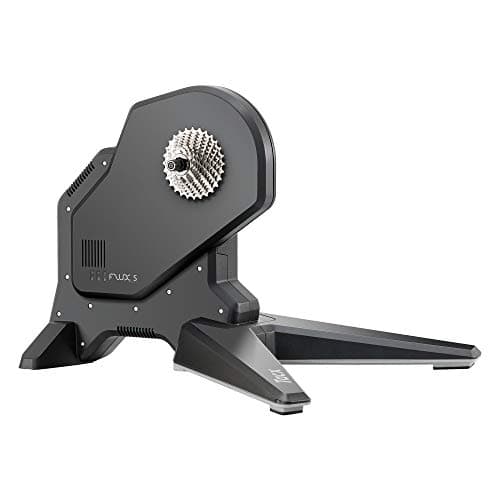
#ad We may earn a commission · Price as of October 21, 2026
A good trainer that has aged into a used-market bargain. Buy it secondhand for the flywheel and the direct drive; do not buy it new, and do not buy it if your numbers have to travel.
- Type
- Direct drive, electromagnetic
- Claimed accuracy
- ±3%
- Max resistance
- 1,500 W
- Max gradient
- 10%
- Flywheel
- 6.7 kg physical, ~25 kg simulated inertia
- Connectivity
- ANT+ FE-C, Bluetooth
What we'd praise
- A heavy 6.7 kg flywheel — the road feel is better than the price band it now sells in
- Direct drive, so the tire and the tire-pressure variable are out of the equation entirely
- Simple, robust and well supported for years; spares and cassette bodies are easy to source
- Widely available secondhand at prices no current direct-drive trainer matches
What we'd flag
- ±3% is the loosest accuracy claim of any trainer we would still recommend
- 10% gradient ceiling is genuinely low — Zwift routes clip it regularly at full difficulty
- 1,500 W ceiling will be met by strong sprinters
- No WiFi, no virtual shifting, no fast data rate
- Discontinued, so buying new means old stock at whatever price a retailer is holding
The Flux S was Tacx's answer to the question of how cheaply a real direct-drive trainer could be built, and its answer was to spend the money on the flywheel and save it on the electronics. That trade has aged unusually well in one respect and badly in another: the ride still feels good, and the ±3% accuracy figure and 10% gradient ceiling are now the lowest numbers in any trainer worth discussing.
It has been superseded twice over — first by the Flux 2, then by the current generation entirely. What keeps it relevant is the secondhand market.
Buy this new instead
Elite Rivo
7.87.8 out of 10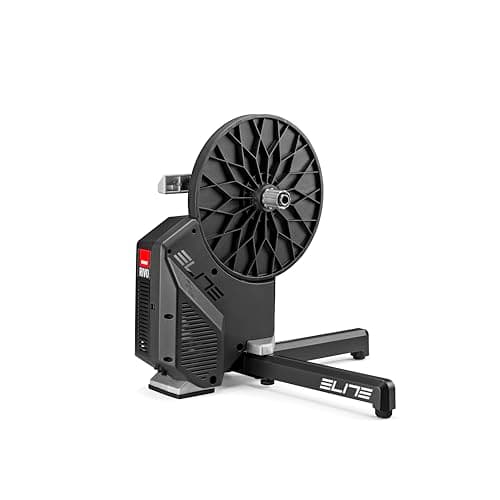
#ad We may earn a commission · Price as of October 21, 2026
The modern equivalent of what the Flux S was for: the cheapest honest way into direct drive, now with WiFi and virtual shifting instead of a heavy flywheel.
- Type
- Direct drive, electromagnetic
- Claimed accuracy
- ±2.5%, estimated power
- Max resistance
- 2,000 W at 40 km/h
- Max gradient
- 18%
- Flywheel
- 4 kg
- Connectivity
- WiFi, Bluetooth, Zwift protocol
What we'd praise
- Onboard WiFi at a price a used Flux S is not far from — a connection that simply does not drop
- 18% gradient ceiling against the Flux S's 10%, which is the specification that actually bites
- Zwift Cog and Click support, so virtual shifting removes the cassette question
- Folds down to a storable size, which the Flux S never did
What we'd flag
- 4 kg flywheel is much lighter, and the ride feel is correspondingly less settled
- Power is estimated at ±2.5% rather than measured
- No ANT+ radio at all, which rules out ANT+-only head units
If the Flux S appeals because it is the cheapest direct-drive trainer you can find, this is the current version of that argument — and it is a genuinely close call. You trade flywheel mass for WiFi, a much higher gradient ceiling and virtual shifting. Full detail in our Elite Rivo review.
Good questions
Frequently asked questions
Is the Tacx Flux S still worth buying?
Secondhand, yes — it is one of the cheapest ways to get a real direct-drive trainer with a heavy 6.7 kg flywheel, and it rides better than its price suggests. New, no: old stock at retail money is beaten on accuracy, gradient ceiling and connectivity by current entry-level trainers like the Elite Rivo and Wahoo Kickr Core 2.
How accurate is the Tacx Flux S?
Tacx claims ±3%, which is about seven and a half watts at 250 W and the loosest figure among trainers still worth recommending. For training against your own history it is fine, because consistency matters more than absolute truth. It is a real handicap for Zwift racing or for matching an outdoor power meter.
Is the Flux S's 10% gradient limit a problem?
It can be. Ten percent is low enough that Zwift routes exceed it regularly at 100% trainer difficulty, and when that happens the trainer simply stops getting harder, so a steep ramp feels flatter than it should. Most riders run trainer difficulty around 50%, which halves the simulated gradient and keeps them inside the limit on almost everything.
What is the difference between the Tacx Flux S and the Flux 2?
The Flux 2 is the higher-specified model, with more resistance, a heavier flywheel, a tighter accuracy claim and a higher gradient ceiling. The Flux S was the cut-down version built to a price, spending its budget on the flywheel rather than the electronics.
What should I check when buying a used Tacx Flux S?
Three things. Which freehub body is fitted, since that decides whether your cassette will mount at all. Whether it sounds clean under load, because bearings are the usual failure. And whether it will complete a spindown calibration — it needs calibrating manually, and a unit that cannot is telling you something. Confirm the power supply is included.
Does the Tacx Flux S have WiFi?
No. It connects over ANT+ FE-C and Bluetooth. WiFi has since become available on trainers costing less than a Flux S did new, and it is the most useful thing missing — it removes the dropouts and failed ERG sessions that Bluetooth causes in a crowded room.
How we sourced this
Keep going