The Supporting Cast
The Best Cassettes for Smart Trainers
Direct drive means your trainer needs a cassette. Getting the speed count, freehub and ratio right is the difference between a setup that works and an evening lost to the wrong box.
The short answer
Quick picks
| # | Product | Best for | Score | Price |
|---|---|---|---|---|
| 1 | 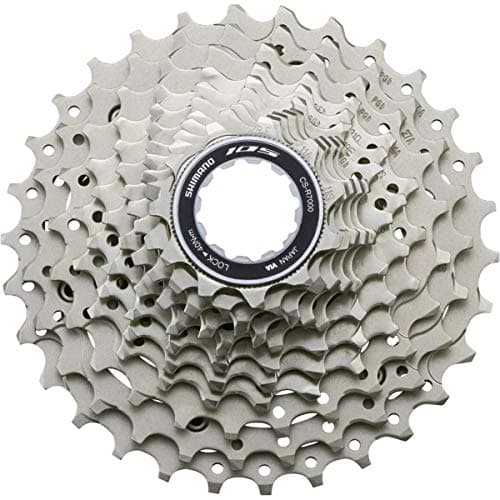 Shimano 105 CS-R7000 The default cassette for a trainer: right speed count for most bikes on the road, right freehub for most trainers, right price for a part that never gets wet. | Best cassette for 11-speed setups | 8.68.6 out of 10 | |
| 2 | 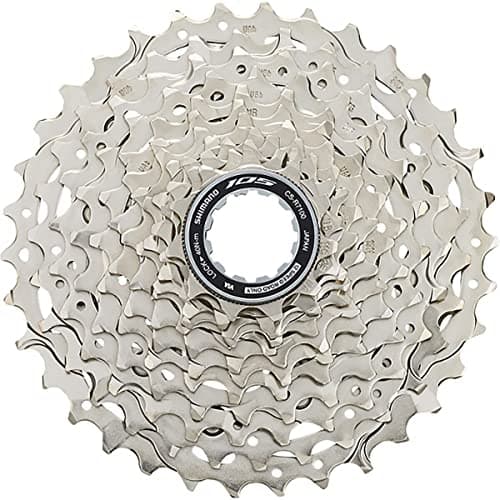 Shimano 105 CS-R7101 The sensible 12-speed choice: the same reasoning as the 11-speed 105, one cog further along. | Best 12-speed cassette for the money | 8.28.2 out of 10 | $80.00 · View on Amazon #ad We may earn a commission · Price as of October 22, 2026 |
| 3 | 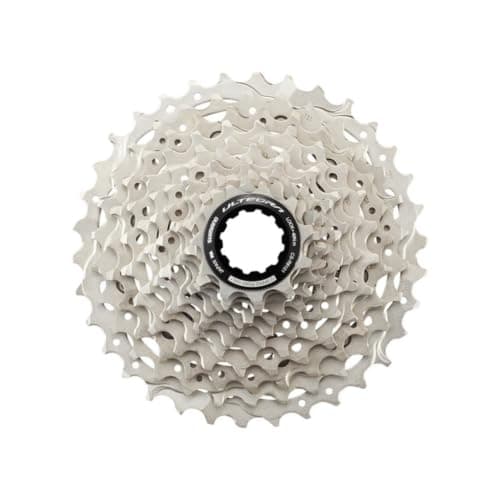 Shimano Ultegra CS-R8101 Worth it only for exact parity with an Ultegra road wheel — otherwise the 105 does the same job indoors for less. | Best 12-speed if you want the same as your road wheel | 7.97.9 out of 10 | $124.65 · View on Amazon #ad We may earn a commission · Price as of October 22, 2026 |
| 4 | 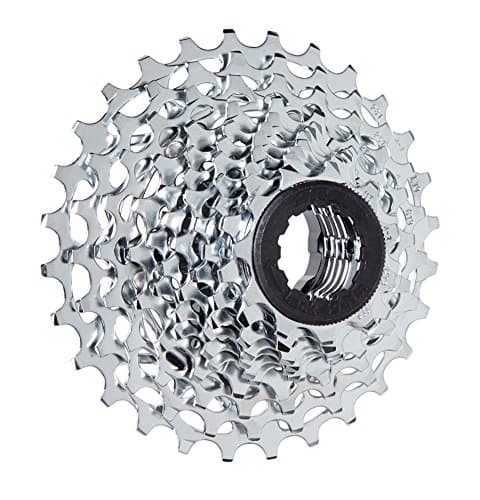 SRAM PG-1130 The SRAM 11-speed answer — but check carefully, because SRAM's 12-speed road groups need a completely different freehub. | Best for SRAM 11-speed drivetrains | 7.77.7 out of 10 | |
| 5 | 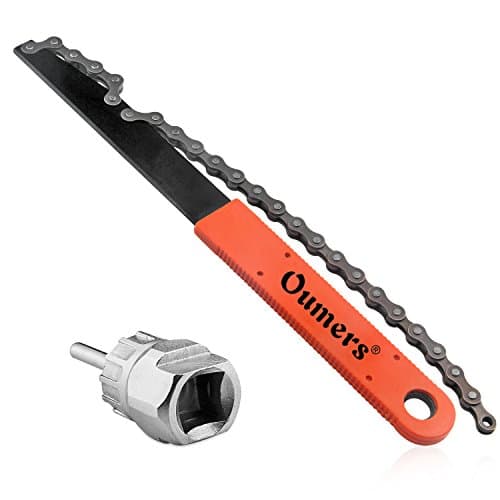 Oumers Cassette Removal Tool Kit Two cheap tools that turn a trip to the bike shop into a job you do while the kettle boils. | The tools the trainer does not come with | 8.08.0 out of 10 | $12.99 · View on Amazon #ad We may earn a commission · Price as of October 22, 2026 |
A direct-drive trainer takes the place of your rear wheel, which means it also takes the place of your cassette. Some ship with one fitted, some ship bare, and a growing number ship with a single cog for virtual shifting instead. If yours needs a cassette, three things have to line up, and getting any of them wrong means a part that physically will not work.
This page is the short version of that decision, with the picks that cover the great majority of bikes.
Speed count: the one that stops the bike working
Chains and cassettes are built as a system. An 11-speed chain is wider than a 12-speed chain, and the sprocket spacing differs to match. Put an 11-speed chain on a 12-speed cassette and the chain will not sit properly in the cogs; the indexing will be wrong at every shift and both parts will wear rapidly.
There is no adapter and no workaround. Count the sprockets on your rear wheel before ordering — it takes ten seconds and it is the single most common ordering mistake in this category.
Freehub body: where the money gets lost
The freehub is the splined part of the trainer that the cassette slides onto, and there is more than one standard.
Shimano HG is the default and what almost every trainer ships with. It takes Shimano 8-, 9-, 10- and 11-speed, Shimano 12-speed road, and SRAM 11-speed road.
SRAM XDRis required for SRAM's 12-speed AXS road groups. It is physically different and an HG cassette will not fit it. If your bike is SRAM AXS, you need an XDR freehub body for your trainer, sold separately by the trainer manufacturer. Budget for it before you buy the trainer, not after.
Shimano Micro Spline is the mountain-bike 12-speed standard, and again a separate body. If you plan to put a modern mountain bike on the trainer, check this.
| Your drivetrain | Cassette to buy | Freehub needed | Notes |
|---|---|---|---|
| Shimano 11-speed road | Shimano 105 CS-R7000 | Shimano HG | The most common setup by far |
| SRAM 11-speed road | SRAM PG-1130 or Shimano 105 11sp | Shimano HG | Spacing is interchangeable in practice |
| Shimano 12-speed road | 105 CS-R7101 or Ultegra CS-R8101 | Shimano HG, 12-speed road | Check the trainer body supports it |
| SRAM 12-speed AXS road | SRAM XDR cassette | SRAM XDR — separate part | HG cassettes will not fit |
| Shimano 12-speed mountain | Micro Spline cassette | Micro Spline — separate part | Check before buying the trainer |
| Any, with virtual shifting | None — a single cog | As supplied | Removes the whole question |
Mountain bikers get the worst of the freehub problem, because SRAM Eagle needs an XD body and Shimano 12-speed needs Micro Spline, which Wahoo does not make at all. Our mountain bike trainer roundup lists which makers sell which bodies and Wahoo's documented cassette workaround.
Ratio: match your road wheel, not the biggest range you can find
Nothing breaks if your trainer cassette has a different ratio spread from your road wheel, but something subtly annoying happens: the gear numbers on your shifter stop meaning the same thing. The gear that gives you 90 rpm at threshold outdoors gives you something else indoors, and after a winter of that, your first outdoor ride feels wrong.
The fix is trivially easy at the point of purchase. Read the numbers stamped on your road cassette — usually the smallest and largest sprocket, like 11-28 or 11-30 — and buy the same. If you cannot get the exact match, the closest available is fine; what you want to avoid is jumping from an 11-28 to an 11-36.
The wider range does not help indoors either. On a smart trainer the app controls the resistance, so an easier bailout gear is far less useful than it is on a real climb — and in ERG mode your gear choice barely matters at all.
The virtual shifting alternative
A growing number of trainers now support virtual shifting — Zwift Cog and Click and similar systems — where the trainer runs a single cog and your gears are changed in software rather than by the derailleur. Elite's Rivo supports it, and several Wahoo units ship in cog-based versions.
If your trainer supports it, it genuinely removes this entire page from your life. No cassette to buy, no speed count to match, no freehub standard to check, no lockring tool, and no chain crossover noise because the chain sits on one cog all ride. The trade-offs are that it works properly only in supported apps, and that your shifting feel is a software approximation rather than a mechanical one.
For a rider whose bike is 11-speed now and might be 12-speed next year, that is a real advantage — the trainer stops caring what drivetrain you own.
Should you buy an expensive cassette?
No, with one exception. A trainer cassette lives indoors, never sees water, salt or grit, and turns in a perfectly straight line under a controlled load. Every reason to buy a premium cassette outdoors — corrosion resistance, weight, crisp shifting under mud — is either irrelevant or a non-issue in that environment. A 105-level cassette will outlast the trainer.
The exception is parity. If you move a wheel between the trainer and the road frequently, or you want indoor and outdoor shifting to feel absolutely identical, matching your road cassette exactly is worth the extra. That is a preference, not a performance argument, and it is fine to have it.
Fitting it, briefly
Slide the sprockets onto the freehub splines — they are asymmetric so there is only one correct orientation — keeping any spacers in the order they came out. Thread on the lockring and tighten firmly with the lockring tool. A chain whip is only needed to remove a cassette, not to fit one.
The full sequence in context, including axle adapters, leveling the bike and calibration, is in our smart trainer setup guide. If you would rather not own the tools, most bike shops will fit a cassette in a few minutes for roughly what the tools cost — the tools win the second time you need them.
The virtual shifting route now has its own page: Zwift Cog vs cassette compares the two setups on compatibility, tools, noise and app support.
The full reviews
Every pick, in detail
#1 · Best cassette for 11-speed setups
Shimano 105 CS-R7000
8.68.6 out of 10The default cassette for a trainer: right speed count for most bikes on the road, right freehub for most trainers, right price for a part that never gets wet.
- Speeds
- 11
- Group level
- 105
- Freehub
- Shimano HG
- Ratios
- Several, including 11-28 and 11-30
- Compatible with
- Shimano and most SRAM 11-speed road drivetrains
- Use
- Fits directly to a standard trainer freehub
What we'd praise
- Matches the drivetrain on an enormous share of road bikes still in daily use
- 105 is the sweet spot of durability and price for a cassette that never sees weather
- Fits the Shimano HG freehub body that comes on most direct-drive trainers as standard
- Available in several ratios so you can match your road wheel exactly
- Shimano 11-speed road spacing also works with most SRAM 11-speed road drivetrains
What we'd flag
- No use at all on a 12-speed bike — speed count must match your chain and shifters
- Needs a lockring tool and something to turn it, which do not come with the trainer
- Ratio choice matters: a different range from your road wheel changes how the gears feel
Eleven-speed road remains the most common drivetrain on bikes actually being ridden, and 105 is the level that makes sense on a trainer. A cassette bolted to a trainer never sees rain, grit or salt; it lives in a warm room and turns in a straight line. Paying for lighter, more expensive materials buys you nothing in that environment.
Get the ratio right and this becomes invisible in the best way. If your road wheel runs 11-28, buy an 11-28 — then every gear indexes to the same ratio indoors as out, and your cadence at a given effort feels identical. Buy an 11-32 by accident and you will spend all winter in a slightly different gear than you think you are in. Fitting is covered in our smart trainer setup guide.
#2 · Best 12-speed cassette for the money
Shimano 105 CS-R7101
8.28.2 out of 10#ad We may earn a commission · Price as of October 22, 2026
The sensible 12-speed choice: the same reasoning as the 11-speed 105, one cog further along.
- Speeds
- 12
- Group level
- 105
- Ratio
- 11-34T as listed
- Freehub
- Shimano HG, 12-speed road
- Compatible with
- Shimano 12-speed road drivetrains
- Finish
- Silver
What we'd praise
- The affordable way to put a 12-speed cassette on a trainer without buying Ultegra
- 11-34 range covers the gradients any virtual world will throw at you
- Fits the Shimano 12-speed road freehub, which most current trainers support
- 105-level construction is more than adequate for indoor-only use
What we'd flag
- 11-34 is a wider range than many road wheels, so gear feel will differ if yours is 11-30
- Shimano 12-speed road spacing does not interchange with SRAM 12-speed AXS
- Check your trainer's freehub body is 12-speed road compatible before ordering
If your bike is a recent Shimano 12-speed build, this is the equivalent decision to the 105 above and the same logic applies. There is no benefit to putting an expensive cassette on a trainer, and 105 is the level where durability stops being a question.
The one thing to check before ordering is your trainer's freehub. Shimano's 12-speed road cassettes need a 12-speed road compatible HG freehub body, and trainers manufactured before that standard arrived may need a replacement body — which is a cheap part but one you do not want to discover on the evening the trainer lands. Also note the 11-34 range: if your road wheel is 11-30, gears will not feel identical between the two.
#3 · Best 12-speed if you want the same as your road wheel
Shimano Ultegra CS-R8101
7.97.9 out of 10#ad We may earn a commission · Price as of October 22, 2026
Worth it only for exact parity with an Ultegra road wheel — otherwise the 105 does the same job indoors for less.
- Speeds
- 12
- Group level
- Ultegra
- Ratio
- 11-34T as listed
- Freehub
- Shimano HG, 12-speed road
- Build
- Lighter and better finished than 105
- Compatible with
- Shimano 12-speed road drivetrains
What we'd praise
- Matches an Ultegra road wheel exactly, so shifting behavior is identical indoors and out
- Better machined and finished than 105, with a small weight saving that does not matter here
- The obvious buy if you are moving a cassette between wheel and trainer regularly
- Very long service life in an indoor-only application
What we'd flag
- Costs meaningfully more than 105 for advantages that are irrelevant on a trainer
- Weight saving is pointless on a part bolted to a stationary machine
- Same freehub compatibility check as any Shimano 12-speed cassette
We are ranking this third rather than first deliberately. Ultegra is a better cassette than 105 in ways that matter outdoors — a little lighter, a little better finished, marginally crisper under load. On a trainer, in a warm room, turning in a straight line, none of that changes your experience.
There is one genuinely good reason to buy it: parity. If your road wheel runs an Ultegra 11-34 and your trainer runs the same, shifting feels identical and you can move a wheel between them without thinking. For a rider who switches indoors and outdoors constantly through a winter, that consistency is worth something. For everyone else, buy 105 and put the difference into a fan.
#4 · Best for SRAM 11-speed drivetrains
SRAM PG-1130
7.77.7 out of 10The SRAM 11-speed answer — but check carefully, because SRAM's 12-speed road groups need a completely different freehub.
- Speeds
- 11
- Ratio
- 11-28T as listed
- Cog range
- 11-12-13-14-15-16-17-19-22-25-28
- Freehub
- Shimano HG pattern
- Compatible with
- SRAM 11-speed road setups
- Not compatible with
- SRAM 12-speed AXS, which needs an XDR freehub
What we'd praise
- The straightforward answer for a SRAM 11-speed bike, on a standard HG freehub
- 11-28 is the ratio most road bikes already run, so indoor gearing matches your outdoor wheel
- Fits the same freehub body as Shimano 11-speed, so no trainer parts to change
- Durable enough to outlast several seasons of indoor use easily
What we'd flag
- A 28T bottom gear is tighter than an 11-32 or 11-34, which matters if you like grinding simulated climbs
- Absolutely not compatible with SRAM 12-speed AXS, which requires an XDR freehub body
- Costs more than the equivalent Shimano 105 for no indoor advantage
SRAM 11-speed road uses the same Shimano HG freehub pattern and broadly the same spacing, which makes this a simple swap onto a standard trainer freehub. If your bike is SRAM Rival, Force or Red in an 11-speed generation, this is the part.
The critical warning is about the generation after it. SRAM's 12-speed AXS road groups use an XDR freehub body, which is a different standard and physically will not accept an HG cassette. If your bike is AXS, you need an XDR freehub body for your trainer before any cassette conversation happens — that is a separate part, usually sold by your trainer manufacturer, and it is the single most common expensive surprise in this whole category.
#5 · The tools the trainer does not come with
Oumers Cassette Removal Tool Kit
8.08.0 out of 10#ad We may earn a commission · Price as of October 22, 2026
Two cheap tools that turn a trip to the bike shop into a job you do while the kettle boils.
- Includes
- Chain whip and lockring tool
- Pattern
- Shimano HG lockrings
- Also needs
- Adjustable wrench or large socket
- Used for
- Fitting and removing cassettes
- Frequency
- Once at setup, then rarely
- Alternative
- A shop fitting, for roughly the same money
What we'd praise
- Cheaper than a single shop visit, and you keep the tools afterwards
- The same tools service your road wheel, so nothing here is single-purpose
- Makes moving a cassette between wheel and trainer a ten-minute job
- Chain whip is only needed for removal, so fitting a new cassette is even simpler
What we'd flag
- The lockring tool needs an adjustable wrench or socket you may not own
- Budget chain whips flex under load and can slip if the chain is not seated properly
- Factory lockrings are tightened hard — the first removal takes real force
A cassette is held on by a threaded lockring. Removing one needs a splined lockring tool to undo the ring and a chain whip to stop the cassette spinning while you do it. Fitting one only needs the lockring tool. Neither is expensive and both stay useful for as long as you own a bike.
The detail that catches people out: the lockring tool is a splined socket, and it needs something to turn it — an adjustable wrench or a large socket wrench. Buy the kit alone and you will get halfway through the job and stop. The second thing worth knowing is that factory lockrings are done up hard, so brace the trainer or wheel properly and use steady pressure rather than a jerk.
Good questions
Frequently asked questions
What cassette do I need for my smart trainer?
One that matches your chain's speed count, fits your trainer's freehub body, and ideally matches the ratio of your road cassette. For most riders that means a Shimano 105 11-speed or 12-speed on a standard HG freehub. Count your sprockets and read the numbers on your road cassette before ordering.
Do smart trainers come with a cassette?
It varies by model and by version. Some ship with a cassette fitted, some ship bare, and an increasing number ship with a single cog for virtual shifting instead. Check exactly which version you are ordering, since it changes whether you need to buy anything at all.
Will a SRAM AXS cassette fit my trainer?
Only if the trainer has an XDR freehub body. SRAM's 12-speed AXS road groups use XDR, which is physically different from the Shimano HG body most trainers ship with, and an HG cassette will not fit an XDR body or the reverse. The XDR body is a separate part sold by your trainer manufacturer.
Does my trainer cassette need to match my road cassette?
It must match the speed count. Matching the ratio as well is strongly recommended but not required — if your road wheel is 11-28 and your trainer is 11-32, every gear indexes to a different ratio indoors, so your cadence at a given effort will not feel the same.
What tools do I need to fit a cassette to a trainer?
A splined lockring tool and something to turn it, such as an adjustable wrench or a large socket. A chain whip is needed only to remove an existing cassette, not to fit a new one. Both tools are inexpensive and also service your road wheel.
Is a Zwift Cog better than a cassette?
For many riders, yes. A single cog with virtual shifting removes the speed-count question, the freehub standard question, the tools and the chain crossover noise entirely. The trade-offs are that it works properly only in supported apps and that the shifting feel is a software approximation.
How we sourced this
Keep going