The Supporting Cast
The Best Trainer Tires, Ranked
A wheel-on trainer eats road tires and coats your floor in black dust. Here are the tires built for the job, the honest cheap alternative, and who should skip all of it.
The short answer
Quick picks
| # | Product | Best for | Score | Price |
|---|---|---|---|---|
| 1 | 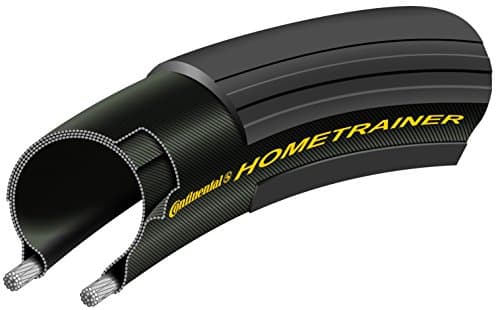 Continental Hometrainer The default answer: a purpose-made compound that survives drum heat, sheds little dust and lasts several winters. | Best trainer tire overall | 8.78.7 out of 10 | |
| 2 | 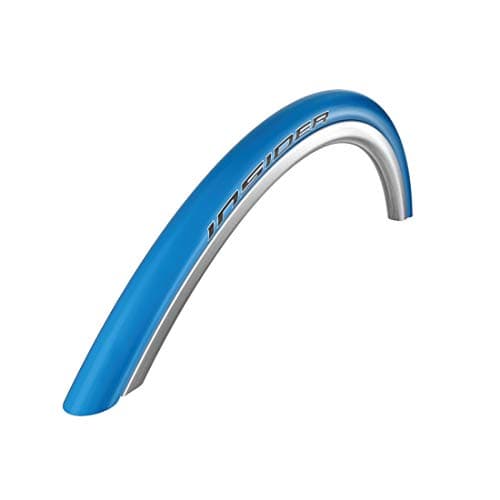 Schwalbe Insider Trainer Buy this one if you are on a wheel-on trainer most weeks of the year and want to stop thinking about tires entirely. | Longest-lasting option | 8.48.4 out of 10 | $141.46 · View on Amazon #ad We may earn a commission · Price as of October 21, 2026 |
| 3 | 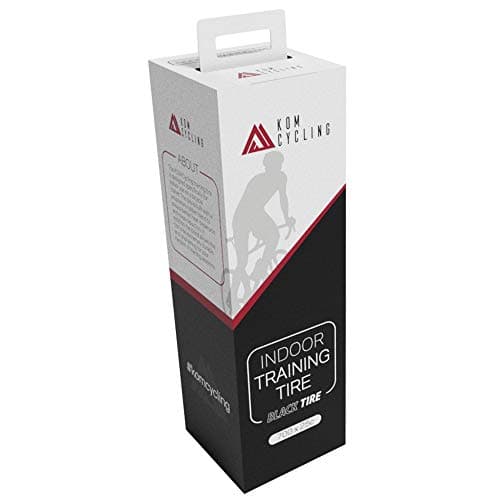 KOM Cycling Indoor Trainer Tire The sensible-money pick in the width most modern road bikes actually run — a real trainer compound without a premium badge. | Best value trainer tire | 8.38.3 out of 10 | $34.99 · View on Amazon #ad We may earn a commission · Price as of October 21, 2026 |
| 4 | 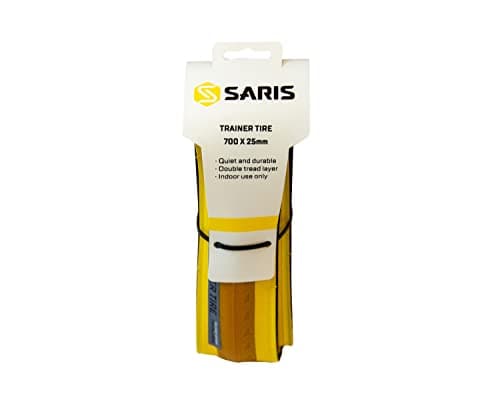 Saris Indoor Trainer Tire The cheap one that gets the important thing right: it is unmistakably not a road tire, and you will never forget that mid-swap. | Cheapest dedicated trainer tire | 8.18.1 out of 10 | |
| 5 | 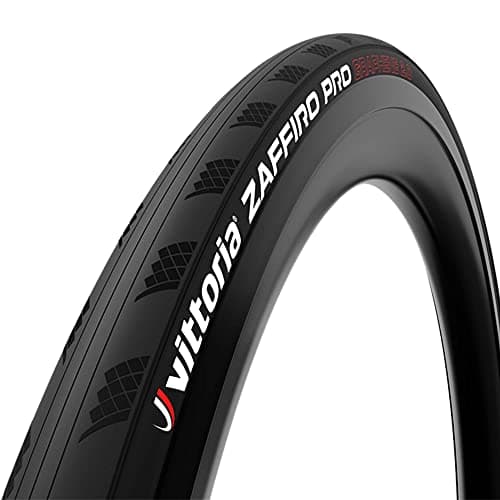 Vittoria Zaffiro Pro G2.0 Not a trainer tire, and included honestly as the alternative most riders actually use — good for low indoor volume, expensive for high. | The sacrificial road tire alternative | 6.56.5 out of 10 | $38.93 · View on Amazon #ad We may earn a commission · Price as of October 21, 2026 |
Assuming you are still here: a wheel-on trainer presses your rear tire against a spinning drum with real force, and holds it there for an hour at a time. That is a completely different environment from a road. There is no cooling airflow, no cornering, no impacts, and the same narrow strip of rubber is in contact with hot metal for the entire ride.
Road tires handle it badly. They are built from softer compounds designed for grip and comfort, and under sustained drum contact they heat up, soften, shed rubber and glaze over. What you notice first is the black dust — on the trainer, on the floor, eventually on the wall behind. What you notice second is a tire that is worn out after one winter.
What actually makes a trainer tire different
A harder compound. It gives up all its wet grip, because it does not need any. What it gains is resistance to heat and abrasion, which is the entire job.
A completely slick tread. Any tread pattern is just texture humming against a drum. Slick is quieter and gives a consistent contact patch, which also means more consistent virtual-power readings on a trainer that estimates from wheel speed.
Often a bright color. This is a safety feature, not styling. A trainer tire on the road in the wet is genuinely dangerous, and a yellow, blue or red tire makes that mistake impossible to make absentmindedly.
| Tire | Size | Purpose-built? | Color | Best for | Road safe? |
|---|---|---|---|---|---|
| Continental Hometrainer | 700 x 23c | Yes | Black | Overall | No |
| Schwalbe Insider Trainer | 700 x 23c | Yes | Blue | Highest volume riders | No |
| KOM Cycling Indoor Trainer Tire | 700 x 25c | Yes | Black | Best value | No |
| Saris Indoor Trainer Tire | 700 x 25c | Yes | Yellow | Cheapest dedicated option | No |
| Vittoria Zaffiro Pro G2.0 | 700 x 25c | No — road tire | Black | Low indoor volume | Yes |
How we ranked them
We do not have a wear-test rig and we will not publish mileage figures we did not measure — our how we review page sets out that policy. What we did was compare each tire on the attributes that determine performance in this specific application: whether the compound is purpose-made for indoor use, the tread pattern, the width relative to modern rims, and whether the product carries a visual indoor-only cue. Then we scored durability, quietness, heat resistance and value.
We have also included one product that is deliberately not a trainer tire, because a large share of riders use a cheap road tire instead and a roundup that pretends otherwise is not much use. It is ranked last, with the reasons stated.
Width: check your rim, not your habit
Road bikes and rims have both widened over the last decade. A 700 x 23c tire on a modern wide rim sits with a slightly bulged profile and presents a different contact patch to the drum than the trainer was designed around. If your bike currently runs 25c or 28c tires, a 25c trainer tire is the better match.
Going wider than 25c on a trainer is generally unnecessary — a wider contact patch means more heat and more drag with no benefit, since you are not looking for comfort over road surfaces that do not exist. Check what your outdoor tire says on the sidewall and match it, or go one size narrower.
The dedicated wheel trick
The single best quality-of-life upgrade for a wheel-on setup is not a better tire, it is a second wheel. Keep an old rear wheel with a trainer tire and a matching cassette permanently mounted, and switching between indoor and outdoor riding becomes a thirty-second wheel swap instead of a tire change.
It removes the two real risks at once: you never accidentally ride a trainer tire outdoors, and you never wear your good tire on a drum. Any serviceable old wheel does — it does not need to be light, aerodynamic or even particularly true, because it is only ever going to spin in a straight line at a fixed point. Match the cassette ratio to your road wheel and the gearing stays identical; our cassette guide covers matching.
Getting the setup right so the tire lasts
Three habits do most of the work. Set roller tension consistently — most trainers specify a number of turns past first contact, and over-tightening is the fastest way to destroy a tire while also making your virtual power read high. Pump to the same pressure every ride, since pressure changes both wear and, on a virtual-power trainer, your numbers. Wipe the drum occasionally, because accumulated rubber on the roller increases abrasion and noise.
And do not chase performance here. A trainer tire is a consumable in a fixed application; there is no rolling-resistance advantage to buy and nothing that will make you faster. Spend the attention on the things that do: our accessories checklist and fan roundup cover the purchases that actually change how your indoor riding feels.
When the answer is to stop buying tires
If you are on your second or third trainer tire, it is worth doing the sum. Trainer tires, a spare wheel, tire wear on your good rubber and the dust in the room all add up, and the thing they are all working around is that your bike's tire should not be part of the machine at all.
A direct-drive trainer removes the tire, most of the noise and all of the dust in one purchase. The gap between a good wheel-on setup and the cheapest direct-drive trainer has narrowed considerably — our direct drive vs wheel-on comparison makes the case honestly, and best budget smart trainers shows what the entry tier costs.
Not certain you need one? Do I need a trainer tire answers it by trainer type — the short version is that direct-drive riders do not need one at all.
The full reviews
Every pick, in detail
#1 · Best trainer tire overall
Continental Hometrainer
8.78.7 out of 10The default answer: a purpose-made compound that survives drum heat, sheds little dust and lasts several winters.
- Size
- 700 x 23c
- Bead
- Folding
- Compound
- Dedicated trainer compound
- Tread
- Slick
- Color
- Black
- Use
- Indoor only
What we'd praise
- The reference trainer tire — the one most wheel-on riders end up on after trying alternatives
- Folding bead makes it easy to keep a spare in a drawer and swap seasonally
- Purpose-built compound resists the heat a resistance drum generates far better than a road tire
- Sheds dramatically less rubber dust than a road tire, which is the mess nobody warns you about
What we'd flag
- Black, so there is no visual reminder that this wheel must not go outside
- 700 x 23c only in this listing, which is narrow if your bike runs 28s or wider rims
- Genuinely dangerous on the road — the compound is not designed for grip on tarmac
If you ride a wheel-on trainer regularly, this is the tire the category is measured against. A road tire is designed to grip wet tarmac and absorb impacts; a trainer tire is designed to be squeezed against a hot steel or elastogel drum for hours without softening, glazing or disintegrating into black dust. Those are different jobs and different compounds.
The folding bead is a practical detail worth having: it means the tire packs flat, so keeping a dedicated indoor wheel with this on it is easy, and swapping between indoor and outdoor rubber takes minutes. The one thing to be clear about is that this is an indoor-only tire and the black sidewall gives you no reminder of that. Label the wheel. If you have a direct-drive trainer, you do not need this at all — see the section below.
#2 · Longest-lasting option
Schwalbe Insider Trainer
8.48.4 out of 10#ad We may earn a commission · Price as of October 21, 2026
Buy this one if you are on a wheel-on trainer most weeks of the year and want to stop thinking about tires entirely.
- Size
- 700 x 23c
- Bead
- Folding
- Type
- Tube type
- Compound
- PerformanceLine indoor compound
- Color
- Blue, marked inside use only
- Use
- Indoor only
What we'd praise
- Built around durability, which is the specification that matters most for a tire that never turns a corner
- Folding bead for easy storage and seasonal swaps
- Schwalbe's dedicated indoor compound handles sustained drum heat without glazing
- Blue sidewall printed inside use only, so the tire tells you what it is every time you look at it
What we'd flag
- By far the most expensive tire here, and a trainer tire is not a performance purchase
- Tube type, so this is not a route into a tubeless indoor setup
- 700 x 23c only, which is narrow if your bike runs 28s or wider rims
- Overkill if your indoor riding is a handful of sessions a winter
There is a straightforward calculation behind this pick. A trainer tire does not need grip, puncture protection, rolling resistance or cornering stability — it needs to survive being pressed against a hot drum for hundreds of hours. Durability is essentially the only axis worth paying for, and this is the durable one.
Whether that is worth the premium depends entirely on volume, and the premium here is large — this tire costs several times what the Saris does. A rider doing four sessions a week from October to March will get through a cheap tire and be glad of the upgrade. A rider doing the occasional rainy-day hour will not notice the difference. If you are in the second group, buy the Saris and spend the difference on a fan.
#3 · Best value trainer tire
KOM Cycling Indoor Trainer Tire
8.38.3 out of 10#ad We may earn a commission · Price as of October 21, 2026
The sensible-money pick in the width most modern road bikes actually run — a real trainer compound without a premium badge.
- Size
- 700 x 25c
- Compound
- Proprietary indoor compound
- Tread
- Slick
- Claimed benefit
- Quiet running, long life
- Fit
- Common 700c road rims
- Use
- Indoor only
What we'd praise
- 700 x 25c suits modern road rims better than a 23c, which is the more common width now
- Priced at the value end while still being a purpose-made indoor compound rather than a road tire
- Marketed specifically on quiet running, which is the second reason to buy a trainer tire
- Slick tread means no knobbles humming against the drum
What we'd flag
- Smaller brand with less long-term reliability history than Continental or Schwalbe
- One width only, so wider rims or 28c setups are out
- Like every trainer tire, unsafe on the road — no exceptions
The width matters more than people expect. Road bikes have moved decisively to 25c and wider, and rims have widened with them, so a 23c trainer tire on a modern wide rim sits with a slightly odd profile and a smaller contact patch than the roller expects. A 25c is the more natural fit for most bikes bought in the last decade.
KOM sell this on quietness and longevity, and the mechanism behind both is the same: a harder, slick compound that does not deform or shed as it heats. It is not a premium tire and does not pretend to be. If you want the longest-lasting option, the Schwalbe below is the upgrade; if you want the cheapest dedicated one, the Saris is.
#4 · Cheapest dedicated trainer tire
Saris Indoor Trainer Tire
8.18.1 out of 10The cheap one that gets the important thing right: it is unmistakably not a road tire, and you will never forget that mid-swap.
- Size
- 700 x 25c
- Color
- Yellow
- Compound
- Trainer-specific
- Tread
- Slick
- Visual cue
- Bright color signals indoor-only
- Use
- Indoor only
What we'd praise
- The bright yellow is a genuine safety feature — you will never absentmindedly ride this outside
- Cheapest purpose-made trainer tire here, and a real trainer compound rather than a discounted road tire
- 700 x 25c, which is the right width for most current road bikes
- From a company that also makes the trainers, so the compound is matched to their drums
What we'd flag
- Not the longest-lasting option — expect to replace it sooner than the Schwalbe
- Yellow looks exactly as odd as it sounds if you care about how the bike looks
- Single width and size, so no options if your setup is unusual
The bright color is not a styling choice, it is the point. The genuine risk with trainer tires is not that they wear out — it is that somebody fits one, forgets, and rides it outside on a wet corner. A trainer compound has no meaningful wet grip, and finding that out at speed is a serious matter. A yellow tire makes the mistake impossible.
Beyond that it is a straightforward, cheap, purpose-built indoor tire in the right width. It will not last as long as the Schwalbe and it does not need to. If you are also running rollers, the same logic applies — rollers scrub a tire in exactly the way a wheel-on trainer does.
#5 · The sacrificial road tire alternative
Vittoria Zaffiro Pro G2.0
6.56.5 out of 10#ad We may earn a commission · Price as of October 21, 2026
Not a trainer tire, and included honestly as the alternative most riders actually use — good for low indoor volume, expensive for high.
- Size
- 700 x 25c
- Type
- Training road tire, not a trainer tire
- Use
- Road legal — and safe outdoors
- Compound
- Road training compound
- Role here
- Cheap tire to sacrifice to the drum
- Trade-off
- Wears faster indoors, sheds more dust
What we'd praise
- A genuine road tire, so a mistaken outdoor ride is not dangerous
- Cheap enough to treat as a consumable if your indoor volume is low
- Useful dual purpose — winter road tire in the week, trainer tire at the weekend
- Sensible answer if you have exactly one wheelset and swap tires often
What we'd flag
- Wears noticeably faster on a drum than a purpose-made trainer tire
- Sheds far more rubber dust, which coats the trainer, the floor and eventually the room
- Softer compound builds and holds more heat under sustained load
- Ends up costing more than a trainer tire if your indoor volume is high
Plenty of riders never buy a trainer tire. They put a cheap road tire on the back, accept that it will wear out faster, and get on with it. That is a legitimate strategy and pretending otherwise would be dishonest, so here is the version of it we would actually recommend: a solid budget training tire, in the common width, from a brand that makes good rubber.
The arithmetic decides it. Below roughly one or two indoor sessions a week, a sacrificial road tire is cheaper and simpler, and it has the significant safety advantage of being road-legal if you forget which wheel is which. Above that, a trainer tire wins outright on cost per hour and on the amount of black dust in your pain cave. And if you are about to buy a new trainer anyway, the whole question disappears with direct drive.
Good questions
Frequently asked questions
Do I need a trainer tire for a direct-drive trainer?
No. A direct-drive trainer replaces your rear wheel entirely, so no tire is involved at all. You need a cassette that matches your drivetrain instead. Trainer tires are only relevant for wheel-on trainers and rollers, where the tire runs against a drum.
Can you ride a trainer tire on the road?
No, and it is genuinely dangerous. Trainer compounds are hardened for heat and abrasion resistance and have very little wet grip, because grip is irrelevant indoors. This is exactly why some trainer tires are made in bright colors — so nobody fits one and forgets.
How long does a trainer tire last?
It depends on your roller tension, tire pressure and how many hours you ride, so any single number would be misleading. What is consistent is that a purpose-made trainer tire lasts several times longer on a drum than a road tire of similar price, and sheds far less rubber dust while doing it.
Is it cheaper to just use an old road tire?
Below roughly one or two indoor sessions a week, usually yes, and it has the safety advantage of being road-legal if you forget which wheel is which. Above that, a trainer tire wins on cost per hour, and it dramatically reduces the black rubber dust that otherwise coats the trainer and floor.
What width trainer tire should I buy?
Match your outdoor tire, or go one size narrower. Modern road rims are wider than they used to be, so a 25c is a better fit than a 23c on most bikes bought in the last decade. Going wider than 25c adds heat and drag with no benefit indoors.
Why does my wheel-on trainer make so much black dust?
Because a soft road compound is being abraded against a drum with no cooling airflow. A dedicated trainer tire uses a harder compound that resists that abrasion, which is why it sheds far less. Over-tightening the roller against the tire makes the problem substantially worse.
How we sourced this
- Continental bicycle tire range and specifications (manufacturer)
- Vittoria tire range and compounds (manufacturer)
- Schwalbe Insider trainer tire specifications (manufacturer)
- Saris trainer accessories and indoor trainer tire (manufacturer)
- Wheel-on trainer setup, roller tension and tire wear (DC Rainmaker)
Keep going