Head to Head
Direct Drive vs Wheel-On Trainers
The decision that shapes every other indoor purchase. What the tire actually costs you in accuracy, noise and feel — and the four cases where wheel-on is still the right answer.
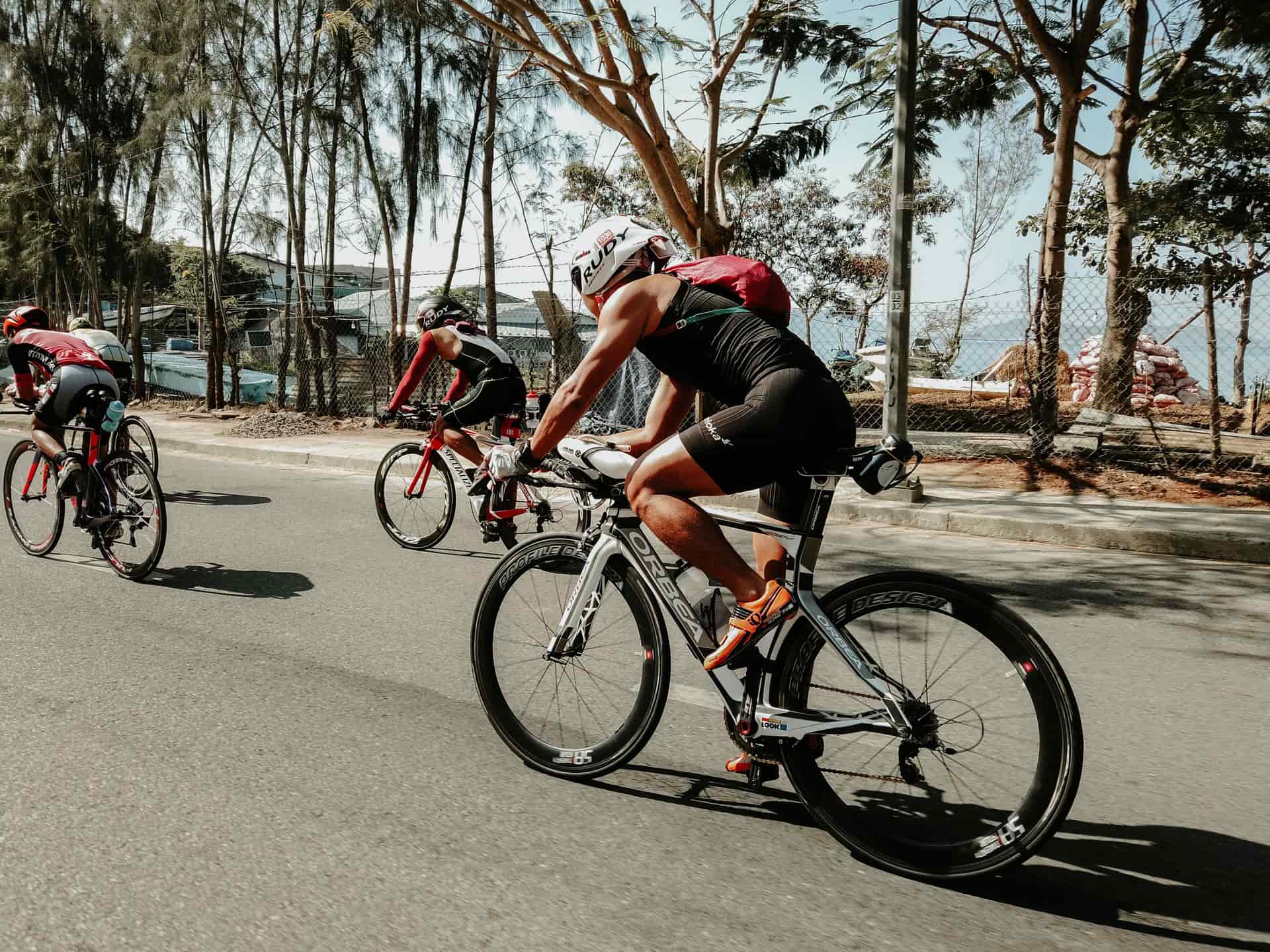
The short answer
Quick picks
| # | Product | Best for | Score | Price |
|---|---|---|---|---|
| 1 | 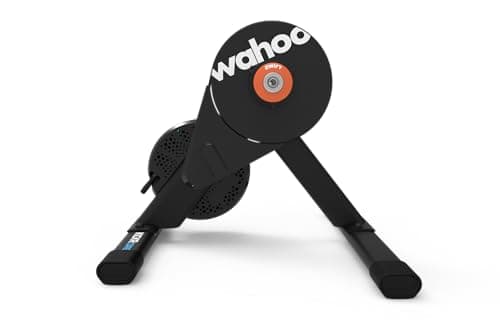 Wahoo Kickr Core 2 The trainer the whole direct-drive value conversation is benchmarked against: measured power, a planted ride and no tire in the loop. | The direct-drive benchmark | 9.09.0 out of 10 | $549.99 · View on Amazon #ad We may earn a commission · Price as of October 21, 2026 |
| 2 | 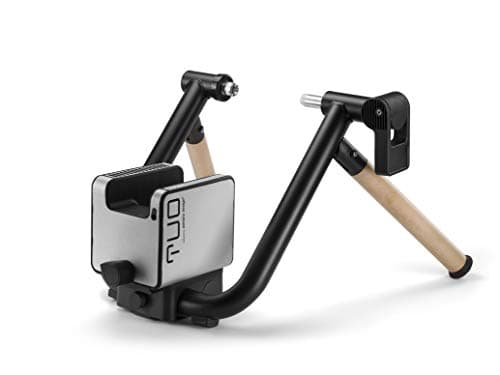 Elite Tuo The best case for wheel-on: real app control and a claimed ±2.5% for a fraction of direct-drive money, with the tire still in the loop. | The wheel-on benchmark | 7.67.6 out of 10 | $149.99 · View on Amazon #ad We may earn a commission · Price as of October 21, 2026 |
Every other indoor decision follows from this one. A direct-drive trainer has you remove the rear wheel and bolt the bike onto a cassette fitted to the trainer's own freehub. A wheel-on trainer leaves the wheel where it is and presses a resistance roller against the tire. That single mechanical difference propagates into accuracy, noise, feel, running costs and how likely you are to actually get on the bike on a Tuesday in February.
Why the tire changes the numbers
A wheel-on trainer cannot measure your power at the source. It infers load from what is happening at the roller, and between your legs and that roller sits a rubber contact patch that changes shape with pressure, temperature and wear. Elite quotes ±2.5% for the Tuo, and that figure is real — under the conditions the manufacturer specifies. The conditions include a correctly tensioned roller, a consistent tire pressure and a spindown calibration performed after the tire has warmed up.
A direct-drive trainer has no such dependency. The chain drives a cassette that drives the trainer's own flywheel, and the strain measurement happens inside a sealed unit whose geometry does not change between Tuesday and Thursday. That is why direct-drive units can quote ±2% and flagships ±1%, and why those numbers hold up across a season without you doing anything. Our accuracy guide unpacks what those tolerances actually mean for training.
| Direct drive | Wheel-on | |
|---|---|---|
| Typical claimed accuracy | ±1% to ±2% | ±2.5% to ±3% |
| Accuracy holds without maintenance | Yes | No — pressure and tension dependent |
| Noise under load | Low — drivetrain only | Higher — tire on drum |
| Tire wear | None | Real, ongoing |
| Road feel | Planted, heavier flywheel | Lighter, more surge |
| Time to mount the bike | 2-5 minutes | Under a minute |
| Setup complexity | Cassette, axle adapters | Clamp the skewer, tension the roller |
| Max resistance / gradient | Higher on both | Lower on both |
| Purchase price | Higher | Lower |
Noise is a bigger deal than the spec sheets admit
The loudest thing in most pain caves is not the trainer, it is the tire. A knobbly or worn road tire against a steel drum produces a rising hum that carries through floors, and it gets worse as the tire degrades. Direct-drive trainers remove that entirely — what you hear is your drivetrain and, on some units, a fan. Riders who live in apartments or ride at 5am while a household sleeps consistently rank this as the single biggest quality-of-life difference, well ahead of the accuracy gap. A trainer mat helps with structure-borne noise in both cases but does nothing about the airborne hum.
Road feel, and why flywheel mass matters
Direct-drive trainers generally carry heavier flywheels — 12 lb on the Kickr Core 2, more on the flagships, with the Tacx Neo simulating mass electronically instead. That stored momentum is what carries you through the dead spots in your pedal stroke and makes an out-of-the-saddle effort feel like a bike accelerating rather than a machine fighting you. Wheel-on trainers use your own wheel as part of the flywheel, which sounds elegant and is in practice much lighter, so the ride surges more between pedal strokes. It is not unpleasant, and after a month you stop noticing. But side by side, the direct-drive ride is the one people describe as "realistic."
The running costs nobody quotes
Wheel-on trainers have a consumable: your rear tire. A road tire on a trainer drum wears visibly within a few weeks of regular use and coats the room in fine black dust. The usual fixes are a dedicated trainer tire in a harder compound, or an old wheel with a sacrificial tire that stays on the trainer permanently. Either is a real cost, and the second one is also a real convenience — swapping wheels takes ten seconds and removes the whole argument about mounting time.
Direct-drive trainers have their own hidden line item: the cassette. Many ship without one, and it needs to match your groupset speed and, on some drivetrains, the freehub standard. Factor that in when you compare, and check the axle standard of your bike against the adapters in the box. Our cost guide walks through the full landed price of each tier.
Who should buy wheel-on anyway
Four cases hold up. The budget is genuinely fixed and a controllable wheel-on trainer gets you training this winter instead of next. The trainer travels — to races for warm-ups, to a second home, in a car trunk — where a compact unit that does not require you to strip the bike is worth real money. A second bike lives on it permanently, so the mounting-time question disappears. Or you are testing whether indoor riding is for you at all, and would rather find out cheaply.
Outside those four, direct drive is the honest recommendation for an upgrading rider. The price gap has narrowed year on year, and what it buys is exactly the set of things that determine whether you keep riding indoors: quieter, more accurate, better feel, no consumables.
Decided on direct drive?
See the best direct-drive smart trainers, rankedWhat about the accuracy gap in practice?
Here is the honest framing. If you train alone and compare yourself to yourself, a well-set-up wheel-on trainer is fine, because repeatability matters more than absolute accuracy. Where the gap bites is when the numbers have to travel: racing on Zwift against riders on other hardware, following a plan written around an FTP measured elsewhere, or moving a workout between your trainer and an outdoor power meter. In those cases a ±2.5% figure that also drifts with tire pressure is a meaningfully worse tool than a sealed ±2% unit. If you own a power meter already, our smart trainer vs power meter guide covers how to reconcile two sources of watts.
Two practical notes before the verdict. Thru-axle bikes are the case where wheel-on gets fiddly, because the trainer clamps the axle; smart trainer thru-axle compatibility lists which makers include which adapters. And if the wheel-on route is simply about making the bike you own into a stationary bike for the winter, how to turn your bike into a stationary bike covers the two cheap parts that make it rideable.
The verdict
Direct drive wins on every axis except price, portability and mounting speed. If any of those three is your binding constraint, buy the best controllable wheel-on trainer you can — the Elite Tuo is that trainer, and it is a genuinely good one. If none of them is, spend up. The cheapest direct-drive trainers now sit close enough to good wheel-on money that the decision is usually easier than people expect, and our best budget smart trainers roundup is where that ladder starts.
The full reviews
Head to head
#1 · The direct-drive benchmark
Wahoo Kickr Core 2
9.09.0 out of 10#ad We may earn a commission · Price as of October 21, 2026
The trainer the whole direct-drive value conversation is benchmarked against: measured power, a planted ride and no tire in the loop.
- Type
- Direct drive
- Claimed accuracy
- ±2%
- Max resistance
- 1,800 W
- Max gradient
- 16%
- Flywheel
- 12 lb
- Connectivity
- WiFi, Bluetooth, ANT+ FE-C
What we'd praise
- Measures power directly at ±2% claimed accuracy — no tire, no estimate, no drift
- 12 lb flywheel carries momentum convincingly through surges and standing efforts
- No tire wear, no pressure ritual, and noticeably quieter under load
What we'd flag
- Costs meaningfully more than any wheel-on trainer, and a cassette is often extra
- Your rear wheel comes off every time you move between indoors and outdoors
The Kickr Core 2 is the fairest stand-in for "direct drive" because it is neither the cheapest nor the flagship — it is the middle of the category, and what it does well is what the whole category does well. Your rear wheel comes off, the bike bolts to a cassette on the trainer's freehub, and from that moment the tire is out of the measurement loop entirely. Power is read at the flywheel and quoted at ±2%.
The 12 lb flywheel is the other half of the argument. Mass carries momentum through the dead spot in your pedal stroke, which is what makes a direct-drive trainer feel like a bike rolling rather than a machine resisting. Read the full breakdown in our Kickr Core review, or see where it lands against the flagships in best smart trainers.
#2 · The wheel-on benchmark
Elite Tuo
7.67.6 out of 10#ad We may earn a commission · Price as of October 21, 2026
The best case for wheel-on: real app control and a claimed ±2.5% for a fraction of direct-drive money, with the tire still in the loop.
- Type
- Wheel-on
- Claimed accuracy
- ±2.5%
- Max resistance
- 1,300 W
- Max gradient
- 10%
- Roller
- Elastogel
- Connectivity
- BT, ANT+ FE-C
What we'd praise
- Rear wheel stays on — mount the bike and start pedaling in under a minute
- Costs a fraction of a direct-drive trainer while still accepting full app control
- Nothing to match: no cassette, no freehub standard, no axle adapters to hunt down
What we'd flag
- Accuracy depends on tire pressure and roller tension, so it drifts if you get sloppy
- Lower 1,300 W ceiling and 10% gradient, plus real tire wear on every ride
The Tuo is the fairest stand-in for "wheel-on" because it is the version of the idea done properly. It takes FE-C and FTMS control like any smart trainer, so Zwift climbs and ERG workouts behave correctly, and Elite quotes ±2.5% — close enough to the direct-drive benchmark that the spec sheet alone will not settle this argument.
What the spec sheet does not show is that the ±2.5% assumes you did your part. The roller has to press into the tire with consistent tension, the tire has to hold consistent pressure, and the unit needs a proper spindown after a warm-up. Do all three and the Tuo is a genuinely good training tool. Skip them and your numbers wander. It leads our best turbo trainers roundup for exactly that reason.
Good questions
Frequently asked questions
Is a direct-drive trainer more accurate than a wheel-on trainer?
Yes, and more importantly it stays accurate. Direct-drive trainers typically claim between ±1% and ±2% and hold that without maintenance because the tire is not part of the measurement. Wheel-on trainers claim ±2.5% to ±3% and only meet it when roller tension, tire pressure and calibration are all kept consistent.
Are wheel-on trainers much louder?
Usually yes. The main noise source on a wheel-on trainer is the tire running against the resistance drum, which produces a hum that carries through floors and worsens as the tire wears. Direct-drive trainers remove the tire entirely, so what you hear is mostly your own drivetrain.
Do direct-drive trainers come with a cassette?
Some do and many do not. If yours does not, you need a cassette that matches your drivetrain speed and the trainer's freehub standard, plus the tools to fit it or a shop visit. It is a real cost that should go into any price comparison against a wheel-on trainer.
Will a wheel-on trainer wear out my tire?
Yes. A standard road tire wears visibly within weeks of regular trainer use and sheds rubber dust. Most riders either fit a harder-compound trainer tire or keep a spare rear wheel with a sacrificial tire permanently mounted, which also makes swapping between indoor and outdoor riding almost instant.
Is direct drive worth it if I only ride indoors in winter?
It depends on how much you ride. For a couple of sessions a week over three or four months, a good controllable wheel-on trainer is defensible. If you ride indoors most weeks, do structured ERG workouts, or race online, the direct-drive advantages in accuracy, noise and tire wear repay the difference quickly.
Can I use a wheel-on trainer for ERG workouts?
Only if it is a controllable smart trainer such as the Elite Tuo. Most cheap wheel-on trainers have a manual resistance lever and cannot change load on command, so ERG mode is unavailable and Zwift climbs will not get harder on their own.
How we sourced this
Keep going
Read these next
- GuidesSmart Trainer Thru-Axle Compatibility
- GuidesHow to Turn Your Bike Into a Stationary Bike
- GuidesBike Trainer Weight Limits, by Model
- TrainersThe Best Turbo Trainers, Ranked
- TrainersThe Best Budget Smart Trainers, Ranked
- TrainersWahoo Kickr Core Review
- GuidesHow Accurate Are Smart Trainers?
- AccessoriesThe Best Trainer Tires
- AccessoriesThe Best Cassettes for Smart Trainers