Indoor Trainers
The Best Bike Rollers, Ranked
Rollers are the oldest indoor training tool and the least understood. Here are the sets worth owning, the published numbers behind them, and an honest account of what they cannot do.
The short answer
Quick picks
| # | Product | Best for | Score | Price |
|---|---|---|---|---|
| 1 | 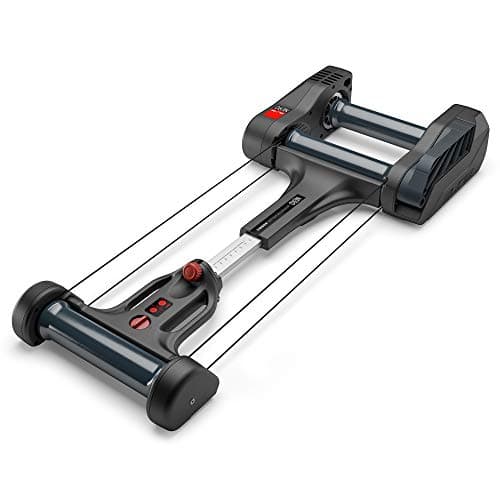 Elite Nero The rollers that behave like a trainer: app-controlled resistance, estimated power and a floating frame — brilliant, expensive, and still rollers. | Best rollers overall | 7.97.9 out of 10 | $866.34 · View on Amazon #ad We may earn a commission · Price as of October 22, 2026 |
| 2 | 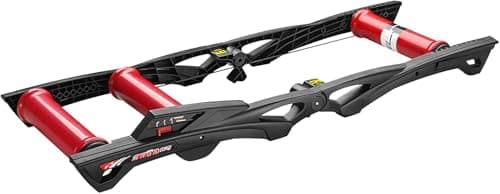 Elite Arion Mag The sensible rollers: three real resistance levels, parabolic ends that forgive a wandering line, and nothing you have to charge. | Best value rollers | 7.27.2 out of 10 | $379.99 · View on Amazon #ad We may earn a commission · Price as of October 22, 2026 |
| 3 | 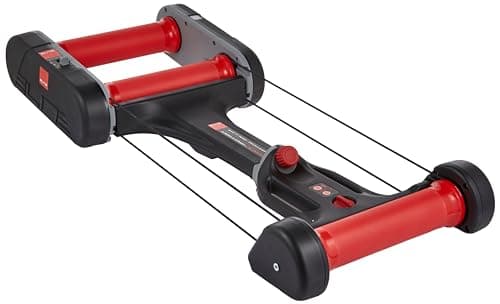 Elite Quick-Motion The most forgiving non-smart rollers you can buy — the floating frame is what makes rollers approachable, and you pay for it. | Best for nervous first-time roller riders | 7.07.0 out of 10 | $499.99 · View on Amazon #ad We may earn a commission · Price as of October 22, 2026 |
| 4 | 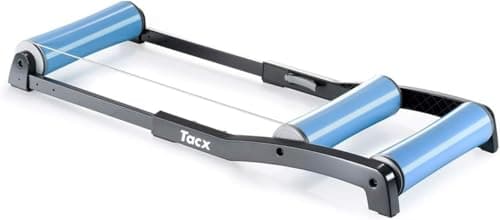 Tacx Antares Rollers stripped to the idea: no resistance, no data, no electronics — outstanding for pedaling technique and race-day warm-ups, useless for intervals. | Best for pure technique work | 6.66.6 out of 10 | $199.99 · View on Amazon #ad We may earn a commission · Price as of October 22, 2026 |
| 5 | 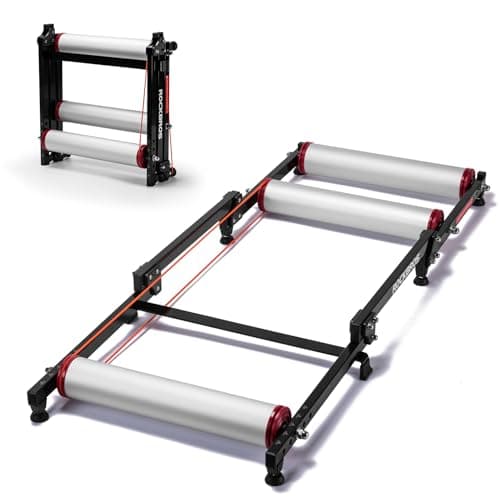 ROCKBROS Bike Rollers A cheap way to discover whether rollers suit you — bought with the honest caveat that the manufacturer publishes almost nothing about how it performs. | Cheapest way to try rollers | 5.95.9 out of 10 | $165.99 · View on Amazon #ad We may earn a commission · Price as of October 22, 2026 |
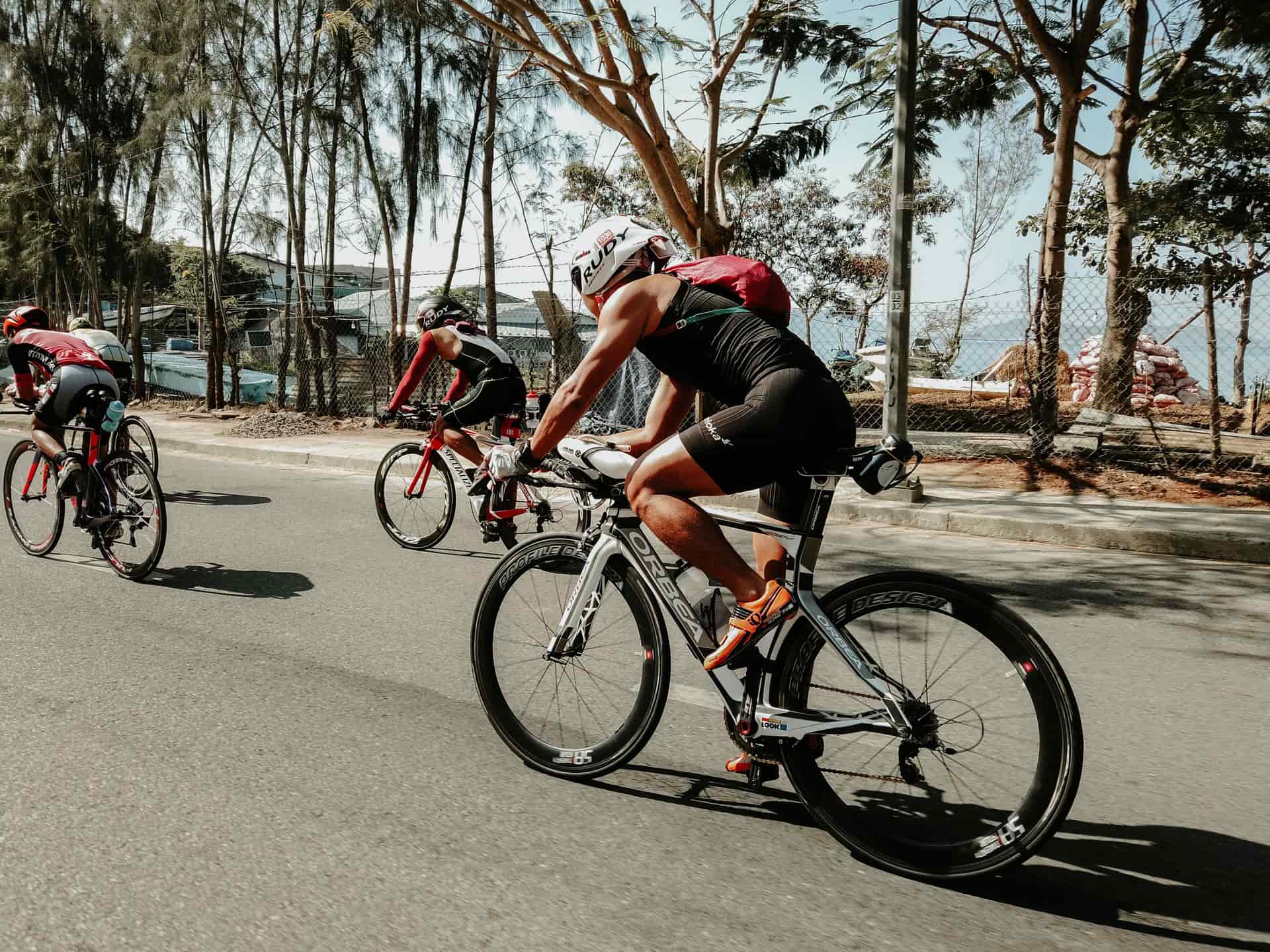
Rollers predate every trainer on this site by decades and they still do one thing better than any of them: they make you a better bike rider rather than just a fitter one. Your bike is not attached to anything. It sits on three spinning drums, held up entirely by your balance and your pedal stroke, and the moment either gets sloppy the bike tells you. Nothing bolted to a frame can replicate that.
They are also, for most riders, the wrong first purchase. This roundup ranks the rollers worth owning and is equally clear about where they stop — because a page that sells you rollers for a job a smart trainer does better is not doing you a favor.
What rollers are genuinely good at
Pedaling technique. On a fixed trainer you can stamp on the pedals with a terrible, lumpy stroke and nothing will tell you. On rollers, a stamped stroke moves the bike sideways. Smoothing that out is a skill that transfers directly to the road, and rollers are the only indoor tool that teaches it with instant feedback.
Warm-ups. Race-day warm-ups happen in a car park thirty minutes before a start, and a set of folding rollers goes in a car trunk without tools. Nothing has to come off the bike, so you roll off the rollers and onto the start line.
Storage and setup.Every set here folds. The Quick-Motion collapses to 52 x 45 x 30 cm. A direct-drive trainer does not do that, and if your pain cave is also the living room, that is not a small detail — our apartment setup guide covers the space problem in full.
Engagement. Rollers demand attention. Some riders find that the antidote to indoor boredom, because you genuinely cannot zone out.
The three specifications that actually differentiate rollers
Resistance.Plain rollers produce only the drag of the drums and your tires, which is not much — makers of unresisted sets, Tacx among them, generally publish no ceiling at all. Adding a magnetic unit gives you a figure worth quoting: Elite publishes 520 W at 40 km/h for the Arion Mag. This is the number that decides whether you can do a real workout, and it is quoted at a stated speed on Elite's sheets, which is the only way the figure means anything.
Drum profile. Parabolic drums rise at each end, so a wheel that starts to drift is nudged back toward the middle. Straight drums do not do this. This single feature is most of the difference between rollers that are learnable and rollers that are frightening, and it is worth checking before you buy on price.
Frame type. A rigid frame transmits the surge of every pedal stroke into your hands. A floating frame moves with it. The floating design is meaningfully calmer to ride and it is what the Quick-Motion and the Nero are charging you for.
| Rollers | Resistance | Max power at 40 km/h | App control | Frame | Best for |
|---|---|---|---|---|---|
| Elite Nero | Magnetic, electronic | 760 W | Yes — ANT+ / Bluetooth | Floating | Rollers as your main trainer |
| Elite Arion Mag | Magnetic, 3 levels | 520 W | No | Fixed | Best value |
| Elite Quick-Motion | Magnetic, 3 levels | 425 W | No | Floating | Nervous beginners |
| Tacx Antares | None | Not published | No | Fixed | Technique and warm-ups |
| ROCKBROS Rollers | Adjustable, unpublished | Not published | No | Fixed | Trying rollers cheaply |
How we ranked them
We do not have a lab and we do not pretend to — our how we reviewpage says so plainly. What we did was pull each manufacturer's published technical sheet, record the figures they actually state (resistance levels, maximum power at a stated speed, frame type, folded dimensions, connectivity), and score on the four things a roller buyer weighs: control, road feel, value and ease of use. Where a manufacturer publishes nothing — as with the ROCKBROS set — we say so and score it down, rather than filling the gap with a guess. Prices come live from Amazon and change daily, so you will see today's number or "Check price," never a stale one.
The honest limits of rollers
They do not measure power. Only the Nero produces a wattage figure at all, and Elite describes it as estimated. If you want measured watts you need a power meter or a direct-drive trainer.
The resistance ceiling is low.The best figure on this page is 760 W at 40 km/h. A budget direct-drive trainer manages more than double that. Sprints and heavy over-unders simply run out of road on rollers.
They wear tires and make noise. Your tire runs on a drum, exactly as on a wheel-on trainer, so expect tread wear and rubber dust — a trainer tire is a sensible purchase. And a tire on a drum is loud; if noise is your constraint, our quietest trainers roundup is the page you want instead.
You can fall off. Not usually dramatically, but it happens, and it happens most often when you look away, reach for a bottle or stop concentrating. Set up in a doorway or beside a wall for your first few sessions, ride in a gear that keeps the wheel speed up, and do not try to learn rollers while watching a race.
Who should buy rollers, and who should not
Buy rollers if you are a bike rider first and a training-plan follower second: if you race, if you want a smoother stroke, if you need a warm-up setup that travels, or if you find fixed trainers unbearably static. Buy the Nero if you want them to be your only indoor tool. Buy the Arion Mag if you want them alongside a trainer.
Do not buy rollers as your first and only indoor purchase if what you want is structured training, ERG workouts, Zwift racing or a reliable FTP figure. Those are exactly the jobs a smart trainer was invented to do, and rollers will frustrate you. Our do I need a smart trainer guide is the better starting point if that describes you, and how much a smart trainer costs sets out what each budget actually buys.
The full reviews
Every pick, in detail
#1 · Best rollers overall
Elite Nero
7.97.9 out of 10#ad We may earn a commission · Price as of October 22, 2026
The rollers that behave like a trainer: app-controlled resistance, estimated power and a floating frame — brilliant, expensive, and still rollers.
- Type
- Smart rollers, app-controlled
- Resistance
- Magnetic, electronically controlled
- Max power
- 760 W at 40 km/h
- Power data
- Estimated power
- Connectivity
- ANT+, Bluetooth
- Frame
- Floating System, foldable
What we'd praise
- The only roller here an app can control — Zwift raises the resistance on a climb and ERG workouts actually work
- Floating frame absorbs the surge and fall of your pedal stroke, which makes it far less twitchy than fixed rollers
- ANT+ and Bluetooth both supported, so it talks to head units as well as apps
- Folds to 63 x 47 x 30 cm, so it stores where a direct-drive trainer never could
- 110 kg supported rider weight is generous for a roller
What we'd flag
- Elite lists the power figure as estimated, not measured — treat it as a training reference, not a race number
- 760 W at 40 km/h is a low resistance ceiling; a real sprint will simply spin out
- Costs flagship-trainer money for a roller that does less structured work than a mid-tier direct-drive trainer
- Still rollers: you can ride off the side of them, and no amount of electronics changes that
The Nero is the only product on this list that answers the standard objection to rollers, which is that they cannot do a workout. Because the resistance unit is magnetic and electronically controlled, Zwift can raise the load when the road tilts up and an app can hold you near a target wattage. Elite publishes a 760 W maximum at 40 km/h and describes the power output as estimated, both of which are honest and both of which set expectations correctly.
The other half of what makes it good is mechanical. Elite's Floating System lets the whole roller frame move fore and aft with the natural surge of your pedal stroke instead of resisting it, which is the single biggest reason riders fall off conventional rollers. It is still a balance discipline — nothing holds the bike up but you — but the learning curve is a slope rather than a cliff. If you want measured watts and no balance risk at all, the honest alternative is a direct-drive smart trainer.
#2 · Best value rollers
Elite Arion Mag
7.27.2 out of 10#ad We may earn a commission · Price as of October 22, 2026
The sensible rollers: three real resistance levels, parabolic ends that forgive a wandering line, and nothing you have to charge.
- Type
- Classic rollers, fixed frame
- Resistance
- Magnetic, 3 levels
- Max power
- 520 W at 40 km/h
- Power data
- None
- Rollers
- Parabolic ends, antistatic compound
- Folded size
- 53 x 73 x 25 cm
What we'd praise
- Three magnetic resistance levels give you a genuine range of workout loads rather than drag alone
- Parabolic roller ends steer a drifting wheel back toward the middle — the feature that makes rollers learnable
- Antistatic roller compound is quieter and easier on a tire than a bare drum
- Sealed bearings need no maintenance at all
- Folds flat to a size you can slide behind a door
What we'd flag
- No power measurement and no app control — you are training by feel, cadence or heart rate
- 520 W ceiling means hard efforts run out of resistance quickly
- Fixed frame with no floating system, so the surge of each stroke is transmitted straight to your balance
- Resistance changes mean getting off and moving a lever
If you want rollers because you want rollers — for pedaling technique, for balance, for a warm- up that does not require dismantling your bike — the Arion Mag is the one to buy. The three magnetic levels are the important part, because plain rollers with no resistance unit are limited to whatever drag the drums produce, which is not very much. Elite publishes 520 W at 40 km/h with the magnets engaged, roughly double what an unresisted set manages.
The parabolic drum ends are the feature nobody markets properly. A conventional roller drum is a straight cylinder, so a wheel that drifts keeps drifting until it leaves. A parabolic profile rises at each end, so a drifting wheel is nudged back toward the middle. That is the difference between rollers you learn on and rollers that teach you a hard lesson about doorframes.
#3 · Best for nervous first-time roller riders
Elite Quick-Motion
7.07.0 out of 10#ad We may earn a commission · Price as of October 22, 2026
The most forgiving non-smart rollers you can buy — the floating frame is what makes rollers approachable, and you pay for it.
- Type
- Classic rollers, floating frame
- Resistance
- Magnetic, 3 levels
- Max power
- 425 W at 40 km/h
- Power data
- None
- Frame
- Floating System
- Folded size
- 52 x 45 x 30 cm
What we'd praise
- Floating frame moves with the bike's surge instead of fighting it, which is the single biggest safety and comfort upgrade rollers offer
- Three magnetic resistance levels, so it is a training tool rather than just a balance toy
- The most compact folded footprint here at 52 x 45 x 30 cm
- Parabolic rollers keep a wandering wheel centered
What we'd flag
- Lowest resistance ceiling of the Elite units at 425 W at 40 km/h
- Costs more than the higher-resistance Arion Mag, because you are paying for the floating frame
- No power measurement, no app control, no data of any kind
- Floating frames take some getting used to — the platform moves as well as the bike
Every pedal stroke on rollers produces a small surge forward and a small ease back. On a rigid roller frame, your body absorbs all of that through the bars, which is exactly the input that makes new roller riders wobble. Elite's Floating System lets the frame itself take the movement, which smooths the ride and dramatically reduces the twitchiness.
The cost is resistance. Elite publishes 425 W at 40 km/h, the lowest figure here, so this is not the roller for hard intervals. It is the roller for a rider who is genuinely nervous about the idea and wants the friendliest possible introduction — and for anyone whose storage space is the binding constraint, since it folds smaller than anything else on this list. Structured intervals belong on a smart trainer, not here.
#4 · Best for pure technique work
Tacx Antares
6.66.6 out of 10#ad We may earn a commission · Price as of October 22, 2026
Rollers stripped to the idea: no resistance, no data, no electronics — outstanding for pedaling technique and race-day warm-ups, useless for intervals.
- Type
- Classic rollers, no resistance unit
- Resistance levels
- 0
- Max power
- Not published
- Power data
- None
- Rollers
- Conical, 100-110 mm drums
- Folded size
- 800 x 470 x 135 mm (31.5 x 18.5 x 5.3 in)
What we'd praise
- The purest roller experience — nothing between you, the tire and the drum
- Retracts to 31.5 x 18.5 x 5.3 in and weighs 17 lb, so it slides under a bed and travels to a race
- Conical drums keep the wheel drifting back toward the middle rather than off the end
- Nothing to charge, pair, update or calibrate, ever
What we'd flag
- No resistance unit and no published power ceiling — this is a warm-up and technique tool, not a workout machine
- No data of any kind, so you cannot run structured training on it
- Fixed frame, so every surge goes straight into your balance
- The sliding frame only covers a 980-1100 mm wheelbase, so check your bike before buying
Tacx publishes no resistance levels and no wattage ceiling for the Antares, because there is no resistance unit in it — the only drag is what the drums and your tires produce. That is not a criticism of the product, it is a description of its job. The Antares exists so that you can spin a bike smoothly indoors with nothing bolted to it, which makes it the classic race-day warm-up tool and the classic off-season pedaling-technique tool.
What rollers do that no trainer can is expose a bad pedal stroke instantly. Punch the pedals and the bike wanders; smooth the stroke out and the bike tracks straight. The 100-110 mm drums are conical rather than straight, so a drifting wheel is pushed back toward the center instead of continuing off the end. The frame slides to suit a 980 to 1100 mm wheelbase and retracts to a 5.3 inch-deep slab for storage. If you want that feedback and a workout, buy the Arion Mag instead.
#5 · Cheapest way to try rollers
ROCKBROS Bike Rollers
5.95.9 out of 10#ad We may earn a commission · Price as of October 22, 2026
A cheap way to discover whether rollers suit you — bought with the honest caveat that the manufacturer publishes almost nothing about how it performs.
- Type
- Classic rollers with resistance
- Published resistance curve
- None available
- Power data
- None
- Frame
- Folding, adjustable wheelbase
- Fit
- Adjustable for road and mountain bikes
- Price band
- Entry
What we'd praise
- By far the cheapest way to find out whether you actually like riding rollers
- Adjustable wheelbase covers road and mountain bike geometries
- Folds down for storage like the more expensive units
- Costs little enough that treating it as an experiment is a rational decision
What we'd flag
- ROCKBROS does not publish a resistance curve or a maximum wattage figure, so we cannot tell you what it will hold
- No parabolic drum profile is specified, and that profile is what makes rollers learnable
- No power data and no app control of any kind
- Build quality and bearing life at this price are an unknown next to Elite's sealed units
There is a real argument for a cheap set of rollers, and it is this: rollers are a taste. Some riders love the engagement and the feedback and ride them for years; others find the constant concentration exhausting and go back to a fixed trainer within a month. Spending a few hundred on finding that out is a poor bet. Spending very little is reasonable.
We list this pick with a caveat we will not paper over: ROCKBROS does not publish a resistance curve, a maximum wattage or a drum profile, so we cannot tell you how much load it holds or how forgiving the drums are, and we are not going to invent numbers. What we can say is that it is adjustable, it folds, and it costs a fraction of the Elite units. Treat it as a trial. If you find you love rollers, upgrade to a set whose specifications actually exist.
Good questions
Frequently asked questions
Are rollers better than a turbo trainer?
They are better at different things. Rollers develop balance and a smoother pedal stroke because the bike is not fixed, and they set up in seconds. A turbo or smart trainer is better for structured training, holds far more resistance, and lets you concentrate on the workout instead of on staying upright.
Can you use rollers with Zwift?
Yes, but how well depends on the set. The Elite Nero connects over ANT+ and Bluetooth and lets Zwift control its resistance, so climbs load up automatically. Non-smart rollers need a separate speed or power sensor for Zwift to read anything, and the resistance never changes on its own.
Are rollers hard to learn?
There is a real learning curve, but it is usually a few sessions rather than weeks. Set up in a doorway or next to a wall, start in a gear that keeps your wheel speed up, look ahead rather than down, and keep your upper body relaxed. Parabolic drums and a floating frame both make the process considerably easier.
Do rollers give you a proper workout?
It depends entirely on whether they have a resistance unit. Unresisted sets such as the Tacx Antares carry no published power ceiling at all, because the only drag is the drums and your tires — that is warm-up territory. Elite publishes 520 W at 40 km/h for the magnetic Arion Mag and 760 W for the electronic Nero. Even the best figure here is well below what a budget direct-drive trainer holds, so hard intervals belong on a trainer.
Do rollers wear out your tires?
Yes, in the same way a wheel-on trainer does, because your tire is running against a spinning drum. Expect tread wear and some rubber dust. A dedicated trainer tire in a harder compound lasts much longer and sheds less, and is a sensible purchase if you plan to use rollers regularly.
What is a floating roller frame and is it worth it?
A floating frame lets the whole roller assembly move fore and aft with the natural surge of each pedal stroke instead of resisting it. That makes the ride noticeably calmer and less twitchy, especially for newer roller riders. It is worth paying for if you are nervous about rollers, less so if you are already comfortable on them.
How we sourced this
- Elite Nero smart roller technical specifications (manufacturer)
- Elite Arion Mag technical specifications (manufacturer)
- Elite Quick-Motion technical specifications (manufacturer)
- Garmin Tacx Antares (T1000) published specifications (retailer spec sheet)
- Trainer and roller resistance explainer (DC Rainmaker)
Keep going