Trainer Review
Wahoo Kickr Rollr Review: The Trainer That Keeps the Wheel On
Front tire clamped, rear wheel on a roller, bike on in seconds. The convenience is real and so is the compromise — this trainer is designed around a power meter you supply.
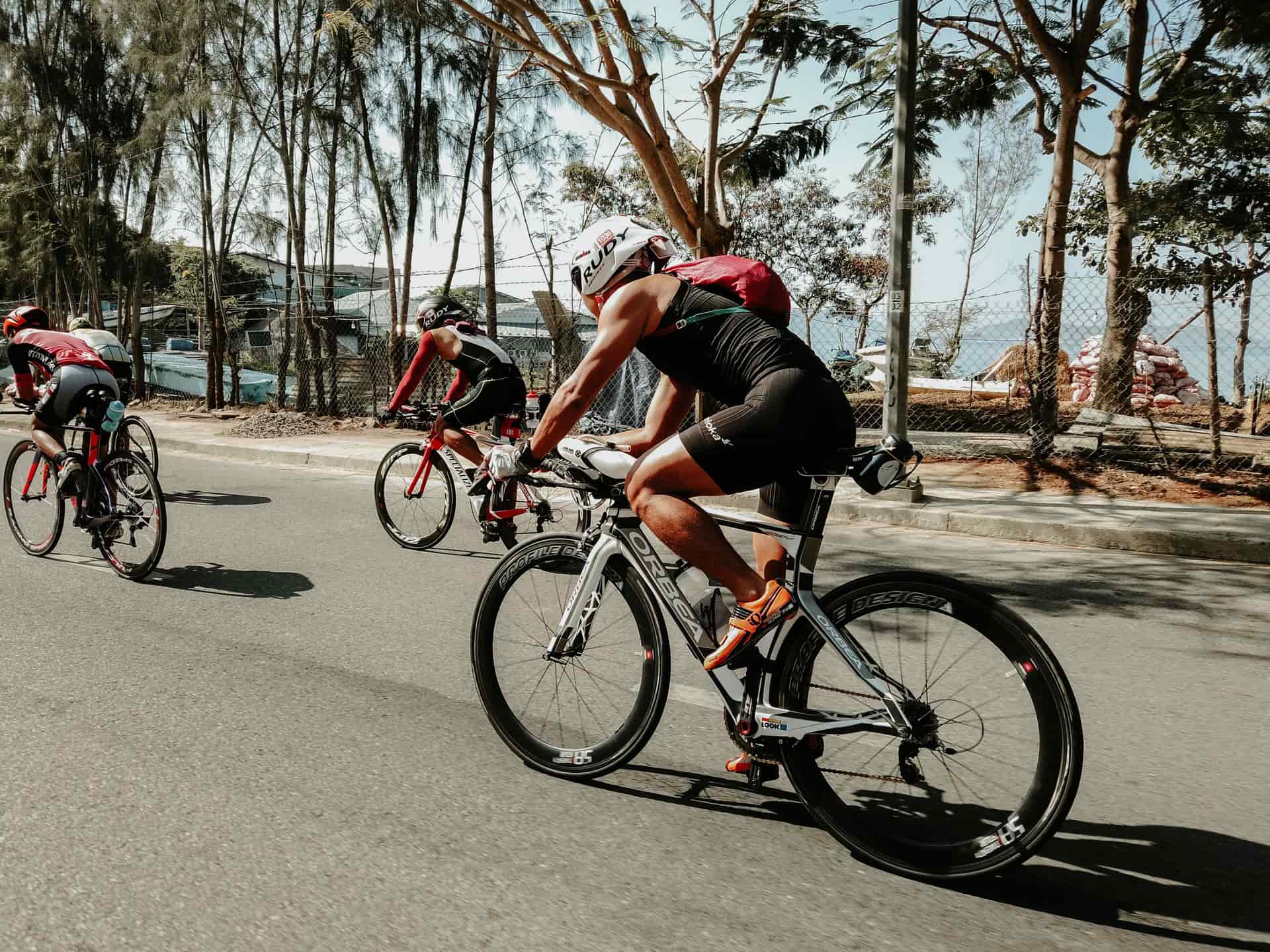
Every direct-drive trainer asks the same tax before every ride that is not a ride: quick release or thru-axle out, wheel off, bike lifted on, and the reverse afterwards if you want to go outside. Most of us stopped noticing years ago. Anyone sharing a trainer between two bikes, or living with a partner whose bike also needs to go on it, notices constantly.
The Kickr Rollr is Wahoo's answer to exactly that. The front wheel drops into a clamp that grips the tire; the rear wheel sits on a roller driving an electromagnetic resistance unit. The bike stays whole. There is no cassette to buy, no axle adapter to find, no drivetrain compatibility question, and disc or rim brakes make no difference. In DC Rainmaker's review, swapping a bike on or off was about three seconds of work.
How it actually works
Two halves joined by a beam. At the front, a safety tire gripper clamps the front wheel so the bike cannot go anywhere. At the back, the rear tire rests on a roller connected to an electromagnetic brake and a 10.5 lb (4.7 kg) flywheel. Because the resistance unit never touches your drivetrain, Wahoo lists it as compatible with every drivetrain, both brake types, and standard road tires — there is no trainer tire to buy for it, which is a genuine saving over a conventional wheel-on turbo.
The fitting window matters more than most people expect. Wahoo publishes 950 to 1100 mm of wheelbase and tires up to 2.1 inches (53 mm), with a 113 kg (250 lb) rider limit and a 23 kg (50 lb) unit weight. That covers most adult road, gravel and cross-country bikes. It does not cover everything: DC Rainmaker's review found a 650c triathlon bike would not fit the frame, which is exactly the kind of bike a multi-bike household might have wanted to put on it. Measure before you order.
Connectivity is standard Wahoo and unusually complete for the price: ANT+, ANT+ FE-C, Bluetooth and Direct Connect. Resistance is controllable from an app, with a stated maximum of 1,500 W and a simulated gradient range of 10% climbing to -10% descending.
| Wahoo Kickr Rollr | Wahoo Kickr Core 2 | Elite Nero (rollers) | |
|---|---|---|---|
| Wheel comes off | No | Yes, rear | No |
| Cassette needed | No | Yes | No |
| Power figure | External meter, or a native estimate | Measured, ±2% | Estimated |
| Max resistance | 1,500 W | 1,800 W | 760 W at 40 km/h |
| Max gradient | 10% (and -10%) | 16% | Not published |
| Flywheel | 10.5 lb (4.7 kg) | 5.4 kg | Not published |
| Front wheel | Clamped in a tire gripper | Stays on, on a riser | Free — you balance |
| Connectivity | ANT+, FE-C, Bluetooth, Direct Connect | WiFi, Bluetooth, ANT+ FE-C | ANT+, Bluetooth |
| Folds | Yes | No | Yes |
The power question, and what changed in August 2025
For its first three years the Rollr broadcast no power of its own at all. It relayed the figure from your power meter, and without one, apps had nothing to work with. That is why Wahoo's accuracy specification reads the way it does: within ±1% of an external power meter.
On 12 August 2025 Wahoo shipped a firmware update adding a native power broadcast, so the Rollr can now estimate your output on its own. That genuinely widens who can use it — a newcomer can get on Zwift without buying a power meter first. But be clear about the quality of that number. In DC Rainmaker's hands-on test of the update, the native estimate underreported heavily at low output, showing around 180 W while reference power meters read roughly 250 W, with the gap narrowing to about 15 to 20 W at higher wattages. Wahoo says plainly that this is not an attempt to replace a power meter, and deliberately errs toward underreporting rather than inflating figures.
Why is roller-based estimation so hard? Because the trainer is measuring through your tire. Pressure, rubber compound, how hard the roller is loaded, your weight, your position — all of it changes how much of your effort reaches the drum, and none of it is something the trainer can see. That is the same physics that makes every wheel-on trainer harder to trust than a direct-drive unit, which our accuracy guide works through properly.
The practical upshot: treat the native broadcast as a way to ride, not a way to train. If you care about your numbers, pair a power meter and let the Rollr relay it. That is the configuration Wahoo designed and the one its own specification describes.
ERG mode is the weak spot
This is where the Rollr is furthest behind a direct-drive trainer, and it is worth being blunt about. DC Rainmaker's review found a high resistance floor — you need the easiest gearing to hold low wattages at all — significant overshoot at the start of intervals, and poor stability once inside them, with the power figure moving around rather than sitting on target.
The same review noted that the rear tire can bounce on the roller when you back off after a hard effort, taking five to seven seconds to settle. Neither problem stops you doing structured work, but if your training is mostly ERG-mode intervals, this is not the trainer for it, and no firmware has changed that. A rider whose sessions are mostly sim-mode riding, group rides and steady endurance will notice it far less.
Noise, tires and the rest of the wheel-on tax
It is loud. Every wheel-on trainer is, because a rubber tire pressed against a spinning drum makes noise, and the noise scales with your speed rather than your effort — so an easy spin in a big gear is louder than a hard effort in a small one. If you live in a flat, or the room shares a wall with a sleeping child, read the quietest smart trainers before you commit to any wheel-on design.
The 10.5 lb flywheel is the same weight Wahoo used in the discontinued wheel-on Snap, and the ride reflects that: pleasant and settled at steady state, less convincing than a heavier direct-drive unit when you change pace. And while the Rollr does not need a dedicated trainer tire, your normal tire is still being worn by a drum, so expect it to age faster than it would outdoors. A mat is not optional here either: rollers plus sweat plus a floor is a bad combination.
Wahoo Kickr Rollr vs Kickr Core 2
This is the comparison most people actually need, and the specifications make it a short argument. The Core 2 measures its own power at a claimed ±2%, holds 1,800 W, simulates 16% instead of 10%, adds onboard WiFi, and costs meaningfully less. On data quality, quietness and price it wins outright.
The Rollr wins on one axis, and it is a bigger axis than the spec sheet admits: the bike stays whole. No cassette purchase, no axle standard to check, no wheel on the floor, and a bike swap measured in seconds rather than minutes. For a household with three bikes and one trainer, or a rider who genuinely will not use a trainer that demands a wheel comes off, that convenience is the whole product. Everyone else should read our Kickr Core 2 review and buy that instead.
Where it sits against actual rollers
The Rollr is not a set of rollers, despite the name. On real rollers — an Elite Nero, say — the bike is not attached to anything and you balance it yourself, which teaches a smoother pedal stroke and terrifies most people for the first week. The Rollr clamps the front wheel, so balance is not part of the deal at all; what you get is roller drive without roller skill.
That makes it a genuinely different purchase, and for most riders an easier one. If the appeal was the pedaling technique rather than the convenience, our best bike rollers roundup is the right page, and smart trainer vs rollers settles which style suits how you train.
Who should buy it
Buy the Rollr if you already own a power meter and the wheel-removal ritual is the thing standing between you and indoor riding. Buy it if two or three bikes share one trainer and you are tired of cassette compatibility. Buy it if your bike has an axle standard or a drivetrain that makes direct drive awkward, since the Rollr does not care what any of it is.
Skip it if you want one box that measures power honestly — that is a direct-drive trainer, and the budget tiernow starts below what the Rollr costs. Skip it if your training is ERG intervals. Skip it if noise is your constraint. And check your wheelbase against Wahoo's 950 to 1100 mm window before you order, because a bike that does not fit makes every other consideration academic.
Still deciding?
Compare the Rollr against the whole trainer fieldThe full reviews
Every pick, in detail
The pick if the wheel is never coming off
Wahoo Kickr Rollr
7.47.4 out of 10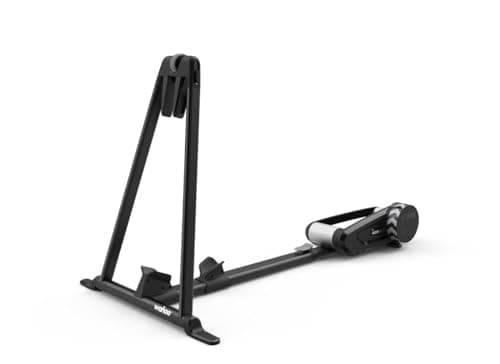
#ad We may earn a commission · Price as of October 22, 2026
The most convenient trainer in the category and the least self-sufficient: brilliant if you already own a power meter and hate removing wheels, hard to justify if you do not.
- Type
- Hybrid: front tire clamp, rear wheel on a roller
- Resistance
- Electromagnetic, 1,500 W maximum
- Max gradient
- 10% simulated climb, -10% descent
- Flywheel
- 10.5 lb (4.7 kg)
- Power accuracy
- Within ±1% of an external power meter (not included)
- Connectivity
- ANT+, ANT+ FE-C, Bluetooth, Direct Connect
- Fits
- 950-1100 mm wheelbase, tires up to 2.1 in (53 mm)
- Weight limits
- 23 kg (50 lb) unit, 113 kg (250 lb) rider
What we'd praise
- A bike goes on or comes off in seconds — no wheel removal, no cassette, no thru-axle adapter
- Works with any drivetrain and with disc or rim brakes, because it never touches the drivetrain
- Standard road tires are fine; there is no trainer tire to buy and swap
- The right answer for a household where several bikes share one trainer
- ANT+ FE-C, Bluetooth and Direct Connect, so it fits any app and any head unit
- Folds down, which a direct-drive trainer of this size does not
What we'd flag
- You really want an external power meter — Wahoo's own accuracy claim is stated relative to one
- The native power estimate added in August 2025 underreports badly at low output in DC Rainmaker's testing
- ERG mode is the weak point: a high resistance floor, overshoot at interval starts and poor stability
- Wheel-on means it is loud, and the noise rises with speed rather than with effort
- 10.5 lb flywheel is the same as Wahoo's old wheel-on Snap, so road feel is mid-pack at best
- It costs more than a Kickr Core 2 that measures power itself and simulates a steeper gradient
- The 950-1100 mm wheelbase window rules out some small frames and 650c bikes
The Rollr answers a question nobody else took seriously: what if the bike just rolled on? The front wheel drops into a clamp that grips the tire, the rear wheel sits on a roller, and that is the whole setup. Nothing comes off the bike, nothing touches the drivetrain, and Wahoo quotes a fitting window of 950 to 1100 mm of wheelbase with tires up to 2.1 inches.
What you give up is the thing direct drive gives you for free: a trustworthy watt. Wahoo states the Rollr's accuracy as being within ±1% of an external power meter, which is a specification about somebody else's hardware. Read that sentence twice before you buy, because it is the entire review.
Best alternative if you want measured power in the box
Wahoo Kickr Core 2
8.48.4 out of 10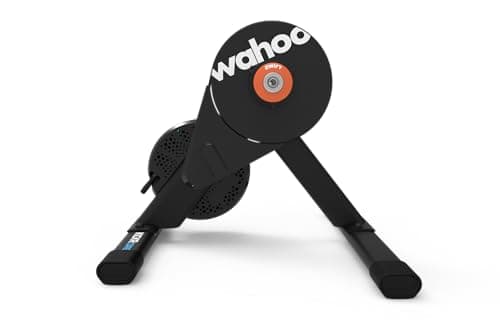
#ad We may earn a commission · Price as of October 22, 2026
The trainer the Rollr has to justify itself against: cheaper, quieter, steeper and self-sufficient — as long as you accept taking the wheel off.
- Type
- Direct drive, electromagnetic
- Claimed accuracy
- ±2%, measured
- Max resistance
- 1,800 W
- Max gradient
- 16%
- Flywheel
- 5.4 kg
- Connectivity
- WiFi, Bluetooth, ANT+ FE-C
What we'd praise
- Measures power itself at a claimed ±2%, so nothing else has to be bought to make it useful
- Costs less than the Rollr while simulating a steeper gradient and holding more resistance
- Heavier flywheel and a quieter ride, because the tire is out of the equation entirely
- Onboard WiFi and Race Mode, neither of which the Rollr offers
What we'd flag
- The rear wheel has to come off every single time, and a cassette has to be bought and fitted
- Swapping between bikes means checking axle standards and cassette speed counts
- Wahoo does not publish a flywheel weight for the Core 2 — the 5.4 kg figure comes from the Core lineage and third-party reviews
- No folding frame, and it is a heavier thing to move between rooms
This is the honest comparison, and it is uncomfortable for the Rollr. The Core 2 costs less, measures its own power at a claimed ±2%, simulates 16% instead of 10%, holds 1,800 W instead of 1,500, and is dramatically quieter because there is no tire on a drum.
What it asks in return is the ritual: rear wheel off, bike onto the trainer, wheel back on afterwards, plus a cassette matched to your drivetrain. Our cassette guide covers that purchase, and the full Kickr Core 2 review covers the trainer. If that ritual does not bother you, buy this instead.
The power meter that makes the Rollr work properly
4iiii Precision 3+
8.68.6 out of 10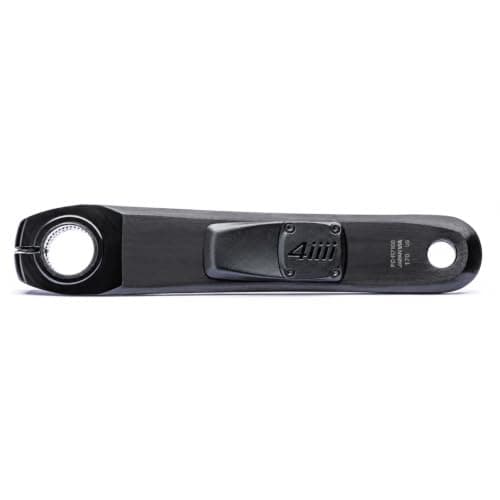
#ad We may earn a commission · Price as of October 22, 2026
Budget for this alongside the Rollr rather than after it — the trainer is built around the assumption that you own one.
- Type
- Left crank arm, single-sided
- Claimed accuracy
- ±1%
- Battery
- CR2032, up to 800 hours
- Connectivity
- ANT+, Bluetooth
- Fitting
- Ride-ready on a fitted crank arm
- Role here
- Supplies the power the Rollr broadcasts
What we'd praise
- The cheapest route to a real measured watt, which is exactly what the Rollr is missing
- Ride-ready on a crank arm, so fitting is one crank bolt rather than a workshop job
- Up to 800 hours from a coin cell you can buy anywhere
- It stays on the bike, so your power number is the same indoors and outdoors
What we'd flag
- Single-sided: it reads your left leg and doubles it, so a big imbalance shows up as error
- You must match crank length, model and drivetrain exactly before ordering
- It is a second purchase on top of a trainer that already costs more than a Kickr Core 2
- No left/right balance or cycling-dynamics data
Wahoo added a native power estimate to the Rollr in August 2025, and it is genuinely better than nothing. It is not, in Wahoo's own framing, a replacement for a power meter. If you want numbers you can train against, plan around, or race with, the Rollr expects you to bring your own measurement.
The Precision 3+ is the cheapest honest way to do that. It is a left-crank meter, so it reads one leg and doubles it, which is fine for training and imperfect for balance data — the case is made in full in our single vs dual-sided guide. Pair it once and the Rollr behaves like a proper smart trainer, with ±1% figures flowing through to Zwift.
Good questions
Frequently asked questions
Do you need a power meter for the Wahoo Kickr Rollr?
Not any more, but you still want one. Wahoo added a native power broadcast in a firmware update on 12 August 2025, so the Rollr can estimate power on its own. Wahoo states that this is not intended to replace a power meter, and DC Rainmaker's testing found the estimate underreporting by roughly 50 to 70 W at low output. Wahoo's own accuracy specification — within plus or minus 1% — is stated relative to an external power meter.
Does the Wahoo Kickr Rollr work with Zwift?
Yes. It broadcasts over ANT+, ANT+ FE-C, Bluetooth and Direct Connect, and Zwift can control its resistance up to a simulated 10% gradient. With a power meter paired, Zwift sees that meter's figure; without one, it sees the Rollr's own estimate.
Do you need a cassette or a trainer tire for the Kickr Rollr?
Neither. The Rollr never touches your drivetrain, so no cassette is needed and any drivetrain works. It also runs on standard road tires rather than a dedicated trainer tire, though the rear tire will wear faster than it would outdoors because it is running against a roller.
What bikes fit the Wahoo Kickr Rollr?
Wahoo publishes a 950 to 1100 mm wheelbase window and tire clearance up to 2.1 inches (53 mm), with disc and rim brakes both supported and a 113 kg (250 lb) rider limit. Most adult road, gravel and cross-country bikes fit. Very small frames and 650c bikes may not — DC Rainmaker found a 650c triathlon bike would not fit.
Is the Wahoo Kickr Rollr good for ERG mode workouts?
It is the weakest part of the trainer. DC Rainmaker's review found a high resistance floor that forces easy gearing to hold low wattages, overshoot at the start of intervals, and poor stability inside them. If most of your training is structured ERG work, a direct-drive trainer will hold the target far better.
Kickr Rollr or Kickr Core 2?
The Core 2 measures its own power at a claimed plus or minus 2%, holds 1,800 W against the Rollr's 1,500, simulates 16% instead of 10%, is much quieter and costs less. Choose the Rollr only for the convenience: the bike stays whole, no cassette is needed and swapping bikes takes seconds.
Is the Wahoo Kickr Rollr loud?
Yes, by direct-drive standards. It is a wheel-on design, so a tire runs against a drum and the noise rises with speed rather than with effort. An easy spin in a big gear will be louder than a hard effort in a small one. A mat helps with vibration through the floor but does not fix airborne tire noise.
How we sourced this
Keep going