Head to Head
Kickr Core 2 vs Elite Rivo
Two direct-drive trainers separated by about two dollars. One wins the spec sheet, the other wins the numbers — and which of those you need decides it.
The short answer
Quick picks
| # | Product | Best for | Score | Price |
|---|---|---|---|---|
| 1 | 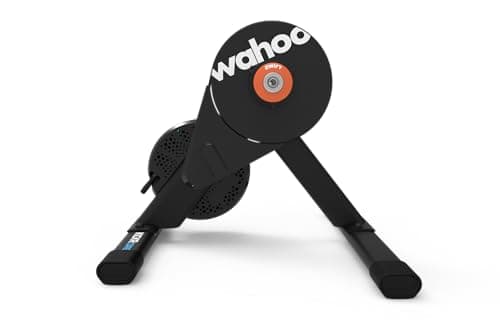 Wahoo Kickr Core 2 The one to buy if your numbers have to mean something: measured power, a heavier flywheel and ANT+, at the same money as the trainer that beats it on paper. | Best for measured power | 9.09.0 out of 10 | $549.99 · View on Amazon #ad We may earn a commission · Price as of October 22, 2026 |
| 2 | 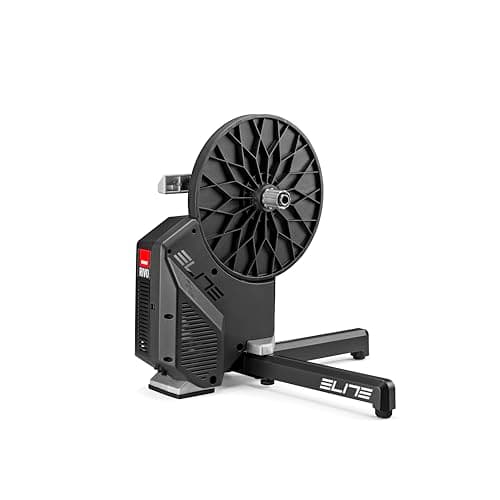 Elite Rivo Wins the spec sheet and the floor plan, and asks you to accept an estimated power number in exchange. | Best for small rooms and bigger ceilings | 7.87.8 out of 10 | $549.99 · View on Amazon #ad We may earn a commission · Price as of October 22, 2026 |
Most head-to-heads on this site are a value trainer against a flagship, and the interesting question is whether the gap is worth paying. This one is different. The Core 2 and the Rivo sit within a couple of dollars of each other, which removes price from the decision entirely and leaves you comparing two genuinely different philosophies at the same money.
And the awkward part is this: on the specification sheet, the cheaper-feeling trainer wins. The Rivo quotes more watts, a steeper gradient, a lighter folding frame and the same onboard WiFi. If you buy on a spec table, you buy the Rivo and you are done reading. The reason this page exists is that the one specification the Rivo loses on is the one that determines whether the trainer is any use for training.
| Kickr Core 2 | Elite Rivo | |
|---|---|---|
| Power accuracy | ±2%, measured | ±2.5%, estimated |
| Max resistance | 1,800 W | 2,000 W at 40 km/h |
| Max gradient | 16% (and -10% decline) | 18% |
| Flywheel | 5.4 kg (12 lb) | 4 kg |
| Onboard WiFi | Yes | Yes |
| Bluetooth | Yes, up to 3 connections | Yes, dual channel |
| ANT+ FE-C | Yes | No |
| Virtual shifting | Zwift Cog and Click version | Zwift Cog and Click compatible |
| Fast data rate | Race Mode | No equivalent |
| Sensor relay | Kickr Bridge | No |
| Folding frame | No | Yes, 10 kg with handle |
Measured versus estimated: the difference that decides this
Elite lists the Rivo's power as estimatedat ±2.5%. Wahoo lists the Core 2's as ±2%, measured. Those two claims look adjacent and they are not the same kind of claim at all.
A measured trainer reads the load it is actually applying. An estimating trainer works power out from what it knows about its own resistance unit — the current it is sending to the electromagnets and the speed the flywheel is turning — and infers the rest from a model. When the model matches your riding, an estimate can be very good. When it does not, the error is not random noise that averages out; it is a consistent lean in one direction, and it moves with cadence, gear and temperature in ways a tolerance band does not describe.
For a lot of riders this genuinely does not matter. If you ride for fitness and enjoyment, and your numbers only ever get compared to your own numbers from last month on the same trainer, an estimate is fine — repeatability is what drives training adaptation, and the Rivo is repeatable. Our accuracy guide makes that case at length, and we stand by it.
It stops being fine the moment your numbers have to travel. A structured plan built on an FTP test, a race result, a coach reading your files, a Zwift race category, a power figure you want to compare against a power meter on your outdoor bike — all of those assume the number is the number. That is the line, and it is a much cleaner line than the half-a-percent gap in the tolerance figures suggests.
The ceilings the Rivo wins, and who actually reaches them
2,000 W against 1,800 W, and 18% against 16%. Both are real advantages and both are smaller in practice than they look.
The wattage ceiling is the easier one to dismiss. A 1,800 W ceiling is not a limit most riders will find — it is well beyond a hard sprint for the great majority of people, and if you are routinely putting 1,800 W through a trainer you are shopping in a different tier anyway. Note also that Elite quotes its 2,000 W figure at 40 km/h; resistance on an electromagnetic trainer depends on flywheel speed, so that headline number is a best-case, not a floor.
The gradient ceiling is the one worth taking seriously, for one specific group. Heavier riders reach a trainer's resistance ceiling at a lower gradient than lighter riders do, because the trainer has to generate more force to simulate the same slope. If you are a bigger rider who rides climbing routes, the difference between 16% and 18% is not marketing — it is whether the trainer holds the simulated gradient or quietly caps it. If you are 70 kg riding rolling terrain, you will never find either ceiling.
The Core 2 has one ceiling the Rivo does not advertise at all: a -10% simulated decline. Whether driving the pedals downhill matters to you is a taste question, but it is a feature on one side of this comparison and absent from the other side's specification.
Flywheel and road feel: 5.4 kg against 4 kg
The Core 2 spins roughly a third more flywheel mass than the Rivo. That is the difference you feel first and the one hardest to convey in writing.
Stored momentum is what makes a trainer feel like a bike rolling rather than a machine resisting. More mass means the pedal stroke smooths over its own dead spots, and a big gear at low cadence feels planted instead of notchy. Less mass means the flywheel gives up speed faster between pedal strokes, which is most obvious grinding up a simulated climb at 60 rpm and least obvious spinning along at 90 rpm in a group ride.
Neither is unpleasant. The Rivo is a perfectly good ride and a colossal upgrade on any wheel-on trainer. But if you have ridden a heavier flywheel and liked it, the Rivo will feel lighter to you, and no firmware update changes that.
The ANT+ hole
The Rivo does Bluetooth, WiFi and Zwift's own protocol. It does not do ANT+ at all. The Core 2 does ANT+ FE-C alongside WiFi and Bluetooth.
For a rider running Zwift on an Apple TV, a tablet or a modern laptop, this is a non-issue — Bluetooth or WiFi covers it and you will never notice. It becomes a real problem in two situations. The first is a bike computer: Garmin and Wahoo head units talk ANT+ FE-C to control a trainer, and the Rivo simply will not appear. The second is a crowded Bluetooth setup, where ANT+ is the pressure-release valve that lets you move a sensor onto a different radio instead of fighting for connection slots. Our ANT+ adapter guide explains why that second one bites more often than people expect — and note that no dongle fixes the Rivo, because the omission is in the trainer, not your computer.
The Core 2 goes the other way and adds Kickr Bridge, which relays a heart rate strap through the trainer so your app sees one device instead of three. If dropouts mid-workout have been a recurring annoyance, that is worth more than a spec line suggests.
Virtual shifting: both do it, from different directions
Both trainers work with Zwift Cog and Click, so on either one you can run a single cog instead of a cassette and change gear in software. That removes the whole drivetrain compatibility question, which is the single most annoying part of buying a direct-drive trainer.
The difference is what you get in the box. The Core 2 is sold in two versions — one bundled with the Zwift Cog and Click, one with an 11-speed cassette — so you pick your approach at checkout and pay about the same either way. The Rivo ships with a pre-installed freehub that takes Shimano/SRAM 9/10/11-speed and Shimano 12-speed road cassettes, but no cassette, so if you want real gears you are buying one. Our cassette guide covers what to buy and the two tools you need.
Want the full ranking?
See both against the rest of the fieldLiving with them: the floor plan argument
This is the Rivo's strongest genuine win and it has nothing to do with riding. It weighs 10 kg, the legs fold, and there is a handle. It can go against a wall, behind a door or under a bed between sessions.
The Core 2 is a fixed frame. It is not enormous, but it does not fold and it does not want to be moved often. If your trainer lives permanently in a garage or a spare room, that is irrelevant. If it shares a living room with people who did not choose to own a smart trainer, it is close to decisive — and no amount of measured power accuracy wins an argument about the lounge. Our apartment setup guide is built around exactly that constraint.
The verdict
Buy the Kickr Core 2. For most riders spending this much on a direct-drive trainer, the reason they are spending it is to get real numbers, and measured power at ±2% with a heavier flywheel and ANT+ is the more complete trainer at the same price. The ceilings it gives up are ones most riders will never touch.
Buy the Elite Rivoif the folding frame solves a problem the Core 2 cannot, or if you are a heavier rider or dedicated climber who will genuinely use 18% and 2,000 W, and you are honest with yourself that an estimated power figure is enough for how you ride. It is a lot of trainer for the money and we would not talk anyone out of it on those grounds.
If neither quite fits, three neighbors are worth a look: the Elite Avantiif you like the Rivo but want Elite's measured ±1% sensor and the ANT+ radio the Rivo lacks — and Elite Avanti vs Kickr Core 2 puts that trainer directly against the winner of this page — the Kickr Core against the Tacx Neo 2T if you are weighing value against flagship instead, and our best budget smart trainers roundup if this price is a stretch.
The full reviews
Head to head
#1 · Best for measured power
Wahoo Kickr Core 2
9.09.0 out of 10#ad We may earn a commission · Price as of October 22, 2026
The one to buy if your numbers have to mean something: measured power, a heavier flywheel and ANT+, at the same money as the trainer that beats it on paper.
- Type
- Direct drive, electromagnetic
- Claimed accuracy
- ±2%, measured
- Max resistance
- 1,800 W
- Max gradient
- 16% up, -10% down
- Flywheel
- 5.4 kg (12 lb)
- Connectivity
- WiFi, Bluetooth, ANT+ FE-C
What we'd praise
- ±2% comes from measured power, not an estimate — the single most important difference on this page
- 5.4 kg flywheel is a third heavier than the Rivo's, and the ride feel shows it
- ANT+ FE-C as well as WiFi and Bluetooth, so head units and older setups can see it
- Race Mode pushes power to the app roughly 10x faster than the original Core, so surges register almost immediately
- Kickr Bridge relays a heart rate strap through the trainer, taking one connection out of the chain
What we'd flag
- 1,800 W and 16% are both lower ceilings than the Rivo quotes
- Heavier and fixed-frame — there are no folding legs and no carry handle
- ±2% is unchanged from the seven-year-old original Core, so this is not an accuracy upgrade over that trainer
- Wahoo does not publish a flywheel figure in the Core 2 spec sheet, so the 12 lb number comes from the Core lineage and third-party reviews
The Core 2 is a deliberately conservative update. Wahoo left the resistance unit, the flywheel and the accuracy claim where they were, and spent the revision on the thing that actually broke people's rides: the connection. Onboard WiFi, a faster data rate called Race Mode, and a sensor relay called Kickr Bridge. That is the whole list.
On a spec sheet that looks like standing still. Against the Rivo it is the reason to pay, because the numbers the Core 2 does quote are measured rather than estimated. Full detail in our Kickr Core 2 review.
#2 · Best for small rooms and bigger ceilings
Elite Rivo
7.87.8 out of 10#ad We may earn a commission · Price as of October 22, 2026
Wins the spec sheet and the floor plan, and asks you to accept an estimated power number in exchange.
- Type
- Direct drive, electromagnetic
- Claimed accuracy
- ±2.5%, estimated power
- Max resistance
- 2,000 W at 40 km/h
- Max gradient
- 18%
- Flywheel
- 4 kg
- Connectivity
- Bluetooth, WiFi, Zwift protocol
What we'd praise
- 2,000 W and an 18% gradient ceiling — both higher than the Core 2 quotes, at the same money
- 10 kg with folding legs and a carry handle, so it can live against a wall between rides
- Onboard WiFi at this tier, and it pulls its own firmware updates
- Zwift Cog and Click compatible, so virtual shifting works without a cassette
- Freehub is pre-installed for Shimano/SRAM 9/10/11-speed and Shimano 12-speed road, plus twelve months of Elite's My E-Training app
What we'd flag
- Elite states the power figure as estimated at ±2.5%, not directly measured — the loosest claim in the current direct-drive field
- No ANT+ at all, so ANT+ head units and older dongles simply cannot see it
- 4 kg flywheel is light, and road feel is noticeably less settled than a 5.4 kg unit at low cadence
- No Race Mode equivalent and no heart-rate relay, so every sensor connects on its own
The Rivo is Elite putting a genuine direct-drive trainer at the price where a lot of people are still buying wheel-on units, and the specification is unusually generous for the money: 2,000 W at 40 km/h, an 18% simulated gradient, onboard WiFi, Zwift Cog and Click support, and a 10 kg folding frame with a handle.
The compromise is stated plainly in Elite's own specifications, and we respect them for saying it out loud: power is estimated at ±2.5% rather than measured. Our Elite Rivo review covers the trainer on its own terms.
Good questions
Frequently asked questions
Is the Elite Rivo's power accuracy good enough for training?
For most riders, yes. Elite states the figure as estimated at ±2.5% rather than measured, and an estimate that is consistent still tracks your progress perfectly well, because training adaptation follows repeatability more than absolute accuracy. It stops being good enough when your numbers have to travel — a coach reading your files, a Zwift race category, an FTP figure you want to compare against a power meter on your outdoor bike.
Which is more accurate, the Kickr Core 2 or the Elite Rivo?
The Kickr Core 2. Wahoo claims ±2% from measured power; Elite claims ±2.5% from estimated power. The gap in the tolerance numbers is small, but the difference between measuring the load and inferring it from a model is the more meaningful one, because estimation error tends to lean consistently in one direction rather than averaging out.
Does the Elite Rivo work with a Garmin or Wahoo bike computer?
Not for trainer control. The Rivo has Bluetooth, WiFi and Zwift's protocol but no ANT+ at all, and head units use ANT+ FE-C to control a trainer, so it will not appear. The Kickr Core 2 does support ANT+ FE-C. No USB dongle fixes this, because the omission is in the trainer rather than in your computer.
Does the 16% gradient limit on the Kickr Core 2 matter next to the Rivo's 18%?
Rarely for lighter riders on flat and rolling routes, because gearing absorbs much of the difference. It matters for heavier riders and for anyone who rides very steep virtual climbs, since a trainer hits its resistance ceiling at a lower gradient the more the rider weighs. Note too that Elite quotes its 2,000 W figure at 40 km/h, so that headline number is a best case rather than a floor.
Do both trainers support Zwift virtual shifting?
Yes. Both work with the Zwift Cog and Click, so you can run a single cog instead of a cassette and shift in software. The Kickr Core 2 is sold either bundled with the Cog and Click or with an 11-speed cassette. The Rivo ships with a pre-installed freehub for Shimano/SRAM 9/10/11-speed and Shimano 12-speed road cassettes, but no cassette in the box.
Which one is better for a small apartment?
The Elite Rivo, clearly. It weighs 10 kg, the legs fold and it has a carry handle, so it can be put away between rides. The Kickr Core 2 is a fixed frame that does not fold. If the trainer has to share a living space, that difference outweighs most of the specification argument.
Is the Kickr Core 2 worth it if I already own the original Kickr Core?
Usually not. The Core 2 keeps the same ±2% accuracy, the same 1,800 W ceiling and the same 16% gradient as the original, and spends the update on connectivity — WiFi, Race Mode and Kickr Bridge. If mid-workout dropouts have been a real problem for you that is a genuine fix, but it is not an accuracy or ride-feel upgrade.
How we sourced this
Keep going
Read these next
- TrainersElite Avanti vs Kickr Core 2
- TrainersElite Avanti vs Elite Rivo
- TrainersWahoo Kickr Core 2 Review
- TrainersElite Rivo Review
- TrainersElite Avanti Review
- TrainersKickr Core vs Tacx Neo 2T
- TrainersThe Best Smart Trainers, Compared
- TrainersThe Best Budget Smart Trainers
- GuidesHow Accurate Are Smart Trainers?