Head to Head
Polar H10 vs Polar H9
Same electrodes, same radios, same battery life. Polar's own comparison table lists exactly two differences, and the strap makes three. Whether any of them is worth the price gap depends on how you pair it.
The short answer
Quick picks
| # | Product | Best for | Score | Price |
|---|---|---|---|---|
| 1 | 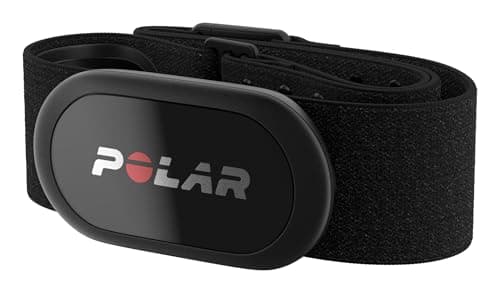 Polar H10 The same sensor as the H9 with a second Bluetooth channel, session memory and the better strap — worth the difference for exactly the riders who use those three things. | Best if two apps need your heart rate at once | 9.29.2 out of 10 | $104.79 · View on Amazon #ad We may earn a commission · Price as of September 18, 2026 |
| 2 | 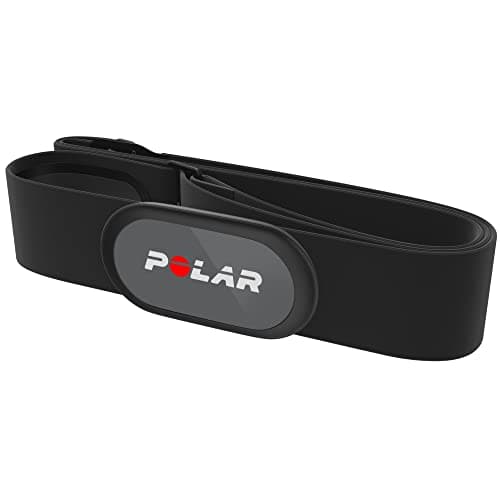 Polar H9 The H10's measurement at a lower price. If one app is all you ever pair, and it or your head unit speaks ANT+, this is the strap to buy. | Best value — the same sensor, one Bluetooth channel | 9.09.0 out of 10 | $69.90 · View on Amazon #ad We may earn a commission · Price as of September 18, 2026 |
| 3 | 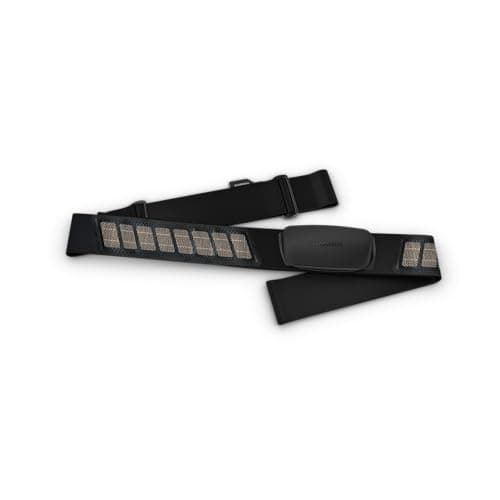 Garmin HRM-Dual If dual Bluetooth is the reason you were going to pay for an H10, the HRM-Dual gets you there for less — without the memory or the Pro Strap. | The cross-shop: two Bluetooth plus unlimited ANT+ | 9.09.0 out of 10 | $59.95 · View on Amazon #ad We may earn a commission · Price as of September 18, 2026 |
| 4 | 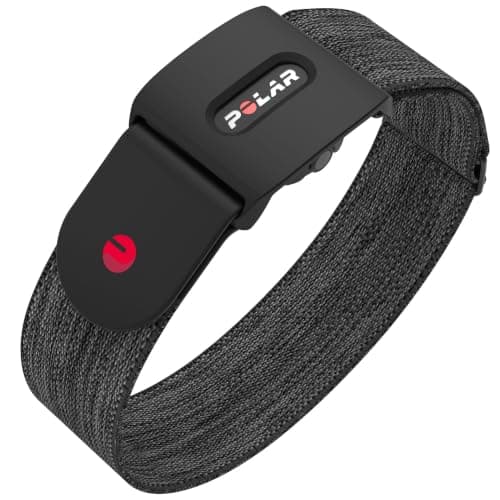 Polar Verity Sense Not a competitor to either strap on accuracy — a different answer for the rider who has already decided the chest strap has to go. | If a chest strap is the problem | 8.68.6 out of 10 | $104.95 · View on Amazon #ad We may earn a commission · Price as of September 18, 2026 |
Polar makes the comparison unusually easy, because it publishes a side-by-side table on both product pages. Read across it and almost every row matches: electrical heart rate measurement from the same electrode design, Bluetooth LE, ANT+ version 2.1, a 295-foot broadcast range, the 5 kHz band that gym equipment listens to, a WR30 water-resistance rating, a coin cell Polar rates at up to 400 hours, a 2.1 oz total weight and a 0.7 oz sensor. The rows that differ are "Dual Bluetooth" and "Memory," and the box contents differ on the strap. That is the entire comparison, and this page exists to tell you what each of those three things is actually for.
We have not lab-tested either strap. The specifications are Polar's; the accuracy reputation of the H10 is attributed to the independent reviewers who use it as a reference, cited in our H10 review.
Difference one: dual Bluetooth
A Bluetooth heart rate sensor can normally talk to one device at a time. The H10 can talk to two. That matters in one specific and very common situation: two devices that both want your heart rate and neither of which has ANT+. An iPad running Zwift plus an Apple Watch recording the workout is the textbook example, because Apple devices do not do ANT+. A phone running TrainerRoad plus an Apple TV running Zwift is another.
If one of your two devices can listen over ANT+ — a Garmin or Wahoo head unit, a Garmin watch, a laptop with an ANT+ adapter — the H9 handles the same setup: Bluetooth to one, ANT+ to the other. ANT+ is a broadcast, so any number of ANT+ devices can listen at once on both straps. The second Bluetooth channel is only a limitation for the all-Apple pain cave, and for that rider it is decisive.
Difference two: onboard memory
The H10 stores one session of up to 30 hours in the strap itself. You start it from Polar's app, ride without a phone or head unit anywhere near you, and sync afterward. The H9 has no memory: no paired device, no data. For an indoor rider this is close to irrelevant — the trainer app is right there — and it matters mainly for swimming, for gym sessions without a watch, or for anyone who wants heart rate from an outdoor ride without carrying a recording device. Decide honestly whether that is you; most riders reading this page never use it.
| Polar H10 | Polar H9 | Garmin HRM-Dual | Polar Verity Sense | |
|---|---|---|---|---|
| Sensing | ECG, chest | ECG, chest | ECG, chest | Optical, arm |
| Bluetooth connections | Two | One | Two | Two |
| ANT+ | Yes | Yes | Yes | Yes |
| 5 kHz gym band | Yes | Yes | No | No |
| Battery | Coin cell, up to 400 h | Coin cell, up to 400 h | CR2032, up to 3.5 yr at 1 h/day | Rechargeable, up to 30 h |
| Onboard memory | One session, 30 h | None | None | About 600 h |
| Strap | Pro Strap, silicone dots, buckle | Soft Strap, elastic | Garmin soft strap | Armband |
| Water resistance | WR30 | WR30 | Rated for sweat and rain | WR50 |
| Sensor weight | 0.7 oz | 0.7 oz | 54.4 g with strap | Armband |
Difference three: the strap
This is the one Polar's table does not list, and it is the one you will notice every ride. The H10 ships on the Pro Strap: a textile strap with silicone grip dots on the inside and a firm buckle. The H9 ships on the Soft Strap, an elastic strap with a simple hook. Both are machine-washable and both take the same sensor, so the sensor is interchangeable between them. On a fan-cooled forty-minute session the difference is academic. On a two-hour ride in a warm room, soaked through, the Soft Strap relies entirely on elastic tension and creeps; the Pro Strap's dots hold. If the strap slipping is why you stopped wearing a chest strap, the Pro Strap is a legitimate reason to buy the H10 — or to buy an H9 and a Pro Strap separately, which Polar sells.
What is identical, and why it matters more
The part of a heart rate monitor that determines whether the number is right — the electrodes, the sampling, the firmware — is the same on both straps. That is why the H9 scores the same on accuracy as the H10 on this page. The reason any chest strap beats a wrist optical sensor indoors is response time: intervals start hard and the ECG signal tracks the jump within a beat or two, where optical sensors lag several seconds. Both Polars do that equally well. The battery is the same coin cell at the same 400-hour rating, which at an hour a day is more than a year. Water resistance is WR30 on both. If your decision is about the quality of the heart rate number, there is no decision: buy the cheaper one.
Where the Garmin HRM-Dual and the Verity Sense fit
Two cross-shops close the loop. The Garmin HRM-Dual has the H10's dual Bluetooth and ANT+ at a price nearer the H9, with a CR2032 Garmin rates at up to three and a half years — but no memory and no 5 kHz band. If dual Bluetooth is your only reason to step up from the H9, it is the cheaper way to get it. The Polar Verity Sense is for the rider who has decided the chest strap has to go: an optical armband with two Bluetooth channels, ANT+, far more memory than the H10 and WR50, at the cost of optical lag and a rechargeable battery. Our heart rate monitor roundup ranks all four against the rest of the field.
The verdict
H9 for most indoor riders: one app, one strap, ANT+ for anything else, and a year of battery. H10 for the all-Apple setup that needs two Bluetooth listeners, for anyone who will genuinely use the session memory, and for the rider whose strap will not stay put on a long, hot session. If you are unsure which you are, you are an H9 buyer — and if the strap turns out to be the problem, the Pro Strap fits it.
Want the wider field?
See every heart rate monitor we rankThe full reviews
Head to head
#1 · Best if two apps need your heart rate at once
Polar H10
9.29.2 out of 10#ad We may earn a commission · Price as of September 18, 2026
The same sensor as the H9 with a second Bluetooth channel, session memory and the better strap — worth the difference for exactly the riders who use those three things.
- Measurement
- ECG electrodes, chest strap
- Bluetooth
- Dual — two devices at once
- ANT+ / 5 kHz
- Yes / Yes
- Battery
- CR2025, up to 400 hours
- Internal memory
- One session, up to 30 hours
- Strap
- Polar Pro Strap, silicone dots, buckle
- Water resistance
- WR30
What we'd praise
- Two simultaneous Bluetooth connections plus ANT+ — Zwift on the tablet and a watch or head unit at the same time, no dongle
- Onboard memory records a session without a phone or head unit, then syncs later
- Pro Strap has silicone grip dots and a proper buckle, so it stays put on a sweaty two-hour ride
- Same 400-hour coin cell life as the H9
- The strap independent reviewers use as the reference when testing other monitors
What we'd flag
- Costs more than the H9 for the same ECG measurement and the same battery life
- The Pro Strap's grip dots wear over years of washing; replacement straps are an ongoing cost
- Neither the memory nor the second Bluetooth channel matters to a rider who only ever pairs to one app
Polar's own comparison table lists two lines where the H10 differs from the H9: dual Bluetooth, and memory for one session of up to 30 hours. The third difference is the strap — the H10 ships on the Pro Strap with silicone dots and a buckle, the H9 on the Soft Strap. Everything else is shared: ECG electrodes, ANT+, 5 kHz, WR30, a coin cell Polar rates at up to 400 hours, 0.7 oz of sensor.
Our Polar H10 review covers it as the reference strap it has become. On this page the question is narrower: which of those three differences you would actually use.
#2 · Best value — the same sensor, one Bluetooth channel
Polar H9
9.09.0 out of 10#ad We may earn a commission · Price as of September 18, 2026
The H10's measurement at a lower price. If one app is all you ever pair, and it or your head unit speaks ANT+, this is the strap to buy.
- Measurement
- ECG electrodes, chest strap
- Bluetooth
- Single — one device at a time
- ANT+ / 5 kHz
- Yes / Yes
- Battery
- Coin cell, up to 400 hours
- Internal memory
- None
- Strap
- Polar Soft Strap, machine-washable
- Water resistance
- WR30
What we'd praise
- Identical ECG measurement, ANT+ and 5 kHz to the H10 for noticeably less
- Same 400-hour battery life and the same WR30 rating
- ANT+ covers the second-device problem for most head units, so single Bluetooth rarely bites
- Soft Strap is machine-washable and comfortable; it is the strap Polar sold for years before the Pro
What we'd flag
- One Bluetooth connection — a Zwift tablet and an Apple Watch cannot both listen without ANT+ on one of them
- No onboard memory, so a ride without a paired device is a ride without heart rate data
- Soft Strap has no grip dots and relies on elastic tension, which slips more once it is soaked
Polar positions the H9 as the H10 with the extras removed, and the specification pages bear that out. The electrodes, the Bluetooth LE and ANT+ radios, the 5 kHz gym-equipment band, the 400-hour coin cell and the WR30 rating are all the same. What is missing is the second Bluetooth channel, the session memory and the Pro Strap.
For the indoor rider who pairs a strap to Zwift and nothing else, none of the three is a loss. Our heart rate monitor roundup ranks it against the wider field.
#3 · The cross-shop: two Bluetooth plus unlimited ANT+
Garmin HRM-Dual
9.09.0 out of 10#ad We may earn a commission · Price as of September 18, 2026
If dual Bluetooth is the reason you were going to pay for an H10, the HRM-Dual gets you there for less — without the memory or the Pro Strap.
- Measurement
- ECG electrodes, chest strap
- Bluetooth
- Two simultaneous connections
- ANT+
- Yes, unlimited listeners
- Battery
- CR2032, up to 3.5 years at 1 h/day
- Internal memory
- None
- Weight
- 54.4 g including strap
What we'd praise
- Two Bluetooth connections, like the H10, at a price closer to the H9
- CR2032 rated by Garmin at up to 3.5 years of an hour a day — roughly three times the Polar figure
- Strap is simple, soft and washable; the module unclips
What we'd flag
- No onboard memory and no 5 kHz band
- Strap has no grip dots; fit relies on tension like the H9's Soft Strap
- Module is larger than Polar's
The HRM-Dual sits exactly where the H10-vs-H9 argument gets interesting. It has the second Bluetooth channel the H9 lacks, it broadcasts ANT+ to as many listeners as care to hear it, and Garmin rates its CR2032 at up to three and a half years of daily hour-long use. What it does not have is memory or the 5 kHz band.
Our Garmin HRM-Dual reviewcovers it on its own; here it is the answer to "I want two Bluetooth connections but not the H10 price."
#4 · If a chest strap is the problem
Polar Verity Sense
8.68.6 out of 10#ad We may earn a commission · Price as of September 18, 2026
Not a competitor to either strap on accuracy — a different answer for the rider who has already decided the chest strap has to go.
- Type
- Optical armband
- Worn
- Upper arm
- Bluetooth
- Two simultaneous connections
- ANT+
- Yes
- Battery
- Rechargeable, up to 30 hours
- Internal memory
- 16 MB, about 600 hours
- Water resistance
- WR50
What we'd praise
- No chest strap at all — the only option here for riders who cannot tolerate one
- Dual Bluetooth plus ANT+, and far more onboard memory than the H10
- WR50, so it survives a sweat-soaked winter of indoor sessions
What we'd flag
- Optical, not ECG — it lags a chest strap by a few seconds on sharp interval starts
- Rechargeable: about 30 hours per charge against 400 from a coin cell
- Costs about what the H10 does
The Verity Sense belongs on this page only because some people reading it are here to find out whether they can avoid a chest strap entirely. Yes: Polar's optical armband has the H10's connectivity, more memory and a WR50 rating. The trade is optical measurement, which lags ECG by a few seconds at the start of a hard interval, and a rechargeable battery.
Power meter vs heart rate monitor explains why a few seconds of lag matters more indoors than out.
Good questions
Frequently asked questions
What is the difference between the Polar H10 and H9?
Polar's own comparison lists two: the H10 supports two simultaneous Bluetooth connections and stores one session of up to 30 hours in the strap, while the H9 has one Bluetooth connection and no memory. The H10 also ships on the Pro Strap with silicone grip dots and a buckle; the H9 ships on the elastic Soft Strap. ECG sensing, ANT+, 5 kHz, WR30 and the 400-hour coin cell are the same.
Is the Polar H9 as accurate as the H10?
Polar uses the same electrical (ECG) measurement on both straps and publishes no accuracy difference between them. The differences are in connectivity, memory and the strap, not in the heart rate number.
Does the Polar H9 have dual Bluetooth?
No. Polar's comparison table lists dual Bluetooth as a feature of the H10 only. The H9 connects to one Bluetooth device at a time, plus any number of ANT+ devices, plus 5 kHz gym equipment.
Can I use the Polar H9 with Zwift and an Apple Watch at the same time?
Not over Bluetooth alone, because both the Apple device running Zwift and the Apple Watch are Bluetooth-only and the H9 has one Bluetooth channel. That is the specific case the H10 (or the Garmin HRM-Dual) is for. If Zwift is running on a laptop with an ANT+ adapter, the H9 can use ANT+ for Zwift and Bluetooth for the watch.
Does the Polar H10 battery last longer than the H9?
No. Polar rates both at up to 400 hours from a replaceable coin cell, which it describes as more than a year of daily one-hour training. The Garmin HRM-Dual is rated by Garmin at up to 3.5 years at an hour a day.
Can I put the H10's Pro Strap on an H9 sensor?
Yes. The H9 and H10 sensors snap onto the same strap connectors, and Polar sells the Pro Strap separately. An H9 plus a Pro Strap is a cheaper route to the H10's fit than buying the H10 outright, if the strap is your only reason.
Is the Polar H10 worth it over the H9 for indoor cycling?
Only if you need two Bluetooth-only devices listening at once, will use the onboard memory, or need the Pro Strap's grip for long sweaty sessions. For a rider who pairs to one trainer app and has ANT+ for anything else, the H9 delivers the same heart rate data for less.
How we sourced this
Keep going