Accessory Review
Garmin HRM-Dual Review
Garmin's plainest heart rate strap does exactly one thing and does it for three and a half years on a single coin cell. For most indoor riders, that is the entire specification list.
The short answer
Quick picks
| # | Product | Best for | Score | Price |
|---|---|---|---|---|
| 1 | 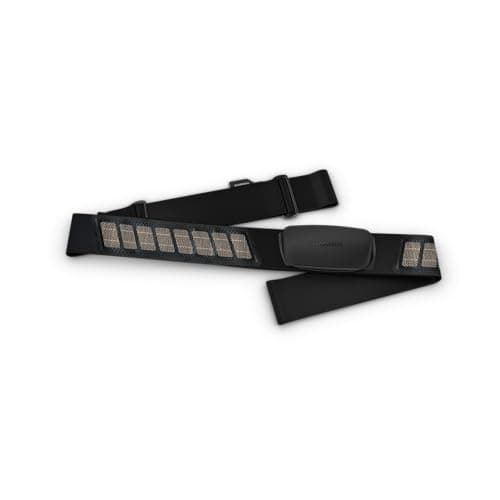 Garmin HRM-Dual The correct answer for most indoor riders: real ECG measurement, dual broadcast, three and a half years of battery, and none of the money spent on features you will not use. | Best budget heart rate strap | 9.09.0 out of 10 | $59.95 · View on Amazon #ad We may earn a commission · Price as of October 22, 2026 |
| 2 | 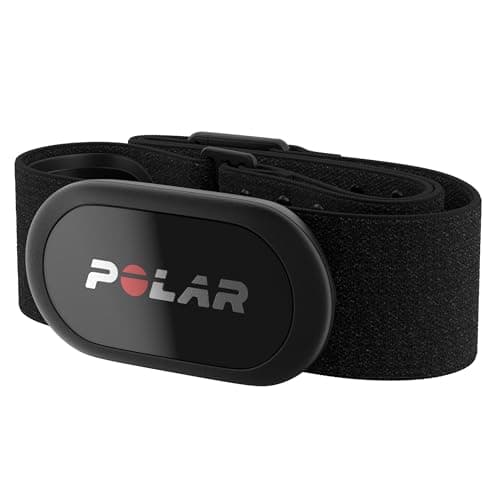 Polar H10 Worth the premium only if you use HRV to guide training or want the strap to record without a phone. Otherwise the Garmin does the same job. | Step up for HRV and recording | 9.39.3 out of 10 | $104.45 · View on Amazon #ad We may earn a commission · Price as of October 22, 2026 |
Most heart rate straps are sold on features you will never use. Running dynamics, swimming modes, recovery scores, proprietary app ecosystems. The Garmin HRM-Dual is the opposite proposition: an ECG chest strap that broadcasts your heart rate over ANT+ and Bluetooth at the same time, costs about half what the premium straps cost, and runs for up to three and a half years on a coin cell.
For an indoor cyclist, that is very close to a complete answer — and the questions worth asking are what you give up at this price, and whether the two things you give up matter.
The battery figure is not a typo
Garmin quotes up to 3.5 years from a CR2032 at an average of one hour of use per day. That is the best battery specification in the category by a very wide margin — the Polar H10 manages up to 400 hours, and rechargeable straps like the Wahoo TRACKR run around 100 hours per charge.
This matters more than it sounds, because a heart rate strap is a device you want to stop thinking about. Every rechargeable sensor in a pain cave is one more thing that can be flat when you have forty-five minutes and the motivation to use them. With a multi-year cell, the strap is simply always ready, and when it eventually is not, the fix is a CR2032 from any supermarket and a coin to open the door.
Unlimited ANT+ connections: the indoor advantage
Garmin publishes an unusual detail — unlimited simultaneous ANT+ connections, and two Bluetooth connections. That asymmetry is worth understanding, because it maps directly onto how an indoor setup actually works.
ANT+ is a broadcast protocol: the strap shouts its heart rate into the room and any number of devices can listen without the strap knowing or caring. Bluetooth is a paired protocol: a connection is negotiated, and the number of simultaneous partners is limited.
In practice, a typical pain cave has a tablet running Zwift, possibly a head unit recording a backup file, and a trainer that may itself want to relay the strap. On a single-connection sensor, the first device to claim the signal keeps it and the others show nothing — one of the most common frustrations our connection troubleshooting guide deals with. If your devices speak ANT+, the HRM-Dual sidesteps that entirely. If you are Bluetooth-only, an ANT+ adapter is a cheap way to unlock the better half of this strap.
| Garmin HRM-Dual | Polar H10 | Wahoo TRACKR | |
|---|---|---|---|
| Measurement | ECG electrodes | ECG electrodes | ECG electrodes |
| Battery | CR2032, up to 3.5 years | CR2025, up to 400 h | Rechargeable, ~100 h |
| ANT+ | Unlimited connections | Yes | Yes |
| Bluetooth | Two connections | Two simultaneous | Yes |
| Onboard memory | No | One session, up to 30 h | No |
| HRV | Yes | Reference-grade | Yes |
| 5 kHz gym equipment | No | Yes | No |
| Weight | 54.4 g with strap | 0.7 oz sensor | Not published |
| Price band | Budget | Premium | Premium |
What you actually give up
Two things, and for most riders neither is decisive.
No onboard memory. The H10 can record a session by itself and sync afterwards. The HRM-Dual cannot; it needs a receiving device present. Indoors that is rarely an issue, since the whole point of the session is that something is displaying it — but it does mean that if Zwift crashes at minute fifty, the heart rate data goes with it.
No premium strap.Polar's Pro strap uses silicone dots that grip properly; Garmin's plain elastic is more prone to creeping down your ribs during hard efforts, which shows up as dropouts and spikes. This is fixable — fit it snugly and wet the electrodes — and it is the single most common cause of bad readings on any strap.
What you do not give up is accuracy. The HRM-Dual measures the same electrical signal with the same technology as straps costing twice as much, and it reports heart rate variability as well as heart rate. The premium in this category buys HRV fidelity, recording and comfort — not a fundamentally better heart rate number.
Living with it indoors
Wet the electrodes before every ride. This is the whole maintenance routine and skipping it is responsible for most of the "my heart rate says 195 in the first two minutes" reports on every forum. The strap needs a conductive path to your skin and does not have one until you sweat.
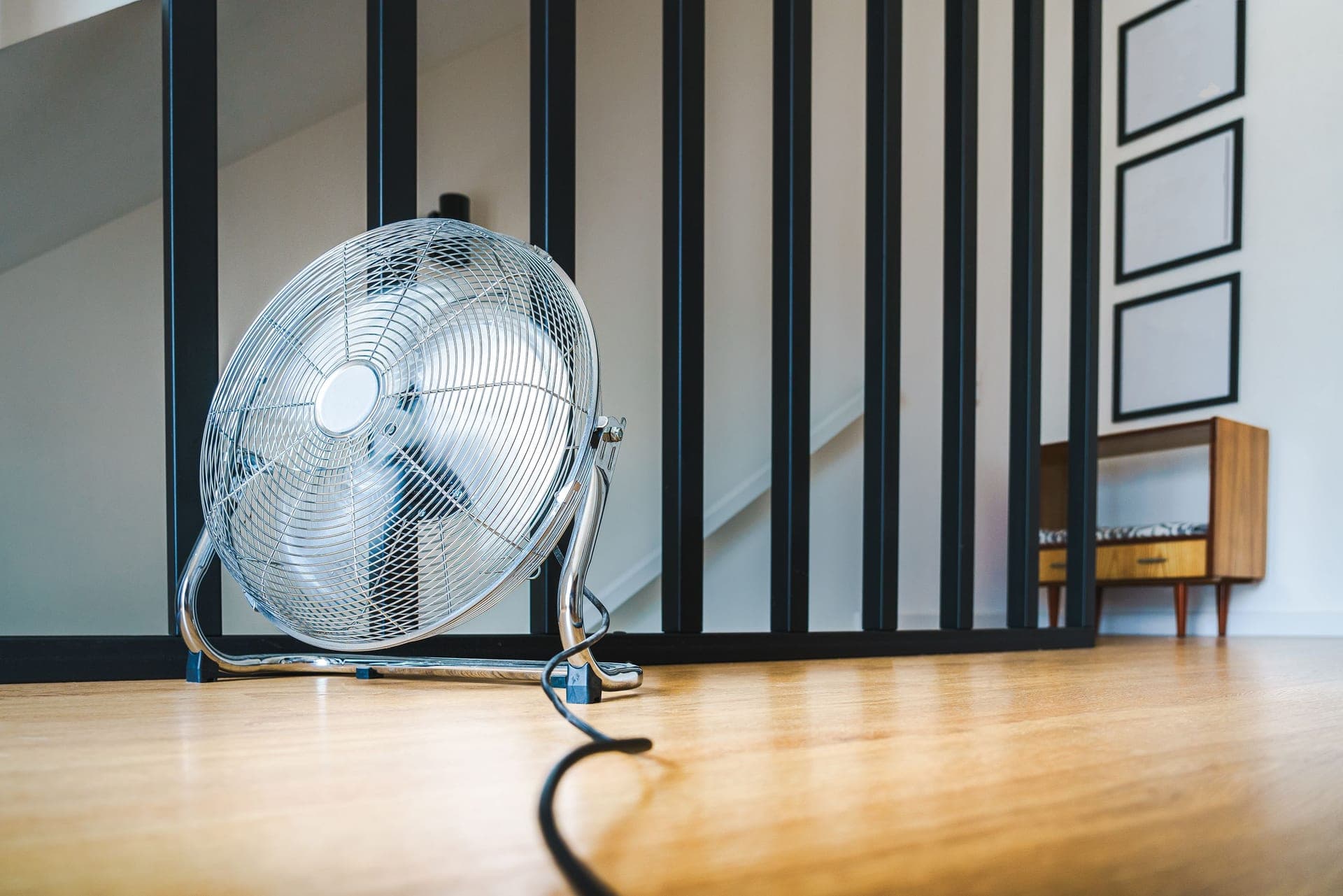
Rinse it afterwards. Indoor sweat is far more concentrated on kit than outdoor riding, because it lands in one place for an hour with no airflow unless you have a proper fan — which, incidentally, is the single accessory that improves an indoor session more than anything else. Salt degrades both the elastic and the conductive fabric, and a strap that has gone hard or stopped gripping should be replaced rather than argued with. The sensor pod will outlast several straps.
Pair it as a heart rate source in your app of choice; if your trainer supports a heart-rate relay — the Kickr Core 2 does — routing the strap through the trainer removes one more connection from the chain.
Do you need a heart rate strap at all?
Honest answer: if you own a smart trainer or a power meter, power is the better primary number for prescribing and executing training. It responds instantly, it does not drift with heat or caffeine, and it is what structured workouts are written in.
Heart rate remains useful as the second number — it tells you what a given wattage is costing you today, which is exactly the information power cannot provide. That comparison is the subject of our power meter vs heart rate guide, and the practical conclusion is that a cheap accurate strap alongside power beats an expensive strap on its own.
Which is precisely the case for this one.
Comparing straps?
See every heart rate monitor rankedThe full reviews
Every pick, in detail
#1 · Best budget heart rate strap
Garmin HRM-Dual
9.09.0 out of 10#ad We may earn a commission · Price as of October 22, 2026
The correct answer for most indoor riders: real ECG measurement, dual broadcast, three and a half years of battery, and none of the money spent on features you will not use.
- Measurement
- ECG electrodes, chest strap
- Battery
- CR2032, up to 3.5 years at 1 h/day
- Connectivity
- ANT+ (unlimited) and Bluetooth LE (two)
- Weight
- 54.4 g including strap
- Module size
- 62 x 34 x 11 mm
- Data
- Heart rate and heart rate variability
What we'd praise
- Up to 3.5 years on a CR2032 — the best battery life of any strap we know of, by a distance
- Unlimited simultaneous ANT+ connections, so every device in the room can listen at once
- Cheapest strap we would actually recommend, at roughly half the price of the premium options
- Does exactly one job and does it properly, with nothing to configure
- User-replaceable battery behind a simple coin-slot door
What we'd flag
- No onboard memory — it needs a watch, head unit or app present to record anything
- No running dynamics; this is the plain strap, not Garmin's Pro or 600-series
- Two Bluetooth connections rather than the unlimited ANT+ side, which occasionally matters indoors
- The plain elastic strap slides more easily than Polar's silicone-dotted Pro strap
The HRM-Dual is a deliberately unambitious product and that is its whole appeal. It measures heart rate with ECG electrodes, broadcasts it over ANT+ and Bluetooth simultaneously, and runs for up to three and a half years on a coin cell. There is nothing else in it.
For a rider whose heart rate needs to appear on a screen next to their watts, that list is complete. Everything above it in price is buying HRV precision, onboard recording or running analytics.
#2 · Step up for HRV and recording
Polar H10
9.39.3 out of 10#ad We may earn a commission · Price as of October 22, 2026
Worth the premium only if you use HRV to guide training or want the strap to record without a phone. Otherwise the Garmin does the same job.
- Measurement
- ECG electrodes, chest strap
- Battery
- CR2025, up to 400 hours
- Connectivity
- Bluetooth LE (two), ANT+, 5 kHz gym
- Internal memory
- One session, up to 30 hours
- Water resistance
- WR30
- Strap
- Silicone-dotted Pro strap
What we'd praise
- The reference sensor for heart rate variability, used in published validation research
- Records a session entirely on its own, no phone or head unit needed
- The Pro strap does not creep down your ribs during hard efforts
- Also speaks the 5 kHz standard used by commercial gym equipment
What we'd flag
- Roughly twice the price for accuracy most riders will not act on
- 400 hours is excellent and still a fraction of the HRM-Dual's multi-year cell
- Takes a CR2025, not the ubiquitous CR2032
If you have read this far and are wondering whether to spend more, the H10 is where the money goes: better HRV fidelity, onboard recording, and a strap that stays put. Full detail in our Polar H10 review.
Good questions
Frequently asked questions
How long does the Garmin HRM-Dual battery last?
Garmin quotes up to 3.5 years from a user-replaceable CR2032, based on an average of one hour of use per day. That is the longest battery life of any mainstream heart rate strap — the Polar H10 manages up to 400 hours and rechargeable straps run around 100 hours per charge.
Does the Garmin HRM-Dual work with Zwift?
Yes. It broadcasts over both ANT+ and Bluetooth LE simultaneously, so Zwift will see it either way. The ANT+ side supports unlimited simultaneous connections, which means a tablet, a head unit and anything else in the room can all read it at once without repairing.
Is the Garmin HRM-Dual accurate enough?
Yes. It uses the same ECG measurement as straps costing twice as much — reading the electrical signal that fires your heart rather than inferring pulse from light. The premium in this category buys HRV fidelity, onboard recording and a better strap, not a fundamentally better heart rate number.
Garmin HRM-Dual or Polar H10?
The HRM-Dual for most riders: same measurement method, far longer battery, unlimited ANT+ connections, about half the price. The H10 if you actively use HRV to guide training, want the strap to record a session with no phone present, or want the silicone-dotted Pro strap that does not slide during hard efforts.
Does the HRM-Dual record data without a watch?
No. Unlike the Polar H10 it has no onboard memory, so a watch, head unit or app has to be present and receiving. Indoors that is rarely a problem, though it does mean a crashed app takes the heart rate data with it.
Why does my heart rate strap read too high at the start of a ride?
Dry electrodes, almost every time. The strap needs a conductive path to your skin and does not have one until you sweat, so it reports noise for the first few minutes. Wet the electrodes before you start. If it keeps happening on an older strap, the fabric has degraded and needs replacing.
How we sourced this
- Garmin HRM-Dual heart rate monitor specifications (manufacturer)
- Garmin HRM-Dual heart rate strap in-depth review (DC Rainmaker)
- Garmin HRM-Dual review — battery life and connectivity (Cyclingnews)
- Polar H10 heart rate sensor specifications for comparison (manufacturer)
- Wahoo heart rate monitors, current range and specifications (manufacturer)
Keep going