Accessory Review
Polar H10 Review
The strap that research papers use when they need a reference. Here is what that accuracy actually buys an indoor cyclist, and when a cheaper strap is the smarter purchase.
The short answer
Quick picks
| # | Product | Best for | Score | Price |
|---|---|---|---|---|
| 1 | 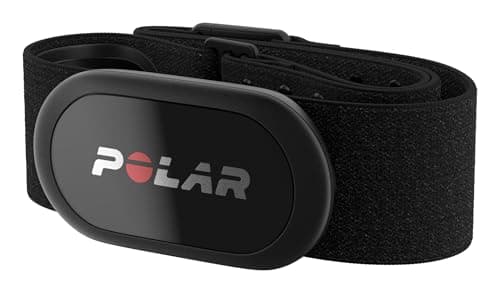 Polar H10 The most accurate heart rate sensor most riders can buy, with the connectivity to sit at the center of an indoor setup. If you are going to wear a strap, wear this one. | Best heart rate strap | 9.39.3 out of 10 | $104.45 · View on Amazon #ad We may earn a commission · Price as of October 21, 2026 |
| 2 | 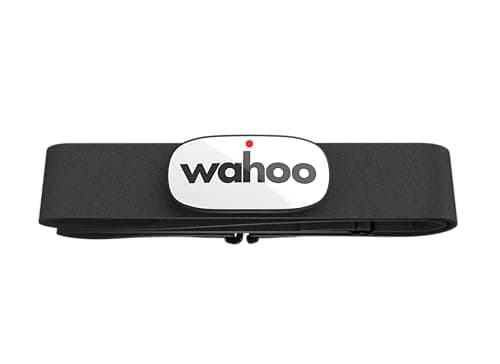 Wahoo TRACKR Heart Rate The strap to buy if you would rather charge something than replace a battery — and the obvious choice inside a Wahoo setup. | Best rechargeable alternative | 8.78.7 out of 10 | $98.50 · View on Amazon #ad We may earn a commission · Price as of October 21, 2026 |
Heart rate is the oldest number in endurance training and the one most people now get wrong, because most people read it off a watch. An optical sensor on your wrist shines light into your skin and infers pulse from how the reflection changes — a genuinely clever piece of engineering that struggles with exactly the conditions cycling produces: cold hands, high cadence vibration, and rapid changes in effort.
A chest strap measures the electrical signal that makes your heart contract. It is not an estimate, it is the actual event, and the Polar H10 is the strap that everyone else's strap gets compared against — including in published research on heart rate variability, where it is routinely used as the reference against clinical ECG.
Why ECG beats optical, specifically for cyclists
The failure modes of an optical wrist sensor line up almost perfectly with the things cyclists do.
Cold and vasoconstriction. Blood flow to the skin drops in the cold and at the start of a ride. Less blood near the surface means a weaker optical signal, which is why watches so often show a plausible-looking but wrong heart rate for the first ten minutes.
Vibration and cadence lock. A wrist sensor can latch onto the rhythmic movement of the arm and report your cadence back to you as a heart rate. It is a well-documented failure and it looks entirely convincing on the screen.
Rapid change. Optical sensors smooth aggressively to suppress noise, so the number lags the effort. During a set of thirty-second efforts, the lag is a meaningful fraction of the interval.
Indoors, two of these three get worse rather than better: you are stationary, so the airflow that would normally warm your hands does not exist unless you own a serious fan, and your position on the bars is fixed, which encourages exactly the kind of steady arm vibration that confuses an optical reading.
| Polar H10 | Wahoo TRACKR | Garmin HRM-Dual | |
|---|---|---|---|
| Measurement | ECG electrodes | ECG electrodes | ECG electrodes |
| Battery | CR2025, up to 400 h | Rechargeable | CR2032, up to 3.5 years |
| Bluetooth connections | Two simultaneous | Yes | Two |
| ANT+ | Yes | Yes | Yes, unlimited connections |
| 5 kHz gym equipment | Yes | No | No |
| Onboard memory | One session, up to 30 h | No | No |
| Water resistance | WR30 | IPX7 | Rated for sweat and rain |
| HRV | Reference-grade | Yes | Yes |
| Price band | Premium | Premium | Budget |
The connectivity is the underrated part
Two simultaneous Bluetooth connections plus ANT+ sounds like a specification-sheet detail and it is actually the reason the H10 fits an indoor setup so well.
Picture a normal pain cave session. Zwift is running on a tablet. A Garmin on the bars is recording the same ride as a backup. Your trainer is talking to the tablet over WiFi or Bluetooth. On a single-connection strap, the first device to grab the heart rate signal owns it and the second one shows nothing — a source of a genuinely large share of the "why can I not see my heart rate" questions our connection troubleshooting guide exists to answer.
The H10 hands out two Bluetooth channels and an ANT+ broadcast that anything can listen to. In practice that means it never has to be repaired between devices, and it is one fewer thing to fight before a workout. It also speaks the old 5 kHz gym standard, which is only relevant if you also use commercial gym equipment, but costs nothing to have.
Onboard memory: the feature you will use once and then love
The H10 can record a session by itself — up to 30 hours in its own memory, with no phone, watch or head unit involved. Start it from the Polar app, ride, and sync afterwards.
For an indoor rider this is a small but genuine safety net. If Zwift crashes mid-session, or the tablet battery dies, or you simply forget to start the recording, the strap has the data anyway. It is also the tidiest way to capture a resting HRV measurement in the morning without wearing a watch to bed.
Four hundred hours, and the battery detail to note
Polar quotes up to 400 hours, which is around a year of daily hour-long training. That is excellent, and it is one of the reasons the H10 feels less like a gadget and more like part of the kit.
One practical note: it takes a CR2025, not the far more common CR2032. They look similar and they are not interchangeable — the 2025 is thinner. Buy a couple when you buy the strap and put them somewhere you will find them.
Comfort, and the part that actually wears out
The Pro strap uses silicone dots rather than a smooth elastic band, and the difference is real: it does not creep down your ribs during a hard session, which is the main cause of dropouts and spiky data on cheaper straps. Fit it snugly and wet the electrodes before you start — dry electrodes are behind the great majority of "my heart rate reads 190 in the first minute" complaints.
The sensor pod lasts for years. The fabric strap does not: sweat degrades the elastic and the conductive material, and a strap that has gone hard or stopped gripping should be replaced rather than argued with. Rinse it after indoor sessions — indoor sweat is far more concentrated on kit than outdoor riding is, which is also why a sweat net is on our essentials list.
If the H10's price is giving you pause, the H9 uses the same electrodes and the same coin cell; Polar H10 vs H9 goes through the three things the H10 adds and which riders use them. And for what a chest strap is actually for on a trainer, our FTP test guide explains how heart rate makes a power test interpretable.
Who should buy it
Buy the H10 if heart rate matters to how you train — if you use HRV to guide recovery, if you do structured work where lag matters, or if you want one sensor that talks to everything in the room at once. It is the best consumer heart rate sensor available and it is not a close contest.
Buy something cheaper if you just want a number on the screen next to your watts. Any ECG strap delivers that, and the roundup covers the value options. And if you are wondering whether heart rate or power should be your primary guide indoors, our power meter vs heart rate guide answers that directly.
The H10's two simultaneous Bluetooth connections plus ANT+ is also why it tops our best heart rate monitors for Zwift ranking — on a platform with a hard connection ceiling, a strap that can feed two consumers at once is doing something the cheaper straps cannot. ANT+ vs Bluetooth for Zwift explains the underlying protocol difference.
Not sure a strap is worth it?
Compare every heart rate monitorPolar also makes the optical armband most often cross-shopped against this strap. If you find chest straps uncomfortable, chest strap vs armband heart rate monitor sets the H10 against the Verity Sense and explains exactly what the optical measurement costs you on short intervals.
The full reviews
Every pick, in detail
#1 · Best heart rate strap
Polar H10
9.39.3 out of 10#ad We may earn a commission · Price as of October 21, 2026
The most accurate heart rate sensor most riders can buy, with the connectivity to sit at the center of an indoor setup. If you are going to wear a strap, wear this one.
- Measurement
- ECG electrodes, chest strap
- Battery
- CR2025, up to 400 hours
- Connectivity
- Bluetooth LE, ANT+, 5 kHz gym
- Internal memory
- One session, up to 30 hours
- Water resistance
- WR30
- Sensor weight
- 0.7 oz
What we'd praise
- The reference strap for heart rate variability — used in published validation research, not just marketing copy
- Two simultaneous Bluetooth connections plus ANT+, so a head unit and Zwift can both see it at once
- Onboard memory records a session with no phone or watch present at all
- Up to 400 hours from a CR2025, which is roughly a year of daily hour-long rides
- The silicone-dotted strap genuinely does not slide, which is the difference between clean data and noise
What we'd flag
- It is a chest strap, and some people simply will not wear one
- The most expensive mainstream strap, and much of what you pay for is HRV accuracy you may never use
- CR2025 rather than the more common CR2032 — worth knowing before you go looking for a spare
- The strap itself wears out long before the sensor does, and replacements are an ongoing cost
The H10 measures the electrical activity of your heart with ECG electrodes rather than inferring it from light bounced off your wrist. That is the whole difference: an optical sensor estimates, an ECG strap measures, and every serious comparison of the two ends the same way.
What makes it particularly good indoors is the radio. Two simultaneous Bluetooth connections plus ANT+ means it can feed Zwift and a head unit at the same time without either dropping.
#2 · Best rechargeable alternative
Wahoo TRACKR Heart Rate
8.78.7 out of 10#ad We may earn a commission · Price as of October 21, 2026
The strap to buy if you would rather charge something than replace a battery — and the obvious choice inside a Wahoo setup.
- Measurement
- ECG electrodes, chest strap
- Battery
- Rechargeable
- Connectivity
- Bluetooth, ANT+
- Data
- Heart rate and HRV
- Water resistance
- IPX7
- Replaces
- Wahoo TICKR and TICKR X
What we'd praise
- Rechargeable, so there is no coin cell to hunt for at the wrong moment
- Better sealed than the coin-cell design it replaces, which matters given how much sweat lands on it
- Reports HRV alongside heart rate
- Pairs cleanly with Wahoo trainers, including the Kickr Bridge relay on the Core 2
What we'd flag
- Around 100 hours per charge against the H10's 400 on a coin cell — a real step down in convenience
- No onboard memory, so it needs a receiving device to record anything
- Another cable and another charging habit in a room that already has several
The TRACKR is Wahoo's replacement for the TICKR and TICKR X, and the headline change is the move from a replaceable coin cell to a rechargeable battery. That buys better sealing against sweat and costs you a lot of runtime.
Full context on that transition is in our Wahoo TICKR review.
Good questions
Frequently asked questions
Is the Polar H10 more accurate than a watch?
Substantially, and especially for cycling. The H10 measures the heart's electrical signal with ECG electrodes; a wrist watch infers pulse from light reflected off the skin. Optical sensors struggle with cold hands, rhythmic arm vibration and rapid changes in effort — which describes most interval sessions, indoors and out.
Can the Polar H10 connect to Zwift and a bike computer at the same time?
Yes. It supports two simultaneous Bluetooth connections plus an ANT+ broadcast, so Zwift on a tablet and a Garmin on the bars can both see it without repairing. That is a genuine advantage over single-connection straps, where the first device to claim the signal keeps it.
How long does the Polar H10 battery last?
Polar quotes up to 400 hours, roughly a year of daily hour-long training. It takes a CR2025 coin cell, not the more common CR2032 — they look similar but the CR2025 is thinner and they are not interchangeable, so buy spares when you buy the strap.
Does the Polar H10 record without a phone?
Yes. It has onboard memory for one session of up to 30 hours, started from the Polar app and synced afterwards. That is a useful safety net indoors — if the app crashes or the tablet dies mid-session, the strap still has the data.
Polar H10 or Wahoo TRACKR?
The H10 for data quality, connectivity and battery life — 400 hours on a coin cell against roughly 100 per charge, plus onboard memory and dual Bluetooth. The TRACKR if you would rather charge a device than replace a coin cell, or if you are already inside a Wahoo setup where it pairs neatly with the trainer.
Why does my heart rate read too high at the start of a ride?
Almost always dry electrodes. The strap needs a conductive path to your skin, and until you sweat it does not have one, so it reports noise. Wet the electrodes before you start and the problem disappears. If it persists on a strap that has been used for a year or two, the fabric has degraded and needs replacing.
How we sourced this
- Polar H10 heart rate sensor specifications (manufacturer)
- Validity of the Polar H10 sensor for heart rate variability analysis (PubMed)
- Polar H10 heart rate monitor review (Cyclingnews)
- Wahoo heart rate monitors, current range and specifications (manufacturer)
- Wahoo TRACKR heart rate monitor review (Cyclist)
Keep going
Read these next
- AccessoriesThe Best Heart Rate Monitors for Zwift
- GuidesANT+ vs Bluetooth for Zwift
- AccessoriesPolar H10 vs Polar H9
- GuidesHow to Do an FTP Test
- AccessoriesThe Best Heart Rate Monitors for Cycling
- AccessoriesWahoo TICKR Review
- GuidesPower Meter vs Heart Rate Monitor
- AccessoriesThe Indoor Cycling Accessories Checklist