Pain Cave
Polar H10 Alternatives, Ranked
The H10 is the reference chest strap, and three specific features justify its price. Work out whether you use any of them and the alternatives sort themselves out.
The short answer
Quick picks
| # | Product | Best for | Score | Price |
|---|---|---|---|---|
| 1 | 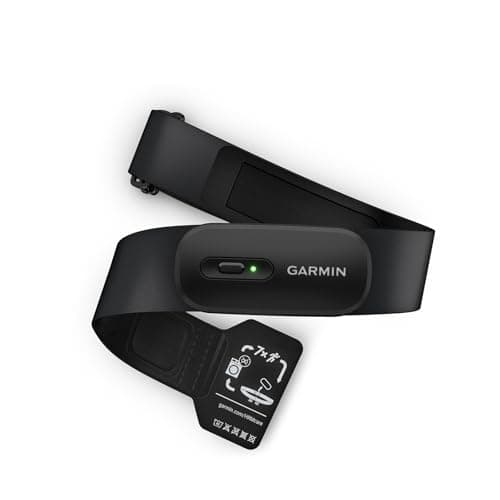 Garmin HRM 200 For the rider who wants the H10's job done for less: a dual-band chest strap with a washable strap and a replaceable cell, and the obvious pick if your head unit is a Garmin. | Best Polar H10 alternative overall | 8.88.8 out of 10 | $78.23 · View on Amazon #ad We may earn a commission · Price as of November 22, 2026 |
| 2 | 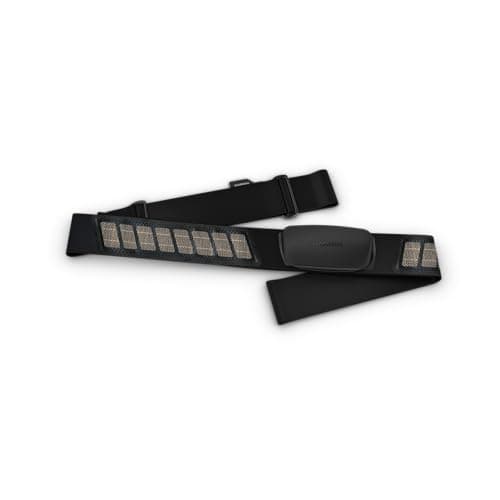 Garmin HRM-Dual For the rider whose last heart rate strap died of a flat battery in a drawer: up to 3.5 years on one coin cell, with HRV data and published connection limits. | Best alternative if you never want to think about the battery | 8.88.8 out of 10 | $59.99 · View on Amazon #ad We may earn a commission · Price as of November 22, 2026 |
| 3 | 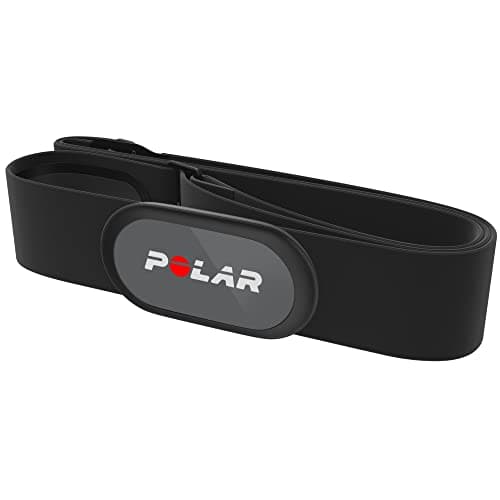 Polar H9 For the rider who likes Polar and just wants to spend less: the H10's strap and comfort without the onboard memory or the swim rating. | Closest alternative that is still a Polar | 8.68.6 out of 10 | $69.90 · View on Amazon #ad We may earn a commission · Price as of November 22, 2026 |
| 4 | 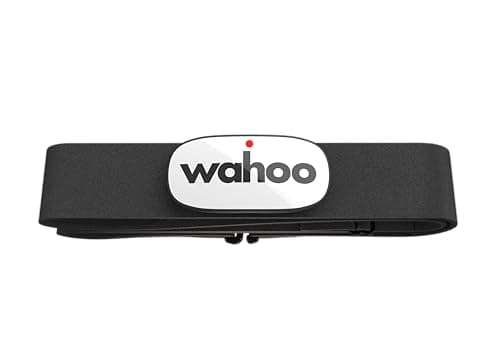 Wahoo TRACKR Heart Rate Monitor For the rider in a Wahoo pain cave who would rather plug something in than hunt for a CR2032: a rechargeable dual-band strap with an LED that tells you it is alive. | Best alternative if you would rather charge than replace | 8.48.4 out of 10 | |
| 5 | 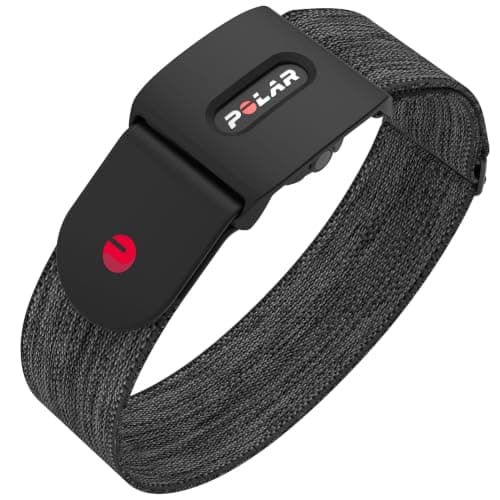 Polar Verity Sense For the rider whose objection is the strap rather than the brand: an optical armband that keeps the H10's onboard recording, at the cost of slower response during hard intervals. | Best alternative if the chest strap itself is the problem | 8.38.3 out of 10 | |
| 6 | 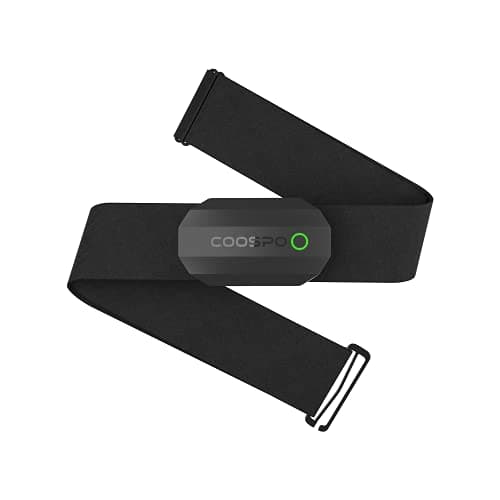 COOSPO H808S Heart Rate Monitor The budget pick: the cheapest dual-band chest strap we are willing to rank, with a published IP67 rating and no ecosystem behind it. | Budget pick: the cheapest dual-band strap worth owning | 8.08.0 out of 10 |
The H10 is a genuinely good product and this page is not an argument against it. It is a question: three things separate the H10 from a $40 strap, and most riders do not use any of them. Work out which of the three you actually need and the shortlist below answers itself.
What the Polar H10 gives you that cheaper straps do not
Onboard memory. The H10 can record a session by itself and sync it afterwards, with no phone or head unit paired. If you always ride looking at a screen — which covers essentially all indoor cycling — you will never use this. If you swim, or ride with nothing on the bars, it is the feature.
Two simultaneous Bluetooth connections plus ANT+. That means a tablet running Zwift and a watch recording the ride can both read the strap at once without a fight. Only one alternative on this page — the Verity Sense — publishes the same arrangement, though the Garmin HRM-Dual publishes unlimited ANT+ plus two Bluetooth LE, which amounts to the same practical outcome.
A swim rating. The H10 is swim-rated and most of the straps here are sweat-rated. For an indoor cyclist that is a difference without a consequence. For a triathlete it is the whole reason to buy an H10.
If none of those three described you, you are in the right place. If one of them did, buy the H10 — our H10 review covers it properly and we would rather tell you that than sell you a strap you will replace.
How we ranked them
Published connectivity first, because a strap that cannot talk to the tablet and the watch at once will annoy you weekly, and because several makers publish nothing here at all. Then strap comfort and the strap itself — electrode layout and whether the band is washable and replaceable, which is what determines how long any monitor lasts. Then battery arrangement, where the spread runs from 3.5 years on a coin cell to a rechargeable pack. Then value.
We have not lab-tested these against an ECG. Every figure below is the manufacturer's own published specification, and where a maker publishes nothing — several do not publish connection counts — we say so rather than estimating. How we review explains the method.
| Monitor | Type | Connectivity | Battery | Onboard memory | Water rating |
|---|---|---|---|---|---|
| Polar H10 (the benchmark) | Chest strap | Two Bluetooth + ANT+ | Replaceable coin cell | Yes — one session | Swim rated |
| Garmin HRM 200 | Chest strap | Bluetooth + ANT+ | Replaceable coin cell | No | Not swim rated |
| Garmin HRM-Dual | Chest strap, ECG electrodes | Unlimited ANT+ + two Bluetooth LE | CR2032, up to 3.5 years at 1 h/day | No | Not swim rated |
| Polar H9 | Chest strap | Bluetooth + ANT+ | Replaceable coin cell | No | Water resistant |
| Wahoo TRACKR | Chest strap | Bluetooth + ANT+ | Rechargeable | No | Not published |
| Polar Verity Sense | Optical armband | ANT+ + two Bluetooth | Rechargeable, up to 30 h | Yes — 16 MB, ~600 h | WR50 |
| COOSPO H808S | Chest strap | Bluetooth + ANT+ | Replaceable coin cell | No | IP67 |
Electrodes against optical, said plainly
Five of these are electrical chest straps and one is an optical armband, and the difference is physical rather than a matter of quality. Electrodes read the heart's electrical signal directly. Optical sensors shine light into tissue and infer heart rate from changes in blood flow, which is a step removed and therefore slower to respond.
On steady riding, the gap is small enough not to matter. On short, hard intervals — where your heart rate is changing by 30 beats in twenty seconds — an optical sensor lags, and lag is exactly where you were looking at the number. The flip side is comfort: nothing strapped around your ribs is comfortable at hour two, and an armband largely is.
So the rule is use-dependent rather than quality-dependent. Short structured intervals and HRV work: chest strap. Long steady sessions and "I hate chest straps": armband. Chest strap vs armband has the full argument.
The battery question is the one people actually regret
Accuracy complaints about these straps are rare. Dead-strap complaints are not, and the arrangements here differ enormously.
A long-life coin cell — Garmin quotes up to 3.5 years for the HRM-Dual at an hour a day — effectively removes the issue for several seasons. A rechargeable strap like the TRACKR never needs a specific battery, but it does need a habit, and a sealed pack has a finite life. A standard coin cell, as on the HRM 200, H9 and H808S, is a two-minute fix whenever it happens, provided you have one.
One practical note that applies to all of them: the most common "my strap is broken" is a dry strap, not a flat battery. Electrical straps need damp contact to read at all, and the second most common is a worn band — which is why a washable, replaceable strap is on our ranking criteria.
Where this fits with our other heart rate pages
This page starts from the H10 and asks what replaces it, which is a different question from the ones our other pages answer, and we would rather say so than have you read three pages. The best heart rate monitors for cycling ranks the whole market with the H10 included and first. Heart rate monitors under $100 is the price band. Heart rate monitors for Zwift is about pairing and connection limits specifically.
The verdict
Buy the Garmin HRM 200if you want the H10's everyday job for less, particularly in a Garmin household. Buy the Garmin HRM-Dualif battery life is your real grievance — 3.5 years on a coin cell is the strongest claim here, and its published connection limits match the H10's in practice. Buy the Polar H9 if you want to stay with Polar and simply spend less, accepting the loss of onboard memory. Buy the Wahoo TRACKR if your pain cave is Wahoo and you prefer charging to cell-hunting. Buy the Polar Verity Sense if the strap itself is what you are escaping, and accept slower response on sharp intervals. Buy the COOSPO H808S — the budget pick — if you want heart rate in Zwift and nothing else.
And if you use onboard memory, two Bluetooth connections and a swim rating, buy the H10. That is what it is for.
Starting from scratch?
See every heart rate monitor we rankTwo neighbors worth reading before you commit: Polar H10 vs Polar H9 is the within-brand version of this decision, and power meter vs heart rate monitor is the bigger question of where this money belongs.
The full reviews
Every pick, in detail
#1 · Best Polar H10 alternative overall
Garmin HRM 200
8.88.8 out of 10#ad We may earn a commission · Price as of November 22, 2026
For the rider who wants the H10's job done for less: a dual-band chest strap with a washable strap and a replaceable cell, and the obvious pick if your head unit is a Garmin.
- Type
- Chest strap, electrical
- Connectivity
- Bluetooth and ANT+
- Battery
- Replaceable coin cell
- Ecosystem
- Garmin Edge and watches
- Strap
- Washable, replaceable
- Sizing
- M-XL
What we'd praise
- Dual-band — Bluetooth and ANT+ — so it pairs with Zwift, a head unit and a watch
- Costs less than the H10 while doing the job most riders actually ask of a strap
- The natural choice if your head unit or watch is already a Garmin
- Washable, replaceable strap, which is what determines how long any monitor survives
- Replaceable coin cell, so there is nothing to charge and nothing sealed to age out
What we'd flag
- No onboard memory, so it cannot record a session without a paired device
- Not swim-rated the way the H10 is
- Garmin publishes fewer connection-count details than Polar does for the H10
- Sizing runs M-XL, which is a narrower range than some straps offer
- Coin cells are a consumable, however long they last
If you are looking for a Polar H10 alternative because of the price, this is the one. The HRM 200 is a dual-band electrical chest strap — Bluetooth and ANT+ — with a washable, replaceable strap and a coin cell you swap rather than charge. For the overwhelming majority of indoor cycling use, that is the complete feature set.
It is also the obvious answer if your bike computer or watch is a Garmin, because the strap, the device and Garmin Connect all behave as one system: one pairing, one firmware path, one app. That integration is worth more in daily use than any specification on the box.
What you give up against the H10 is onboard memory and the swim rating. Our main heart rate monitor roundup ranks it against the H10 directly, and the Zwift-specific page covers pairing.
#2 · Best alternative if you never want to think about the battery
Garmin HRM-Dual
8.88.8 out of 10#ad We may earn a commission · Price as of November 22, 2026
For the rider whose last heart rate strap died of a flat battery in a drawer: up to 3.5 years on one coin cell, with HRV data and published connection limits.
- Measurement
- ECG electrodes, chest strap
- Battery
- CR2032, up to 3.5 years at 1 h/day
- Connectivity
- ANT+ (unlimited) and Bluetooth LE (two)
- Weight
- 54.4 g including strap
- Module size
- 62 x 34 x 11 mm
- Data
- Heart rate and heart rate variability
What we'd praise
- Up to 3.5 years on a CR2032 at an hour a day — the longest battery claim on this page
- Unlimited simultaneous ANT+ connections plus two Bluetooth LE, which is published and specific
- Reports heart rate variability as well as heart rate, like the H10
- 54.4 g including the strap, so it genuinely disappears once it is on
- A long, well-documented service record across a huge installed base
What we'd flag
- No onboard memory, so it needs a paired device to record anything
- Not swim-rated
- An older design than the HRM 200, and sold alongside it rather than above it
- The two-Bluetooth limit matters if a tablet, a watch and a phone all want it at once
- A coin cell that lasts years is still a coin cell you will eventually have to find
The HRM-Dual answers the single most common complaint about heart rate monitors, which is not accuracy — it is that the thing is dead when you want it. Garmin quotes up to 3.5 years from one CR2032 at an hour of use a day. That is a strap you fit, forget, and replace a battery in three winters later.
The connectivity figures are also unusually specific, and specificity is useful: unlimited simultaneous ANT+ connections plus two Bluetooth LE. In a pain cave where a tablet, a head unit and a watch all want the same strap, knowing the published limit saves a lot of guessing. ANT+ vs Bluetooth for Zwift explains why that matters more indoors than out.
Like the HRM 200, it reads HRV as well as heart rate, so the training-metric side of the H10 is covered. The HRM-Dual review has the detail.
#3 · Closest alternative that is still a Polar
Polar H9
8.68.6 out of 10#ad We may earn a commission · Price as of November 22, 2026
For the rider who likes Polar and just wants to spend less: the H10's strap and comfort without the onboard memory or the swim rating.
- Type
- Chest strap, electrical
- Connectivity
- Bluetooth and ANT+
- Battery
- Replaceable coin cell
- Water resistance
- Water resistant
- Strap
- Washable Polar strap
- Onboard memory
- No
What we'd praise
- The same Polar strap and electrode design that makes the H10 comfortable
- Dual-band Bluetooth and ANT+, so nothing about your pairing changes
- Stays inside Polar Flow if that is already where your training data lives
- Replaceable coin cell rather than a sealed pack
- Cheaper than the H10 while keeping most of what people like about it
What we'd flag
- No onboard memory — this is the H10's main exclusive and the H9 does not have it
- Water resistant rather than swim-rated
- Polar publishes fewer simultaneous-connection details for it than for the H10
- If you specifically want an H10 for HRV reference work, the H9 is not a substitute
- Priced close enough to the H10 that it is worth checking both before buying
The H9 is the obvious alternative if your reason for looking is price rather than brand. It shares the strap design and electrode layout that make Polar straps comfortable, it is dual-band, and it keeps you inside Polar Flow if that is where your history lives.
The difference is specific and easy to evaluate: the H9 has no onboard memory. The H10 can record a session on its own and sync it afterwards, which is useful in a pool or on a ride where you carry no device at all. If you always ride with a phone, a head unit or a tablet in front of you — which describes almost all indoor cycling — you will never use it.
Polar H10 vs Polar H9 is the direct comparison with the full list, and our H10 review explains what the memory and the swim rating are for.
#4 · Best alternative if you would rather charge than replace
Wahoo TRACKR Heart Rate Monitor
8.48.4 out of 10For the rider in a Wahoo pain cave who would rather plug something in than hunt for a CR2032: a rechargeable dual-band strap with an LED that tells you it is alive.
- Type
- Chest strap, electrical
- Connectivity
- Bluetooth and ANT+
- Battery
- Rechargeable
- Indicator
- LED status light
- Ecosystem
- Wahoo app and head units
- Strap
- Washable, replaceable
What we'd praise
- Rechargeable, so there is no coin cell to source and no battery door to lose
- An LED status light, which removes the usual guesswork about whether it is awake
- Dual-band Bluetooth and ANT+, so Zwift, a head unit and a watch are all covered
- The obvious choice if your trainer and head unit are already Wahoo
- Washable, replaceable strap
What we'd flag
- Rechargeable means a cable and a habit, where a coin cell means neither
- The most expensive chest strap on this page
- No onboard memory and no swim rating
- A sealed battery has a finite life, unlike a replaceable cell
- Wahoo publishes less connection-count detail than Garmin or Polar
The TRACKR is the rechargeable option, and whether that is an advantage depends entirely on your habits. If you already charge a head unit and lights after every ride, adding a strap to that routine costs nothing and you never think about coin cells again. If you do not, a rechargeable strap is one more dead thing in a drawer.
The LED status light is a small feature that solves a real annoyance: electrical straps wake on contact with damp skin, and without an indicator the only way to know it is awake is to go looking in an app. This one tells you.
It is the natural pick if your trainer and computer are Wahoo — the Kickr roundup is the hardware side of that ecosystem — and our Wahoo TICKR review covers the cheaper strap in the same family.
#5 · Best alternative if the chest strap itself is the problem
Polar Verity Sense
8.38.3 out of 10For the rider whose objection is the strap rather than the brand: an optical armband that keeps the H10's onboard recording, at the cost of slower response during hard intervals.
- Type
- Optical armband
- Worn
- Upper arm, or a swimming goggle clip
- Connectivity
- ANT+ plus two simultaneous Bluetooth connections
- Battery
- Rechargeable, up to 30 hours
- Onboard memory
- 16 MB, about 600 hours of sessions
- Water resistance
- WR50
What we'd praise
- No chest strap at all, which for some riders is the entire reason to switch
- Onboard memory — 16 MB, around 600 hours — so it records without a paired device, like the H10
- Published connectivity: ANT+ plus two simultaneous Bluetooth connections
- Up to 30 hours rechargeable, and WR50 water resistance
- Far more comfortable than any strap on a long seated indoor session
What we'd flag
- Optical measurement is slower to respond than electrodes during sharp interval transitions
- Armband position and tightness affect the reading much more than a chest strap's does
- Not a like-for-like replacement if you use heart rate for HRV reference work
- Rechargeable, so it needs a charging habit
- The most expensive pick on this page
A large share of people searching for H10 alternatives do not want a different strap — they want to stop wearing a strap. The Verity Sense is the honest answer to that: an optical sensor on an upper-arm band, which is a far more comfortable place to carry a sensor through a two-hour seated session.
It is also the only pick here that keeps one of the H10's genuine exclusives: onboard memory. Polar publishes 16 MB, around 600 hours of sessions, so it can record with nothing paired to it at all. Connectivity is published too — ANT+ plus two simultaneous Bluetooth connections — and it is rated WR50.
The trade is real and worth stating clearly. Optical sensors infer heart rate from blood flow, which responds more slowly than electrodes reading the heart's electrical signal. On steady riding the difference is small; on 30-second intervals it lags. Chest strap vs armband heart rate monitor is the full comparison.
#6 · Budget pick: the cheapest dual-band strap worth owning
COOSPO H808S Heart Rate Monitor
8.08.0 out of 10The budget pick: the cheapest dual-band chest strap we are willing to rank, with a published IP67 rating and no ecosystem behind it.
- Type
- Chest strap
- Connectivity
- Bluetooth and ANT+
- Water resistance
- IP67
- Battery
- Replaceable coin cell
- Works with
- Zwift, Garmin, Wahoo, apps
- Strap
- Washable, adjustable
What we'd praise
- By far the cheapest dual-band strap here, at a fraction of the H10's price
- Bluetooth and ANT+ both present, which many cheap straps skip
- A published IP67 rating, which is a real figure rather than a vague sweat claim
- Works with Zwift, Garmin and Wahoo without anything proprietary in the way
- Replaceable coin cell and a washable, adjustable strap
What we'd flag
- No onboard memory and no swim rating
- COOSPO publishes far less technical detail than Polar, Garmin or Wahoo
- No app ecosystem or training platform behind it
- Long-term strap and electrode durability is the usual compromise at this price
- No published simultaneous-connection figures at all
If the H10's price is the whole objection, this is the floor of the market we are willing to stand behind. It is dual-band — Bluetooth and ANT+, which plenty of cheap straps drop — it carries a published IP67 rating, and it pairs with Zwift, Garmin and Wahoo without anything proprietary in the way.
What you are buying for the difference between this and an H10 is a sensor, not a system. There is no training platform, no published connection limits and much less technical documentation. For an indoor rider who wants heart rate in Zwift and nothing more, that is a perfectly rational trade.
Heart rate monitors under $100 is the band page where this competes head-on, and power meter vs heart rate monitor is worth reading if you are deciding where this money should go at all.
Good questions
Frequently asked questions
What is the best alternative to the Polar H10?
The Garmin HRM 200. It is a dual-band electrical chest strap - Bluetooth and ANT+ - with a washable, replaceable strap and a replaceable coin cell, and it costs less than the H10 while covering everything most indoor cyclists ask of a heart rate monitor. It is the obvious pick if your head unit or watch is a Garmin. If battery life is the priority, the Garmin HRM-Dual is quoted at up to 3.5 years on one CR2032 at an hour a day.
What does the Polar H10 do that cheaper straps do not?
Three things. It has onboard memory, so it can record a session with nothing paired to it. It publishes two simultaneous Bluetooth connections plus ANT+, so a tablet and a watch can both read it at once. And it is swim-rated rather than just sweat-rated. For an indoor cyclist who always rides looking at a screen, the first and third are rarely used - which is exactly why the alternatives on this page make sense for most riders.
Is the Polar H9 a good alternative to the H10?
Yes, if your reason for looking is price rather than brand. The H9 shares the strap design and electrode layout that make Polar straps comfortable, it is dual-band Bluetooth and ANT+, and it keeps your data in Polar Flow. The specific thing it lacks is onboard memory, so it cannot record a session without a paired device. It is also water resistant rather than swim-rated. Check both prices before deciding, because they sit closer together than the model numbers suggest.
Is an armband heart rate monitor as accurate as a chest strap?
It depends what you are measuring. Electrodes in a chest strap read the heart's electrical signal directly, while an optical armband infers heart rate from blood flow, which responds more slowly. On steady riding the difference is small. On short hard intervals, where your heart rate changes by tens of beats in seconds, the optical sensor lags noticeably. For heart rate variability work a chest strap is the right tool. For long steady sessions, the armband's comfort advantage is real.
Do all these heart rate monitors work with Zwift?
Yes. Every monitor on this page broadcasts over Bluetooth and ANT+, which covers Zwift on a PC, a Mac, an Apple TV, a tablet or a phone. The thing to watch is not compatibility but connection count: Bluetooth devices allow a limited number of simultaneous links, so a strap feeding both a tablet and a watch may run out. Garmin publishes unlimited ANT+ plus two Bluetooth LE for the HRM-Dual, and Polar publishes ANT+ plus two Bluetooth for the Verity Sense; several other makers publish nothing.
Why does my heart rate strap read erratically at the start of a ride?
Almost always because the electrodes are dry. An electrical chest strap needs damp contact with skin to pick up the signal at all, so the first few minutes of a ride - before you have started sweating - are when readings jump or drop out. Wetting the electrode pads before you put the strap on fixes it. The other common cause is a worn strap that no longer holds the electrodes against your skin, which is why a washable, replaceable band matters.
How we sourced this
- Polar — H10 heart rate sensor specifications
- Polar — H9 heart rate sensor specifications
- Polar — Verity Sense technical specifications (memory, connections, WR50, battery)
- Garmin — HRM-Dual product page (CR2032 life, ANT+ and Bluetooth connection limits, weight)
- Garmin — HRM 200 product page
- Wahoo — TRACKR heart rate monitor product page
- COOSPO — heart rate monitor product range
- DC Rainmaker — Garmin heart rate strap review (HRM-Dual)
Keep going