Accessories
The Best Heart Rate Monitors Under $100, Ranked
Every electrical chest strap reads the same signal, so the band under $100 is decided by something else: how many devices can listen at once, how long the battery lasts, and whether you can stand wearing it.
The short answer
Quick picks
| # | Product | Best for | Score | Price |
|---|---|---|---|---|
| 1 | 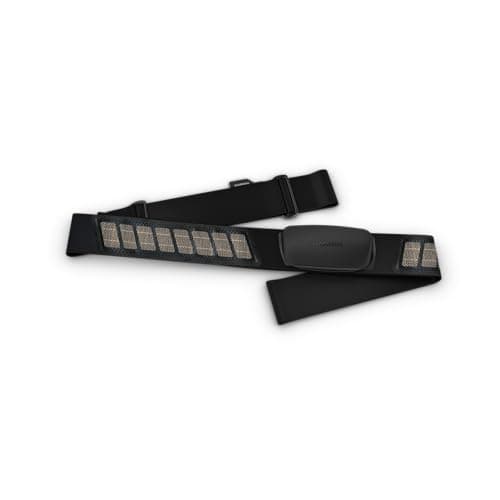 Garmin HRM-Dual Best for the indoor rider who wants two Bluetooth channels and a battery measured in years, for well under the band. | Best overall under $100 | 8.88.8 out of 10 | $59.99 · View on Amazon #ad We may earn a commission · Price as of November 22, 2026 |
| 2 | 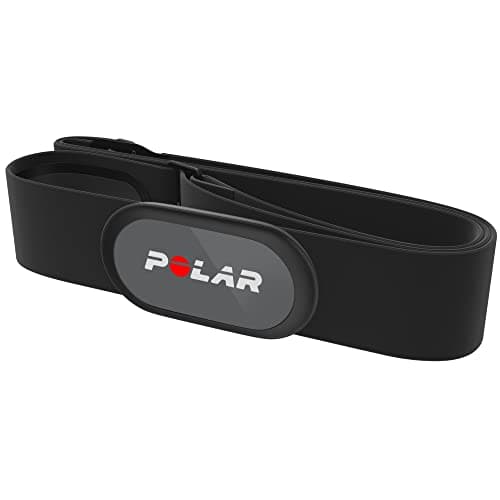 Polar H9 Best for the rider who has found chest straps uncomfortable before — Polar's strap is the reason to pick it. | Best strap comfort under $100 | 8.68.6 out of 10 | $69.90 · View on Amazon #ad We may earn a commission · Price as of November 22, 2026 |
| 3 | 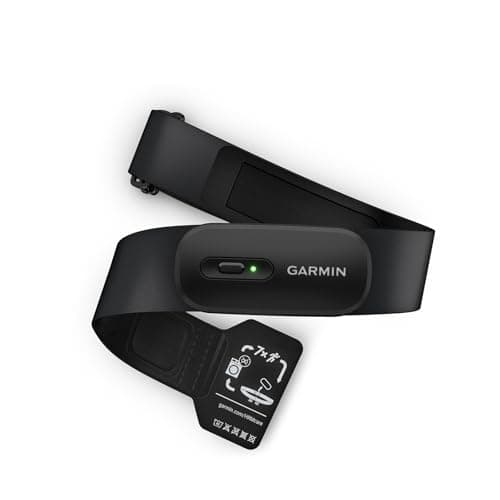 Garmin HRM 200 Best for riders already inside the Garmin ecosystem who want the current strap rather than the long-running one. | Best for Garmin Edge and watch users | 8.58.5 out of 10 | $78.23 · View on Amazon #ad We may earn a commission · Price as of November 22, 2026 |
| 4 | 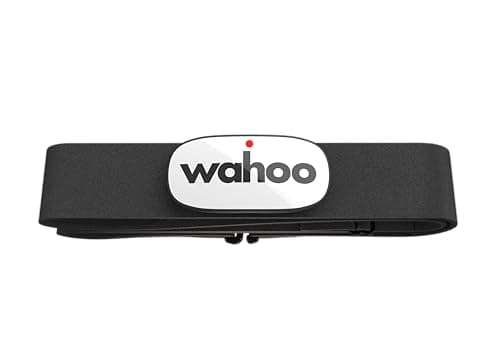 Wahoo TRACKR Heart Rate Monitor Best for the rider who would rather charge a strap than remember which coin cell it takes. | Best rechargeable option under $100 | 8.48.4 out of 10 | |
| 5 | 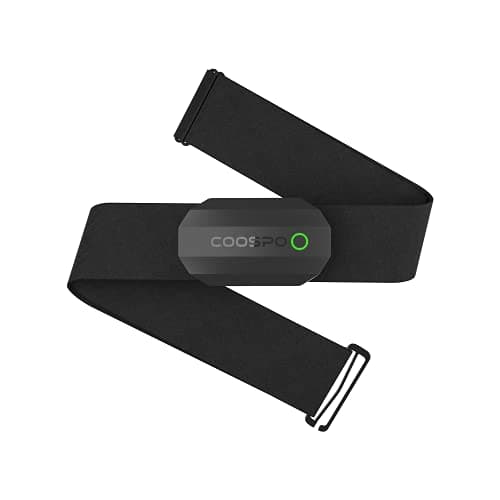 COOSPO H808S Heart Rate Monitor Budget pick: a dual-band IP67 strap for a third of the band, if comfort on three-hour rides is not the priority. | Budget pick: cheapest dual-band strap worth owning | 8.28.2 out of 10 |
A hundred dollars is a useful line in heart rate monitors because it removes almost nothing that matters and quite a lot that does not. Every strap on this page measures heart rate the same way — electrodes against the skin reading the heart's electrical signal — which is the accurate method, and the one that wrist and armband optical sensors are compared against. Nothing above this band measures it better.
What the band does remove is a short list of extras: onboard memory for recording a session without a phone, swim ratings, and optical armband alternatives. If you want any of those, the full heart rate monitor ranking covers the straps that sit above this band. If you do not, read on, because the decision under $100 is about connections and batteries.
The specification that actually decides it: simultaneous connections
Bluetooth negotiates a limited number of connections per sensor. ANT+ broadcasts to an unlimited number of listeners. That difference is invisible outdoors with one head unit and very visible indoors, where it is normal to want Zwift and a watch and sometimes a phone app reading the same strap at once.
The HRM-Dual is the only strap in this band that publishes its figure: two simultaneous Bluetooth LE connections, plus unlimited ANT+. That is why it is first here. It also matters most on the platform with the least room — Zwift on Apple TV gets two Bluetooth connections inside the game and the remote takes one of them, so a strap on Apple TV is usually competing with the trainer for the remaining channel. ANT+ vs Bluetooth for Zwift explains how to get out of that corner, and Zwift on Apple TV documents the limit.
Coin cell or rechargeable
Both are fine and they fail differently. A coin cell gives you years — Garmin publishes up to 3.5 years for the HRM-Dual at an hour a day — and then dies without warning, dropping out under load in a way that reads exactly like a software fault. A rechargeable strap like the Wahoo TRACKR never ambushes you, but it does require you to remember.
Our rule: if you ride indoors on a schedule, take the rechargeable and charge it on the first of the month. If you ride irregularly and hate maintenance, take the coin cell and replace it at the start of each indoor season rather than when it fails.
| Monitor | Radios | Published connections | Battery | Water rating |
|---|---|---|---|---|
| Garmin HRM-Dual | Bluetooth + ANT+ | Two Bluetooth, unlimited ANT+ | CR2032, up to 3.5 years at 1 h/day | Not published |
| Polar H9 | Bluetooth + ANT+ | Not published | Replaceable coin cell | Water resistant |
| Garmin HRM 200 | Bluetooth + ANT+ | Not published | Replaceable coin cell | Not published |
| Wahoo TRACKR HR | Bluetooth + ANT+ | Not published | Rechargeable | Not published |
| COOSPO H808S | Bluetooth + ANT+ | Not published | Replaceable coin cell | IP67 |
Why no armbands or wrist sensors in this band
Optical sensors read heart rate indirectly, from blood flow, which means they report a consequence of a heartbeat rather than the beat itself. That is physics, not a brand failing, and it shows up as lag at the start of an interval — exactly where an indoor cyclist needs the number to be right. Polar's Verity Sense is the optical armband we do recommend, but it sits above this band. Chest strap vs armband heart rate monitor is the full argument.
Wrist sensors built into watches are excluded on the same basis plus one more: on a bike your wrist is loaded and relatively still, which is the worst case for an optical reading.
The verdict
Buy the Garmin HRM-Dual unless you have a specific reason not to — two published Bluetooth channels, unlimited ANT+ and a battery claim measured in years, at well under the band. Buy the Polar H9 if comfort is what has defeated you before. Buy the Garmin HRM 200if you want Garmin's current strap in a Garmin ecosystem. Buy the Wahoo TRACKR HR if you would rather charge than replace. Buy the COOSPO H808S if the band is really a third of the band — it is the budget pick and it does the job.
Riding Zwift?
See the heart rate monitors ranked for ZwiftThe full reviews
Every pick, in detail
#1 · Best overall under $100
Garmin HRM-Dual
8.88.8 out of 10#ad We may earn a commission · Price as of November 22, 2026
Best for the indoor rider who wants two Bluetooth channels and a battery measured in years, for well under the band.
- Measurement
- ECG electrodes, chest strap
- Battery
- CR2032, up to 3.5 years at 1 h/day
- Connectivity
- ANT+ (unlimited) and Bluetooth LE (two)
- Weight
- 54.4 g including strap
- Module size
- 62 x 34 x 11 mm
- Data
- Heart rate and heart rate variability
What we'd praise
- Publishes two simultaneous Bluetooth connections, which is the specification that matters on a tablet or Apple TV
- ANT+ to unlimited listeners as well, so a head unit and a PC can both read it
- Up to 3.5 years from one CR2032 at an hour a day — the longest claim here by a wide margin
- Reports heart rate variability as well as heart rate
What we'd flag
- No onboard memory, so it cannot record a session without a paired device
- No published swim rating, unlike the pricier Polar H10
- The plainest strap and module of the group
The specification that decides most indoor heart rate purchases is not accuracy — every electrical chest strap here reads the same electrical signal — it is how many devices can listen at once. Garmin publishes the HRM-Dual as ANT+ to unlimited listeners plus two simultaneous Bluetooth LE connections, and those two Bluetooth channels are exactly what you need when Zwift wants the strap and your watch or phone wants it too.
The second number is the battery: up to 3.5 years from a single CR2032 at an hour a day. Nothing else on this page is close, and a strap you never think about is a strap you actually wear. Our Garmin HRM-Dual review covers it alone.
#2 · Best strap comfort under $100
Polar H9
8.68.6 out of 10#ad We may earn a commission · Price as of November 22, 2026
Best for the rider who has found chest straps uncomfortable before — Polar's strap is the reason to pick it.
- Type
- Chest strap, electrical
- Connectivity
- Bluetooth and ANT+
- Battery
- Replaceable coin cell
- Water resistance
- Water resistant
- Strap
- Washable Polar strap
- Onboard memory
- No
What we'd praise
- Polar's strap is the one riders most often say they stop noticing
- Dual-band Bluetooth and ANT+, so it works on tablets and on a PC
- Washable strap, which matters more indoors than out
- Replaceable coin cell rather than a rechargeable pack
What we'd flag
- No onboard memory and no swim rating — both are H10 features
- Polar does not publish a simultaneous-Bluetooth-connection count for it
- Costs more than the Garmin HRM-Dual for fewer published specifications
The H9 is the Polar H10 with the extras removed: same family, same electrical measurement, same dual-band broadcasting, without the onboard memory or the swim rating. What it keeps is the thing most people actually buy Polar for, which is the strap. Comfort is not a published specification and we will not score it as though it were, but it is the most common reason a heart rate monitor ends up in a drawer.
If the band is your constraint, this is the comfortable option. Polar H10 vs Polar H9 is the comparison that says exactly what the extra money buys, and our Polar H10 review covers the one that sits just above this band.
#3 · Best for Garmin Edge and watch users
Garmin HRM 200
8.58.5 out of 10#ad We may earn a commission · Price as of November 22, 2026
Best for riders already inside the Garmin ecosystem who want the current strap rather than the long-running one.
- Type
- Chest strap, electrical
- Connectivity
- Bluetooth and ANT+
- Battery
- Replaceable coin cell
- Ecosystem
- Garmin Edge and watches
- Strap
- Washable, replaceable
- Sizing
- M-XL
What we'd praise
- Current-generation Garmin strap with a washable, replaceable band
- Dual-band, and it appears on a Garmin Edge or watch without a pairing fight
- Published M-XL sizing, which is the range most riders need
- Replaceable coin cell
What we'd flag
- More expensive than the HRM-Dual without publishing a longer battery claim
- No onboard memory
- Garmin does not publish a simultaneous-Bluetooth-connection count for it
The HRM 200 is Garmin's current mainstream strap, and it is the right pick if you ride an Edge or wear a Garmin watch: the pairing is uneventful, the data lands where you expect it, and the strap is washable and replaceable. Published sizing runs M-XL.
It ranks below the HRM-Dual here on one basis only — the HRM-Dual publishes more about itself, specifically the two-Bluetooth-connection figure and the 3.5-year battery claim, and usually costs less. The full heart rate monitor ranking places both against the rest of the field.
#4 · Best rechargeable option under $100
Wahoo TRACKR Heart Rate Monitor
8.48.4 out of 10Best for the rider who would rather charge a strap than remember which coin cell it takes.
- Type
- Chest strap, electrical
- Connectivity
- Bluetooth and ANT+
- Battery
- Rechargeable
- Indicator
- LED status light
- Ecosystem
- Wahoo app and head units
- Strap
- Washable, replaceable
What we'd praise
- Rechargeable, so there is no coin cell to buy and no sudden death mid-season
- An LED status light, which makes 'is it awake' a one-second question
- Dual-band Bluetooth and ANT+
- Firmware and battery state are easy to read in the Wahoo app
What we'd flag
- Sits at the very top of this band, so a small price move puts it outside
- Rechargeable means remembering to charge it — the failure mode is different, not absent
- Wahoo does not publish a simultaneous-Bluetooth-connection count for it
Coin cells have one genuinely annoying property: they do not fail cleanly. A fading CR2032 drops the signal under load, which looks exactly like a software problem and sends people hunting through pairing screens. A rechargeable strap moves that problem somewhere more visible — you charge it, or you do not.
The TRACKR adds an LED status light, which is a small thing that removes a whole class of five-minutes-before-a-ride confusion. It is the most expensive pick in this band, so check the live price in the table above before assuming it still fits. Our Wahoo TICKR review covers the long-running strap this one replaced.
#5 · Budget pick: cheapest dual-band strap worth owning
COOSPO H808S Heart Rate Monitor
8.28.2 out of 10Budget pick: a dual-band IP67 strap for a third of the band, if comfort on three-hour rides is not the priority.
- Type
- Chest strap
- Connectivity
- Bluetooth and ANT+
- Water resistance
- IP67
- Battery
- Replaceable coin cell
- Works with
- Zwift, Garmin, Wahoo, apps
- Strap
- Washable, adjustable
What we'd praise
- Dual-band Bluetooth and ANT+ for roughly a third of the band
- IP67, the only published water-ingress rating on this page
- Cheap enough to own two, which solves the washing problem permanently
- Pairs with Zwift, Garmin and Wahoo without ceremony
What we'd flag
- No published battery-life figure
- Strap material is the most basic here and the least pleasant on long rides
- No onboard memory and no simultaneous-connection figure published
The budget pick, and a genuinely good one for indoor use. It is dual-band, it carries an IP67 rating — the only published ingress figure on this page, and the relevant one when the strap spends an hour soaked — and it pairs with Zwift and with Garmin and Wahoo head units without any fuss.
Where it loses to the straps above it is comfort over long rides and published documentation. If most of your riding is 45 to 90 minutes indoors, that is a trade worth making, and the money saved buys a fan that will change your sessions more than a nicer strap would.
Good questions
Frequently asked questions
What is the best heart rate monitor under $100?
The Garmin HRM-Dual. It is the only strap in this band that publishes its connection limits — two simultaneous Bluetooth LE connections plus unlimited ANT+ — and Garmin claims up to 3.5 years from one CR2032 at an hour a day. The Polar H9 is the more comfortable strap, and the COOSPO H808S is the budget pick at roughly a third of the band.
Do you need to spend more than $100 on a heart rate monitor?
No, not for accuracy. Every strap in this band uses electrodes against the skin to read the heart's electrical signal, which is the accurate method and the one optical sensors are measured against. What more money buys is onboard memory for recording without a phone, swim ratings, and optical armband alternatives — useful features, but none of them makes the heart rate number better.
How many devices can a cheap heart rate strap talk to at once?
It depends on the strap, and most makers in this band do not publish the figure. Garmin publishes two simultaneous Bluetooth LE connections on the HRM-Dual plus unlimited ANT+. ANT+ is always the better protocol for multiple listeners because it broadcasts rather than negotiating a connection, which is why a USB ANT+ stick on a PC solves this problem outright.
Is a chest strap better than an armband for indoor cycling?
For intervals, yes. A chest strap reads the heart's electrical signal directly; an optical armband reads blood flow, which is a consequence of the heartbeat and therefore lags at the start of a hard effort. That lag is exactly where an indoor cyclist needs the number to be correct. Optical armbands are more comfortable, and Polar's Verity Sense is the one we recommend, but it sits above this band.
Which heart rate monitor under $100 has the longest battery life?
The Garmin HRM-Dual, at up to 3.5 years from a single CR2032 at an hour of use a day — that is Garmin's published claim and it is far longer than anything else in the band publishes. Polar, COOSPO and Garmin's HRM 200 all use replaceable coin cells without publishing a comparable figure, and the Wahoo TRACKR HR is rechargeable.
How we sourced this
- Garmin — HRM-Dual specifications (ANT+ unlimited, two Bluetooth LE connections, up to 3.5 years battery, 54.4 g)
- Polar — H9 heart rate sensor product page (Bluetooth and ANT+, washable strap)
- Garmin — HRM 200 product page (Bluetooth and ANT+, washable replaceable strap, M-XL sizing)
- Wahoo — TRACKR Heart Rate monitor product page (rechargeable, LED indicator, Bluetooth and ANT+)
- Zwift Insider — Apple TV and the two Bluetooth connection limit in Zwift
Keep going