Trainers
The Best Wahoo Kickr, Ranked
Wahoo sells five Kickrs, and the difference between them is not quality - it is which problem each one solves. Ranked on Wahoo's published accuracy, resistance and gradient figures.
The short answer
Quick picks
| # | Product | Best for | Score | Price |
|---|---|---|---|---|
| 1 | 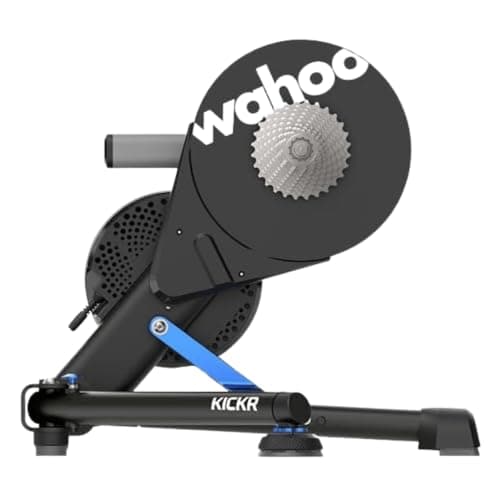 Wahoo Kickr v6 For the rider who wants the best Kickr trainer without a smart bike budget: ±1%, 2,200 W, 20% and WiFi, in the frame Wahoo has been refining the longest. | Best Wahoo Kickr overall | 9.19.1 out of 10 | |
| 2 | 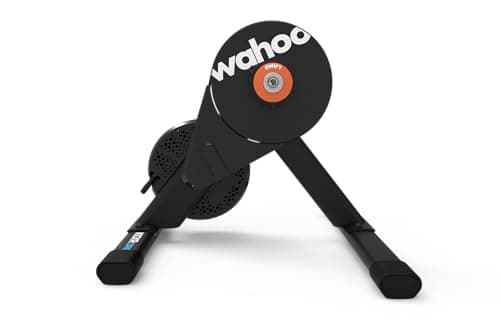 Wahoo Kickr Core 2 The right Kickr for most people and the budget pick on this page: WiFi, ERG mode and direct drive at the lowest price Wahoo sells a trainer for. | Budget pick: the cheapest Kickr that does the whole job | 8.88.8 out of 10 | |
| 3 | 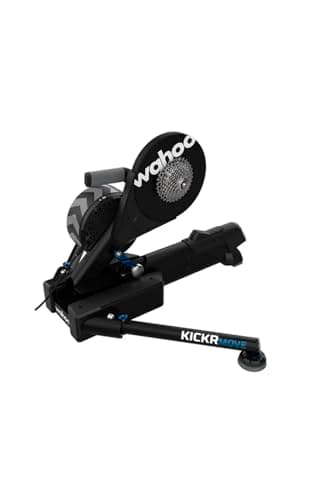 Wahoo Kickr Move For the Kickr buyer whose complaint is comfort rather than watts: v6 performance with fore-aft movement designed in, instead of a rocker plate bolted on. | Best Kickr if you want the bike to move under you | 8.98.9 out of 10 | $1,249.00 · View on Amazon $1,349.99Save 7% #ad We may earn a commission · Price as of November 22, 2026 |
| 4 | 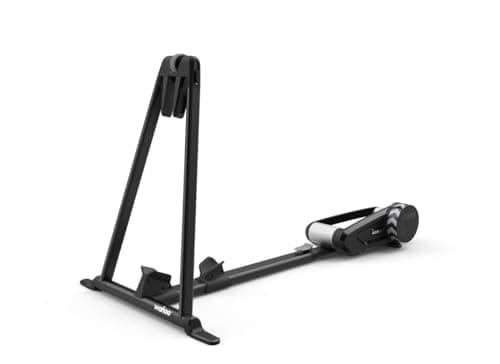 Wahoo Kickr Rollr For the rider with two or three bikes and no patience for wheel swaps: the fastest Kickr to get on and off, with the clear caveat that its ±1% figure assumes a power meter you already own. | Best Kickr if you swap bikes and refuse to remove a wheel | 7.67.6 out of 10 | |
| 5 | 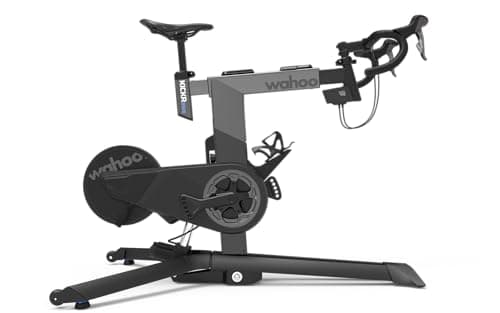 Wahoo Kickr Bike Pro For the rider whose indoor season is most of the year and whose road bike should stay built: the top of the Kickr range, at a price that only makes sense if you ride indoors constantly. | Best Kickr if you would rather not use a bike at all | 8.98.9 out of 10 | $3,039.99 · View on Amazon $3,999.99Save 24% #ad We may earn a commission · Price as of November 22, 2026 |
"Which Kickr should I buy" is a harder question than it looks, because Wahoo does not sell five versions of one trainer. It sells one trainer at two accuracy tiers, the same trainer on a moving rail, a hybrid that takes any bike without a wheel swap, and a complete bike. The models overlap in price but not in purpose, so picking by price alone is the reliable way to end up with the wrong one.
This page ranks them the way we rank everything: on the figures the manufacturer publishes, and on what each one changes about the ride. We have not lab-tested these trainers and do not pretend to have; every accuracy, resistance and gradient number below is Wahoo's own, labeled as such, and our how we review page explains the method.
How we ranked them
Published accuracy first, because a trainer is a measuring instrument before it is anything else, and the ±1% / ±2% split is the cleanest line through the range. Then resistance and gradient headroom, which decide whether the trainer runs out before you do on a steep climb or a standing sprint. Then road feel — flywheel mass and, on the Move and Bike Pro, actual movement. Then what the purchase really costs, including the cassette a direct-drive trainer does not come with and, on the Rollr, the power meter it assumes you own.
| Model | Format | Claimed accuracy | Max resistance | Max gradient | Movement |
|---|---|---|---|---|---|
| Kickr v6 | Direct drive | ±1% | 2,200 W | 20% | Axis feet only |
| Kickr Core 2 | Direct drive | ±2% | 1,800 W | 16% | None |
| Kickr Move | Direct drive on a rail | ±1% | 2,200 W | 20% | Fore-aft travel |
| Kickr Rollr | Front clamp + rear roller | ±1% with your own power meter | 1,500 W | 10% | Rear wheel floats |
| Kickr Bike Pro | Complete smart bike | ±1% | 2,500 W | 20% (physical tilt) | +20% / -15% frame tilt |
The only two numbers that separate the v6 and the Core 2
Almost every "which Kickr" question is really this one. Wahoo publishes ±1% for the v6 and ±2% for the Core 2, and 2,200 W against 1,800 W. Everything else that used to separate them — WiFi being the big one — now appears on both.
Here is the practical reading. ±2% means a 250 W effort is reported somewhere between 245 W and 255 W. Every structured training plan in Zwift and TrainerRoad is written to be run on hardware in that band, and your FTP test is run on the same trainer as your intervals, so the error largely cancels out of your own training. Where ±2% starts to cost you is when you compare indoor watts against an outdoor power meter and the two disagree by numbers you cannot explain.
1,800 W, meanwhile, is a ceiling very few riders touch outside a standing sprint, and 16% against 20% only appears on the steepest virtual climbs. Kickr Core 2 vs Kickr v6 goes through both in full, and how accurate are smart trainers covers what a published tolerance does and does not promise.
What a Kickr costs after the Kickr
Three of the five models on this page need something you do not get in the box. The v6, Core 2 and Move are direct-drive trainers, so they arrive without a cassette and it has to match your drivetrain — our cassette roundup covers which one, and it is a real cost rather than a rounding error. The Rollr needs a power meter to reach its published accuracy figure. Only the Bike Pro is genuinely complete.
Beyond that, the accessories that actually change the experience are a mat under the trainer, a fan in front of it and somewhere to put a tablet. The Wahoo Kickr accessories roundup ranks the Wahoo-branded ones, and the accessories checklist is the brand-agnostic version. If your budget is fixed, a Core 2 plus a mat and a fan is a better pain cave than a v6 on a bare floor.
Where a Kickr is the wrong answer
Two cases. If your ceiling is well under the Core 2, the honest advice is to look at a different brand rather than a worse Kickr — the budget smart trainer roundup covers that market, and bike trainers under $500 is the band below where Wahoo stops. If you specifically want to know what else exists at Kickr money, Wahoo Kickr alternatives and Kickr Core alternatives are the two pages that answer it.
The other case is quiet. Kickrs are quiet by the standards of wheel-on trainers, but a direct-drive trainer in an apartment is still a drivetrain and a flywheel in a room with neighbors underneath. The quiet trainer roundup ranks on that specifically.
The verdict
Buy the Kickr v6 if you want the best Kickr trainer and the ±1% figure matters to you — most often because you also ride outdoors with a power meter and want the two numbers to agree. Buy the Kickr Core 2 if you want the sensible one: it is the budget pick here and the Kickr most riders should own, because every workout the v6 can run, it runs. Buy the Kickr Move for comfort on long seated rides, the Kickr Rollr if bike swapping is your actual problem and you already own a power meter, and the Kickr Bike Pro if you ride indoors most of the year and want your road bike left alone.
Not set on Wahoo?
See every smart trainer we rankTwo neighbors worth reading before you commit: the best smart trainers under $1,000 puts the v6 and the Core 2 against Elite and Tacx at the same money, and direct drive vs wheel-on is the format decision the Rollr sits in the middle of.
The full reviews
Every pick, in detail
#1 · Best Wahoo Kickr overall
Wahoo Kickr v6
9.19.1 out of 10For the rider who wants the best Kickr trainer without a smart bike budget: ±1%, 2,200 W, 20% and WiFi, in the frame Wahoo has been refining the longest.
- Type
- Direct drive
- Claimed accuracy
- ±1%
- Max resistance
- 2,200 W
- Max gradient
- 20%
- Flywheel
- 16 lb
- Connectivity
- WiFi, Bluetooth, ANT+ FE-C
What we'd praise
- The ±1% accuracy figure, the tightest tolerance Wahoo publishes for a trainer
- 2,200 W and a 20% gradient ceiling — more headroom than most riders will ever use
- WiFi, so the trainer talks to Zwift without a phone or a dongle in the loop
- The 16 lb flywheel is the heaviest in the Kickr trainer line and it shows in the coast-down
- Axis feet allow a small amount of side-to-side give without a rocker plate
What we'd flag
- Materially more than the Core 2 for an accuracy change most riders cannot feel
- Heavy and awkward to move once set up — this is a trainer that stays where you put it
- No fore-aft movement, which the Move adds for a lot more money
- Needs mains power, so it cannot go anywhere without an outlet
- The cassette is not included, which is a real line item on top of the price
This is the Kickr the rest of the line is measured against, and the reason is the specification sheet rather than the badge. Wahoo publishes ±1% for the v6 against ±2% for the Core 2, quotes 2,200 W of resistance against 1,800 W, and a 20% simulated gradient against 16%. The 16 lb flywheel is the heaviest in the trainer range. Those four numbers are the whole upgrade, and they are all published figures rather than impressions.
The feature that changes day-to-day use most is WiFi. A trainer on WiFi connects to Zwift over your network instead of relying on a Bluetooth link to a tablet, which removes the most common cause of mid-ride dropouts in a pain cave full of sensors competing for the same radio. Our ANT+ vs Bluetooth explainer covers why that matters more than it sounds.
The honest case against it is the Core 2 sitting below it at a materially lower price with the same drivetrain compatibility and the same app support. Our Kickr Core 2 vs Kickr v6 comparison works through that decision in detail, and the full v6 review covers the setup and the noise floor.
#2 · Budget pick: the cheapest Kickr that does the whole job
Wahoo Kickr Core 2
8.88.8 out of 10The right Kickr for most people and the budget pick on this page: WiFi, ERG mode and direct drive at the lowest price Wahoo sells a trainer for.
- Type
- Direct drive, electromagnetic
- Claimed accuracy
- ±2%
- Max resistance
- 1,800 W
- Max gradient
- 16%
- Flywheel
- 5.4 kg
- Connectivity
- WiFi, Bluetooth, ANT+ FE-C
What we'd praise
- WiFi on the cheapest Kickr in the line, which the previous Core did not have
- ±2% is inside the band every structured training plan is written against
- 1,800 W and 16% are above anything a sustained indoor session asks for
- Direct drive, so your rear tire and your trainer tire bill both disappear
- The least expensive route into the Wahoo app, ERG mode and the Kickr ecosystem
What we'd flag
- ±2% rather than ±1%, which matters if you compare numbers with an outdoor power meter
- The 5.4 kg flywheel gives a noticeably lighter coast-down than the v6
- No Axis feet, no fore-aft movement and no included cassette
- 16% gradient is a real ceiling on the steepest Zwift and Rouvy climbs
- Still needs mains power and a solid floor — it is not a trainer you travel with
The Core 2 is the Kickr we would put in most pain caves. It is a direct-drive trainer with app-controlled resistance, ERG mode and — new to this generation — WiFi, which until recently was reserved for the v6. What you give up against the v6 is one percentage point of published accuracy, 400 W of resistance you will probably not reach, four points of gradient and a lighter flywheel.
Put differently: every workout you can do on a v6, you can do on a Core 2. The v6 reports it to a tighter tolerance and simulates a steeper hill. For a rider whose training lives inside Zwift or TrainerRoad and who never compares indoor watts against an outdoor power meter, that is a gap worth exactly the price difference and no more. How accurate are smart trainers explains what ±2% actually costs you.
The part people underestimate is the cassette. A direct-drive trainer arrives without one, and it has to match your drivetrain — our cassette guide covers which to buy. The Core 2 review has the full setup walkthrough.
#3 · Best Kickr if you want the bike to move under you
Wahoo Kickr Move
8.98.9 out of 10$1,349.99Save 7%
#ad We may earn a commission · Price as of November 22, 2026
For the Kickr buyer whose complaint is comfort rather than watts: v6 performance with fore-aft movement designed in, instead of a rocker plate bolted on.
- Type
- Direct drive on a fore-aft rail
- Claimed accuracy
- ±1%
- Max resistance
- 2,200 W
- Max gradient
- 20%
- Flywheel
- 16 lb
- Movement
- Fore-aft travel
What we'd praise
- Fore-aft movement built into the frame — no rocker plate to buy, build or level
- Identical published performance to the v6: ±1%, 2,200 W, 20%, 16 lb flywheel
- The movement makes long seated efforts more comfortable for most riders
- Removes the single biggest reason Kickr owners buy a third-party platform
- Same drivetrain compatibility and same app behavior as the rest of the line
What we'd flag
- A large premium over the v6 for movement rather than performance — the watts are identical
- Fore-aft only: it does not rock side to side the way a rocker plate does
- The largest footprint of any Kickr trainer, which matters in a shared room
- Heavier again than the v6, and the rail has to sit on a flat, solid floor
- Nothing here improves your training numbers — this is a comfort purchase, honestly described
The Move is a v6 on a rail. The published performance figures are the same — ±1%, 2,200 W, 20% gradient, 16 lb flywheel — and the difference is that the whole trainer slides fore and aft as you ride, which is what a bike does on the road and what a bike bolted rigidly to a frame cannot do.
That matters more than it sounds for anyone doing two-hour seated sessions. A rigid trainer holds your hips in one position for the entire ride, and the usual fix is a rocker plate. Our rocker plate roundup covers that route, which is cheaper but adds a platform under the trainer and a levelling job to the setup. The Move puts the movement inside the product.
It is worth being blunt about what you are buying. The Move will not make you faster or your numbers better than a v6, and it is fore-aft only — it does not lean. Kickr Move vs Kickr v6 is the direct comparison, and the Move review covers living with the rail.
#4 · Best Kickr if you swap bikes and refuse to remove a wheel
Wahoo Kickr Rollr
7.67.6 out of 10For the rider with two or three bikes and no patience for wheel swaps: the fastest Kickr to get on and off, with the clear caveat that its ±1% figure assumes a power meter you already own.
- Type
- Hybrid: front tire clamp, rear wheel on a roller
- Fits
- 950-1100 mm wheelbase, tires up to 2.1 in
- Power accuracy
- Within ±1% of an external power meter you supply
- Max resistance
- 1,500 W
- Max gradient
- 10% climb, -10% descent
- Rider limit
- 250 lb (113 kg)
What we'd praise
- The bike goes on and comes off in seconds — no wheel removal, no cassette, no axle adapter
- Takes tires up to 2.1 in, so a road bike, a gravel bike and a hardtail all fit one unit
- The front clamp holds the bike upright on its own while you clip in
- No cassette to buy, which removes a cost every direct-drive Kickr adds
- Folds and moves far more easily than any direct-drive trainer on this page
What we'd flag
- It only reaches ±1% when you supply your own power meter — on its own it estimates
- 1,500 W and a 10% gradient are the lowest ceilings of any Kickr here
- A 250 lb rider limit, which is lower than several direct-drive trainers we rank
- Your rear tire wears against the roller, so a trainer tire becomes worth considering
- The total cost is higher than it looks once a power meter is in the equation
The Rollr solves a problem the rest of the line ignores. Every direct-drive Kickr asks you to take the rear wheel out, fit a cassette that matches your drivetrain and find the right axle adapter. If you own a road bike, a gravel bike and a mountain bike, that is three cassettes and a decision every time you change bikes. The Rollr clamps the front tire and sits the rear wheel on a roller, so any of the three goes on in well under a minute.
The specification to read carefully is the power one. Wahoo quotes accuracy within ±1% of an external power meter, which means the Rollr is designed to be paired with a power meter you already own. Without one it is estimating. Power meter pedals are the usual partner because they move between bikes as fast as the Rollr does.
Everything else is a trade. 1,500 W and 10% are the lowest ceilings here, and the 250 lb rider limit is worth checking against our heavy-rider roundup before you order. The Rollr review goes through the tire-wear question.
#5 · Best Kickr if you would rather not use a bike at all
Wahoo Kickr Bike Pro
8.98.9 out of 10$3,999.99Save 24%
#ad We may earn a commission · Price as of November 22, 2026
For the rider whose indoor season is most of the year and whose road bike should stay built: the top of the Kickr range, at a price that only makes sense if you ride indoors constantly.
- Claimed accuracy
- ±1%
- Max resistance
- 2,500 W
- Physical tilt
- +20% climb, -15% descent
- Connectivity
- WiFi, Bluetooth, ANT+ FE-C, Direct Connect
- Rider range
- 5 ft 0 in to 6 ft 4 in, up to 113 kg (250 lb)
- Cranks
- 165, 167.5, 170, 172.5 and 175 mm
- Weight
- 93 lb
- Sensor relay
- Kickr Bridge
What we'd praise
- The frame physically tilts +20% and -15%, which no trainer on this page can do
- 2,500 W is the highest published resistance ceiling in the Kickr range
- Adjustable cranks from 165 to 175 mm, so the fit is set rather than inherited
- Your road bike stays built, clean and ready to ride outdoors
- Kickr Bridge relays your sensors, which simplifies a crowded pain cave considerably
What we'd flag
- Several times the price of the v6 — this is a different purchase, not an upgrade
- 93 lb and immovable once assembled; it needs a permanent home
- The published rider range tops out at 6 ft 4 in and 250 lb
- No electronic shifting from your own groupset — you learn its shifters instead
- Nothing here changes the watts you can produce; it changes the experience of producing them
The Bike Pro is where the Kickr line stops being trainers. There is no bike to mount, no cassette to match and no wheel to remove: the fit is adjustable, the cranks come in five lengths from 165 to 175 mm, and the whole frame tilts +20% on a climb and -15% on a descent. That tilt is the one thing no trainer here replicates, including the Move.
The practical argument for it is not performance. It is that your road bike stays assembled and clean all winter while you ride every day on something purpose-built, and that two riders of different sizes can share one machine in about ninety seconds. Kickr Bridge also takes your heart rate strap and sensors and relays them, which removes a common source of pairing chaos.
The case against it is the price and the footprint. At 93 lb it does not move, and the published rider range stops at 6 ft 4 in and 250 lb. Our smart bike roundup ranks it against the competition, smart bike vs smart trainer is the decision behind it, and the Bike Pro review has the detail.
Good questions
Frequently asked questions
Which Wahoo Kickr should I buy?
The Kickr v6 is the best Wahoo Kickr overall: Wahoo publishes plus or minus 1% accuracy, 2,200 W of resistance, a 20% gradient ceiling and a 16 lb flywheel, with WiFi. The Kickr Core 2 is the one most riders should actually buy - it is the cheapest Kickr, it now has WiFi too, and it gives up only one percentage point of published accuracy, 400 W you are unlikely to reach and four points of gradient. Choose the Move for fore-aft movement, the Rollr if you swap bikes constantly, and the Bike Pro if you want a complete smart bike.
What is the difference between the Kickr Core 2 and the Kickr v6?
Two published numbers. The v6 claims plus or minus 1% accuracy against the Core 2's plus or minus 2%, and 2,200 W of resistance with a 20% gradient ceiling against 1,800 W and 16%. The v6 also carries a heavier 16 lb flywheel against the Core 2's 5.4 kg, which affects coast-down feel. Both have WiFi, both run ERG mode, and both take the same cassettes. Every workout you can do on a v6 you can do on a Core 2.
Is the Wahoo Kickr Move worth the extra money over the v6?
Only if your complaint about indoor riding is comfort rather than performance. The Move publishes identical figures to the v6 - plus or minus 1%, 2,200 W, 20% gradient, 16 lb flywheel - so you are paying purely for fore-aft movement built into the frame. That movement genuinely helps on long seated efforts, but a rocker plate under a v6 is the cheaper route to a similar outcome, and the Move moves fore-aft only rather than rocking side to side.
Does the Wahoo Kickr Rollr measure power on its own?
Not to its headline figure. Wahoo quotes accuracy within plus or minus 1% of an external power meter, which means the Rollr is designed to be paired with a power meter you supply; without one it is estimating. That is the single most important thing to understand before buying it. Power meter pedals are the usual partner because they move between bikes as quickly as the Rollr itself does.
Do you need a cassette for a Wahoo Kickr?
Yes, for the v6, Core 2 and Move. Direct-drive trainers replace your rear wheel, so they need a cassette fitted to the trainer's freehub, and it has to match your drivetrain's speed count and brand. It is not included with any of them, so budget for it as part of the purchase. The Kickr Rollr needs no cassette because your rear wheel stays on the bike, and the Kickr Bike Pro has no cassette at all.
Which Kickr is best for Zwift?
All five work with Zwift, and the one that makes the connection most reliable is any model with WiFi - which now includes both the v6 and the Core 2. A WiFi trainer talks to Zwift over your network rather than competing with your heart rate strap and cadence sensor for Bluetooth connections, which is the most common cause of mid-ride dropouts. On value, the Core 2 is the best Kickr for a Zwift-only rider.
How we sourced this
- Wahoo — Kickr smart trainer product page (v6)
- Wahoo — Kickr Core 2 smart trainer product page
- Wahoo — Kickr Move smart trainer product page
- Wahoo — Kickr Rollr product information FAQ (wheelbase, tire width, power accuracy, rider limit)
- Wahoo — Kickr Bike Pro smart bike product page
- Wahoo — drivetrain compatibility for Kickr Core and Move trainers
- Wahoo — Kickr v6 (2022) smart trainer information FAQ
Keep going