Accessories
The Best Rocker Plates for Indoor Cycling
A plate lets the bike and trainer lean as a unit. Rocker feet give you a few degrees of compliance and a lot less noise. They are sold under the same name, cost ten times apart, and most buyers get the wrong one.
The short answer
Quick picks
| # | Product | Best for | Score | Price |
|---|---|---|---|---|
| 1 | 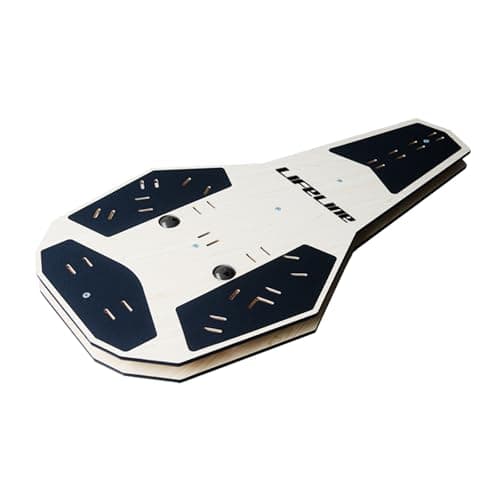 RideNow Bike Rocker Plate The only real rocker plate we could verify on Amazon, and quite possibly the same object several branded plates are built from — with the honest caveat that its own specifications are not published anywhere we can cite. | Best actual rocker plate you can buy on Amazon | 7.87.8 out of 10 | $399.00 · View on Amazon #ad We may earn a commission · Price as of November 22, 2026 |
| 2 | 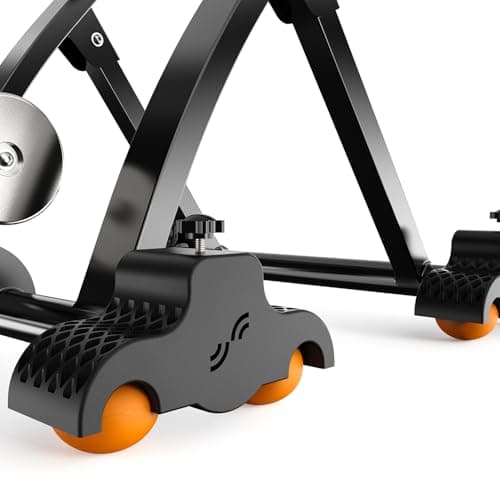 Sportneer Adjustable Rocker Feet Adapters (4-pack) Buy these for noise and vibration decoupling, which they genuinely do well, and treat the movement as a bonus rather than the reason. | Best cheap way to add a little movement | 7.57.5 out of 10 | $39.99 · View on Amazon #ad We may earn a commission · Price as of November 22, 2026 |
| 3 | 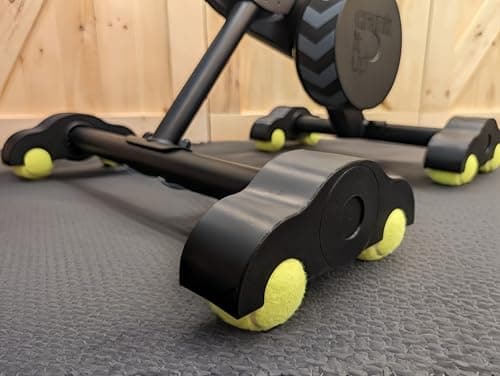 Snap Rocker Feet Adapters, 4-pack with 8 tennis balls The same idea as the Sportneer set with a more positive snap fit — provided the snap actually fits your trainer, which is the one thing to check. | The alternative rocker-feet listing | 7.17.1 out of 10 | $39.99 · View on Amazon #ad We may earn a commission · Price as of November 22, 2026 |
| 4 | 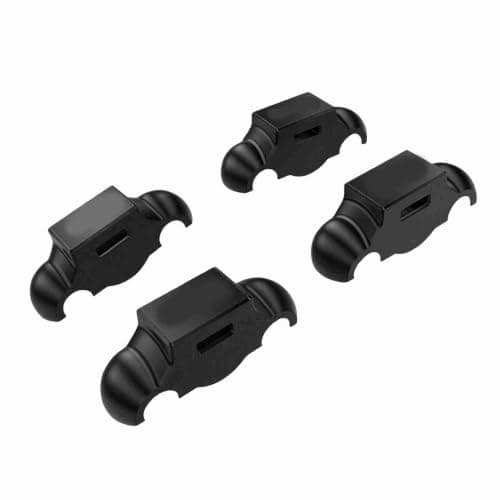 Keenso Indoor Cycling Rocker Base (4-pack) Good at damping, mislabeled as a rocker plate. Buy it knowingly for noise, or buy a mat instead and spend the difference. | Best if the goal is damping rather than rocking | 6.86.8 out of 10 | $44.93 · View on Amazon #ad We may earn a commission · Price as of November 22, 2026 |
| 5 | 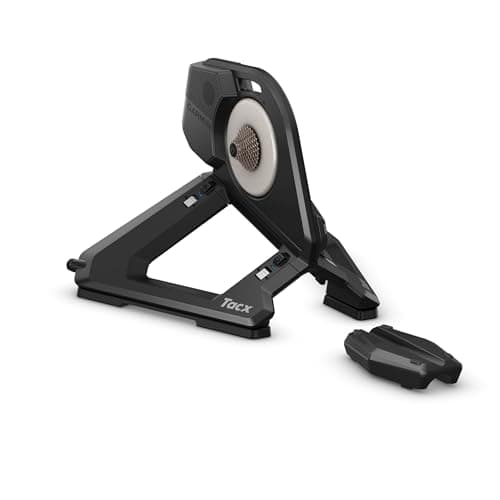 Garmin Tacx Neo 3M The option worth knowing about before you spend on a platform: if you were going to upgrade the trainer anyway, buy the movement built in and skip this category entirely. | Best if you would rather buy the movement in the trainer | 8.38.3 out of 10 | $1,799.99 · View on Amazon #ad We may earn a commission · Price as of November 22, 2026 |
A trainer bolts your rear axle to the floor. Outdoors the bike moves beneath you constantly — it leans, it rolls, your weight shifts between contact points. Indoors none of that happens, and the result is that your saddle contact pressure never changes. That is why long indoor sessions hurt in a way that equivalent outdoor rides do not.
Everything in this category is trying to give some of that movement back. What differs enormously is how much movement, at what price, and taking up how much of your room.
Plate or feet? The difference that matters
| Rocker plate | Rocker feet | |
|---|---|---|
| What sits on it | The trainer AND the front wheel | Just the trainer's feet |
| Movement | About 13 degrees of lean on the rebranded versions of our top pick | A few degrees of compliance |
| How the bike moves | Leans as a unit, like a bike | Twists — the front wheel stays put |
| Noise and vibration | Helps, but not its main purpose | This is the main benefit |
| Extra floor space | Substantial — plate plus trainer footprint | None |
| Storage | Heavy and awkward (KOM lists its equivalent at 66 lb) | Fits in a drawer |
| Typical cost | Hundreds | Tens |
If you read one row, read the third. A plate lets the whole bike lean, because the front wheel is on the platform too. Rocker feet move only the back of the bike, so the frame twists around a fixed front wheel. Both feel different from a rigid setup; only one feels like a bike.
How we ranked these
1. Which product class it actually is. We rank the real plate first and say plainly, on every other pick, that it is not one. In a category where the naming is this loose, that is the single most useful thing a buying guide can do.
2. What is actually published. This category is dominated by generic listings with no manufacturer spec sheet, no load rating and no independent testing. Where we quote a figure, we say whose figure it is — and for our top pick, the tilt and weight numbers come from reviews of the rebranded versions of that design, not from the listing itself.
3. What it costs you in floor space. A plate is a second footprint in a room that usually does not have one spare. That is a genuine cost, and it is why a lot of riders who want a plate end up not having one.
4. Whether a cheaper, existing product already solves your actual problem. If the complaint is noise, a trainer mat plus rocker feet costs a fraction of a plate and is the better answer. If the complaint is saddle discomfort over two hours, it is not.
What movement does and does not do
It does help comfort on long sessions. This is the real benefit and it is worth paying for if you ride long indoors. Allowing the bike to lean changes where your weight sits on the saddle, and varying pressure is what stops a two-hour session becoming a negotiation with your sit bones.
It does reduce what the floor hears. Anything compliant between a trainer and a slab reduces structure-borne vibration, which is what travels through an apartment building. Our guide to making a trainer quieter ranks that whole problem in order of cost.
It does not make you faster, and it does not change your numbers. Listings in this category like to talk about core activation. We have seen no credible testing showing a measurable training effect, so we are not going to repeat the claim as if it were established. Your power meter and your trainer read exactly the same on a plate as off one — see how accurate smart trainers really are if you are worried movement affects measurement. It does not.
And it is not a fix for a bad position. If you hurt after thirty minutes rather than ninety, that is fit, not movement. A plate will not rescue a saddle that is too high or a reach that is too long.
The DIY option, honestly
We would be selling you something you may not need if we skipped this. A large share of the people searching for rocker plates end up building one, and the reason is that the design is genuinely simple: two sheets of plywood, a hinge or a pivot strip, and two inflatable balls whose pressure sets how hard it is to lean.
The commercial plates — including our top pick — use exactly that principle. If you own a circular saw and an afternoon, a DIY plate costs a fraction of the cheapest commercial one and is adjustable in the same way, because the balls are the adjustment. That is the honest answer for a lot of riders, and the reason this category has such an active DIY community.
Buy commercial if you do not want a project, do not have tools or space to build in, or want something that looks finished in a living room. Those are good reasons. “It must be better engineered” is not one, in a category where the branded plates are rebrands of a generic design.
Before you buy
Measure the floor, not the plate. You need the plate footprint plus clearance to get on and off the bike, in a room that already holds a trainer, a mat, a fan and a desk. This is the most common reason a plate gets returned.
Check the combined weight limit, and remember what it includes. Rider plus bike plus trainer. KOM publishes 425 lb for its RPV2 version of this design; a 40 lb direct-drive trainer and a 20 lb bike eat into that before you get on.
Do not stack compliance. A plate on top of a thick mat on top of rocker feet is three soft layers and a wobble you cannot tune out. Pick one.
If your trainer already moves, stop here. A trainer with frame movement does not want a plate under it. That is the case for buying the movement in the trainer instead, and it is the last pick on this page for exactly that reason.
Building the room out?
See the full accessories checklistThe full reviews
Every pick, in detail
#1 · Best actual rocker plate you can buy on Amazon
RideNow Bike Rocker Plate
7.87.8 out of 10#ad We may earn a commission · Price as of November 22, 2026
The only real rocker plate we could verify on Amazon, and quite possibly the same object several branded plates are built from — with the honest caveat that its own specifications are not published anywhere we can cite.
- Type
- Full rocker plate — the trainer and bike sit on it
- Movement
- Side-to-side lean, set by inflatable balls
- Adjustment
- Ball inflation pressure tunes the resistance to lean
- Tilt (rebranded versions)
- About 13 degrees side-to-side, per reviews of the KOM and Lifeline plates
- Combined limit (KOM RPV2)
- 425 lb / 193 kg rider + bike + trainer, per KOM
- Provenance
- Reviewers describe the KOM, Lifeline and ZYING plates as rebrands of this design
What we'd praise
- A genuine rocker plate rather than a set of rocking feet — the whole trainer and bike lean together, which is the movement riders actually want
- Reviewers of the rebranded versions of this design describe about 13 degrees of side-to-side lean, which is a real range rather than a few millimeters of give
- Inflatable balls mean the resistance to lean is tunable to your weight and taste, not fixed at the factory
- Multiple independent reviewers describe the KOM, Lifeline and ZYING plates as rebrands or copies of the RideNow design, so buying it direct removes a branding markup
- Far cheaper than the boutique plates sold direct by specialist makers
What we'd flag
- We could not find a manufacturer spec sheet for the RideNow-branded plate itself — the tilt, weight-limit and plate-weight figures we quote come from reviews of the rebranded versions, so treat them as indicative rather than confirmed for this exact listing
- A plate this size is heavy and permanent: KOM lists its equivalent at 66 lb, which is not something you stand on end in a closet
- Takes a substantial amount of floor space in front of and under the trainer, on top of the trainer's own footprint
- No independent accuracy or durability testing of the RideNow-branded unit that we could cite
- Costs several times what rocker feet cost, for a comfort benefit rather than a performance one
This is the pick if you want an actual rocker plate: a platform that the trainer and the bike both sit on, leaning side to side as a unit. That is a fundamentally different product from the rocking feet further down this page, and it is the one that produces the sensation people are describing when they say a plate transformed their long indoor rides.
The interesting part is provenance. Multiple reviewers covering the KOM, Lifeline and ZYING rocker plates describe them as rebrands or copies of the RideNow design — and the figures published for those branded versions are about 13 degrees of side-to-side lean, a 425 lb combined rider-plus-bike-plus-trainer limit on KOM's RPV2, and a plate weight around 66 lb. If that lineage holds, buying this is buying the same engineering without the brand on top.
We are flagging the limit of that honestly: those numbers are published for the rebranded plates, not for this listing, and we could not find a manufacturer spec sheet for the RideNow-branded unit. Treat them as indicative. What is not in doubt is the product class — this is a full plate with inflatable-ball adjustment, and it costs a fraction of what the boutique makers charge.
#2 · Best cheap way to add a little movement
Sportneer Adjustable Rocker Feet Adapters (4-pack)
7.57.5 out of 10#ad We may earn a commission · Price as of November 22, 2026
Buy these for noise and vibration decoupling, which they genuinely do well, and treat the movement as a bonus rather than the reason.
- Type
- Rocker feet — adapters under the trainer's own feet
- Quantity
- 4 adapters, 8 squash balls included
- Movement
- A few degrees of give, not a rocking platform
- Adjustment
- Ball choice and placement
- Primary benefit
- Vibration and noise decoupling from the floor
- Install
- No tools — the trainer sits on them
What we'd praise
- Costs roughly a tenth of a full plate and takes no extra floor space at all
- The squash balls decouple the trainer from the floor, which is a real and immediate noise and vibration improvement in an apartment
- Nothing to assemble, nothing to store — the trainer just sits on them
- Reversible in thirty seconds if you decide you do not like the feel
- Balls are a consumable you can swap for firmer or softer ones to tune the feel
What we'd flag
- This is NOT a rocker plate, and the marketing in this category routinely blurs the two — expect a few degrees of give, not 13 degrees of lean
- The trainer moves but the front wheel does not, so the bike twists rather than leaning as a unit
- No published load rating we could find, and a trainer plus bike plus rider is a lot of weight on four rubber balls
- Generic product with no independent testing record and inconsistent branding across near-identical listings
- If your floor is uneven, adding compliance under the trainer can make a wobble worse rather than better
Rocker feet are the product most people actually end up buying when they search for a rocker plate, and it is worth being clear about what they are: small adapters that sit between your trainer's feet and the floor, usually cushioned by squash or tennis balls.
What they are very good at is decoupling the trainer from the floor. If you ride in an apartment and the complaint is downstairs rather than comfort, these do more per dollar than anything else in this category — read how to make a bike trainer quieter and the apartment indoor cycling setup for the rest of that problem.
What they are not is a rocker plate. The movement is a few degrees of compliance at the trainer's feet, and because the front wheel stays put, the bike twists rather than leans. That is a different sensation from a plate, and anyone expecting the plate experience from a $30 accessory will be disappointed.
#3 · The alternative rocker-feet listing
Snap Rocker Feet Adapters, 4-pack with 8 tennis balls
7.17.1 out of 10#ad We may earn a commission · Price as of November 22, 2026
The same idea as the Sportneer set with a more positive snap fit — provided the snap actually fits your trainer, which is the one thing to check.
- Type
- Snap-on rocker feet adapters
- Quantity
- 4 adapters, 8 tennis balls included
- Fitment
- Trainer-specific snap design — check your model
- Movement
- A few degrees, same class as the Sportneer set
- Benefit
- Vibration damping and a little lateral give
- Install
- Snaps onto the trainer's existing feet
What we'd praise
- A snap fit is more secure than simply resting a trainer on loose adapters, which matters when you are out of the saddle
- Tennis balls are the cheapest and most universally available consumable in this whole category
- Same noise and vibration decoupling benefit as any ball-based foot
- Cheap enough to try alongside a mat rather than instead of one
What we'd flag
- Snap designs are fitment-specific — confirm the listing covers your exact trainer before ordering, because 'indoor cycling' is not a fitment
- Tennis balls go soft with use and need replacing, and the feel changes as they do
- Still not a rocker plate, with the same front-wheel-stays-put limitation
- Generic listing with no manufacturer, no published load rating and no independent testing
Functionally this is the Sportneer set with a different attachment method. The snap is a genuine improvement in principle: a trainer resting loose on four adapters can shift, and a snap fit cannot.
The catch is that a snap has to fit something specific. Listings in this category describe fitment loosely, and “for indoor cycling trainers” is not a compatibility statement. Check the listing text against your trainer's model before ordering, the same way you would with a thru-axle adapter.
#4 · Best if the goal is damping rather than rocking
Keenso Indoor Cycling Rocker Base (4-pack)
6.86.8 out of 10#ad We may earn a commission · Price as of November 22, 2026
Good at damping, mislabeled as a rocker plate. Buy it knowingly for noise, or buy a mat instead and spend the difference.
- Type
- Vibration-damping base pads, 4-pack
- Primary purpose
- Vibration damping, per the listing
- Movement
- Minimal — this is a damping product
- Install
- Trainer feet sit on the pads
- Name caution
- Listed as a 'rocker plate' but functionally a damping base
- Space cost
- None beyond the trainer's own footprint
What we'd praise
- Does the job it is actually designed for — taking vibration out of the floor — well and cheaply
- No assembly, no storage problem, no extra footprint
- The most honest purchase on this page if your real complaint is noise transfer rather than comfort
- Works alongside a trainer mat rather than instead of one
What we'd flag
- It is listed as a 'rocker plate' and it is not one — this is the clearest example on the page of the naming problem in this category
- Almost no lean, so if you came here for the rocking sensation this is the wrong product
- Generic brand, no published load rating, no independent testing we could cite
- A proper trainer mat does much of the same job and also catches sweat
We include this specifically to make the naming problem concrete. It is listed as an “indoor cycling rocker plate” and it is a set of four vibration-damping pads. Those are different products solving different problems, and the search results in this category mix them freely.
As a damping product it is fine and cheap. But a proper trainer mat does much of the same job, protects your floor, and catches the sweat that is going to land on it — so for most riders the mat is the better version of this purchase.
#5 · Best if you would rather buy the movement in the trainer
Garmin Tacx Neo 3M
8.38.3 out of 10#ad We may earn a commission · Price as of November 22, 2026
The option worth knowing about before you spend on a platform: if you were going to upgrade the trainer anyway, buy the movement built in and skip this category entirely.
- Type
- Direct drive, motor-driven
- Movement
- Multidirectional movement built into the frame
- Claimed accuracy
- ±1%
- Calibration
- None required — the motor is the measuring device
- Road feel
- Surface simulation and a descent drive
- Footprint
- No platform needed — the movement is internal
What we'd praise
- Movement is engineered into the frame, so there is no plate under it and no extra floor space used
- Nothing to inflate, tune, replace or store, and nothing that can shift under you out of the saddle
- You are buying one well-documented product from a manufacturer with a published spec sheet, instead of a generic platform with none
- Also removes calibration entirely and adds road-surface simulation and a descent drive
What we'd flag
- Costs several times a rocker plate, and many multiples of rocker feet — this is a trainer purchase, not an accessory purchase
- Pointless if you already own a trainer you are happy with, which is most people reading this page
- The frame movement is a different, smaller sensation than 13 degrees of plate lean
- Heavy, bulky and genuinely permanent in a room
There is a version of this decision that skips the whole category. Some trainers have movement engineered into the frame, which means no platform, no inflation pressure to tune, and nothing underneath that can shift when you stand up.
The Neo 3M is the current example we would point at — it also needs no calibration at all, drives the flywheel on descents, and simulates road surfaces. If a trainer upgrade was already on your list, that is a better use of the money than a plate under an older trainer. Our Tacx Neo 3M review and Kickr v6 vs Tacx Neo 3M cover it.
One piece of housekeeping, because people search for it: Wahoo's sliding Kickr Move was the other obvious answer here, and our October 2026 content audit recorded it as discontinued in June 2026. We are not going to recommend buying it.
Good questions
Frequently asked questions
What is the difference between a rocker plate and rocker feet?
A rocker plate is a platform that both the trainer and the front wheel sit on, so the whole bike leans side to side as a unit — reviews of the rebranded versions of our top pick describe about 13 degrees of lean. Rocker feet are small adapters under the trainer's own feet, usually cushioned by tennis or squash balls, giving a few degrees of compliance and a useful reduction in vibration through the floor. Because the front wheel stays put with feet, the bike twists rather than leaning. They are sold under the same name and cost about ten times apart.
Are rocker plates worth it for indoor cycling?
For comfort on long sessions, yes. Letting the bike lean changes where your weight sits on the saddle, and varying that pressure is what makes a two-hour indoor ride tolerable. They do not make you faster and they do not change your power numbers. If you are uncomfortable after thirty minutes rather than ninety, the problem is bike fit rather than a lack of movement, and a plate will not fix it.
Does a rocker plate affect power accuracy?
No. Your trainer and your power meter read the same on a plate as off one. Movement changes how the ride feels and how much vibration reaches the floor; it does not change the measurement.
Should I build a DIY rocker plate instead of buying one?
It is a genuinely good option. The design is two sheets of plywood, a pivot, and two inflatable balls whose pressure sets the resistance to lean — which is the same principle the commercial plates use, including the one we rank first. If you have tools and an afternoon, DIY costs a fraction of the cheapest commercial plate and is adjustable the same way. Buy commercial if you do not want a project or want something that looks finished in a living room.
Do rocker plates make a trainer quieter?
They help, but that is not their main purpose, and the cheap option does it better per dollar. Anything compliant between the trainer and the floor reduces the structure-borne vibration that travels through a building, which is why rocker feet with tennis or squash balls are such good value in an apartment. Combine them with a proper trainer mat rather than buying a plate for noise reasons.
Can I use a rocker plate with any smart trainer?
A full plate is trainer-agnostic because the trainer simply sits on it — what matters is the plate's footprint and its combined weight limit for rider plus bike plus trainer. Rocker feet are different: snap-on designs are fitment-specific, so check the listing covers your exact trainer model rather than trusting a generic 'for indoor cycling trainers' description.
Is the Wahoo Kickr Move still a good alternative to a rocker plate?
We are not recommending buying one. Our October 2026 content audit recorded the Wahoo Kickr Move as discontinued in June 2026. If you want movement built into the trainer rather than added underneath it, the Garmin Tacx Neo 3M is the current option, and it also removes calibration entirely.
How we sourced this
- Road.cc — Lifeline rocker plate review: inflatable-ball adjustment and about 13 degrees of rocking range (independent)
- RoadBikeRider — KOM Cycling RPV2 rocker plate review: described as a rebranded RideNow product, 425 lb combined limit, 66 lb plate (independent)
- DC Rainmaker — cycling rocker plate overview and category explainer (independent)
- SmartBikeTrainers — KOM rocker plate RPV1 hands-on, including the generic-design lineage (independent)
- Garmin — Tacx Neo 3M specifications (manufacturer)
Keep going
Read these next
- AccessoriesThe Best Bike Trainer Mats
- GuidesHow to Make a Bike Trainer Quieter
- Indoor SetupThe Apartment Indoor Cycling Setup
- AccessoriesThe Best Front Wheel Riser Blocks
- TrainersGarmin Tacx Neo 3M Review
- AccessoriesThe Indoor Cycling Accessories Checklist
- Indoor SetupThe Best Indoor Cycling Setup
- GuidesHow Accurate Are Smart Trainers?