Trainers
Kickr v6 vs Tacx Neo 3M
Identical headline power figures, opposite engineering. One has a 16 lb flywheel and a WiFi radio; the other has no flywheel at all and can drive your drivetrain downhill. The decision is not about accuracy.

The short answer
Quick picks
| # | Product | Best for | Score | Price |
|---|---|---|---|---|
| 1 | 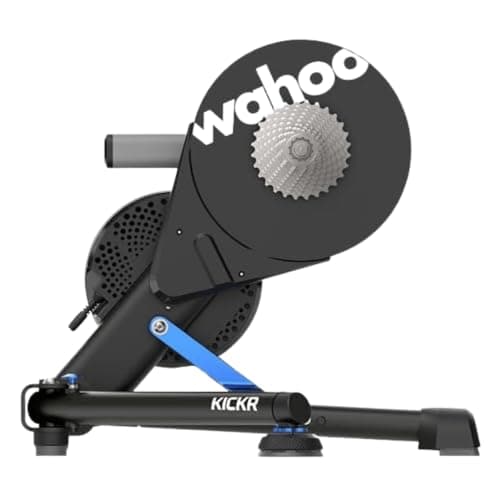 Wahoo Kickr v6 The same published power numbers as the Neo 3M, plus onboard WiFi, for roughly half the money — which is why it wins for most riders. | Best for most riders at this level | 9.19.1 out of 10 | $849.99 · View on Amazon #ad We may earn a commission · Price as of October 21, 2026 |
| 2 | 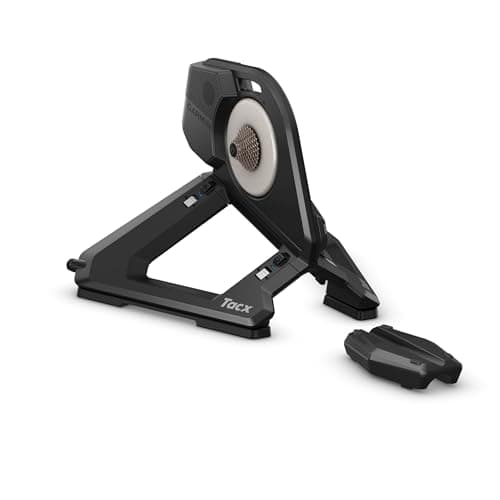 Garmin Tacx Neo 3M The best-feeling and quietest trainer of the three, and the one you buy when ride simulation is the product rather than a feature. | Best ride feel, and the quietest | 8.88.8 out of 10 | $1,799.99 · View on Amazon #ad We may earn a commission · Price as of October 21, 2026 |
| 3 | 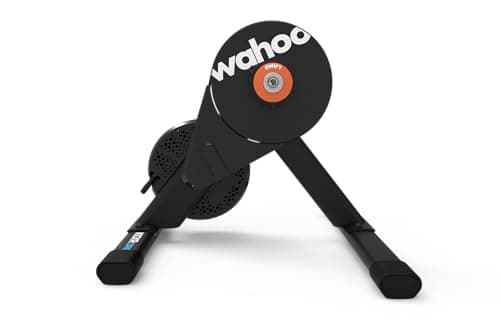 Wahoo Kickr Core 2 The honest answer to a flagship comparison: most of the ride, all of the connectivity, for a fraction of either price. | The cross-shop that spoils both of them | 8.78.7 out of 10 | $549.99 · View on Amazon #ad We may earn a commission · Price as of October 21, 2026 |
This is the flagship question that matters now. It used to be split three ways, because Wahoo's answer to the Neo 3M's movement was the Kickr Move — but Wahoo discontinued the Move in June 2026 according to its own product page, pointing buyers at the fixed-frame Kickr instead. That leaves the v6 as the Wahoo flagship you can still buy new, and it makes this the straight Wahoo-versus-Garmin comparison at the top of the market.
First, the thing that decides nothing
Power accuracy. Both manufacturers claim ±1%, and both trainers reach 2,200 W. Those are the two numbers people compare first and they are identical. Whatever you choose, your FTP, your interval targets and your race results will be the same, and a few watts of offset between two honest devices is normal rather than a fault — how accurate are smart trainers goes through why.
So ignore accuracy. The real differences are architectural, and there are three of them.
Difference one: how the inertia is made
The v6 is a conventional direct-drive trainer — a belt, an electromagnetic brake and a real 16 lb flywheel whose spinning mass carries you through the dead spot in your pedal stroke. It is the architecture almost every trainer uses, and Wahoo does it about as well as it is done.
The Neo 3M has no physical flywheel at all. A motor simulates 125 kg of virtual inertia, and because the resistance is motor-driven rather than brake-driven it can do two things a belt trainer physically cannot. It can drive the drivetrain on a descent, so a downhill pulls at your legs instead of fading to nothing. And it can simulate road surfaces — cobbles, gravel — as vibration through the pedals.
Whether that is worth the premium is a genuine preference rather than a specification argument. Riders who use Zwift for racing and structured work often find the surface effects a novelty they switch off. Riders who use it to ride long virtual routes find descent drive changes the experience of a whole course.
The architecture has two side effects worth more than the simulation to some buyers. The Neo is near-silent, with no belt whine and no flywheel rush, which makes it the only trainer here we would put in an upstairs room without caveats — see best quiet smart trainers and how to make a bike trainer quieter if noise is the constraint. And it runs without mains power for normal riding; only the downhill drive needs the cable, which no Kickr can claim.
Difference two: connectivity, where the money stops making sense
The Kickr v6 has onboard WiFi. The Tacx Neo 3M does not. On a trainer at the Neo's price, that is the hardest thing on this page to defend, because WiFi is not a luxury feature — it is the difference between a trainer that updates its own firmware and talks to the app directly, and one that needs a phone or laptop in the chain. Dropouts, stalled firmware updates and pairing hassle all live in that chain.
It is worse than a straight omission, because the much cheaper Kickr Core 2 has WiFi too. If you ride on an Apple TV, where the game accepts only two Bluetooth connections, the trainer taking one of them is a real cost — Zwift on Apple TV works through that budget sensor by sensor.
The v6 also calibrates itself, so there is no spindown to remember. How to calibrate a smart trainer covers what that routine is on trainers that still need it.
Difference three: movement
The Neo 3M has motion plates built in, giving 5 cm of fore-aft travel, and they can be locked out when you do not want them. That is a genuine comfort advantage on long rides, and it is integrated rather than bolted on.
The v6 answers with Axis feet, which flex a little and are not in the same category. If movement is the specific thing you want, be clear-eyed about the amount: 5 cm is modest next to a dedicated sliding trainer, and the trainer that offered more of it has been discontinued. Our Kickr Move vs Tacx Neo 3M page covers that comparison and its current status, and smart bike vs smart trainer is worth reading if movement and fit are your main drivers, because at Neo 3M money a smart bike is in range.
| Wahoo Kickr v6 | Garmin Tacx Neo 3M | Wahoo Kickr Core 2 | |
|---|---|---|---|
| Claimed accuracy | ±1% | ±1% | ±2% |
| Max resistance | 2,200 W | 2,200 W | 1,800 W |
| Max gradient | 20% | 25% | 16% |
| Inertia | 16 lb physical flywheel | 125 kg simulated, no flywheel | 5.4 kg physical flywheel |
| Onboard WiFi | Yes | No | Yes |
| Bluetooth / ANT+ FE-C | Yes | Yes | Yes |
| Movement | Axis feet flex only | Built-in motion plates, 5 cm fore-aft | None |
| Descent drive | No | Yes | No |
| Road-surface simulation | No | Yes | No |
| Calibration | Automatic | Not published by Garmin | Occasional spindown |
| Mains power | Required | Only for the downhill drive | Required |
| Price band | Flagship | Above flagship | Mid-range |
Who should buy which
Buy the v6 if your riding is training. Intervals, FTP work, Zwift racing, a structured plan. You get identical published power figures, better connectivity, automatic calibration and roughly half the outlay, and nothing in your training is worse for it.
Buy the Neo 3M if your riding is riding. Long virtual routes, descents you want to feel, surfaces you want to notice, and a room where silence is non-negotiable. The simulation is real and no Wahoo reproduces it.
Buy the Neo 3M if the room is the constraint. Near-silent running and mains-free operation for normal riding are properties nothing else here has, and in a flat or an upstairs room they can be worth more than the price difference.
Buy neither if you are not sure.The Core 2 has the same WiFi, ±2% and 1,800 W, and the difference in money buys a fan, a screen and a mat — the three things that actually determine whether you ride four times a week or once.
Want the whole category ranked?
See the full smart trainer rankingsThe full reviews
Head to head
#1 · Best for most riders at this level
Wahoo Kickr v6
9.19.1 out of 10#ad We may earn a commission · Price as of October 21, 2026
The same published power numbers as the Neo 3M, plus onboard WiFi, for roughly half the money — which is why it wins for most riders.
- Type
- Direct drive, belt and physical flywheel
- Claimed accuracy
- ±1%
- Max resistance
- 2,200 W
- Max gradient
- 20%
- Flywheel
- 16 lb, real
- Connectivity
- WiFi, Bluetooth, ANT+ FE-C
- Calibration
- Automatic — no spindown
What we'd praise
- Onboard WiFi, which the Neo 3M does not have — it takes your phone and laptop out of the connection chain entirely
- ±1% claimed accuracy and a 2,200 W ceiling, identical to the Neo 3M's headline figures
- Automatic calibration, so there is no spindown routine to remember
- 16 lb real flywheel plus Axis feet give the most forgiving ride of any fixed-frame Kickr
- Roughly half the Neo 3M's price for the same published power numbers
What we'd flag
- Fixed frame — the Axis feet flex, but there is nothing like the Neo's motion plates
- 20% gradient ceiling against the Neo's 25%, which matters only on the steepest virtual climbs
- Belt pitch climbs with effort, so a sprint is audible through a wall
- Cassette is usually pre-fitted at 11-speed, so 12-speed drivetrains need a swap
- Needs mains power at all times
Start with what this comparison is not about: power data. Both trainers claim ±1% and both top out at 2,200 W. Nothing in your training file will tell you which one you bought. Once that is off the table, the v6's argument is short and strong — it has onboard WiFi, it calibrates itself, and it costs about half as much.
The WiFi point is the one riders underrate until they have lived with it. A trainer with its own network connection updates its own firmware and talks to the app without a phone acting as a bridge, which removes the single most common source of mid-session dropouts. ANT+ vs Bluetooth for Zwift explains why that matters more than any spec on this page, and our Kickr v6 review covers the trainer on its own.
#2 · Best ride feel, and the quietest
Garmin Tacx Neo 3M
8.88.8 out of 10#ad We may earn a commission · Price as of October 21, 2026
The best-feeling and quietest trainer of the three, and the one you buy when ride simulation is the product rather than a feature.
- Type
- Direct drive, motor-driven, no physical flywheel
- Claimed accuracy
- ±1%
- Max resistance
- 2,200 W
- Max gradient
- 25%
- Virtual flywheel
- 125 kg simulated
- Movement
- Built-in motion plates, 5 cm fore-aft travel
- Connectivity
- Bluetooth and ANT+ — no onboard WiFi
What we'd praise
- Motion plates are built in rather than an accessory, and they can be locked out when you do not want them
- Descent simulation actively drives the drivetrain downhill, which no belt-and-flywheel trainer can do
- Road-surface simulation reproduces cobbles and gravel through the pedals
- A 25% gradient ceiling, the highest of the three here
- Near-silent, so it is a genuine option in a shared or upstairs room
- Runs without mains power for normal riding — only the downhill drive needs the cable
What we'd flag
- No onboard WiFi, which on a trainer at this price is the hardest omission to defend
- By some distance the most expensive way to buy ±1% and 2,200 W
- Heavy and long — this is a trainer that gets a permanent floor position, not a cupboard
- The Neo 2T delivers most of the same ride for far less when discounted
- Motion plates give 5 cm of fore-aft travel, which is less than a dedicated moving trainer offers
The Neo 3M is a different machine rather than a better-specified one. There is no physical flywheel at all: a motor simulates 125 kg of inertia, which is what lets it do the two things a belt trainer physically cannot. It drives the drivetrain on a descent, so a downhill actually pulls at your legs instead of coasting to nothing, and it reproduces road surfaces — cobbles, gravel — through the pedals.
Two practical consequences follow from that architecture. It is near-silent, because there is no belt and no spinning mass, which makes it the only trainer on this page we would put in an upstairs room without qualification. And it runs without mains power for normal riding; only the downhill drive needs the cable. Our Tacx Neo 3M review covers it in full, and Neo 2T vs Neo 3M is the same-family comparison that usually matters more to the budget.
The omission that is hard to forgive at this price is onboard WiFi. The much cheaper Kickr Core 2 has it; the Neo 3M does not.
#3 · The cross-shop that spoils both of them
Wahoo Kickr Core 2
8.78.7 out of 10#ad We may earn a commission · Price as of October 21, 2026
The honest answer to a flagship comparison: most of the ride, all of the connectivity, for a fraction of either price.
- Type
- Direct drive, electromagnetic
- Claimed accuracy
- ±2%
- Max resistance
- 1,800 W
- Max gradient
- 16%
- Flywheel
- 5.4 kg
- Connectivity
- WiFi, Bluetooth, ANT+ FE-C
What we'd praise
- Onboard WiFi at a fraction of either flagship's price — the same connectivity advantage the v6 has over the Neo
- ±2% and 1,800 W are enough for structured training and online racing by any honest measure
- 5.4 kg flywheel is heavy for its tier and the road feel shows it
- Leaves budget for the fan, screen and mat that decide whether you finish sessions
What we'd flag
- ±2% rather than ±1%, and a 1,800 W ceiling that a heavy sprinter can reach
- 16% gradient ceiling, well below both flagships
- Fixed frame with no movement of any kind
- No automatic calibration — an occasional spindown is still a step you have to remember
Any fair flagship comparison has to admit where the sensible money goes, and on this site it keeps going to the Core 2. It has the connectivity advantage the v6 holds over the Neo 3M, it claims ±2% rather than ±1%, and it stops at 1,800 W and 16% instead of 2,200 W and 20 to 25%.
For a rider doing structured intervals and Zwift racing, none of those gaps changes an outcome. What changes outcomes is airflow and a screen you can read. If this paragraph has made you hesitate, read our full smart trainer rankings before spending flagship money.
Good questions
Frequently asked questions
Is the Kickr v6 or the Tacx Neo 3M better?
For most riders the Kickr v6, because it claims the same plus/minus 1% accuracy and the same 2,200 W ceiling as the Neo 3M while adding onboard WiFi and automatic calibration, at roughly half the price. The Neo 3M is the better buy if ride simulation is what you want: built-in motion plates, descent drive, road-surface feel, a 25% gradient ceiling and near-silent running.
Does the Tacx Neo 3M have WiFi?
No. The Neo 3M connects over Bluetooth and ANT+ but has no onboard WiFi, which means a phone or laptop stays in the connection chain for app communication and firmware updates. The Kickr v6 has WiFi, and so does the much cheaper Kickr Core 2, which makes it the hardest omission to defend on a trainer at the Neo's price.
Is the Tacx Neo 3M quieter than the Kickr v6?
Yes, noticeably. The Neo 3M has no belt and no physical flywheel - a motor simulates 125 kg of virtual inertia - so there is no belt whine and no flywheel rush, and it is described as near-silent. The Kickr v6's belt pitch climbs with effort, so a sprint is audible through a wall. If a shared or upstairs room is the constraint, that difference can outweigh the price gap.
What can the Tacx Neo 3M do that the Kickr v6 cannot?
Three things, all consequences of being motor-driven rather than brake-and-flywheel driven: it drives the drivetrain on a descent so a downhill pulls at your legs, it simulates road surfaces such as cobbles and gravel through the pedals, and it runs without mains power for normal riding. It also has built-in motion plates with 5 cm of fore-aft travel and a 25% gradient ceiling against the v6's 20%.
Do the Kickr v6 and Tacx Neo 3M measure power the same?
Both claim plus/minus 1% and both reach 2,200 W, so power data is not a reason to choose between them. Expect a few watts of consistent offset between any two honest devices; that is normal rather than a fault. Pick one as your reference, set your FTP from it, and track change rather than the gap.
Is the Kickr Move still an option against the Neo 3M?
Only from remaining retailer stock. Wahoo's own product page states the KICKR MOVE was discontinued as of June 2026 with limited inventory left at selected retailers, and directs buyers to the fixed-frame KICKR instead. That is why this comparison is between the v6 and the Neo 3M rather than the Move and the Neo 3M.
Is a smart bike a better buy than either at this price?
It is worth considering, because at Neo 3M money a smart bike is in range and it removes your own bike, cassette matching and chain maintenance from the equation entirely. What you give up is riding your own fit and your own bike. Our smart bike vs smart trainer comparison works through that trade-off properly.
How we sourced this
- Wahoo — Kickr v6 specifications and manual (manufacturer)
- Wahoo — KICKR MOVE product page, discontinued as of June 2026 with retailer stock only (manufacturer)
- Garmin — Tacx NEO 3M smart trainer product page and specifications (manufacturer)
- Tacx NEO 3M in-depth review: motion and accuracy (DC Rainmaker)
- Garmin launches the Tacx Neo 3M with integrated motion plates (Cyclingnews)
- Garmin Tacx Neo 3M review (OutdoorGearLab)
- Zwift — supported trainers and connection protocols
Keep going