Head to Head
Tacx Neo 3M vs 2T: Which Neo to Buy
The 3M did not change a single measurement, resistance or gradient number from the 2T. Everything it added is around the ride — and one of those additions is worth the premium to exactly one kind of rider.

The short answer
Quick picks
| # | Product | Best for | Score | Price |
|---|---|---|---|---|
| 1 | 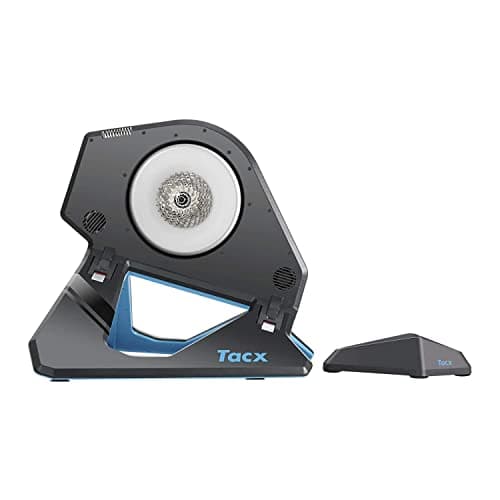 Garmin Tacx Neo 2T Every number that matters is identical to the 3M. What you give up is movement, a handle, a cassette and a second Bluetooth channel — and that is most of the price gap. | Best value in the Neo range | 8.98.9 out of 10 | $899.99 · View on Amazon #ad We may earn a commission · Price as of November 22, 2026 |
| 2 | 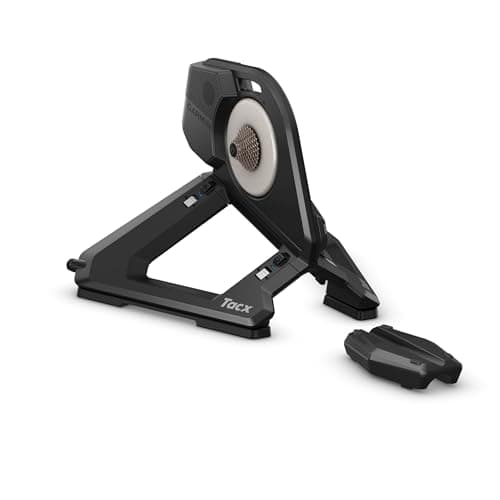 Garmin Tacx Neo 3M The best-feeling trainer on the market, at a price that only makes sense if the movement is why you are shopping. | Best if movement is the reason you are upgrading | 8.68.6 out of 10 | $1,799.99 · View on Amazon #ad We may earn a commission · Price as of November 22, 2026 |
| 3 | 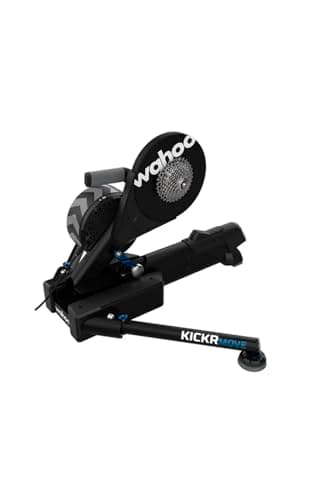 Wahoo Kickr Move If the movement is why you are looking past the 2T, the Move offers more of it and adds WiFi — at the cost of the Neo's descent drive and gradient ceiling. | The cross-shop: more movement, plus WiFi | 8.78.7 out of 10 | $1,249.00 · View on Amazon $1,349.99Save 7% #ad We may earn a commission · Price as of November 22, 2026 |
| 4 |  Wahoo Kickr Core 2 The budget answer to both Neos: WiFi, ±2% and a 16% ceiling for a fraction of the money, if you can live without the descent drive. | Best for riders who do not need Neo money | 8.68.6 out of 10 |
This is an unusual head-to-head because the two trainers are, at the level of the spec sheet that matters most, the same trainer. Garmin built the Neo 3M on the 2T's motor and electronics, kept every performance figure, and spent the revision on the base, the box and the radio. That makes the decision cleaner than most upgrades: you are not weighing accuracy against price, you are weighing a specific set of comfort and convenience features against a large price gap. Whether that gap is justified depends on one question, and we will get to it. As always, we have not bench-tested either unit; the numbers are Garmin's, and the ride observations are attributed to independent reviewers in the sources.
What is identical
Both trainers measure power directly with a claimed accuracy of ±1%. Both hold 2,200 W of resistance and simulate gradients to 25%, which is steeper than anything Zwift draws. Both use the Neo's motor-driven design, so there is no belt and no physical flywheel; inertia is simulated electronically, which produces the settled, heavy feel through the dead spot that Neo owners describe, and the descent drive spins the cassette forward on virtual downhills. Both reproduce road surfaces — cobbles, gravel, wooden bridges — as vibration through the pedals. Both run without mains power for normal riding, losing only the descent drive when unplugged. Both are rated to 125 kg (275 lb), the highest limit in our registry. And neither has WiFi.
If your reason for shopping is the accuracy, the ceiling, the silence, the descent drive or the rider limit, stop here: the 2T delivers all of it. Our Neo 2T review is the place to go next.
| Tacx Neo 2T | Tacx Neo 3M | Wahoo Kickr Move | Wahoo Kickr Core 2 | |
|---|---|---|---|---|
| Claimed accuracy | ±1% | ±1% | ±1% | ±2% |
| Max resistance | 2,200 W | 2,200 W | 2,200 W | 1,800 W |
| Max gradient | 25% | 25% | 20% | 16% |
| Descent drive | Yes | Yes | No | No |
| Flywheel | Virtual | Virtual | 16 lb physical | 5.4 kg physical |
| Built-in movement | None | 5 cm fore-aft plus tilt | 20 cm fore-aft plus side-to-side | None |
| Carry handle | No | Yes | Yes | No |
| Cassette included | No | 11-speed 11-28 | 11-speed 11-28 | No |
| Bluetooth channels | One | Two | Up to three | Not published |
| WiFi | No | No | Yes | Yes |
| Runs unplugged | Yes (no descent) | Yes (no descent) | No | No |
| Weight | 21.5 kg | 23.6 kg | Heavier, on a rail | Not published |
| Rider limit | 125 kg / 275 lb | 125 kg / 275 lb | 113 kg / 250 lb | 113 kg / 250 lb |
What the 3M adds
Motion plates.The base of the 3M contains its own movement: 2.5 cm forward, 2.5 cm back, for 5 cm of total fore-aft travel, with a small amount of side-to-side tilt. The plates can be locked out. This is the same idea as the separate Tacx motion plates that a 2T owner can buy, built into the trainer instead of sitting under it. The travel is deliberately subtle: it takes the fixed-trainer harshness off the saddle contact rather than making the bike visibly rock. Riders who want an obvious, sprint-rocking movement generally prefer the Kickr Move's 20 cm rail, which is why it sits on this page as the cross-shop.
A handle.Trivial on paper, not trivial when a 23 kg trainer has to cross a garage. The 2T has none.
A cassette in the box. The 3M ships with an 11-speed 11-28. The 2T ships with nothing on the freehub, so a 2T buyer adds a cassette to the order — our trainer cassette guide covers which one. For a 12-speed SRAM bike both trainers need the separate XD/XDR body anyway, so the included cassette only helps an 11-speed rider.
Dual Bluetooth, better cooling and improved ERG.The 3M can hold two Bluetooth connections at once, so a head unit and an app can both listen. DC Rainmaker's review reports substantially improved ERG mode accuracy over the 2T and an enhanced cooling system. The ERG improvement is the one genuinely functional gain on the list; how much it matters depends on how much of your riding is structured intervals, which ERG mode explained puts in context.
The one question that decides it
Does a fixed trainer limit how long you can ride? Not how hard — how long. If you find yourself shifting on the saddle at the hour mark on a fixed trainer when you would be fine for three hours outdoors, the cause is the lack of movement, and the 3M's plates are a direct fix for it. If you have never noticed, or if your indoor sessions are an hour of intervals and out, the plates will not change your riding, and every other 3M advantage can be bought for the 2T separately for far less than the price gap: a cassette, a set of Tacx motion plates if you later change your mind, and an ANT+ adapter to sidestep the single Bluetooth channel.
Where the Kickr Move fits
Because the 2T-vs-3M decision reduces to "is built-in movement worth it," it is worth knowing the other answer to that question. The Move puts Wahoo's flagship on a 20 cm fore-aft rail, adds side-to-side, and has onboard WiFi, which no Neo has. It gives up the Neo's descent drive, five points of gradient ceiling and 25 lb of rider limit, and it needs mains power. If movement is the reason and you want to feel it, the Move offers more of it. If you want the Neo's descent drive and virtual flywheel and the subtlety of the plates, the 3M is the only trainer that has both. Kickr Move vs Tacx Neo 3M takes that comparison further.
The budget answer: what a Kickr Core 2 gives up
A lot of people arrive at "Neo 3M vs 2T" hoping to be told they do not need either. That is a fair hope, and the honest version of the answer is a specification list rather than an opinion. Against a Neo, the Wahoo Kickr Core 2publishes ±2% instead of ±1%, 1,800 W instead of 2,200 W, a 16% gradient ceiling instead of 25%, a 5.4 kg physical flywheel instead of a virtual one, a 250 lb rider limit instead of 275 lb, and no motor, which means no descent drive and no road-surface simulation. It adds one thing no Neo has: onboard WiFi.
Read that list against how you actually ride. A 16% ceiling is below Zwift's steepest pitches but above almost every road you will choose to repeat. The gap between ±1% and ±2% is smaller than the day-to-day swing in your own legs, and it only becomes a real problem if you need indoor numbers to line up with an outdoor power meter. What you genuinely lose is the Neo feel: the settled inertia through the dead spot, the cassette being driven forward on a descent, cobbles arriving through the pedals. If none of that is why you opened this page, buy the Core 2 and spend the difference on the room.
Which Neo for racing, and which for long steady rides
Because the two Neos measure identically, neither has a racing advantage over the other. Both claim ±1%, both hold 2,200 W, and both are accepted by the same event organizers. The thing that separates them in practice is session length. A fixed platform asks your hips and lower back to absorb every pedal stroke in exactly the same place for the whole ride, which is why long endurance blocks are where riders notice a fixed trainer at all. The 3M's 5 cm of fore-aft travel is small, and that is the point — it is enough to stop the frame feeling nailed to the floor without introducing the sway that puts some riders off larger movement systems.
For a 45-minute threshold session, buy the 2T; the plates will not change the workout. For three-hour weekend rides, the 3M is the one of the pair that might change whether you finish them. If racing is the main use, the best smart trainers for Zwift puts both Neos against the field on the things race organizers care about.
The verdict
Neo 2T for almost everyone considering a Neo. Identical measurement, identical resistance, identical simulation, the same rider limit, and a price that leaves room for a cassette, a fan and a mat. Neo 3Mfor the rider whose sessions are cut short by the harshness of a fixed platform, who wants the Neo's descent drive and virtual flywheel rather than a physical one, and who is prepared to pay a flagship price for a subtle, well-engineered fix. If you are in the second group and unsure, ride a friend's fixed trainer for two hours first; if you are fine, you are a 2T buyer. Our best smart trainers roundup places both in the wider field.
Leaning toward the 2T?
Read the full Tacx Neo 2T reviewThe full reviews
Head to head
#1 · Best value in the Neo range
Garmin Tacx Neo 2T
8.98.9 out of 10#ad We may earn a commission · Price as of November 22, 2026
Every number that matters is identical to the 3M. What you give up is movement, a handle, a cassette and a second Bluetooth channel — and that is most of the price gap.
- Type
- Direct drive, motor-driven
- Claimed accuracy
- ±1%
- Max resistance
- 2,200 W
- Max gradient
- 25%
- Movement
- None built in
- Cassette
- Not included
- Weight
- 21.5 kg
- Rider limit
- 125 kg (275 lb)
What we'd praise
- Same ±1% measured accuracy, 2,200 W ceiling and 25% gradient as the 3M — the numbers did not change
- Same motor-driven descent, road-feel surface simulation and virtual flywheel
- Never needs calibration and rides unplugged if you accept losing the descent drive
- Substantially cheaper, and it has been discounted far more often than the 3M
What we'd flag
- No motion plates — the 2T is a fixed trainer unless you buy Tacx's separate plates
- No carry handle, and 21.5 kg does not move easily without one
- No cassette in the box; the 3M ships with an 11-28
- The older electronics: the 3M added a second Bluetooth channel and improved ERG behavior
The 2T is the Neo platform without the extras. Garmin did not touch the measurement, the resistance or the simulation when it built the 3M, so the 2T still measures at ±1%, still holds 2,200 W and 25%, still drives the drivetrain downhill and still buzzes through the pedals on virtual cobbles. Our Tacx Neo 2T review covers the platform.
What it does not have is built-in movement, a handle, a cassette or the newer electronics. Whether those four things are worth the premium is the whole decision, and it comes down to the movement.
#2 · Best if movement is the reason you are upgrading
Garmin Tacx Neo 3M
8.68.6 out of 10#ad We may earn a commission · Price as of November 22, 2026
The best-feeling trainer on the market, at a price that only makes sense if the movement is why you are shopping.
- Type
- Direct drive, motor-driven
- Claimed accuracy
- ±1%
- Max resistance
- 2,200 W
- Max gradient
- 25%
- Movement
- Built-in plates, 5 cm fore-aft plus slight tilt
- Cassette
- 11-speed 11-28 included
- Weight
- 23.6 kg
- Rider limit
- 125 kg (275 lb)
What we'd praise
- Motion plates are built into the base — 2.5 cm forward, 2.5 cm back, with a little side-to-side — and they lock out
- Carry handle, which the 2T should always have had
- Cassette in the box, so a Shimano/SRAM 11-speed bike rides on day one
- Dual Bluetooth connections and improved ERG accuracy over the 2T, per independent testing
What we'd flag
- A large premium for a trainer whose power, resistance and gradient numbers are identical to the 2T
- 5 cm of travel is subtle; riders who want obvious movement generally prefer the Kickr Move's 20 cm rail
- Heaviest trainer in the range and no WiFi at any price
- The improved cooling suggests the 2T could throttle under sustained very high power — but it is a fix for a problem most riders never meet
Garmin's changes for the 3M are all around the edges of the ride: the motion plates, the handle, the cassette, a second Bluetooth channel, better cooling and, according to DC Rainmaker's testing, substantially improved ERG accuracy. Nothing about how it measures or resists changed. Our Tacx Neo 3M review goes through the ride in detail.
That makes the 3M easy to recommend to one rider and hard to recommend to everyone else. If you have ridden a fixed trainer for years and the harshness is what limits your sessions, this is the fix. If you have never noticed, the 2T is the same trainer for a lot less.
#3 · The cross-shop: more movement, plus WiFi
Wahoo Kickr Move
8.78.7 out of 10$1,349.99Save 7%
#ad We may earn a commission · Price as of November 22, 2026
If the movement is why you are looking past the 2T, the Move offers more of it and adds WiFi — at the cost of the Neo's descent drive and gradient ceiling.
- Type
- Direct drive, fore-aft movement rail
- Claimed accuracy
- ±1%
- Max resistance
- 2,200 W
- Max gradient
- 20%
- Movement
- 20 cm (8 in) fore-aft, plus side-to-side
- Connectivity
- WiFi, Bluetooth, ANT+ FE-C
- Rider limit
- 250 lb (113 kg)
What we'd praise
- Four times the fore-aft travel of the Neo 3M, and it is the obvious, unmistakable kind of movement
- Onboard WiFi, which no Neo has
- Same ±1% claim and 2,200 W as both Neos
- ERG Easy Ramp for restarting an interval gently after a stop
What we'd flag
- 20% gradient ceiling against the Neo's 25%, and no motor-driven descent
- 16 lb physical flywheel rather than the Neo's virtual one — a different, slightly less settled feel at low cadence
- 250 lb rider limit against the Neo's 275 lb
- Needs mains power to run at all
Anyone weighing the 3M over the 2T should look sideways at the Kickr Move, because the question is really "is built-in movement worth the premium," and Wahoo answers it with a different design: a 20 cm rail rather than 5 cm plates, plus WiFi. The Neo keeps its descent drive, its 25% ceiling and its higher rider limit.
We compare the two directly in Kickr Move vs Tacx Neo 3M, and the Move on its own in the Kickr Move review.
#4 · Best for riders who do not need Neo money
Wahoo Kickr Core 2
8.68.6 out of 10The budget answer to both Neos: WiFi, ±2% and a 16% ceiling for a fraction of the money, if you can live without the descent drive.
- Type
- Direct drive, electromagnetic
- Claimed accuracy
- ±2%
- Max resistance
- 1,800 W
- Max gradient
- 16%
- Flywheel
- 5.4 kg physical
- Connectivity
- WiFi, Bluetooth, ANT+ FE-C
- Rider limit
- 250 lb (113 kg)
What we'd praise
- Onboard WiFi, which neither Neo has
- 1,800 W and a 16% ceiling cover every gradient Zwift draws for most riders
- ±2% is close enough that your own day-to-day variation is larger
- Leaves most of a Neo's price for a cassette, a fan, a mat and a screen
What we'd flag
- ±2% rather than ±1%, and a physical flywheel rather than the Neo's virtual one
- No motor-driven descent drive, so virtual downhills stop driving the cassette
- 16% gradient ceiling against the Neo's 25%
- 250 lb rider limit, 25 lb below both Neos
This is the pick for the rider who arrived at this page to find out whether a Neo is worth it and would rather the answer were no. The Core 2 is a fixed, direct-drive trainer with onboard WiFi, a 5.4 kg flywheel, a ±2% accuracy claim and a 16% gradient ceiling. Set against a Neo it loses the virtual flywheel, the descent drive, nine points of gradient headroom, 400 W of resistance and 25 lb of rider limit.
None of those losses show up in a Zwift race result. What they change is the texture of the ride — the settled feel through the dead spot that Neo owners describe, and the cassette being driven forward on a descent instead of coasting. If that texture is not what you are shopping for, this is the trainer to buy, and the Kickr Core 2 review covers it in full.
Good questions
Frequently asked questions
Tacx Neo 3M vs 2T: which should I buy?
Buy the Neo 2T unless built-in movement is specifically why you are upgrading. Every published performance figure is the same on both: ±1% claimed accuracy, 2,200 W of resistance, a 25% gradient ceiling, the motor-driven descent drive, road-surface simulation and a 125 kg rider limit. The 3M's premium buys 5 cm motion plates, a carry handle, an 11-speed cassette in the box and a second Bluetooth channel.
Is there a cheaper trainer worth buying instead of either Neo?
The Wahoo Kickr Core 2 is the budget pick on this page. It publishes ±2% accuracy, 1,800 W, a 16% gradient ceiling, a 5.4 kg physical flywheel and a 250 lb rider limit, and it adds onboard WiFi, which neither Neo has. What it cannot do is the Neo's motor-driven descent or road-surface simulation.
Is the Tacx Neo 3M more accurate than the Neo 2T?
Both carry the same ±1% claimed accuracy and the same measurement design. DC Rainmaker's testing of the 3M reports substantially improved ERG mode accuracy, meaning it holds a target power more tightly in structured workouts, but the underlying power measurement claim is unchanged.
What is the difference between the Tacx Neo 2T and Neo 3M?
The 3M adds built-in motion plates (5 cm of fore-aft travel plus slight tilt), a carry handle, an 11-speed cassette in the box, dual Bluetooth connections, improved cooling and improved ERG behavior. Power accuracy, 2,200 W resistance, 25% gradient, the descent drive, road-feel simulation and the 125 kg rider limit are identical.
Does the Tacx Neo 2T come with a cassette?
No. The 2T ships without a cassette on its Shimano/SRAM 9-11 speed freehub. The Neo 3M includes an 11-speed 11-28 cassette. Both need a separate XD/XDR freehub body for 12-speed SRAM cassettes.
Can you add motion plates to a Tacx Neo 2T?
Yes. Tacx sells separate motion plates that sit under the 2T and provide a similar subtle fore-aft movement to the plates built into the 3M. Buying a 2T plus the plates is typically cheaper than a 3M, at the cost of a bulkier setup and no handle.
Does the Neo 3M have WiFi?
No. Neither Neo has WiFi; both connect over Bluetooth and ANT+. The 3M adds a second Bluetooth channel so two devices can connect at once. The Wahoo Kickr Move, the natural cross-shop, does have onboard WiFi.
Is the Tacx Neo 3M worth it over the Neo 2T?
Only if built-in movement is why you are upgrading. Every performance figure is the same. If a fixed trainer limits how long you can comfortably ride, the 3M's plates are a direct fix. Otherwise the 2T delivers the same ride and leaves a large amount of the price gap in your pocket.
Which is better, the Tacx Neo 3M or the Wahoo Kickr Move?
They answer the movement question differently. The Move has 20 cm of fore-aft travel, side-to-side movement and WiFi. The 3M has subtler 5 cm plates but keeps the Neo's motor-driven descent, virtual flywheel, 25% gradient ceiling and higher 125 kg rider limit. Riders who want obvious movement usually prefer the Move; riders who want the Neo ride feel choose the 3M.
How we sourced this
- DC Rainmaker — Tacx NEO 3M in-depth review (motion plates travel, cassette included, changes vs 2T)
- Garmin — Tacx NEO 3M Owner's Manual, Specifications (125 kg maximum rider weight)
- Zwift Insider — Tacx NEO 2T review (125 kg limit, 2,200 W, 25%, no cassette, unplugged operation, 21.5 kg)
- GRAN FONDO — Tacx NEO 3M on test (23.6 kg unit weight)
- Wahoo — KICKR MOVE product page (20 cm fore-aft motion, 250 lb rider limit, ERG Easy Ramp)
- Cyclingnews — Garmin launches Tacx Neo 3M with integrated motion plates
Keep going