Indoor Trainers
The Best Bike Trainers for Triathlon
A triathlete's trainer sessions are long, steady and prescribed to the watt. That changes what matters — and it is not gradient ceilings or sprint response.
The short answer
Quick picks
| # | Product | Best for | Score | Price |
|---|---|---|---|---|
| 1 | 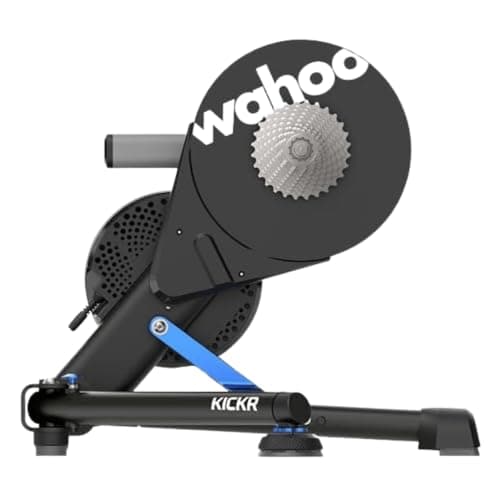 Wahoo Kickr v6 The steadiest ERG mode and the most reliable connection in the mid-range — the trainer to buy if your long-course plan is built on hours at a fixed wattage. | Best overall for triathlon training | 9.19.1 out of 10 | $849.99 · View on Amazon #ad We may earn a commission · Price as of September 18, 2026 |
| 2 | 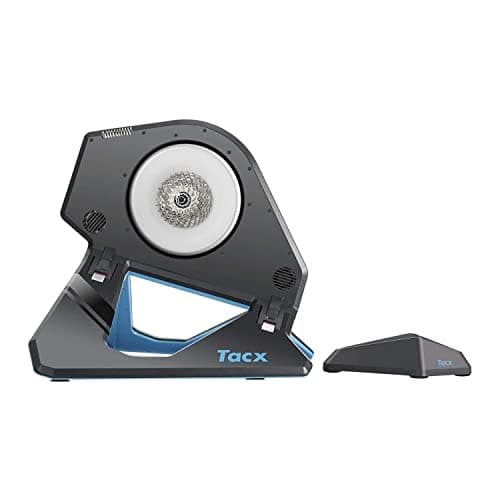 Garmin Tacx Neo 2T The trainer for the athlete who never wants to think about calibration again, and for anyone the Wahoo weight limit rules out. | Best for never calibrating and for heavier athletes | 8.88.8 out of 10 | $899.99 · View on Amazon $1,099.99Save 18% #ad We may earn a commission · Price as of September 18, 2026 |
| 3 | 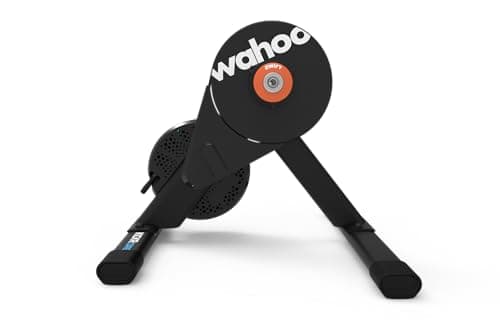 Wahoo Kickr Core 2 Nearly everything a triathlete needs from the v6 — WiFi, measured power, heart rate relay — for a lot less, at a slightly wider accuracy band. | Best value with WiFi | 8.98.9 out of 10 | $548.99 · View on Amazon #ad We may earn a commission · Price as of September 18, 2026 |
| 4 | 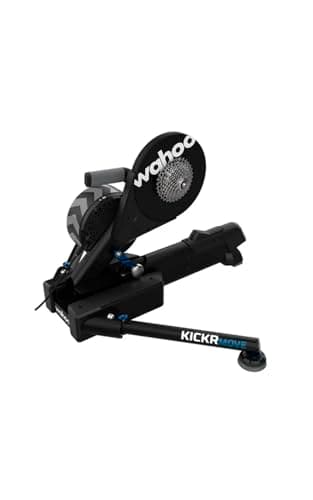 Wahoo Kickr Move Buy it if the aero position is what ends your long indoor rides, not your legs — the movement is the whole product, and for that rider it works. | Best for saddle comfort on long sessions | 8.98.9 out of 10 | $1,338.00 · View on Amazon #ad We may earn a commission · Price as of September 18, 2026 |
| 5 | 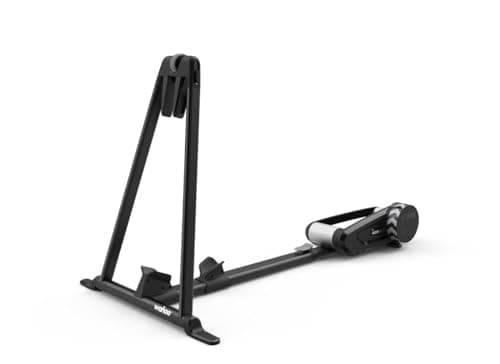 Wahoo Kickr Rollr For the athlete who already owns power pedals and alternates between two bikes, the only trainer here that does not make you choose which one lives on it. | Best for swapping between the tri bike and the road bike | 7.57.5 out of 10 | $699.99 · View on Amazon #ad We may earn a commission · Price as of September 18, 2026 |
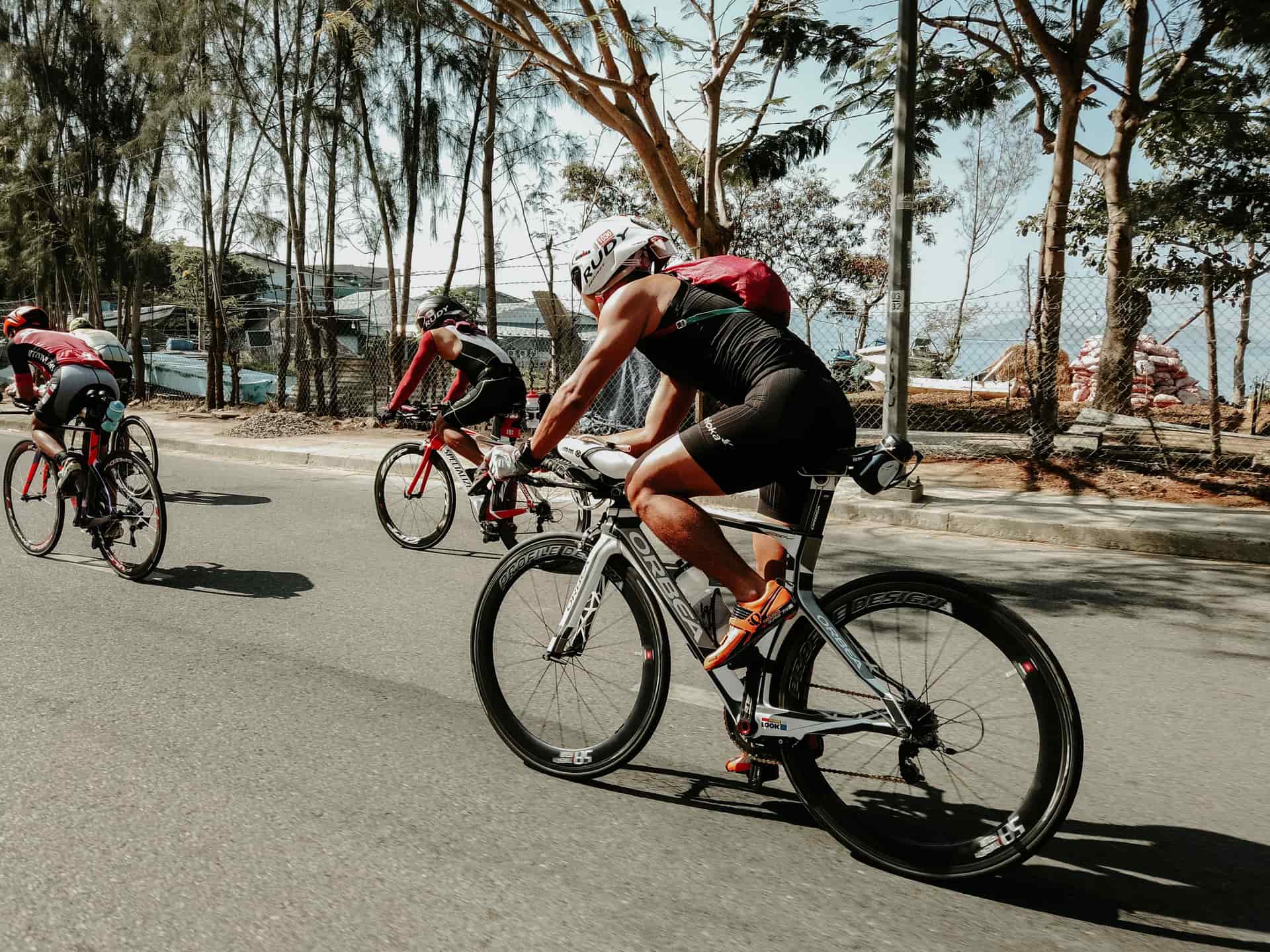
Most trainer roundups are ranked for a road cyclist on Zwift: how hard the sprint response hits, how steep a gradient the unit can fake, how realistic a descent feels. Almost none of that matters to a triathlete. Long-course bike training is dominated by steady-state work — sweet spot, tempo, threshold repeats, long aerobic rides — done in ERG mode at a prescribed wattage, often in the aero position, often before dawn. The trainer's job is to hold a number for a long time without drifting, without dropping the connection, and without making the position unbearable.
So this page is ranked differently from our main smart trainer roundup. ERG steadiness carries the most weight, then measured accuracy, then connection reliability over a long session, then value. Gradient ceiling and sprint response barely feature. We have not bench-tested any of these trainers; the behavior claims below are attributed to the manufacturers' specifications and to independent testing, and the sources are listed at the end.
What a triathlon plan actually asks of a trainer
ERG mode that holds. ERG modesets the resistance so that your power stays at target regardless of cadence. In a 90-minute sweet-spot session the quality you care about is how tightly it holds and how it behaves when you stop pedaling — to grab a bottle, to reach for a gel, to answer a child. Trainers that slam back to full resistance from a standstill are the ones that make riders quit ERG mode altogether. Wahoo's ERG Easy Ramp, which returns resistance to target over ten seconds after a stop, is the feature built for exactly this.
Measured power, not estimated. Triathletes pace a bike leg by power more than any other athletes, and the number you pace from is the number you trained at. Every trainer on this list except the Rollr measures power directly with a claimed accuracy of ±1% or ±2%. We explain the difference between measured and estimated power in how accurate are smart trainers; the short version is that estimated power is fine for a game and not fine for a race plan.
A connection that does not drop. Long sessions turn a small dropout probability into a near-certainty over a season. Onboard WiFi, which Wahoo builds into the v6, Move and Core 2, takes Bluetooth range and interference out of the equation. The Neo 2T does not have it, and that is the one real strike against an otherwise ideal triathlon trainer.
Comfort in the aero position. A tri bike on a fixed trainer is more locked-in than on the road, because the bike cannot rock. Riders who are fine for three hours outdoors start shifting at ninety minutes inside. That is the problem the Kickr Move is built for, and it is also why a trainer desk at the right height and a serious fan matter more to a triathlete than to a Zwift racer.
| Kickr v6 | Neo 2T | Kickr Core 2 | Kickr Move | Kickr Rollr | |
|---|---|---|---|---|---|
| Power source | Measured, ±1% | Measured, ±1% | Measured, ±2% | Measured, ±1% | Your power meter |
| Calibration | Automatic | Never needed | Automatic | Automatic | Meter-dependent |
| WiFi | Yes, plus wired port | No | Yes | Yes | No (Direct Connect port) |
| ERG stop recovery | Easy Ramp, 10 s | Standard | Standard | Easy Ramp, 10 s | Standard |
| Movement | AXIS feet | None | None | Fore-aft rail | None |
| Rider limit | 250 lb / 113 kg | 275 lb / 125 kg | 250 lb / 113 kg | 250 lb / 113 kg | 250 lb / 113 kg |
| Bike swap | Cassette + axle | Cassette + axle | Cassette + axle | Cassette + axle | Seconds |
The tri bike fitting problem
Two things trip up a time-trial bike on a trainer. The first is the front end: a tri bike has a lower front, and on a direct-drive trainer the rear axle sits slightly higher than on the road, which tips the bike nose-down. A front wheel riser block fixes it and is worth the small cost on any of the direct-drive units here. The second is the cassette. If your tri bike is 12-speed and your road bike is 11-speed, a direct-drive trainer forces you to match one of them, and the other bike needs a cassette swap every time — our trainer cassette guide covers the options. The Rollr is on this list because it removes that problem entirely.
Do you need a power meter as well?
If you race by power outdoors, yes, and it is worth deciding which comes first. The trainers above give you accurate indoor power without any additional purchase. A pedal-based meter such as the Favero Assioma gives you the same number outdoors and moves between the tri bike and the road bike in minutes. Smart trainer vs power meter settles the order, and the best power meter pedals ranks the field. If you go the Rollr route, the power meter is not optional.
How we ranked them
The v6 wins because it has no weakness on this brief: measured power, WiFi, wired port, ERG Easy Ramp, and independent tests showing tight ERG transitions. The Neo 2T is a close second on accuracy and consistency and loses only on WiFi. The Core 2 beats both on value and is the right pick for most age-groupers on a budget. The Move ties the Core 2 on our overall score because it solves a problem that is real for one kind of athlete and irrelevant to another. The Rollr is fifth on the numbers but first for the two-bike athlete who already owns power pedals — which is a large share of the people searching for this page.
Ready to commit?
Read the full Wahoo Kickr v6 reviewThe full reviews
Every pick, in detail
#1 · Best overall for triathlon training
Wahoo Kickr v6
9.19.1 out of 10#ad We may earn a commission · Price as of September 18, 2026
The steadiest ERG mode and the most reliable connection in the mid-range — the trainer to buy if your long-course plan is built on hours at a fixed wattage.
- Type
- Direct drive
- Claimed accuracy
- ±1%
- Max resistance
- 2,200 W
- Max gradient
- 20%
- Flywheel
- 16 lb
- Connectivity
- WiFi, Bluetooth, ANT+ FE-C
- Rider limit
- 250 lb (113 kg)
What we'd praise
- ERG Easy Ramp brings resistance back to target over ten seconds after a stop, so a bottle grab mid-interval does not become a wall
- Independent testing found ERG transitions settling in about 2.5 seconds in the small ring — the kind of steadiness a two-hour sweet-spot session lives on
- WiFi plus a Direct Connect port removes the dropout that ruins a long indoor brick
- ±1% claimed and auto-calibrating in the background, so the number you race by indoors is the number you trained by
- AXIS feet give a small amount of side-to-side give without a full motion platform
What we'd flag
- Costs substantially more than the Core 2 for the same WiFi and a tighter accuracy claim
- The 16 lb flywheel is a physical mass — it is heavy and it does not fold
- AXIS feet are not real movement; if saddle comfort on long sessions is your problem, the Kickr Move exists
- Comes with an 11-speed cassette, which may not match a 12-speed tri bike
Triathlon training indoors is mostly one thing: long, steady blocks at a prescribed power, with a handful of short surges. The Kickr v6 is built for that. Wahoo's ERG Easy Ramp feature returns resistance to target over ten seconds after you stop pedaling, which is the difference between grabbing a bottle and stalling into a 300 W wall. Independent testing by DC Rainmaker recorded ERG transitions settling in about 2.5 seconds in the small ring.
The WiFi and the Direct Connect port matter more to a triathlete than to most riders, because the sessions are long enough for a Bluetooth dropout to become likely. Our Kickr v6 review covers the rest.
#2 · Best for never calibrating and for heavier athletes
Garmin Tacx Neo 2T
8.88.8 out of 10$1,099.99Save 18%
#ad We may earn a commission · Price as of September 18, 2026
The trainer for the athlete who never wants to think about calibration again, and for anyone the Wahoo weight limit rules out.
- Type
- Direct drive, motor-driven
- Claimed accuracy
- ±1%
- Max resistance
- 2,200 W
- Max gradient
- 25%
- Flywheel
- Virtual — electromagnetic
- Connectivity
- Bluetooth, ANT+ FE-C
- Rider limit
- 125 kg (275 lb)
What we'd praise
- No calibration, no spin-down, ever — the number is the same on day one and day nine hundred
- ±1% measured power with a virtual flywheel that gives an unusually settled feel at steady state
- 125 kg rider limit, the highest of any direct-drive trainer we list
- Runs without mains power if the socket is inconvenient; the descent drive is the only thing that needs it
- Near-silent, which matters at 5 a.m. before a swim
What we'd flag
- No WiFi — Bluetooth and ANT+ only, so a long session relies on a clean wireless environment
- No cassette in the box, and 12-speed SRAM needs an XD/XDR body
- 21.5 kg with no handle; it does not move, and it does not fold
- Superseded by the Neo 3M if you want motion built in
The Neo 2T's pitch to a triathlete is consistency. It measures power directly, it never needs a spin-down, and its virtual flywheel holds a steady-state effort with very little of the surge-and-sag that lighter physical flywheels show at low cadence. Its 125 kg limit also makes it the default for larger athletes, since every Wahoo trainer stops at 113.
What it lacks is WiFi. On a two-hour session that is a real consideration, and we would pair it with an ANT+ adapter on a computer rather than rely on Bluetooth from across the room. Full detail in the Tacx Neo 2T review.
#3 · Best value with WiFi
Wahoo Kickr Core 2
8.98.9 out of 10#ad We may earn a commission · Price as of September 18, 2026
Nearly everything a triathlete needs from the v6 — WiFi, measured power, heart rate relay — for a lot less, at a slightly wider accuracy band.
- Type
- Direct drive, electromagnetic
- Claimed accuracy
- ±2%
- Max resistance
- 1,800 W
- Max gradient
- 16%
- Flywheel
- 5.4 kg
- Connectivity
- WiFi, Bluetooth, ANT+ FE-C
- Rider limit
- 250 lb (113 kg)
What we'd praise
- Onboard WiFi at mid-range money — the single feature that most improves a long indoor session
- Kickr Bridge relays a heart rate strap through the trainer, so the app sees one device instead of two
- Measured power at ±2%, which is tight enough to pace a 70.3 bike leg from
- 1,800 W and 16% cover every workout a triathlon plan will ever prescribe
What we'd flag
- ±2% rather than ±1% — over a 40 km time trial that is a wider band than the trainers above
- 5.4 kg flywheel feels lighter at low cadence than the v6's 16 lb
- No ERG Easy Ramp feature; a stop mid-interval means restarting into full resistance
- Fixed frame, no handle
The Core 2 is the value answer on this page for one reason: it has WiFi. A triathlete's indoor sessions are long, and the failure that actually ends them is not a lack of gradient ceiling but a Bluetooth dropout forty minutes into a ninety-minute block. Wahoo put the connection fix from the flagship into the mid-range trainer, and added Kickr Bridge so your heart rate strap rides through the same connection.
The trade is ±2% instead of ±1%, and a lighter flywheel. Whether that matters to you is the entire subject of Kickr v6 vs Kickr Core; the Core 2 specifics are in our Kickr Core 2 review.
#4 · Best for saddle comfort on long sessions
Wahoo Kickr Move
8.98.9 out of 10#ad We may earn a commission · Price as of September 18, 2026
Buy it if the aero position is what ends your long indoor rides, not your legs — the movement is the whole product, and for that rider it works.
- Type
- Direct drive, fore-aft movement
- Claimed accuracy
- ±1%
- Max resistance
- 2,200 W
- Max gradient
- 20%
- Flywheel
- 16 lb
- Connectivity
- WiFi, Bluetooth, ANT+ FE-C
- Rider limit
- 250 lb (113 kg)
What we'd praise
- Fore-aft movement rail lets your hips shift naturally, which is the thing that makes hour three in the aero position survivable
- Every v6 spec — ±1%, WiFi, 2,200 W, 20% — on the moving base
- Movement can be locked out for hard ERG work if you prefer a fixed platform
- The closest a fixed-position tri bike gets to the road without a full rocker plate
What we'd flag
- The most expensive trainer here, and the extra is entirely for the movement
- Fore-aft only — no side-to-side lean
- Heavy and long; it needs a permanent spot
- If your long sessions are already comfortable, you are paying for a solution to someone else's problem
Triathletes spend more time locked in one position than any other cyclist, and a fixed trainer makes it worse, because the bike cannot rock under you the way it does on the road. The Kickr Move puts the v6 on a rail that slides fore and aft as you pedal. It does not change the numbers; it changes how long you can sit on them.
Whether that is worth the premium over a v6 is the entire subject of Kickr Move vs Kickr v6. Our Kickr Move review goes into what the movement actually fixes.
#5 · Best for swapping between the tri bike and the road bike
Wahoo Kickr Rollr
7.57.5 out of 10#ad We may earn a commission · Price as of September 18, 2026
For the athlete who already owns power pedals and alternates between two bikes, the only trainer here that does not make you choose which one lives on it.
- Type
- Hybrid: front tire clamp, rear wheel on a roller
- Fits
- 950-1100 mm wheelbase, tires up to 2.1 in
- Power accuracy
- Within ±1% of an external power meter you supply
- Max resistance
- 1,500 W
- Max gradient
- 10% climb, -10% descent
- Rider limit
- 250 lb (113 kg)
What we'd praise
- The bike goes on and off in seconds with both wheels fitted — no cassette, no axle adapter, no tri-bike-only trainer
- Runs your power-meter pedals as the source, so indoor and outdoor watts come from the same device
- Wide, stable stance; the front clamp holds a tri bike square
- ANT+, Bluetooth and Direct Connect
What we'd flag
- Its own power estimate is not something to train by — it is designed around a meter you already own
- 1,500 W and 10% are the lowest ceilings here, though neither limits a triathlon plan
- A rear tire on a roller is louder than direct drive and wears the tire
- The 950-1100 mm wheelbase window excludes some small tri frames and 650c bikes — measure first
Most triathletes own two bikes and one trainer, and a direct-drive unit forces a choice about which bike lives on it — swapping means a cassette match and an axle adapter every time. The Rollr sidesteps that. Clamp the front tire, drop the rear wheel on the drum, ride. Power comes from the pedals or crank meter you already race with, which also means your indoor and outdoor numbers share a source.
The compromise is that the Rollr's own power estimate is not something to pace a race from; Wahoo says as much. Our Kickr Rollr review sets out what it gets right and where the estimate falls short.
Good questions
Frequently asked questions
What is the best bike trainer for triathletes?
The Wahoo Kickr v6 is our pick: ±1% measured power, ERG Easy Ramp for stop-and-restart during long intervals, WiFi and a wired Direct Connect port so two-hour sessions do not drop. The Tacx Neo 2T is the alternative for athletes who never want to calibrate or who exceed Wahoo's 113 kg rider limit.
Can you put a triathlon bike on a smart trainer?
Yes. A tri bike uses the same rear axle standards as a road bike, so any direct-drive trainer fits. Because the front end is low, a front wheel riser block is worth using to keep the bike level, and if the tri bike is a different cassette speed from your road bike you will need a matching cassette on the trainer.
Is ERG mode good for triathlon training?
It is the mode most triathlon plans are written for. ERG holds your power at the prescribed target regardless of cadence, which is exactly what steady-state sweet-spot and threshold sessions need. The quality that varies between trainers is how steadily it holds and how it recovers after you stop pedaling.
Do triathletes need WiFi on a smart trainer?
Not strictly, but it helps more than for most riders. Long sessions turn a small Bluetooth dropout probability into a likely event over a season. The Wahoo Kickr v6, Move and Core 2 have onboard WiFi; the Tacx Neo 2T does not, so pair it with an ANT+ adapter on a computer for the most reliable connection.
Should a triathlete buy a smart trainer or a power meter first?
If most of your bike training is indoors, the smart trainer first, because it gives you accurate power without a second purchase. If you race by power and ride outdoors regularly, a pedal-based power meter gives you the same number on both bikes. The Kickr Rollr is the exception: it is designed around a power meter you already own.
Which smart trainer is best for heavier triathletes?
The Tacx Neo 2T, with a published limit of 125 kg (275 lb). Every Wahoo trainer on this page is rated to 250 lb (113 kg). Treat the limit as rider plus bike; Wahoo states its figure that way for e-bikes.
Is the Kickr Move worth it for triathlon?
Only if the aero position is what ends your long indoor rides. The Move carries the same ±1% accuracy, WiFi and ERG behavior as the Kickr v6 and adds fore-aft movement that lets your hips shift naturally. If your long sessions are already comfortable, the v6 or Core 2 is the better spend.
How we sourced this
- Wahoo — KICKR v6 (2022) Information & FAQ (250 lb limit, WiFi, adapters, cassette)
- DC Rainmaker — Wahoo KICKR v6 in-depth review (ERG Easy Ramp, 2.5 s ERG transitions, AXIS feet)
- DC Rainmaker — Wahoo KICKR CORE 2 in-depth review (WiFi, Race Mode, ±2%, 250 lb)
- Zwift Insider — Tacx NEO 2T review (125 kg limit, ±1%, no calibration, unplugged operation)
- Wahoo — KICKR ROLLR Product Information & FAQ (250 lb limit, 1,500 W, ±10%)
- Wahoo — Bicycle Frame Compatibility [KICKR] (wheel sizes, axle standards, combined weight statement)
Keep going