Power Meters
The Best Power Meters for Triathlon
Triathlon asks two things of a power meter that road riding does not: it has to read the same on the extensions as it did in the saddle, and it has to be the same instrument on your trainer bike and your race bike. Here is what meets both tests.
The short answer
Quick picks
| # | Product | Best for | Score | Price |
|---|---|---|---|---|
| 1 | 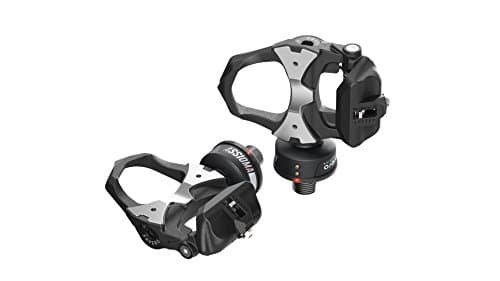 Favero Assioma Duo The default triathlon power meter: dual-sided, ±1%, and it follows you from the trainer to the tri bike and back without a workshop visit. | Best for triathlon overall | 9.39.3 out of 10 | $539.97 · View on Amazon #ad We may earn a commission · Price as of October 5, 2026 |
| 2 | 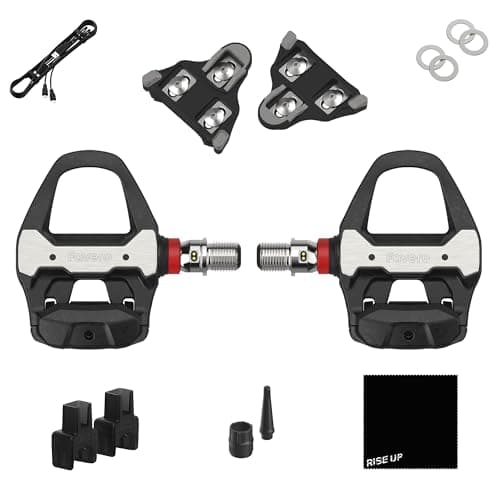 Favero Assioma Pro RS-2 Buy this instead of the Duo if your season is built around 70.3 or full-distance racing and you want the battery and the fast charge. | Best for long course and Ironman distance | 9.19.1 out of 10 | $819.99 · View on Amazon #ad We may earn a commission · Price as of October 5, 2026 |
| 3 | 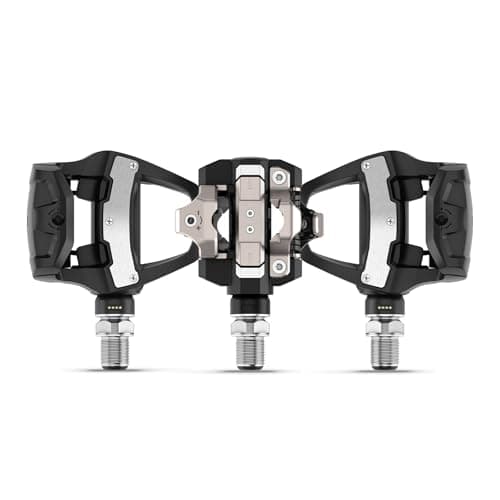 Garmin Rally RS210 Worth the premium if you are already inside Garmin's ecosystem and want SPD-SL cleats and a 90-hour battery. | Best for a Garmin watch and Edge setup | 8.88.8 out of 10 | |
| 4 | 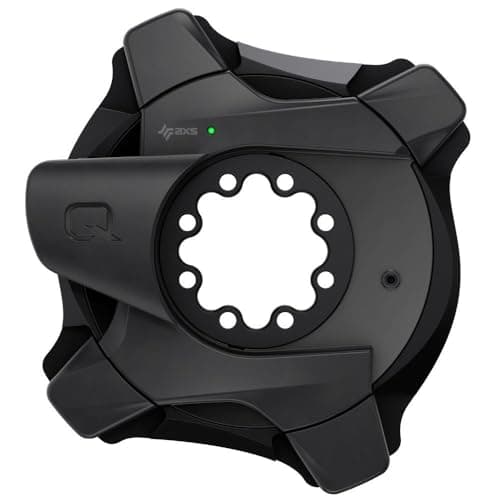 SRAM Red / Force AXS Power Meter Spider The right choice for a SRAM AXS tri bike where the pedal is already decided and you would rather not put electronics there. | Best if you keep your race pedals | 8.58.5 out of 10 | $436.93 · View on Amazon #ad We may earn a commission · Price as of October 5, 2026 |
| 5 | 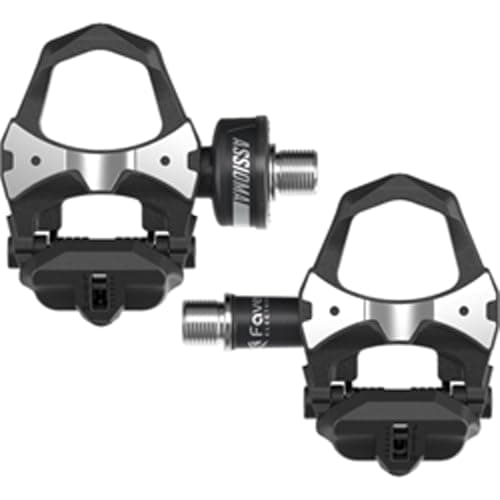 Favero Assioma Uno Good power data for the least money, with the one caveat that it cannot see the balance change aero causes. | Best budget route into race power | 8.88.8 out of 10 | $399.00 · View on Amazon #ad We may earn a commission · Price as of October 5, 2026 |
A triathlon power meter is bought to solve a pacing problem. The bike leg is the part of the race where going 20 W too hard is invisible at the time and decisive two hours later, and the only way to avoid that is to have a number you trained to and trust on race day. That puts a different set of specifications at the top of the list than a road roundup would.
What actually matters for triathlon
Dual-sided, because of the aero position. Dropping onto the extensions changes your hip angle and the way your pelvis sits, and riders who are even upright are not always even in aero. A single-sided meter measures one leg and doubles it, so it cannot see that at all — it will produce a consistent number that is wrong by however much your balance has shifted. Three of the five picks here measure both legs. Single vs dual-sided power meters goes through the arithmetic.
One meter, two bikes. Most triathletes train indoors on a road bike through the winter and race on a tri bike. If the power meter lives on the trainer bike and the race bike has nothing, you are pacing a race against numbers from a different instrument. Pedal-based meters solve this completely: they move in the time it takes to find a pedal wrench. A spider or crank meter does not move, which is the single biggest mark against the SRAM pick here despite it being a very good power meter.
Battery life measured against a race block, not a ride. Any of these covers a race. What separates them is the taper week, the travel day, the pre-race spin and the forgotten charge. Favero quotes around 50 hours for the Assioma Duo and Uno and up to 160 for the Pro RS-2; Garmin quotes up to 90 for the Rally RS210; the SRAM spider runs on a CR2032 for around 200 hours, so there is nothing to charge at all.
Weather and sweat sealing.A rainy race and a two-hour trainer session in a garage are, from the pedal's point of view, the same problem. Favero rates the Assioma family IP67. Our bike trainer sweat protection guide covers the indoor half of that, which does more damage over a season than rain does.
Crank length, entered correctly. Every pedal meter needs your crank length, and tri bikes very often run a different length to road bikes. Moving a pedal meter from one bike to the other without updating the figure scales every reading proportionally. It is the most common self-inflicted error in this category and it takes thirty seconds to avoid.
| Power meter | Type | Sided | Claimed accuracy | Battery | Moves between bikes |
|---|---|---|---|---|---|
| Favero Assioma Duo | Pedal | Dual-sided | ±1% | Rechargeable, around 50 h | Yes |
| Favero Assioma Pro RS-2 | Pedal | Dual-sided | ±1% | Up to 160 h, 15-min fast charge | Yes |
| Garmin Rally RS210 | Pedal | Dual-sensing | ±1% | Rechargeable, up to 90 h | Yes |
| SRAM Red / Force AXS spider | Spider | Total power, estimated balance | ±1.5% | CR2032, around 200 h | No — SRAM AXS cranks only |
| Favero Assioma Uno | Pedal | Single (left), doubled | ±1% | Rechargeable, around 50 h | Yes |
Do you need a power meter if your trainer measures power?
For indoor training, no. A direct-drive smart trainer with measured power gives you a perfectly good training number, and our smart trainer vs power meter guide argues the trainer is the better first purchase for most riders. Triathlon is one of the cases where that changes, because the race happens outdoors and the trainer cannot come. The point of the power meter is that it is the same device in both places.
That also sets up the one habit worth adopting: for a few sessions, record trainer power and power meter power at the same time and learn the offset between them. They will not match exactly, and that is not a fault. How accurate are power meters explains why two honest devices disagree, and how accurate are smart trainers covers the other half.
Getting the number you will race to
A power meter is only worth what you do with it. The sequence is: install it, set the crank length, calibrate it, test to get an FTP, then build a season around that figure and retest. How to install a power meter covers the fitting, calibration covers the zero-offset habit, how to do an FTP test covers the protocols, and how to improve your FTP covers the training. For the indoor half of a triathlon build, our best bike trainers for triathlon roundup is the companion page to this one.
Building the indoor half?
See the best bike trainers for triathlonThe full reviews
Every pick, in detail
#1 · Best for triathlon overall
Favero Assioma Duo
9.39.3 out of 10#ad We may earn a commission · Price as of October 5, 2026
The default triathlon power meter: dual-sided, ±1%, and it follows you from the trainer to the tri bike and back without a workshop visit.
- Type
- Pedal-based, dual-sided
- Claimed accuracy
- ±1%
- Battery
- Rechargeable, around 50 hours
- Cleat system
- Look Keo compatible
- Weight
- 151.5 g per pedal
- Weather
- IP67 rated
What we'd praise
- Dual-sided ±1% measurement, which is what you want when the aero position changes how you load each leg
- Moves between your tri bike and your trainer bike in minutes, so race-day power and indoor power come from the same instrument
- Around 50 rechargeable hours covers a long-course race plus the week around it
- IP67, so a wet race or a sweat-soaked trainer session is not a concern
- The cheapest dual-sided pedal meter from a maker with a long independent testing record
What we'd flag
- Look Keo cleats — if your tri shoes are set up for SPD-SL you are buying cleats
- Sealed battery with a proprietary magnetic charger, so a dead pedal mid-trip needs the right cable
- Favero's manual rules out pedal extenders and crank shorteners, and cranks thicker than 15 mm at the thread
Triathlon makes one demand of a power meter that road cycling does not: the number has to mean the same thing in the aero position on race day as it did in the saddle on the trainer in February, on a different bike, months apart. The cleanest way to satisfy that is to own one instrument and move it, which is exactly what a pedal meter lets you do. Unbolt it from the trainer bike, bolt it to the tri bike, tell the head unit the crank length, go.
Dual-sided matters more here than almost anywhere else. Dropping into aero shifts your hip angle and your pelvis, and riders who are balanced upright are often not balanced on the extensions. A single-sided meter doubles one leg and cannot see that; the Assioma Duo measures both. It claims ±1%, weighs 151.5 g per pedal, and is IP67 rated. Our Assioma Duo review covers it in full, and Assioma Duo vs Uno is the one-side-or-two decision in detail.
#2 · Best for long course and Ironman distance
Favero Assioma Pro RS-2
9.19.1 out of 10#ad We may earn a commission · Price as of October 5, 2026
Buy this instead of the Duo if your season is built around 70.3 or full-distance racing and you want the battery and the fast charge.
- Type
- Pedal-based, dual-sided
- Claimed accuracy
- ±1% (IAV Power System)
- Battery
- Up to 160 hours, 15-minute fast charge
- Weight / stack
- 124.8 g per pedal, 10.5 mm stack
- Power / cadence range
- 0 - 3,000 W, 10 - 250 rpm
- Rider limit
- 120 kg (Favero manual)
What we'd praise
- Up to 160 claimed hours and a 15-minute fast charge — the battery specification that actually suits a long-course block
- 124.8 g per pedal with a 10.5 mm stack, the lightest and lowest-stack pedal here
- IP67, 0-3,000 W and 10-250 rpm, so nothing about a race-day effort is near a limit
- Favero publishes a rider limit (120 kg), an install torque (30-40 N-m) and a two-year warranty
- Shares one spindle with the rest of Favero's Pro range, so the cleat body can change later
What we'd flag
- Clearly the most expensive pick on this page
- Over Bluetooth it sends power, cadence and balance only — advanced metrics need ANT+ or Favero's app
- Sealed, non-replaceable battery and a proprietary charger
- Not compatible with pedal extenders, crank shorteners, or cranks thicker than 15 mm at the thread
Everything the Assioma Duo does well, the Pro RS-2 does with a better battery and a lower stack. Favero quotes up to 160 hours and a 15-minute fast charge, which is the single specification on this page that is genuinely a long-course feature: a full-distance bike leg plus the taper week plus a travel day without thinking about it, and a usable top-up in the time it takes to rack a bike. The pedal is 124.8 g with a 10.5 mm stack, a 54 mm-class Q-factor addition, and it measures 0 to 3,000 W across 10 to 250 rpm.
The honest caveats are the ones Favero itself publishes. Over Bluetooth the RS-2 sends power, cadence and balance; the fuller metric set wants ANT+ or Favero's app. The battery is sealed and the charger is proprietary. And the fitting rules are strict — no extenders, no crank shorteners, and the spindle has to protrude at least 1 mm past the crank thread, which rules out cranks thicker than 15 mm there. Independent reviewers have reported it tracking within a few watts of trainers and crank meters; our Assioma Pro RS review collects those findings with their sources.
#3 · Best for a Garmin watch and Edge setup
Garmin Rally RS210
8.88.8 out of 10Worth the premium if you are already inside Garmin's ecosystem and want SPD-SL cleats and a 90-hour battery.
- Type
- Pedal-based, dual-sensing
- Claimed accuracy
- ±1%
- Battery
- Rechargeable, up to 90 hours
- Cleat system
- Shimano SPD-SL
- Install torque
- 25 ft-lb / 34 N-m (Garmin manual)
- Connectivity
- ANT+, Bluetooth
What we'd praise
- The obvious pick if your race data already lives in a Garmin watch and an Edge — one ecosystem, one set of fields, one sync
- Up to 90 rechargeable hours, comfortably more than the Assioma Duo
- Keeps Shimano SPD-SL cleats, which a lot of triathletes already run
- True dual-sensing rather than a doubled left side
- Garmin publishes a torque figure and an install sequence in the owner's manual
What we'd flag
- Priced above both Favero pedals for the same ±1% claim
- Garmin allows only one pedal washer per side for chain clearance, which is a real constraint on some tri frames
- Advanced cycling-dynamics fields need a head unit that supports them
For a triathlete, ecosystem is not a trivial consideration. If your run, swim and bike data already flow into a Garmin watch and your race-day head unit is an Edge, a Rally pedal removes a category of race-morning risk — nothing new to pair, nothing to translate between apps, data fields you have already laid out. Add up to 90 rechargeable hours and SPD-SL cleats and it is a very easy product to live with.
Installation is where to be careful. Garmin's manual is specific: right pedal first, a thin layer of grease on the spindle, tighten to 25 ft-lb (34 Nm) with a torque wrench or as tight as possible with a pedal wrench, then rotate the crank and check chain clearance. If the chain rubs you may add one washer per pedal, and Garmin explicitly warns against more than one. Our Rally RS210 review covers the whole range, and Assioma vs Garmin Rally is the head-to-head.
#4 · Best if you keep your race pedals
SRAM Red / Force AXS Power Meter Spider
8.58.5 out of 10#ad We may earn a commission · Price as of October 5, 2026
The right choice for a SRAM AXS tri bike where the pedal is already decided and you would rather not put electronics there.
- Type
- Spider-based, total power
- Claimed accuracy
- ±1.5%
- Battery
- CR2032, around 200 hours
- Calibration
- MagicZero automatic recalibration
- Chainrings
- OmniCal — swap rings without recalibrating
- Connectivity
- ANT+, Bluetooth
What we'd praise
- Measures total power at the spider, so your pedal and cleat choice is entirely yours — including Speedplay or an aero-specific pedal
- MagicZero recalibrates automatically, which removes a race-morning task
- OmniCal means a chainring change for a flat course does not require recalibration
- A coin cell for around 200 hours — nothing to charge before a race
- Nothing hanging off a pedal, which is the most crash-exposed place on a bike
What we'd flag
- ±1.5% rather than ±1%
- Total power with an estimated balance, not a true left/right measurement
- Crankset-specific: it only fits SRAM AXS cranks, so it is the least portable pick here
- Does not move to your trainer bike unless that bike runs the same crankset
There is a legitimate triathlon argument against pedal meters: a tri bike's pedals get mounted with shoes already clipped in, thrown about in transition, and occasionally dropped. A spider meter puts the electronics in the middle of the bike instead, and leaves the pedal choice completely open — which matters if you have settled on Speedplay, or on a pedal chosen for stack height rather than for having a strain gauge in it.
SRAM claims ±1.5% here rather than ±1%, and reports total power with an estimated balance rather than a true per-leg measurement. In exchange you get MagicZero, which recalibrates on its own, OmniCal, which lets you change chainrings without recalibrating, and a CR2032 good for around 200 hours. The limit is fitment: this is a SRAM AXS part and it stays on the bike it fits. Our Quarq power meter review covers the range.
#5 · Best budget route into race power
Favero Assioma Uno
8.88.8 out of 10#ad We may earn a commission · Price as of October 5, 2026
Good power data for the least money, with the one caveat that it cannot see the balance change aero causes.
- Type
- Pedal-based, single (left)
- Claimed accuracy
- ±1%
- Battery
- Rechargeable, around 50 hours
- Cleat system
- Look Keo compatible
- Upgrade path
- Add the right pedal to make a Duo
- Connectivity
- BT, ANT+
What we'd praise
- The cheapest way onto Favero's platform, with the same ±1% measurement on the side it reads
- Upgradeable: buy the right-hand sensor pedal later and you have a Duo
- Still fully portable between the trainer bike and the tri bike
- Rechargeable, IP67, and the same install procedure as the Duo
What we'd flag
- Single-sided, so it doubles your left leg — and the aero position is exactly where balance is most likely to shift
- No left/right balance, which is the data most worth having for a position change
- Around 50 hours, the shortest battery life of the pedals here
If the budget is the binding constraint, the Uno is the honest answer rather than a compromise. It is the same pedal platform, the same ±1% claim on the leg it measures, the same rechargeable battery and the same portability, for considerably less. For pacing a bike leg and for training to an FTP figure, a consistent doubled-left number does the job.
The caveat is specific to this page. The strongest reason a triathlete wants dual-sided is to see whether the aero position changes how the legs share the load — and that is exactly the measurement the Uno cannot make. If you later decide you want it, Favero sells the right-hand sensor pedal and the Uno becomes a Duo, which is the cleanest upgrade path in the category. The best budget power meters puts it against the cheaper alternatives.
Good questions
Frequently asked questions
What is the best power meter for a triathlon bike?
The Favero Assioma Duo for most triathletes: dual-sided, ±1%, around 50 rechargeable hours, and because it is a pedal it moves between your trainer bike and your tri bike so both sets of numbers come from one instrument. For long-course racing the Favero Assioma Pro RS-2 adds up to 160 claimed hours and a 15-minute fast charge.
Do triathletes need a dual-sided power meter?
It is more useful in triathlon than in road cycling. The aero position changes your hip angle and pelvis position, and riders who are balanced upright are often not balanced on the extensions. A single-sided meter measures one leg and doubles it, so it cannot see that shift. A dual-sided meter can. A single-sided meter is still perfectly usable for pacing and for training to an FTP figure.
Should I buy power meter pedals or a crank power meter for triathlon?
Pedals, in most cases, because they move between your trainer bike and your race bike and a crank or spider meter does not. The exception is when your pedal choice is already settled for position or aero reasons, or you would rather not put electronics in the place most likely to get knocked in transition. In that case a spider meter such as the SRAM Red / Force AXS unit keeps the pedal decision open.
How much battery life do I need in a power meter for an Ironman?
More than the bike leg. Any of the meters here will finish a race, so the figure matters for the week around it: travel, a pre-race spin, a forgotten charge. Favero quotes up to 160 hours plus a 15-minute fast charge for the Assioma Pro RS-2, Garmin quotes up to 90 hours for the Rally RS210, Favero quotes around 50 hours for the Assioma Duo and Uno, and the SRAM spider runs on a CR2032 for around 200 hours with nothing to charge.
Do I need to change the crank length setting when I move pedals between bikes?
Yes, and it is important. Tri bikes often run a different crank length to road bikes. Power is derived from force and the radius it acts through, so leaving the old figure in place scales every reading proportionally. Update it in the head unit or the maker's app every time the pedals change bikes.
Will my power meter read the same as my smart trainer?
No, and it is not supposed to. They measure in different places through different drivetrains with different published tolerances, so a consistent offset of a few percent between a good power meter and a good trainer is normal. Record both for a few sessions, learn the offset, and then pace from whichever device will be with you on race day.
Can I use SPD-SL cleats with these power meters?
With the Garmin Rally RS210, yes — it uses Shimano SPD-SL directly. The Favero Assioma Duo, Uno and Pro RS use a Look Keo compatible cleat, so SPD-SL riders need new cleats on their existing shoes. The SRAM spider measures at the crank, so any pedal and cleat you like will work with it.
How we sourced this
- Favero — Assioma Duo specifications (manufacturer)
- Favero — Assioma PRO RS specifications and user manual (124.8 g, 10.5 mm stack, IP67, up to 160 h, 15-min fast charge, 0-3,000 W, 10-250 rpm, 30-40 N-m, 120 kg)
- Favero — Assioma Uno specifications (manufacturer)
- Garmin — Installing Rally Pedals, owner's manual (right pedal first, grease, 25 ft-lb / 34 N-m, one washer maximum, check chain clearance)
- Garmin — cycling power meters range and specifications (manufacturer)
- SRAM / Quarq — AXS power meter spider specifications (manufacturer)
- SRAM / Quarq — DZero DUB power meter specifications (manufacturer)
Keep going
Read these next
- TrainersThe Best Bike Trainers for Triathlon
- Power MetersThe Best Power Meters, Compared on the Specs
- Power MetersThe Best Power Meter Pedals, Compared
- ComparisonPower Meter Pedals vs Cranks
- GuidesHow Accurate Are Power Meters?
- GuidesHow to Improve Your FTP
- ReviewFavero Assioma Pro RS Review
- Power MetersSingle vs Dual-Sided Power Meters