Trainers
Kickr Move vs Tacx Neo 3M
Both claim ±1%. Both reach 2,200 W. Both move under you. Then the two most expensive trainers in mainstream cycling disagree about almost everything else.

The short answer
Quick picks
| # | Product | Best for | Score | Price |
|---|---|---|---|---|
| 1 | 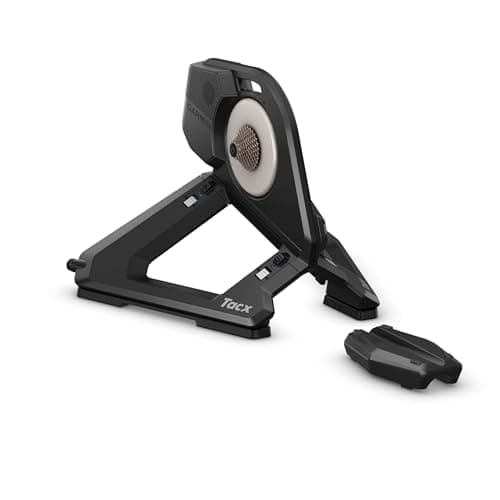 Garmin Tacx Neo 3M The better ride and the worse buy. Choose it when descent drive, silence and road-surface feel are the specific things you are paying for. | Best simulation of a real road | 8.88.8 out of 10 | $1,799.99 · View on Amazon #ad We may earn a commission · Price as of October 21, 2026 |
| 2 | 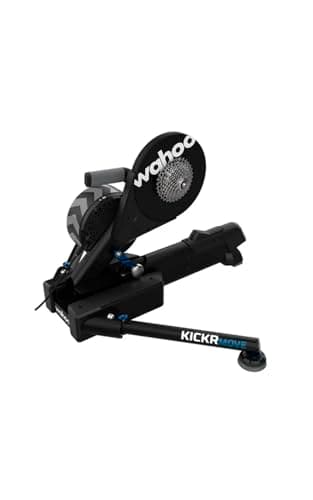 Wahoo Kickr Move More movement, a better connection and a lower price. For most riders shopping this tier, the Move is the correct answer and it is not especially close. | Most movement, if you find stock | 9.19.1 out of 10 | $1,332.64 · View on Amazon #ad We may earn a commission · Price as of October 21, 2026 |
This is the head-to-head at the top of the market, and the specification sheets are unhelpfully similar at first glance. Both claim ±1% power accuracy. Both reach 2,200 W. Both are direct drive, both are controllable by every app worth using, and both move underneath you rather than holding the bike rigid.
Underneath that, they are almost opposites. The Move is a conventional flywheel trainer mounted on a sliding rail, built by a company that treats connectivity as a first-class feature. The Neo 3M is a motor with no flywheel at all, built by a company that treats ride simulation as the product. Which one you should buy comes down to three questions, and price is only the third of them.
| Kickr Move | Tacx Neo 3M | |
|---|---|---|
| Type | Direct drive on rail | Motor direct drive |
| Claimed accuracy | ±1% | ±1% |
| Max resistance | 2,200 W | 2,200 W |
| Max gradient | 20% | 25% |
| Flywheel | 16 lb physical | 125 kg simulated |
| Movement | Fore-aft rail, long travel | Motion plates, ~5 cm travel |
| Lock movement out | No | Yes |
| Onboard WiFi | Yes | No |
| Descent drive | No | Yes |
| Road-surface effects | No | Yes |
| Runs unplugged | No | Yes, except descent drive |
| Price band | High | Highest |
Question one: how much movement do you actually want?
Both trainers are answering the same complaint — that a fixed trainer loads exactly the same contact points for the entire ride, which is why an experienced rider who is fine for five hours outdoors starts shifting in the saddle after seventy minutes indoors. They answer it at different volumes.
The Move puts the whole trainer on a rail and lets it slide a long way. The motion is obvious; you notice it in the first minute, and standing efforts in particular feel far more natural because the bike surges forward under you instead of fighting you. The Neo's plates give roughly 5 cm of travel — enough to take the harshness off, subtle enough that some riders need a few sessions to notice it is there.
There is no objectively correct amount. Riders who came looking for movement usually want the Move's version and find the Neo's underwhelming. Riders who are wary of a trainer wandering under them during hard seated work usually prefer the plates — and the Neo can lock its motion out entirely, which the Move cannot. Neither leans meaningfully side to side; if lateral motion is the thing you want, you are shopping for a rocker plate or a smart bike.
Question two: connection, or simulation?
This is where the two brands reveal what they think a trainer is for.
Wahoo built onboard WiFi into the Move, and it removes the single most common source of indoor training frustration. Bluetooth was designed for short-range accessories in a quiet radio environment, not a room containing a tablet, a phone, a head unit, a heart-rate strap and a set of speakers. When Zwift stops holding an ERG target or the controllable connection silently downgrades to power-only, Bluetooth is almost always why. Our troubleshooting guide is largely a catalog of problems WiFi does not have.
Garmin spent its engineering somewhere else. The Neo's motor can drive as well as resist, so a descent in Zwift spins your legs up rather than leaving you coasting, and because the motor modulates resistance far faster than a brake can, it reproduces road texture — cobbles, gravel, boards — through the pedals. Nothing with a belt and a flywheel can do either. The 3M does not have WiFi.
So: does your indoor riding get ruined more often by a dropped connection, or made better by a more convincing simulation? That is the real question, and only you know the answer.
Question three: noise, room and price
The Neo is quieter — meaningfully so. With no belt and no physical flywheel there is very little to make noise beyond your own drivetrain and, at sustained high power, an internal fan. If you ride early in a flat with a sleeping household, that difference is worth real money, and our apartment pain cave guide explains why the remaining problem is usually vibration through the floor rather than airborne sound. A mat is not optional under either trainer.
Both need floor space and both are heavy, though the Move's rail travel means allowing for length in a way a fixed trainer does not.
On price, the Move is the cheaper trainer and it is not a small gap. Buying the Neo 3M means paying a clear premium for descent drive, road-surface feel and silence, while giving up movement travel and WiFi. That is a defensible trade for some riders and an indefensible one for most, which is why our ranking puts the Move first.
What about the data?
Genuinely a non-issue between these two. Both claim ±1%, both hold ERG targets well, and both are accurate enough that your indoor number will sit sensibly next to an outdoor power meter. Nobody should choose between them on measurement quality.
It is worth stepping back at this point, because the same ±1% claim appears on the Kickr v6 and the Neo 2T, and ±2% — five watts at 250 — appears on the far cheaper Kickr Core 2. Everything above that tier is being bought for feel, movement and connectivity, not for data. Our accuracy guide is the honest version of that argument.
The verdict
For most riders choosing between these two, the Kickr Move is the better buy: more movement, a more reliable connection, and less money. The Neo 3M is the better ride and we would not argue with anyone who bought one for the descent drive and the silence — but it is a preference purchase, and it should be made with that clearly in mind.
If this comparison has mostly convinced you that both are more trainer than you need, that is a perfectly good outcome. The full ranking covers the tier below, where the money buys most of the same capability.
Still weighing it up?
See the whole field rankedThe full reviews
Head to head
#1 · Best simulation of a real road
Garmin Tacx Neo 3M
8.88.8 out of 10#ad We may earn a commission · Price as of October 21, 2026
The better ride and the worse buy. Choose it when descent drive, silence and road-surface feel are the specific things you are paying for.
- Type
- Motor direct drive, no physical flywheel
- Claimed accuracy
- ±1%
- Max resistance
- 2,200 W
- Max gradient
- 25%
- Virtual flywheel
- 125 kg simulated
- Connectivity
- Bluetooth, ANT+ FE-C
What we'd praise
- Descent drive actively spins the drivetrain downhill — nothing with a belt and flywheel can do this
- Road-surface simulation puts cobbles and gravel through the pedals, not just on the screen
- Near-silent, which makes it the better neighbor in a flat or an upstairs room
- Runs unplugged for everything except the downhill drive
- Motion plates can be locked out when you want a stable platform
What we'd flag
- Costs significantly more than the Move for the same accuracy claim and resistance ceiling
- No onboard WiFi, so you are back on Bluetooth or ANT+ for control
- Less fore-aft travel than the Move's rail — subtler motion, which not everyone wants
- Heavy, long and firmly a permanent installation
The Neo 3M is architecturally unlike almost every other trainer: a large motor supplies resistance and, on descents, drive. Inertia is simulated rather than supplied by a flywheel, and Tacx simulates a lot of it. The 3M folds Garmin's motion plates into the base so the trainer travels roughly 5 cm fore and aft with a little extra lateral freedom.
Our Neo 3M review goes through the platform in full, and the Neo 2T is the cheaper route to most of the same experience.
#2 · Most movement, if you find stock
Wahoo Kickr Move
9.19.1 out of 10#ad We may earn a commission · Price as of October 21, 2026
More movement, a better connection and a lower price. For most riders shopping this tier, the Move is the correct answer and it is not especially close.
- Type
- Direct drive on a fore-aft rail
- Claimed accuracy
- ±1%
- Max resistance
- 2,200 W
- Max gradient
- 20%
- Flywheel
- 16 lb
- Connectivity
- WiFi, Bluetooth, ANT+ FE-C
What we'd praise
- Considerably more fore-aft travel than the Neo's motion plates, and you feel the difference immediately
- Onboard WiFi, which the Neo 3M does not have — the single most reliable connection in indoor cycling
- Costs meaningfully less than the Neo 3M for the same claimed accuracy and resistance ceiling
- 16 lb physical flywheel gives a settled, familiar road feel with no simulation involved
What we'd flag
- No descent drive — downhills are coasting, not the motor spinning your legs
- No road-surface simulation, so cobbles and gravel are visual only
- 20% gradient ceiling against the Neo's 25%, which almost nobody will ever meet
- Needs mains power to do anything at all
The Move is a Kickr v6 on a rail. The drive unit, the ±1% claim, the 2,200 W ceiling, the 16 lb flywheel and the onboard WiFi all carry over from the fixed flagship; what changes is that the entire trainer slides fore and aft as you pedal. It is a bigger, more obvious motion than the Neo's plates produce.
Full detail in our Kickr Move review, and Move vs v6 covers whether the rail is worth it at all.
Good questions
Frequently asked questions
Which moves more, the Kickr Move or the Tacx Neo 3M?
The Kickr Move. It puts the entire trainer on a rail with long fore-aft travel, and the motion is obvious from the first minute. The Neo 3M's built-in motion plates give roughly 5 cm of travel plus a little lateral freedom — enough to remove fixed-trainer harshness, subtle enough that some riders barely notice it.
Does the Tacx Neo 3M have WiFi?
No. The Neo 3M connects over Bluetooth and ANT+ FE-C. The Kickr Move has onboard WiFi, which joins your home network and removes the most common cause of dropouts and ERG failures. If connection reliability has been a problem for you, that is a significant point in Wahoo's favor.
What is descent drive and does the Kickr Move have it?
Descent drive means the trainer's motor actively spins the drivetrain on downhills so your legs are turned over the way they would be on a real descent, rather than simply coasting. The Neo 3M has it; the Kickr Move does not, because a belt-and-flywheel trainer physically cannot drive the drivetrain.
Which is quieter, the Kickr Move or the Neo 3M?
The Neo 3M. With no belt and no physical flywheel, the only meaningful noise is your own drivetrain plus an internal cooling fan under sustained high power. The Move is quiet by normal standards but not silent. In an apartment or upstairs room, the Neo is the better neighbor — though a mat matters more than either for vibration through the floor.
Is there any accuracy difference between the Kickr Move and the Neo 3M?
Not on the published claims — both state ±1% and both reach 2,200 W. Neither should be chosen over the other on measurement quality. The same ±1% claim also appears on the cheaper Kickr v6 and Tacx Neo 2T, which is worth knowing before paying a premium at this level.
Can you lock the movement out on either trainer?
On the Neo 3M, yes — the motion plates can be disabled and re-enabled, which is useful during seated threshold work where you want a stable platform. The Kickr Move's rail is always live; the trainer slides whenever you ride it.
How we sourced this
- Wahoo — KICKR MOVE product page, discontinued as of June 2026 with retailer stock only (manufacturer)
- Tacx NEO 3M in-depth review: motion and accuracy (DC Rainmaker)
- Wahoo indoor cycling trainers, specifications and features (manufacturer)
- Garmin Tacx NEO 3M smart trainer product page and specifications (manufacturer)
- Garmin launches the Tacx Neo 3M with integrated motion plates (Cyclingnews)
- Zwift supported trainers and connection protocols
Keep going