Smart Bikes
The Best Smart Bikes for Indoor Training
Five complete indoor bikes, ranked on power accuracy, fit range and what the frame does when the road goes up — including the bundle that costs a third of the rest.

The short answer
Quick picks
| # | Product | Best for | Score | Price |
|---|---|---|---|---|
| 1 | 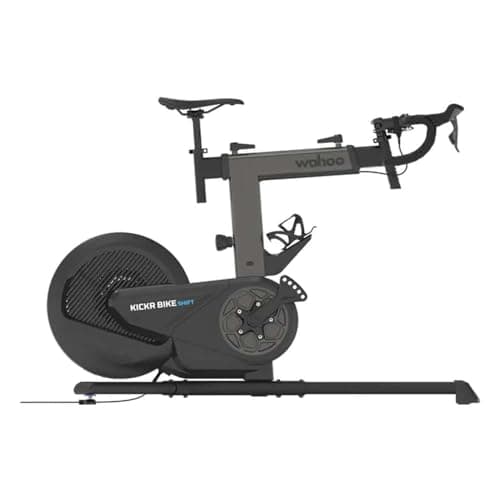 Wahoo Kickr Bike Shift The smart bike that makes the category make sense: flagship-grade power numbers, a belt drive with nothing to maintain, and roughly half the Kickr Bike Pro's money. | Best overall | 8.88.8 out of 10 | $2,104.53 · View on Amazon $2,699.99Save 22% #ad We may earn a commission · Price as of October 6, 2026 |
| 2 |  Zwift Ride with Kickr Core 2 Not the best smart bike on this page, and comfortably the one most people should buy: the category's convenience for roughly a third of the flagship money. | Best value, and the cheapest real way in | 8.68.6 out of 10 | |
| 3 | Garmin Tacx Neo Bike Plus The bike that thinks about the room as well as the ride: fans, a screen, USB power, surface effects and the steepest grade ceiling here — at flagship money, and without the tilt. | Best ride feel and the most complete cockpit | 8.78.7 out of 10 | |
| 4 | Wattbike Atom The analyst's bike: ±1% power, 22 gears, the highest weight limit here and a genuinely useful free app — held back in the US by where Wattbike will actually ship it. | Best for pedaling analysis and no-subscription training | 8.28.2 out of 10 | |
| 5 | 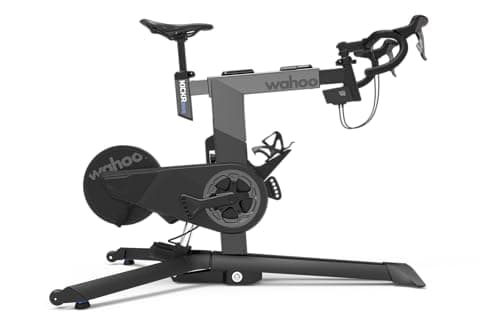 Wahoo Kickr Bike Pro The most complete indoor bike you can buy and the least necessary one: superb if you will use the tilt every week, hard to justify over the Shift if you will not. | Best if you want the frame to climb with you | 8.68.6 out of 10 | $3,999.99 · View on Amazon #ad We may earn a commission · Price as of October 6, 2026 |
A smart bike is a complete stationary bicycle with the resistance unit built into the frame. No road bike goes on it, no wheel comes off, no cassette has to match your drivetrain, and on most of them there is no chain to maintain. You walk up, clip in and ride. That is the whole pitch, and whether it is worth two to four thousand dollars depends almost entirely on how often the setup ritual currently costs you a session.
This page ranks the five smart bikes a US buyer can actually get hold of right now, on the four things that separate them: whether the power number is trustworthy, how wide the fit range is, what happens when the road goes up, and what the cockpit gives you before you start buying accessories. We do not claim to have ridden these bikes. Every specification below comes from the manufacturer's own published figures, and where an independent reviewer has measured something that contradicts the claim, we say so inside the pick.
How we ranked them
Four criteria, in this order. They are deliberately weighted for the rider who already owns a trainer and is upgrading, rather than someone buying their first indoor setup.
1. Is the power number trustworthy?Four of these five claim ±1%; the Zwift Ride bundle claims ±2%, because its power comes from the Kickr Core 2 underneath it. A claim is not a measurement, though, which is why independent findings matter: Cyclingnews measured the Kickr Bike Pro inside Wahoo's ±1% claim, while the5krunner measured the same bike 2.5 to 3% high against dual-sided pedals. Our smart trainer accuracy guide explains why repeatability matters more than absolute accuracy for training, and the exact point at which it stops being enough.
2. Will it fit you, and can it fit someone else?This is where the category quietly excludes people. Both Wahoo bikes stop at a 250 lb rider limit. The Zwift Ride and the Tacx Neo Bike Plus allow 120 kg (265 lb), and the Wattbike Atom allows 135 kg. Crank-length choice tells a similar story: four of the five offer five lengths, the Atom offers one. If the bike is shared, saved fit profiles would matter too — and none of these five has them.
3. What happens when the road goes up?Two completely different answers hide behind the words "simulated gradient". The Kickr Bike Pro physically pitches the frame to +20% and -15%. Everyone else simulates the climb through resistance alone, with ceilings from 16% (Zwift Ride) to 25% (Tacx Neo Bike Plus and Wattbike Atom). Heavier riders reach a resistance ceiling at a lower grade than lighter riders do, because the machine has to generate more force to simulate the same slope — so the published ceiling matters far more at 100 kg than at 65 kg.
4. What does the cockpit include? Only the Tacx Neo Bike Plus has built-in fans, a screen and USB charging. On every other bike here those are separate purchases, and the fan is not optional — our fan roundup exists because airflow is the single biggest determinant of whether you finish a hard indoor session.
| Kickr Bike Shift | Zwift Ride + Core 2 | Tacx Neo Bike Plus | Wattbike Atom | Kickr Bike Pro | |
|---|---|---|---|---|---|
| Claimed accuracy | ±1% | ±2% | Within 1% | ±1% | ±1% |
| Max resistance | 2,200 W | 1,800 W | 2,200 W | 2,500 W | 2,500 W |
| Grade ceiling | 20% (resistance) | 16% (resistance) | 25% (resistance) | 25% (resistance) | 20% (physical tilt) |
| Descent | -15% resistance | No | Yes, on external power | No | -15% physical tilt |
| Drivetrain | Belt drive | Chain + Zwift Cog | Belt drive | Belt drive | Belt drive |
| Rider weight limit | 250 lb | 120 kg | 120 kg | 135 kg | 250 lb |
| Crank lengths | Five | Five | Five | One (170 mm) | Five |
| Built-in fan | No | No | Yes, automatic | No | No |
| Screen / USB | No | No | 4.5 in + 2x USB | No | No |
| ANT+ | Yes, incl. FE-C | Yes | Yes | Yes | Yes, incl. FE-C |
| Sold on Amazon | Yes | No, Zwift direct | No, Garmin direct | No, Wattbike direct | Yes |
The thing nobody tells you about smart bike pricing
Three of these five are not sold on Amazon at all. Zwift, Garmin and Wattbike sell their bikes direct, which means there is no live marketplace price to compare and no third-party seller undercutting the brand. The two Wahoo bikes are the exception, and the gap can run in either direction: when we checked, Wahoo's own store listed the Kickr Bike Shift at $1,999.99 while the Amazon listing showed a higher list price with a discount applied to it.
So check both. On a purchase this size, ten minutes of comparison is worth more than any specification on this page. The buy buttons here show the live Amazon price where one exists and send you to the brand where it does not — we would rather point you at the cheaper legitimate source than the one that pays us.
Not sure you need a whole bike?
Read smart bike vs smart trainer firstShould you buy a smart bike at all?
For most riders, honestly, no. A flagship smart trainer claims the same ±1% accuracy as the bikes at the top of this page for a quarter to a third of the money, and you keep your own saddle, your own bar position and your own fit. Our best smart trainers roundup is the page to read if you have not ruled that route out, and smart bike vs smart trainer is the head-to-head version of this argument.
There are three situations where a smart bike genuinely wins, and they are all about behavior rather than watts. The first is frequency: if you ride indoors most days of the winter, the five minutes of setup and teardown each session is the thing that eventually costs you rides. The second is sharing: tool-free fit adjustment is how two riders of different sizes use one machine without an argument. The third is that your outdoor bike stays an outdoor bike — no stripped rear wheel, no trainer tire, no cassette matching, and no thru-axle compatibility research every time you change bikes.
If none of those three describes you, buy a trainer and spend the difference on the accessories that actually make indoor riding tolerable.
What we left out, and why
The Stages SB20. It was one of the best smart bikes ever built, and it is discontinued. Performance Bicycle lists it as discontinued and no longer available for purchase, and the other retailer listings we checked were closeout or sold out. We will not rank a bike you cannot buy new.
Connected spin bikes. The Schwinn IC4 class — widely available, a quarter of the price, Bluetooth power broadcast — is not a smart bike by the definition this page uses, because an app cannot control its resistance. You set the knob by hand, which means no ERG mode, no structured workout holding a target for you, and no simulated gradient at all. ERG mode is most of why a smart bike costs what it costs. That is a different product solving a different problem: smart trainer vs spin bike covers it, and smart trainer vs Peloton covers the subscription version of the same question.
The Elite Square.Elite's smart bike is real and has been reviewed independently, but we could not verify current US retail availability or a US price to the standard the rest of this page is held to, so it is not ranked here. If that changes, we will add it.
The verdict
The Kickr Bike Shiftis the best smart bike for most people buying one: the full convenience argument, a belt drive with nothing to maintain, ±1% claimed accuracy, five fit points, and roughly half the Pro's money. The absence of a fan and a screen is a real gap, and a cheap one to fill.
The Zwift Ride with Kickr Core 2is the one we would put most new smart bike buyers on, because it changes the question from "is this worth four thousand dollars" to "is this worth a bit more than a flagship trainer". You pay for that with ±2% power, the lowest ceilings here, and a chain to look after.
The Tacx Neo Bike Plus is the best-equipped machine on the page and the Wattbike Atom is the most interesting one for riders who care about pedal mechanics — with the caveat that you must confirm Wattbike will ship to your state. The Kickr Bike Pro finishes last on value and first on experience: if you want the frame to climb, nothing else here does it.
Still weighing the platform rather than the hardware? Our Zwift vs Rouvy comparison covers the two apps every bike on this page supports, and the full pain cave setup guide gets the room right around whatever you buy.
The full reviews
Every pick, in detail
#1 · Best overall
Wahoo Kickr Bike Shift
8.88.8 out of 10$2,699.99Save 22%
#ad We may earn a commission · Price as of October 6, 2026
The smart bike that makes the category make sense: flagship-grade power numbers, a belt drive with nothing to maintain, and roughly half the Kickr Bike Pro's money.
- Claimed accuracy
- ±1%
- Max resistance
- 2,200 W
- Simulated grade
- +20% to -15%
- Drivetrain
- Belt drive, programmable virtual shifting
- Fit points
- Five: stack, reach, setback, saddle height, frame height
- Rider range
- 5 ft 0 in to 6 ft 4 in, up to 250 lb
- Connectivity
- WiFi, Bluetooth, ANT+, ANT+ FE-C, Direct Connect
- Weight
- 79 lb
What we'd praise
- ±1% claimed accuracy and a 2,200 W ceiling — flagship numbers without the flagship frame
- Belt drive and an electronic brake, so there is no chain to lube and nothing to wear out
- Virtual shifting is programmable for SRAM, Shimano or Campagnolo, so you can mirror the gearing of the bike you race on
- Five tool-free fit points plus five crank lengths from 165 to 175 mm, which makes it genuinely shareable
- ANT+ FE-C and Direct Connect as well as WiFi and Bluetooth — it will talk to a head unit, not just an app
- Wahoo's own store listed it at $1,999.99 when we checked on 2026-10-05, below the Amazon list price, so it is worth comparing both
What we'd flag
- The frame does not move. Its grade figure is resistance only, not the physical tilt the Kickr Bike Pro gives you
- No built-in fan, no screen and no USB charging — all three are standard on the Tacx Neo Bike Plus
- 79 lb of furniture that does not fold, so it needs a room it can keep
- 250 lb rider limit is the lowest of the five bikes here
- Pedals are not in the box, and Wahoo's own listing has shown ship-date slippage on this model
Everything that defines a smart bike is here. No bike goes on it, no wheel comes off, nothing gets set up between sessions, and because the drive is a belt rather than a chain there is no drivetrain maintenance at all. Wahoo claims ±1% accuracy and a 2,200 W ceiling, which are flagship figures, and the shifting is programmable per groupset so your gear range indoors can match the bike you ride outdoors.
What it gives up against the Pro is frame movement. The Shift simulates a grade from +20% to -15% with resistance; the Pro simulates it by pitching the whole bike. That is the entire gap between them, and it is worth roughly the price of a second trainer. For most riders the Shift is the right side of that trade. Full detail in our Kickr Bike Shift review.
Two honest caveats. It has no fan, no screen and no USB ports, so the room around it has to supply those — our fan roundupcovers the first accessory most riders need. And at 79 lb it is furniture: plan the room before the purchase, not after.
#2 · Best value, and the cheapest real way in
Zwift Ride with Kickr Core 2
8.68.6 out of 10Not the best smart bike on this page, and comfortably the one most people should buy: the category's convenience for roughly a third of the flagship money.
- Claimed accuracy
- ±2% (Kickr Core 2)
- Max resistance
- 1,800 W
- Simulated grade
- 16%
- Flywheel
- 5.4 kg
- Drivetrain
- Chain and Zwift Cog, virtual shifting via Click controllers
- Rider range
- 146-198 cm, up to 120 kg (265 lb)
- Cranks
- 160, 165, 170, 172.5, 175 mm
- Connectivity
- WiFi, Bluetooth, ANT+
What we'd praise
- Zwift listed the bundle at $1,299.99 on its US store on 2026-10-05 — around a third of flagship smart bike money, trainer included
- Widest fit range on this page: 146 to 198 cm and a 120 kg rider limit, both better than either Wahoo bike
- Shift and steer controllers are built into the bars, so there is nothing to strap on and nothing to slip
- The V2 frame added five crank lengths (160-175 mm), 3 cm more fore-aft saddle adjustment across four positions, oversized bar tops and a lower minimum bar height
- Per DC Rainmaker, the V2 controllers gained an extra internal seal against sweat and moisture, which was the V1's known failure point
- Zwift lists Rouvy compatibility alongside Zwift, so the hardware is not tied to one subscription
What we'd flag
- It is a chain-and-cog bike, not a belt drive: DC Rainmaker notes you still lube and periodically replace the chain, in a somewhat unusual size
- Chain noise is audible — DC Rainmaker describes it as below fan level but louder than a dialed-in chain and cassette
- ±2% claimed accuracy from the Core 2, against ±1% on the other four bikes here
- 1,800 W and 16% are the lowest ceilings on this page, which matters most to heavier riders on steep virtual climbs
- No fan, no screen, no tilt, no handlebar width adjustment, and it is not compatible with the Kickr Climb
This is the bundle that broke the category's price floor. You get the Zwift Ride V2 frame, a Wahoo Kickr Core 2 with the Zwift Cog already fitted, handlebar-integrated rechargeable controllers, flat pedals and the assembly tool, for a list price Zwift puts at $1,299.99 on its US store. The three flagship bikes here start at roughly double that and run to about triple.
The compromises are real and they are all specification rather than concept. Power comes from the Core 2 at a claimed ±2% rather than ±1%, the resistance ceiling is 1,800 W, and the simulated grade stops at 16%. There is a chain, so there is chain maintenance and chain noise. None of that stops it being a complete walk-up-and-ride bike with the widest fit range on this page. Our Zwift Ride review goes through the whole machine, and the Kickr Core 2 review covers the trainer underneath it.
#3 · Best ride feel and the most complete cockpit
Garmin Tacx Neo Bike Plus
8.78.7 out of 10The bike that thinks about the room as well as the ride: fans, a screen, USB power, surface effects and the steepest grade ceiling here — at flagship money, and without the tilt.
- Claimed accuracy
- Within 1%
- Max resistance
- 2,200 W
- Simulated grade
- Up to 25%
- Descent simulation
- Yes, when connected to external power
- Surface feel
- Cobbles and gravel in the Tacx app and compatible apps
- Cockpit
- 4.5-inch display, two USB chargers, interactive fans
- Shifters
- Programmable for Shimano, SRAM or Campagnolo
- Rider limit
- 120 kg (265 lb)
What we'd praise
- Built-in fans that Garmin controls automatically from your power or heart rate — the only bike here that cools you without a separate purchase
- 25% simulated grade is the steepest ceiling on this page, alongside the Wattbike Atom
- Descent simulation drives the pedals downhill when the bike is on external power, which almost nothing else does
- Road-surface effects (cobbles, gravel) in the Tacx app and compatible third-party apps
- A 4.5-inch integrated display and two USB chargers, so your phone or head unit lives on the bike
- Five crank lengths, and Garmin says the seatpost and stem adjust to the millimeter
What we'd flag
- Garmin's launch price was $3,999.99, which puts it in the Kickr Bike Pro's bracket without the tilting frame
- The frame does not move: the 25% figure is resistance, not physical pitch
- Amazon lists accessories for it but not the bike, so there is no live marketplace price to compare — you buy direct
- 120 kg rider limit, and the bike is heavy and permanent once sited
- Descent simulation depends on the external power supply being connected, which is a footnote people miss
Garmin's smart bike is the one that treats the cockpit as part of the product. The fans are built in and are driven automatically by your power or heart rate. There is a 4.5-inch display and two USB chargers. The shifters are programmable for Shimano, SRAM or Campagnolo layouts. Garmin claims power within 1%, a 2,200 W ceiling and grade simulation up to 25%, which is the steepest figure on this page.
Two features set it apart from everything else here. Descent simulation drives the pedals on the way down when the bike is on external power, and road-surface effects reproduce cobbles and gravel through the resistance unit in the Tacx app and compatible third-party apps. If you have ridden a Tacx Neo 2T and liked what the motor does to ride feel, this is that sensation with a bike built around it.
The pricing is the problem. Garmin launched it at $3,999.99 and it still sits in flagship territory, which prices it against the Kickr Bike Pro and loses the one thing the Pro does that nothing else does: pitch the whole frame.
#4 · Best for pedaling analysis and no-subscription training
Wattbike Atom
8.28.2 out of 10The analyst's bike: ±1% power, 22 gears, the highest weight limit here and a genuinely useful free app — held back in the US by where Wattbike will actually ship it.
- Claimed accuracy
- ±1%
- Power range
- 0-2,500 W
- Simulated grade
- 0-25%
- Gearing
- 22 virtual gears, electromagnetic shifters
- Connectivity
- ANT+, Bluetooth, FTMS
- Rider range
- 5 ft 0 in to 6 ft 5 in, up to 135 kg
- Weight
- 45 kg
- App
- Wattbike Hub, no subscription
What we'd praise
- Highest rider weight limit here at 135 kg, and the tallest fit ceiling at 6 ft 5 in
- ±1% claimed accuracy across a 0-2,500 W range, with a 25% grade ceiling
- The Wattbike Hub app comes with the bike at no subscription cost and reports 37-plus metrics, including the pedal-stroke analysis the brand is known for
- 22 virtual gears with electromagnetic shifters, plus an Ergo mode that holds a target without a third-party app
- Works with Zwift, Rouvy and TrainerRoad over Bluetooth, ANT+ and FTMS
What we'd flag
- US availability is the catch: Wattbike is a UK company, and Garage Gym Reviews reported delivery to California addresses only, so confirm shipping to your state before ordering
- 45 kg and no fold — the heaviest bike on this page
- One crank length (170 mm) and a 160 mm Q factor, so there is no crank-length fitting at all
- No built-in fan and no integrated screen
- Wattbike's US store listed it at $2,899.00, reduced from $3,499.00, when we checked on 2026-10-05 — flagship money without the flagship cockpit
Wattbike came to smart bikes from the testing side of the sport rather than the gaming side, and the Atom still reads that way. The claimed accuracy is ±1% across 0-2,500 W, the grade range runs to 25%, and the Wattbike Hub app ships with the bike at no subscription cost and reports 37-plus metrics including the pedal-stroke breakdown the brand built its name on. If you care more about how you pedal than about which virtual world you pedal in, nothing else here competes.
It also has the most generous rider envelope on the page — 135 kg and up to 6 ft 5 in — which matters, because weight limits are where the rest of this category quietly excludes people. Our trainer weight limits guide explains why those numbers are a structural rating rather than a suggestion.
The honest warning is logistics rather than engineering. Wattbike is a UK company and its US shipping coverage has been limited; Garage Gym Reviews reported delivery to California addresses only. Check that before anything else, because the best bike you cannot receive is not a bike.
#5 · Best if you want the frame to climb with you
Wahoo Kickr Bike Pro
8.68.6 out of 10#ad We may earn a commission · Price as of October 6, 2026
The most complete indoor bike you can buy and the least necessary one: superb if you will use the tilt every week, hard to justify over the Shift if you will not.
- Claimed accuracy
- ±1%
- Max resistance
- 2,500 W
- Physical tilt
- +20% climb, -15% descent
- Connectivity
- WiFi, Bluetooth, ANT+ FE-C, Direct Connect
- Rider range
- 5 ft 0 in to 6 ft 4 in, up to 113 kg (250 lb)
- Cranks
- 165, 167.5, 170, 172.5 and 175 mm
- Weight
- 93 lb
- Sensor relay
- Kickr Bridge
What we'd praise
- The frame physically pitches up to 20% and down to -15%, so a climb changes your position and not just your resistance
- Controller buttons are built into the hoods, with nothing to charge and nothing to slip on the bars
- Cyclingnews measured it inside Wahoo's ±1% claim against Favero Assioma Duo pedals, from sprints to hour-long efforts
- Kickr Bridge relays heart rate through the bike, which frees a Bluetooth connection on devices such as Apple TV
- Motor-driven coasting on descents and working brake levers make it the most bike-like machine in the category
What we'd flag
- It is roughly twice the Kickr Bike Shift's money, and the tilt is most of what the extra buys
- The5krunner found it reading around 2.5 to 3% high against two sets of dual-sided power pedals, with no user offset or spindown available
- No saved fit profiles, so sharing it means re-setting five adjustments by hand every time
- 93 lb and 30 in wide: a two-person job to install, and tight through some doorways
- Not silent — a faint hum in Cyclingnews' testing and an occasional metallic whistle under acceleration in the5krunner's
- No pedals, no built-in fan and no screen
The Kickr Bike Pro is the only bike on this page where the frame itself moves. It pitches nose-up to a 20% climb and nose-down to a -15% descent, which changes your weight distribution and your position rather than just the load in your legs. Add motor-driven coasting, brake levers that work and hood-mounted shift buttons, and it is the closest thing in the category to riding a bicycle.
It is also the most expensive route to ±1% power. The Shift claims the same accuracy for roughly half the money, and the independent picture is not spotless: Cyclingnews measured the Pro inside Wahoo's claim, while the5krunner found it reading around 2.5 to 3% high against dual-sided pedals, with no user offset to correct it. Our Kickr Bike Pro review covers both findings in full and does not try to reconcile them.
Good questions
Frequently asked questions
What is the difference between a smart bike and a smart trainer?
A smart trainer replaces your rear wheel or clamps your existing bike; a smart bike is a complete stationary bicycle with the resistance unit built in, so no bike is involved at all. Smart bikes add walk-up convenience, tool-free fit adjustment, virtual shifting and, on most models, a belt drive with no chain to maintain. Smart trainers cost a quarter to a third as much for the same claimed power accuracy, and you keep your own fit and saddle.
What is the cheapest real smart bike?
The Zwift Ride bundled with a Wahoo Kickr Core 2, which Zwift listed at $1,299.99 on its US store when we checked on 2026-10-05. That is roughly a third of flagship smart bike pricing and it includes the trainer. The trade-offs are a claimed accuracy of plus or minus 2% rather than 1%, an 1,800 W resistance ceiling, a 16% grade ceiling, and a chain that needs lubing and occasional replacement.
Which smart bike is most accurate?
On manufacturer claims, four of the five here are level: the Kickr Bike Shift, Kickr Bike Pro, Tacx Neo Bike Plus and Wattbike Atom all claim plus or minus 1%, and the Zwift Ride bundle claims plus or minus 2% because its power comes from the Kickr Core 2. Independent findings complicate that. Cyclingnews measured the Kickr Bike Pro inside Wahoo's claim against Favero Assioma Duo pedals, while the5krunner measured it around 2.5 to 3% high against dual-sided pedals, with no user offset available to correct it.
Do any smart bikes physically tilt?
On this page, only the Wahoo Kickr Bike Pro, which pitches the frame to a 20% climb and a -15% descent. Every other bike here simulates gradient through resistance alone, with published ceilings from 16% on the Zwift Ride to 25% on the Tacx Neo Bike Plus and Wattbike Atom. The Tacx also offers descent simulation, driving the pedals downhill when it is connected to external power.
Which smart bike has the highest weight limit?
The Wattbike Atom at 135 kg. The Zwift Ride and Tacx Neo Bike Plus both allow 120 kg (265 lb), and both Wahoo bikes stop at 250 lb. Weight limits matter more in this category than riders expect, and they are also the figure most often left out of comparison tables.
Do smart bikes work with Zwift and other apps?
Yes. All five broadcast over Bluetooth and all five list ANT+ as well, so Zwift, Rouvy, TrainerRoad and similar apps can control them. Zwift lists the Zwift Ride as compatible with both Zwift and Rouvy. The Wattbike Atom additionally ships with Wattbike's own Hub app at no subscription cost, which is unusual in this category.
Is a smart bike quieter than a smart trainer?
Usually, because four of the five here use a belt drive and an electromagnetic brake with no chain running over a cassette. The exception is the Zwift Ride, which uses a chain and the Zwift Cog: DC Rainmaker describes its drivetrain noise as below fan level but still louder than a dialed-in chain and cassette. In most pain caves the loudest object is the fan rather than the drive.
Can two people share one smart bike?
Yes, and it is one of the strongest reasons to buy one, because the fit adjustments on these bikes are tool-free: swapping riders takes a minute rather than a wrench. The caveat is that none of these five saves fit profiles, so you re-set the adjustments by hand each time. Check the rider height and weight ranges against both riders first, since the limits differ substantially across the five.
How we sourced this
- Wahoo KICKR BIKE SHIFT specifications and price (manufacturer)
- Wahoo KICKR BIKE PRO specifications (manufacturer)
- Zwift Ride with KICKR CORE 2 specifications and price (Zwift US store)
- Zwift Ride V2 hands-on: everything that's different (DC Rainmaker)
- Zwift Ride in-depth review (DC Rainmaker)
- Tacx NEO Bike Plus launch specifications (Garmin newsroom)
- Tacx NEO Bike Plus owner's manual, specifications (Garmin)
- Wattbike Atom specifications and price (Wattbike US store)
- Wattbike Atom review, including US shipping coverage (Garage Gym Reviews)
- Wahoo Kickr Bike Pro review and accuracy testing (Cyclingnews)
- Wahoo KICKR Bike PRO review and accuracy findings (the5krunner)
- Stages SB20 discontinued listing (Performance Bicycle)
Keep going