The Pain Cave
The Best Peloton Alternatives, Ranked
A Peloton is one object, one subscription and a very good class library. Every alternative here unbundles that — and the right one depends entirely on which part of the bundle you actually wanted.
The short answer
Quick picks
| # | Product | Best for | Score | Price |
|---|---|---|---|---|
| 1 | 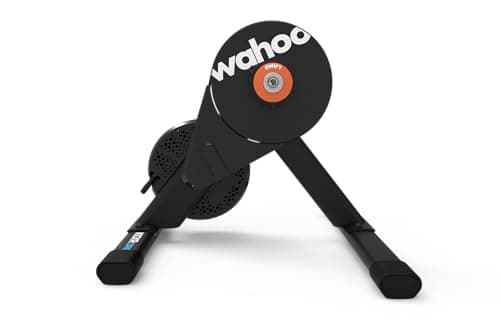 Wahoo Kickr Core 2 The alternative with the strongest case on paper: measured power, every app on the market, and a price a long way under any complete bike — provided you already own a bike to put on it. | Best overall alternative if you own a bike | 8.88.8 out of 10 | |
| 2 | 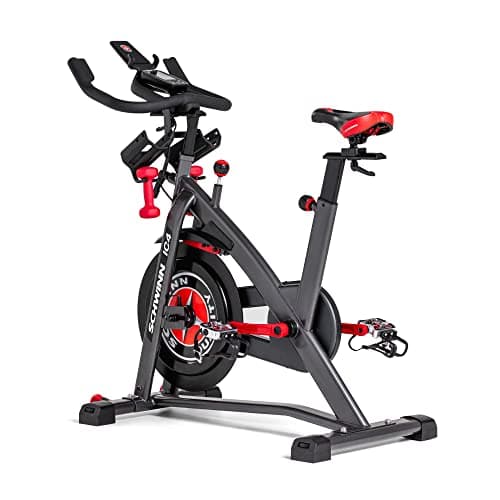 Schwinn IC4 The closest thing to a straight substitution: one object, no bike needed, and an open Bluetooth broadcast that lets you run Peloton's app or anyone else's on hardware you bought once. | Best like-for-like swap if you do not own a bike | 7.47.4 out of 10 | $799.00 · View on Amazon #ad We may earn a commission · Price as of November 22, 2026 |
| 3 | 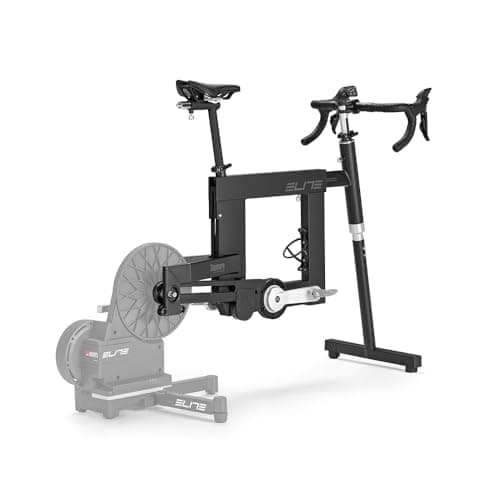 Elite Square A bike-shaped machine for someone who cares where the saddle sits: proper fit range and measured power, at the cost of buying a trainer separately and living inside Elite's compatibility list. | Best if you want a bike-shaped machine with real fit adjustment | 7.87.8 out of 10 | $1,999.99 · View on Amazon #ad We may earn a commission · Price as of November 22, 2026 |
| 4 | 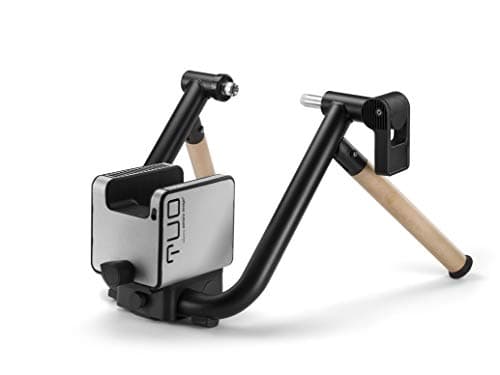 Elite Tuo The budget answer to the subscription question: an app-controlled trainer for a small fraction of a connected bike, as long as you own a bike and can live with a 10% gradient ceiling. | Budget pick — the cheapest credible alternative | 7.67.6 out of 10 | $162.49 · View on Amazon #ad We may earn a commission · Price as of November 22, 2026 |
| 5 | 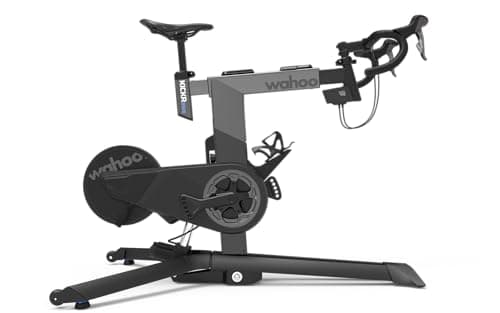 Wahoo Kickr Bike Pro The no-compromise complete bike: measured power to ±1%, a frame that tilts with the gradient, and a price that only makes sense if the riding itself is the point. | Best complete bike, if budget is not the constraint | 8.48.4 out of 10 | $3,039.99 · View on Amazon $3,999.99Save 24% #ad We may earn a commission · Price as of November 22, 2026 |
Let us start where an honest page about alternatives has to start — with what the original is good at. Peloton built the best class library and the best instructors in indoor fitness, and that is not a claim you can argue away with a spec sheet. It also solved a problem the cycling industry never has: the bike arrives as one object, with a 21.5-inch Full HD touchscreen that swivels through 360º, manually controlled resistance, a 4 ft by 2 ft footprint and nothing to match to anything else. If the thing that keeps you training is an instructor saying your name on a screen that was already pointing at you, a Peloton is a rational purchase and this page is not an argument against it.
What people usually want when they search for alternatives is one of three specific things: the recurring cost to be smaller, the hardware to not be locked to one company, or the numbers to be real training data. Those are different problems with different answers, which is why this page is ranked by which part of the bundle you are replacing rather than by price alone.
What you are actually unbundling
A Peloton is four products sold as one: the machine, the screen, the software and the instruction. Every alternative here takes the machine seriously and hands you back some or all of the other three as homework.
The recurring cost.Peloton publishes its All-Access Membership at $49.99 a month (checked on Peloton's own membership page, 2026-11-17). Zwift publishes its standard membership at $19.99 a month or $199.99 a year. MyWhoosh currently advertises no fee at all, which is why Zwift vs MyWhooshexists as a page. Those are the numbers behind the "Peloton alternatives without subscription" searches — and they are also the reason the subscription question should never drive the hardware choice. Software is a monthly decision you can reverse; hardware is not.
The lock-in.A Peloton runs Peloton. Every trainer and bike here broadcasts over open standards — Bluetooth FTMS, ANT+ FE-C, or both — which means the hardware outlives any single app's pricing, feature set or corporate direction. That is the durable argument for unbundling, and it is the one that tends to matter five years out.
The numbers. This is the part most comparison pages get wrong. Peloton does not publish a power accuracy tolerance for the Bike; its specification page lists the screen, the resistance type and the dimensions. Wahoo publishes ±2% for the Kickr Core 2 and ±1% for the Kickr Bike Pro, and Elite publishes ±2.5% for the Tuo. A machine that estimates output from resistance and cadence is not doing the same job as one that measures torque, and the gap appears the moment you try to compare a number with another rider or test an FTP you intend to train on. How accurate are smart trainers covers what those tolerances mean in practice.
The instruction. Nothing here replaces it. There are structured training apps with genuinely excellent plans, and group rides and races with thousands of real people in them, but there is no equivalent of a Peloton instructor and we will not pretend a leaderboard is one. If that is why you ride, weight it heavily.
How we ranked them
What it replaces, first.A trainer and a complete bike are not competing for the same buyer, so the ranking separates "you own a bike" from "you do not", and says which group each pick is for in its first line. Then measured versus estimated power, because it is the one difference no accessory can fix later. Then app freedom — which protocols it broadcasts, and therefore how many apps will still work with it in five years. Then the real total, including the parts a Peloton includes and these do not: a screen, a fan, a mat, a stand, and in some cases a trainer or a bike.
We have not ridden every machine on this page. Every figure is the manufacturer's own published specification or an attributed independent measurement, labeled as such, and where a maker publishes nothing we say so rather than guessing. Our how we review page explains the method.
| Option | Bike needed? | Power | App control | Screen included |
|---|---|---|---|---|
| Wahoo Kickr Core 2 | Yes | Measured, ±2% | Yes | No |
| Schwinn IC4 | No | Estimated | No — manual knob | Basic LCD console |
| Elite Square | No (Elite trainer required) | Measured, from the fitted trainer | Yes | No |
| Elite Tuo | Yes | Measured, ±2.5% | Yes | No |
| Wahoo Kickr Bike Pro | No | Measured, ±1% | Yes | No |
| Peloton Bike (for reference) | No | Output; no tolerance published | Manual resistance | 21.5 in Full HD, 360º |
The decision in one paragraph
Own a road bike and want the numbers to mean something? Kickr Core 2. Own a bike and want the smallest possible outlay? Elite Tuo. Do not own a bike and want the Peloton shape without the Peloton bundle? Schwinn IC4. Do not own a bike and care where the saddle sits? Elite Square. Do not own a bike, and want the best indoor cycling machine made rather than the cheapest exit from a subscription? Kickr Bike Pro.
What it really costs to leave the bundle
The trainer is the headline and rarely the whole bill. A realistic first setup around any trainer here also wants a screen, something to hold it, a fan, a mat and — on a direct-drive trainer — a cassette that matches your drivetrain. None of that is expensive individually, and all of it is easy to forget when you are comparing one number against a Peloton's. What a Zwift setup actually costs itemizes it, and the budget Zwift setup shows the cheapest honest version.
The screen is the part people underestimate, because a Peloton came with one. A tablet on a stand in front of the bars is the usual answer, and if your household is on Android, the best Android tablet for Zwift ranks the options against Zwift's published Android requirements, including the Play Store check to run before the return window closes.
There is a second cost that appears on no invoice: your bike is now indoors. For riders who train through a winter, that is a feature. For riders who ride outdoors most weekends it is a recurring five-minute chore, and it is the most common reason people who own a trainer end up buying a dedicated indoor machine later anyway.
Where a fitness bike genuinely wins
We rank measured power above estimated power, and we would still tell one specific reader to buy the IC4 over the Kickr Core 2 without hesitating: the reader who does not own a road bike, does not want to own one, and will ride three times a week if the machine is sitting there ready. A bike you use beats a trainer you do not, and the distance between "estimated" and "measured" is irrelevant to someone whose goal is to be fitter in March than they were in November.
What changes the recommendation is ambition. The moment you want to compare yourself with other riders, follow a plan with prescribed targets, or carry a number from indoors to an outdoor event, estimated power stops being enough — smart trainer vs power meter is the question that follows next.
The verdict
Buy the Wahoo Kickr Core 2if there is a bike in the garage. It unbundles the most for the least: measured power with a published tolerance, every app on the market, and no obligation to anyone's subscription. Buy the Schwinn IC4if there is not, and run whichever app you like on it — including Peloton's. Buy the Elite Tuo if the goal is simply to stop paying $49.99 a month as cheaply as possible, and accept the 10% gradient ceiling that comes with it. Buy the Elite Square for fit, and the Kickr Bike Pro if you want the best machine in the category and the budget allows it.
And if what you actually valued was the instructor, stay where you are. There is no shame in buying a product because it makes you train, and no spec sheet on this page beats riding.
Own a bike already?
See every smart trainer we rankTwo neighbors to this page if you are still narrowing it down: smart trainer vs Peloton is the head-to-head comparison rather than a shopping list, and the best smart bikes ranks the complete machines against each other if you have already ruled out using your own bike.
The full reviews
Every pick, in detail
#1 · Best overall alternative if you own a bike
Wahoo Kickr Core 2
8.88.8 out of 10The alternative with the strongest case on paper: measured power, every app on the market, and a price a long way under any complete bike — provided you already own a bike to put on it.
- Type
- Direct drive, electromagnetic
- Claimed accuracy
- ±2%, measured
- Max resistance
- 1,800 W
- Max gradient
- 16%
- Flywheel
- 5.4 kg
- Connectivity
- WiFi, Bluetooth, ANT+ FE-C
- Rider limit
- 250 lb (113 kg)
What we'd praise
- Measures power instead of estimating it, and Wahoo publishes the tolerance as ±2%
- WiFi, Bluetooth and ANT+ FE-C, so it pairs with a tablet, an Apple TV, a laptop or a head unit
- Open to any app — Zwift, TrainerRoad, MyWhoosh, Rouvy, or Peloton's own app over Bluetooth
- Costs a fraction of any complete bike because it uses the bike you already own
- Folds down and stores against a wall, which no exercise bike does
What we'd flag
- Useless on its own: it needs a bike with a compatible rear axle, and that bike is out of action while it is mounted
- No screen, no speakers and no classes — you supply the tablet and choose the subscription
- No cassette in the box unless you buy the Zwift Cog version, so you need to know your drivetrain
- 16% gradient ceiling, and the fit is your bike's fit rather than something anyone can adjust in ten seconds
- It does not cool you, so a fan is not optional the way it is on a bike with one built in
If there is a road bike in the garage, this is the swap that costs the least and gives the most. A direct-drive trainer replaces your rear wheel, measures your power to a published ±2% and reports it over WiFi, Bluetooth and ANT+ to whatever software you point at it. The numbers are yours to keep and to compare — against last winter, against a race file, against a training plan written by someone who is not also selling you classes.
The thing worth understanding is that a Peloton output figure and a trainer power figure are not the same kind of number. Peloton does not publish a power accuracy tolerance for the Bike; Wahoo publishes ±2% for this one. That difference does not matter if you ride to feel and to a leaderboard. It matters a great deal if you want a baseline you can retest in eight weeks, or an FTP number that means something outside one app.
Be honest about the costs that are not money. Your bike lives in the trainer, so a Saturday road ride means a five-minute reinstall. You need a tablet or a TV in front of you, a fan, a mat and somewhere to put a drink. A Peloton arrives as one object; this arrives as a project. The payoff is that every part of the project is replaceable and none of it is locked to a single company.
#2 · Best like-for-like swap if you do not own a bike
Schwinn IC4
7.47.4 out of 10#ad We may earn a commission · Price as of November 22, 2026
The closest thing to a straight substitution: one object, no bike needed, and an open Bluetooth broadcast that lets you run Peloton's app or anyone else's on hardware you bought once.
- Type
- Indoor cycling bike, magnetic resistance
- Power data
- Estimated, not measured
- Resistance
- 100 manual levels
- Flywheel
- 40 lb
- Broadcast
- Bluetooth FTMS
- Screen
- Small LCD console; bring your own tablet
- Fit
- Adjustable saddle and bars, generic fit
What we'd praise
- Self-contained like a Peloton: it arrives, you assemble it, and no bike is required
- Broadcasts over Bluetooth FTMS, so the Peloton app, Zwift, Kinomap and most others will see it
- A 40 lb flywheel gives the heavy, smooth feel that makes steady efforts pleasant
- A tablet holder and dumbbell cradles are built in, so the class format works out of the box
- Costs well under a complete connected bike, and nothing obliges you to buy any subscription
What we'd flag
- Power is estimated from flywheel speed and resistance level, and estimated figures are known to read high against a measured power meter
- No ERG mode and no app-controlled resistance — a structured workout means turning a knob by hand
- The console is a basic LCD, not a 21.5-inch touchscreen; the class experience depends on a tablet you position yourself
- Big, heavy and permanent: this is furniture, and it does not fold
- The fit is close to a road position at best, and nothing about it reinforces the position you ride outdoors
This is the pick for the reader who liked the Peloton format— a bike that lives in the corner, a screen in front of it, a class on the screen — and does not want to buy a road bike to get it. The IC4 is a conventional indoor cycling bike with a heavy flywheel and a resistance knob, and the detail that matters here is the Bluetooth FTMS broadcast. That open standard is why it works as an alternative at all: Peloton's app will accept it, and so will Zwift, Kinomap and nearly everything else.
So the trade is explicit. You keep classes if you want them, you keep the one-object convenience, and you give up the built-in touchscreen and the hardware-plus-All-Access bundle. In their place you get a tablet holder and whichever subscription you choose this month, which may be none.
The honest limit is the number on the screen. The IC4 does not measure your torque; it infers watts from how fast the flywheel is turning at a given resistance setting, and that kind of figure is known to overread against a real power meter. For a workout it is fine. As a training baseline it is not, and no firmware will fix it — it is a property of how the machine works, which is exactly the trade smart trainer vs spin bike walks through in detail.
#3 · Best if you want a bike-shaped machine with real fit adjustment
Elite Square
7.87.8 out of 10#ad We may earn a commission · Price as of November 22, 2026
A bike-shaped machine for someone who cares where the saddle sits: proper fit range and measured power, at the cost of buying a trainer separately and living inside Elite's compatibility list.
- Type
- Smart bike frame — Elite trainer required, not included
- Drivetrain
- Belt drive, single sprocket, virtual shifting
- Rider range
- 152-198 cm; 110 kg limit (per DC Rainmaker)
- Saddle
- Height 57-88 cm, setback 17-29.3 cm
- Cranks
- 165, 167.5, 170, 172.5, 175 mm
- Weight
- 23 kg with an Avanti trainer fitted
- Power
- Own battery, 80 hours, no mains outlet
What we'd praise
- Five crank lengths, 31 cm of saddle height range and 12 cm of setback — fit adjustment a fitness bike does not attempt
- Belt drive and a single sprocket: DC Rainmaker calls it virtually silent, with only faint trainer internals audible
- Power comes from the Elite trainer you fit, so the figure is measured and carries a published tolerance
- Mechanical shifters with real lever feel, and gear profiles you build in Elite's app
- Runs 80 hours on its own battery, so the frame needs no outlet of its own
What we'd flag
- No trainer and no pedals in the box — the real cost is the frame plus an Elite Avanti, Justo or Rivo, which lands well above a connected fitness bike
- Built around Elite trainers: DC Rainmaker reported Elite withdrew third-party trainer support after launch, and the widening firmware Elite announced carries no version or date we could verify
- 110 kg rider limit per DC Rainmaker, the lowest ceiling on this page
- No gear indicator in Zwift; DC Rainmaker kept the Elite app open on a phone to see the selected gear
- DC Rainmaker reports app crashes during profile setup, plus owner reports of seatpost creak
A Peloton is adjustable; it is not fitted. If several people of different sizes will ride, or if you want the indoor machine to put you in the position you ride outdoors, the Square takes that seriously in a way no fitness bike does — five crank lengths in 2.5 mm steps, 31 cm of saddle height and 12 cm of setback.
It is also the one pick here that is explicitly not complete. The Square is a frame: you fit an Elite trainer into it, and the trainer supplies the resistance and the measured power. That is how a bike-shaped product ends up with a real accuracy specification instead of an estimate. It is also why the total is the second-highest commitment on this page — read the frame price as a starting point, not a finishing one.
Two cautions we will not soften. Elite built this around its own trainers and, per DC Rainmaker, pulled third-party support after launch, so check your exact trainer against Elite's current compatibility list before committing. And the 110 kg rider limit is the lowest ceiling of anything here. Our best smart bikes roundup compares it against the complete machines if a frame-plus-trainer stack is not what you had in mind.
#4 · Budget pick — the cheapest credible alternative
Elite Tuo
7.67.6 out of 10#ad We may earn a commission · Price as of November 22, 2026
The budget answer to the subscription question: an app-controlled trainer for a small fraction of a connected bike, as long as you own a bike and can live with a 10% gradient ceiling.
- Type
- Wheel-on, controllable
- App control
- Yes — full resistance control
- Claimed accuracy
- ±2.5%
- Max resistance
- 1,300 W
- Max gradient
- 10%
- Connectivity
- Bluetooth, ANT+ FE-C
- Rider limit
- Not published by Elite
What we'd praise
- By far the cheapest way off a subscription bike and into app-controlled indoor training
- An app sets the resistance, so a structured workout holds its target without you touching anything
- Wheel-on: no cassette to match, no axle standard to check, nothing extra to buy on arrival
- Bluetooth and ANT+ FE-C, so it pairs with a tablet or with a laptop and a USB stick
- Reports its own power, so Zwift needs no additional sensor
What we'd flag
- A 10% gradient ceiling and 1,300 W of resistance — both arrive early on a steep Zwift climb
- ±2.5% is consistent with itself but not comparable to another rider's trainer or an outdoor power meter
- Tire wear, roller noise and a tire-pressure check before every ride; it is the loudest pick here
- Elite publishes no rider weight limit for it, so heavier riders have no figure to check
- Still needs your bike, a screen, a fan and a subscription — the cheap part is only the trainer
"Affordable Peloton alternatives" is one of the most common ways people search for this, and the honest answer is a wheel-on trainer under a bike you already own. The Tuo is the cheapest unit we rank that an app can actually control, which is the line that matters: below it, trainers are a knob you turn, and a knob cannot execute an interval session for you.
You pay for the price in two places. The gradient ceiling is 10%, so on a real Zwift climb the hill stops getting harder while the screen says it should — a trainer simulates gradient with resistance, and above the ceiling there is no resistance left to add. And accuracy is ±2.5%, which is fine for tracking your own progress and not fine for comparing yourself with anyone else.
It is also a wheel-on trainer, which means a trainer tire if you would rather not shred a good road tire, a pressure check before each ride, and more noise than any direct-drive unit. If the household noise budget is tight, read the quiet trainer roundup before buying this one.
#5 · Best complete bike, if budget is not the constraint
Wahoo Kickr Bike Pro
8.48.4 out of 10$3,999.99Save 24%
#ad We may earn a commission · Price as of November 22, 2026
The no-compromise complete bike: measured power to ±1%, a frame that tilts with the gradient, and a price that only makes sense if the riding itself is the point.
- Claimed accuracy
- ±1%
- Max resistance
- 2,500 W
- Physical tilt
- +20% climb, -15% descent
- Connectivity
- WiFi, Bluetooth, ANT+ FE-C, Direct Connect
- Rider range
- 5 ft 0 in to 6 ft 4 in, up to 113 kg (250 lb)
- Cranks
- 165, 167.5, 170, 172.5 and 175 mm
- Weight
- 93 lb
What we'd praise
- Complete and self-contained: no bike needed, no trainer to buy separately, nothing to match
- The frame physically pitches up to 20% and down to -15%, so a climb changes your position and not just your resistance
- Wahoo publishes ±1%, and Cyclingnews measured it inside that claim against Favero Assioma Duo pedals
- Five crank lengths and a fit range from 5 ft 0 in to 6 ft 4 in, so a household can share it
- Shifter buttons in the hoods, working brake levers and motor-driven coasting on descents
What we'd flag
- Several times the price of a connected fitness bike — the most expensive answer on this page by a wide margin
- the5krunner found it reading around 2.5 to 3% high against two sets of dual-sided power pedals, with no user offset or spindown available
- No saved fit profiles, so sharing it means re-setting five adjustments by hand
- 93 lb and 30 in wide: a two-person install, and tight through some doorways
- No screen, no speakers, no fan and no pedals in the box, so the class experience is still yours to assemble
"Peloton bike alternatives" usually means a complete machine rather than a trainer, and at the top of that category this is it. Nothing needs matching to anything: no bike, no cassette, no axle standard. You set a fit once and ride, and the resistance is controlled by whichever app you like.
What the money buys over a fitness bike is two things. The first is measured power with a published ±1% tolerance, independently checked inside that claim by Cyclingnews against Favero Assioma Duo pedals. The second is the tilt: the frame pitches to +20% and -15%, so climbing is felt in your hands and your back, not only in your legs.
It is not perfect and we will not pretend otherwise. the5krunner measured it reading roughly 2.5 to 3% high against two sets of dual-sided power pedals, with no user offset or spindown to correct it. There are no saved fit profiles. And there is still no screen, no speakers, no fan and no classes — if those four were what you valued about a Peloton, this machine hands all of them back to you as homework.
Good questions
Frequently asked questions
What is the best Peloton alternative?
It depends on whether you own a road bike. If you do, the Wahoo Kickr Core 2 is the best alternative: it measures power to a published plus or minus 2%, broadcasts over WiFi, Bluetooth and ANT+ so any app can use it, and costs far less than a complete bike. If you do not own a bike, the Schwinn IC4 is the closest like-for-like swap — self-contained, nothing to match, and it broadcasts over Bluetooth FTMS so Peloton's own app or Zwift will both accept it.
Is there a Peloton alternative without a subscription?
Yes, in two senses. Every piece of hardware on this page works with no subscription at all — a trainer in ERG mode or a bike with a resistance knob gives you a workout without any app. And if you do want software, MyWhoosh currently advertises no fee, while Zwift publishes $19.99 a month or $199.99 a year against Peloton's $49.99 a month All-Access Membership. What you give up is the class library and the instructors, which is the part no alternative replaces.
Can you use the Peloton app on a different bike?
Yes. Peloton sells an app membership intended for people who bring their own equipment, and the Schwinn IC4 broadcasts cadence, speed and estimated power over Bluetooth FTMS, which is the standard such apps read. That makes a bike like the IC4 the most direct substitution available: you keep the classes if you want them and drop the bundled hardware. Check Peloton's current app tiers and device support before relying on any specific feature.
Is a smart trainer better than a Peloton?
For a cyclist, usually yes — and for a general fitness rider, often no. A smart trainer measures power to a published tolerance, works with every major training app and uses the bike you already own, which makes it the better instrument and much better value. A Peloton is one object with a 21.5-inch screen, a class library and instruction built in, which makes it the better appliance. The honest question is not which is better but which one you will use four times a week.
What is the cheapest Peloton alternative?
If you own a bike, a wheel-on controllable trainer like the Elite Tuo is the cheapest credible route — an app can set its resistance, which is the line that separates a training tool from a resistance knob. Be clear about the limits: Elite publishes a 10% gradient ceiling and plus or minus 2.5% accuracy for it, and you still need a screen, a fan and a trainer tire. If you do not own a bike, the cheapest honest answer is a self-contained indoor cycling bike rather than a trainer.
Does a Peloton give you real power numbers?
It gives you a consistent output figure rather than a measured one. Peloton's published Bike specifications list the screen, the manual resistance and the dimensions, and do not include a power accuracy tolerance — unlike trainer makers, who publish figures from plus or minus 1% to plus or minus 2.5%. The practical consequence is that Peloton output is useful for tracking your own progress on that one bike, and not reliable for comparing yourself with other riders or carrying a training number elsewhere.
How we sourced this
- Peloton — Bike product page: 21.5 in Full HD screen with 360º movement, manual resistance, 54 x 23 x 61 in
- Peloton — All-Access Membership pricing ($49.99/mo, checked 2026-11-17)
- Zwift — pricing FAQ ($19.99/mo or $199.99/yr, US)
- Wahoo — Kickr Core smart trainer specifications
- Wahoo — Kickr Bike Pro specifications
- Elite — Tuo interactive trainer specifications
- DC Rainmaker — Elite Square in-depth review (rider limit, trainer compatibility, noise)
- Cyclingnews — Wahoo Kickr Bike Pro review (accuracy against Favero Assioma Duo)
- Schwinn — IC4 indoor cycling bike specifications
Keep going