Trainers
Smart Trainer vs Spin Bike
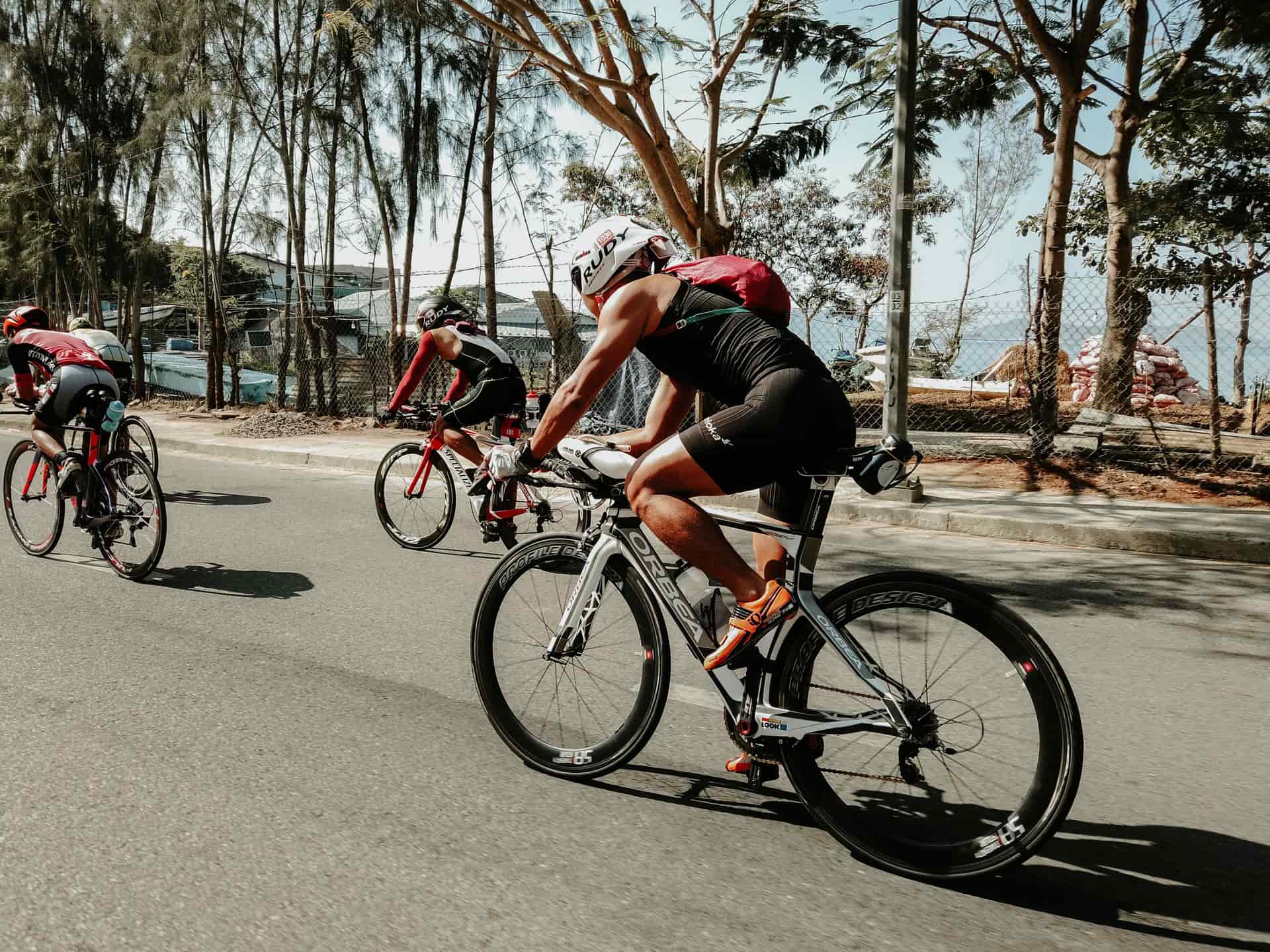
Both put you on pedals in your own house. Only one produces numbers you can train on, and only one keeps you in the position you actually ride in.
The short answer
Quick picks
| # | Product | Best for | Score | Price |
|---|---|---|---|---|
| 1 | 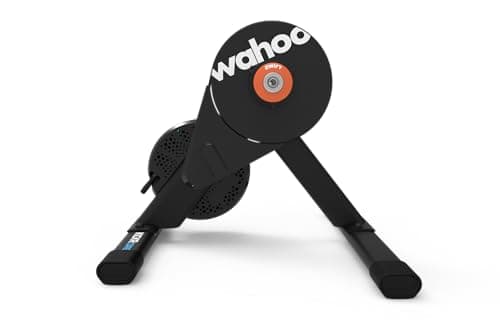 Wahoo Kickr Core 2 If you own a road or gravel bike, this is not a close decision. A smart trainer gives you real power data, real app control and a position that transfers to outdoor riding. | Best for anyone who owns a bike | 9.09.0 out of 10 | $549.99 · View on Amazon #ad We may earn a commission · Price as of October 21, 2026 |
| 2 | 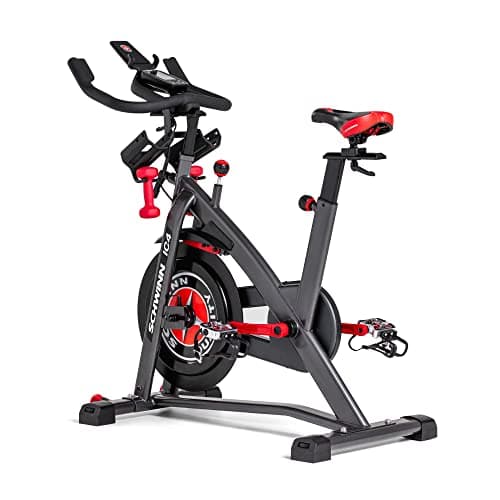 Schwinn IC4 A genuinely good exercise bike and a poor training tool for a cyclist. Buy it for fitness and convenience, not for numbers you intend to act on. | Best if you do not own a bike | 6.56.5 out of 10 | $899.00 · View on Amazon #ad We may earn a commission · Price as of October 21, 2026 |
This comparison usually gets framed as a price question, and it is the wrong frame. A decent spin bike and a decent smart trainer land in similar territory once you have added the fan, the screen and the mat that neither works properly without. The real question is much simpler: do you own a bike you like riding outdoors?
If yes, a smart trainer wins on almost every axis that matters and the rest of this page is detail. If no, the answer flips, and a spin bike may well be the sensible purchase — but you should understand exactly what you are giving up, because the marketing will not tell you. It is also worth pricing the third route before you commit: a first road or gravel bike plus a mid-range trainer often lands close to a good spin bike, and these side-by-side road and gravel bike comparisons are the quickest way to see what that bike should cost.
| Smart trainer | Spin bike | |
|---|---|---|
| Power data | Measured, typically ±1–2.5% | Estimated from resistance and speed |
| ERG mode | Yes — the app holds your target watts | No — you turn a knob |
| Terrain response | Resistance follows the gradient automatically | Manual, if at all |
| Fit | Your own bike, your own position | Adjustable, generic |
| Transfers to outdoor riding | Directly | Partially — fitness, not position |
| Requires a bike | Yes | No |
| Setup time per session | Bike on, ride | Sit down, ride |
| Maintenance | Your drivetrain, plus sweat protection | Minimal |
| Storage | Folds or stores in most cases | Permanent floor space |
| Noise | Drivetrain only on direct drive | Very low |
The power number is the whole argument
A smart trainer measures torque in the load path — a strain gauge or an optical sensor reading what your legs are actually doing — and publishes a figure with a stated tolerance, typically ±1% to ±2.5%. A spin bike almost never does. It knows what resistance level it is set to and how fast the flywheel is turning, and it calculates a wattage from that model.
The problem is not that the estimate is imprecise. It is that it is systematicallyoff, and often by a lot. Riders comparing a spin bike's broadcast power to a real power meter routinely find the bike reading substantially high, and the offset changes with resistance setting and flywheel speed rather than staying constant.
That matters because everything useful you can do with power depends on the number meaning something. An FTP test on a spin bike produces a number you cannot use anywhere else. Zones derived from it do not transfer to the road. Comparing your indoor efforts to a friend's, or to a training plan written by a coach, becomes guesswork. Our accuracy guide explains why repeatability matters more than absolute truth — but a spin bike often fails even the repeatability test, because the error is not stable.
ERG mode is the second argument, and it is nearly as big
On a smart trainer, the app can command the resistance. In ERG mode that means the trainer holds you at a target wattage regardless of your gear or cadence: the workout is executed exactly as written, and your only job is to keep the pedals turning. In simulation mode it means the resistance rises when the road rises, without you touching anything.
A spin bike has a knob. You can absolutely do intervals on one — people have been doing so for decades — but you are the resistance controller, and holding a precise wattage by hand while fatigued is a skill nobody executes well at the end of a hard set. Our ERG mode guide covers what that feature actually does, and it is the single clearest reason a trainer produces better training.
Note the asymmetry here: the IC4 and bikes like it broadcast to Zwift over Bluetooth FTMS, so your avatar moves. They do not accept control from Zwift. You will ride a virtual climb without the pedals getting any harder unless you reach down and make it so.
Fit: the argument nobody makes and everybody feels
If you ride outdoors, your bike fit is a set of measurements you have arrived at over years — saddle height to within millimeters, setback, reach, bar drop, cleat position. Every hour spent in that position reinforces the specific adaptations that make you comfortable and efficient on the road.
A spin bike is adjustable but generic. The saddle is not your saddle, the bars are not your bars, the crank length is whatever it is, and the pedals are usually a compromise. You can get close. You cannot get identical, and the difference shows up as saddle discomfort on your first outdoor ride of spring, or as a knee that only complains indoors.
For a cyclist, this alone decides it. For someone whose exercise is the ride itself, it is irrelevant.
What about the honest advantages of a spin bike?
There are real ones, and pretending otherwise would be dishonest.
It is one object. No cassette to match, no drivetrain compatibility question, no bike to mount and dismount, no chain to keep clean. You sit down and ride.
It shares.A spin bike suits a household where several people of different sizes ride. A trainer holds one person's bike, and swapping bikes is a five-minute job.
Nothing you love gets sweated on. Indoor sweat is genuinely corrosive, and it lands on your headset, your stem bolts and your bar tape. A spin bike is designed to take it; a carbon road bike is not, which is why a sweat net appears on our accessories checklist.
The flywheel is heavy. Forty pounds of steel spinning gives a smooth, weighty feel that many riders find flattering, particularly at steady effort. It is not a substitute for good data, but it is not nothing.
The cost comparison, honestly
A quality spin bike is a single purchase. A smart trainer is a purchase plus a bike, and if you do not already have the bike, that comparison is not close — a trainer plus a decent road bike is several times the price of the spin bike.
If you do have the bike, the numbers reverse: a mid-range trainer costs less than a good spin bike and delivers considerably more. And both need the same supporting cast to be tolerable — a serious fan, a mat, and a screen you can actually see. Our cost guide breaks down what each price band buys.
The verdict
For a cyclist, this is not a close call: buy the smart trainer. Measured power, ERG control and your own fit are three things a spin bike cannot give you at any price, and they are exactly the three things that make indoor hours turn into outdoor speed.
For someone who does not own a bike and does not want one, the spin bike is the sensible buy — just do not treat its power number as data. And if what you are actually weighing is a Peloton or a smart bike, those are different arguments again, and we have written both.
Decided on a trainer?
See the smart trainers rankedThe full reviews
Head to head
#1 · Best for anyone who owns a bike
Wahoo Kickr Core 2
9.09.0 out of 10#ad We may earn a commission · Price as of October 21, 2026
If you own a road or gravel bike, this is not a close decision. A smart trainer gives you real power data, real app control and a position that transfers to outdoor riding.
- Type
- Direct-drive smart trainer
- Claimed accuracy
- ±2%
- App control
- ERG and simulation, full control
- Max gradient
- 16%
- Flywheel
- 5.4 kg
- Fit
- Your own bike, your own fit
What we'd praise
- You ride your own bike, so the fit is already correct and the position transfers to the road
- Measured power at a claimed ±2% — numbers you can build a training plan on
- Full app control, so ERG mode holds a workout target and Zwift changes resistance with the terrain
- Onboard WiFi, which removes the most common cause of dropouts mid-session
- Folds away in a way a spin bike never will
What we'd flag
- You need a bike, and it is occupied while it is on the trainer
- Setup takes a few minutes and a cassette has to match your drivetrain
- Sweat lands on your actual bicycle, so a sweat net and a routine are non-optional
- A trainer alone is not a complete setup — a fan and a screen are part of the real cost
A smart trainer replaces your rear wheel and turns the bike you already own into a controllable training machine. The power figure is measured rather than estimated, the app can command the resistance, and your saddle height, reach and cleat position are the ones you already ride. Full detail in our Kickr Core 2 review.
#2 · Best if you do not own a bike
Schwinn IC4
6.56.5 out of 10#ad We may earn a commission · Price as of October 21, 2026
A genuinely good exercise bike and a poor training tool for a cyclist. Buy it for fitness and convenience, not for numbers you intend to act on.
- Type
- Spin bike, magnetic resistance
- Power data
- Estimated, not measured
- App control
- Broadcasts over Bluetooth FTMS; resistance set by hand
- Resistance
- 100 manual levels
- Flywheel
- 40 lb
- Fit
- Adjustable, but not your bike's fit
What we'd praise
- Self-contained: it arrives, you assemble it, and there is nothing else to buy or match
- A 40 lb flywheel gives a heavy, smooth feel that flatters steady riding
- Broadcasts over Bluetooth FTMS, so Zwift, Peloton and Kinomap will all see it
- Nothing to sweat onto except the bike that is designed to be sweated on
- Cheaper than a good trainer plus the bike you would need to put on it
What we'd flag
- Power is estimated, and the well-documented overread against a real power meter can be substantial
- No ERG mode — resistance is a knob you turn, so structured workouts are executed by hand
- The fit is close to your road position at best, and nothing about it transfers precisely
- Large, heavy and permanent; a spin bike does not fold into a cupboard
A spin bike is a self-contained machine with a heavy flywheel and a resistance knob. The IC4 is among the better ones and it will broadcast speed, cadence and an estimated power figure over Bluetooth FTMS, so Zwift will happily accept it.
The catch is what "estimated" means. The bike does not measure your torque; it infers wattage from flywheel speed and resistance setting, and the resulting number is known to read high against a real power meter. That is fine for a workout and useless as a training baseline.
Good questions
Frequently asked questions
Is a smart trainer better than a spin bike?
For anyone who owns a bike, yes. A smart trainer measures power rather than estimating it, accepts control from the app so ERG mode can hold a workout target, and keeps you in your own bike fit so the training transfers to outdoor riding. A spin bike wins only on convenience and on not needing a bike at all.
Can you use a spin bike with Zwift?
Many will connect. Bikes that broadcast over Bluetooth FTMS, such as the Schwinn IC4, will send speed, cadence and an estimated power figure to Zwift so your avatar moves. What they cannot do is accept control from Zwift, so the resistance does not change when the road tilts — you have to turn the knob yourself.
How accurate is spin bike power?
It is an estimate derived from resistance level and flywheel speed rather than a measurement of your torque, and it commonly reads high against a real power meter. Worse, the error varies with resistance setting rather than staying constant, so it often fails even the repeatability test that makes a cheap smart trainer usable.
Does a spin bike have ERG mode?
No. ERG mode requires the app to command the trainer's resistance, and a spin bike's resistance is set by hand. You can ride intervals on one, but you are the controller, and holding a precise wattage by hand while fatigued is much harder than letting the machine do it.
Is a spin bike cheaper than a smart trainer?
Only if you do not already own a bike. A quality spin bike is a single purchase; a smart trainer needs a bike to sit in it. If you already have the bike, a mid-range trainer typically costs less than a good spin bike and does considerably more. Both need a fan, a mat and a screen to be tolerable.
Will training on a spin bike make me faster outdoors?
It will improve your fitness, which helps. What it will not do is reinforce your outdoor position, because the fit is generic rather than yours, and it will not give you power numbers you can build a plan around. For a cyclist, a smart trainer converts indoor hours into outdoor speed far more directly.
How we sourced this
- Wahoo indoor cycling trainers, specifications and features (manufacturer)
- Schwinn IC4 indoor cycling bike specifications (manufacturer)
- Schwinn IC4 review — app connectivity and power reporting (BarBend)
- Zwift support: supported devices, FTMS and trainer control
- Schwinn IC4 review — tested and rated (OutdoorGearLab)
Keep going