Trainers
Smart Trainer vs Peloton
One is a measuring instrument you attach to your own bike. The other is a complete fitness product with a screen and a membership. They are not really competing for the same person.

The short answer
Quick picks
| # | Product | Best for | Score | Price |
|---|---|---|---|---|
| 1 | 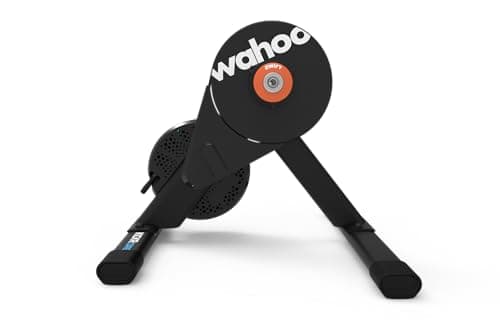 Wahoo Kickr Core 2 The right answer for anyone who rides outdoors: real power, free choice of software, and a position that makes your indoor hours count on the road. | Best for a cyclist | 9.09.0 out of 10 | $549.99 · View on Amazon #ad We may earn a commission · Price as of October 22, 2026 |
| 2 | 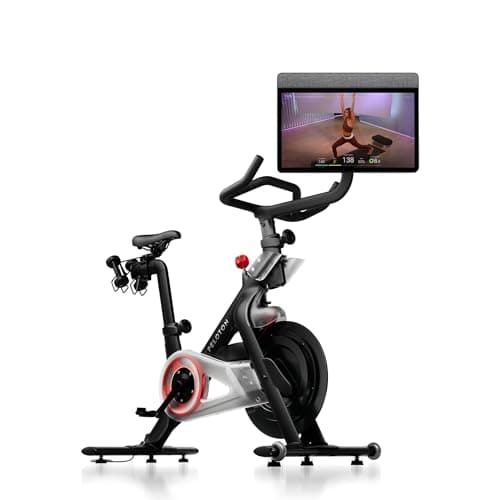 Peloton Bike An outstanding fitness product and a weak cycling one. Buy it for the classes and the convenience, never for the numbers. | Best for class-led fitness | 6.86.8 out of 10 | $1,695.00 · View on Amazon #ad We may earn a commission · Price as of October 22, 2026 |
These two products get compared constantly and they are barely in the same business. A smart trainer is an open measuring instrument that turns your own bicycle into a controllable training machine. A Peloton is a closed fitness product: hardware, screen, software and instruction sold as one thing with a subscription attached.
Which means the honest answer depends almost entirely on a question about you rather than about the machines. Are you training, or are you exercising? Both are completely legitimate. They just point at different purchases.
| Smart trainer | Peloton | |
|---|---|---|
| Power data | Measured, typically ±1–2.5% | Estimated; varies between bikes |
| Software choice | Zwift, TrainerRoad, Rouvy, MyWhoosh, any | Peloton only |
| ERG mode | Yes, on any controllable trainer | No — resistance is set by hand or auto-matched |
| Recurring cost | Optional app subscription | Membership required for classes |
| Instruction | None built in | The best class library in fitness |
| Fit | Your own bike | Adjustable, generic |
| Screen | Bring your own | Built in |
| Transfers outdoors | Directly | Fitness only |
| Resale | Strong — open standards | Tied to a platform |
| Requires a bike | Yes | No |
The power number, and why it is not a technicality
A smart trainer measures torque in the load path and publishes a tolerance — ±1% on a Kickr v6, ±2% on a Kickr Core 2, ±2.5% at the entry level. Because the measurement is real and the tolerance is stated, the number travels: you can test your FTP indoors and use it outdoors, follow a plan a coach wrote, or race against a field on comparable hardware.
Peloton derives power from what the bike knows about its own resistance and flywheel, and the figure is understood to vary between individual bikes. Peloton itself does not present it as a laboratory-grade measurement, and the Bike+ auto-calibrates its resistance system rather than offering the kind of user calibration a trainer does.
None of this makes a Peloton bad at what it does. A class does not need your wattage to be true in an absolute sense — it needs it to be a consistent target within that ride, and it is. But the moment you want to compare today with last winter, or indoor with outdoor, or yourself with a training plan, an unstable estimate stops being useful. Our accuracy guide explains why repeatability, not precision, is the thing to look for — and it is exactly the property that a derived figure struggles to guarantee.
Open versus closed, and what that costs over five years
This is the difference that compounds. A smart trainer speaks ANT+ FE-C and Bluetooth FTMS, which are open standards. That means you can run Zwift this year and TrainerRoad next, use a Garmin head unit for a structured workout with no app at all, sell the trainer to anyone, and keep using it when your favorite platform raises its price or changes direction.
A Peloton runs Peloton. The hardware and the content are one commercial relationship, and if you stop paying, the thing that made the bike worth buying largely goes away. That is a legitimate business model and it funds excellent content — but it should be priced in as an ongoing cost rather than a one-off purchase. A Peloton membership is a materially larger recurring bill than a Zwift subscription, and the subscription is optional on a trainer in a way it is not on a Peloton.
Motivation is a real specification
We will not pretend otherwise: the best trainer in the world produces zero watts if you do not get on it, and Peloton is extraordinarily good at getting people on it. The instruction is professional, the production is excellent, and the format asks nothing of you beyond showing up.
The trainer world's answer to motivation is different in kind. Zwift makes indoor riding into a game with other people in it; TrainerRoad makes it a plan that tells you exactly what to do; our Zwift vs TrainerRoad comparison covers which suits which temperament. Neither has a person on a screen encouraging you, and for a meaningful number of riders that is the difference between a habit and a dust-gathering machine.
Be honest with yourself about which category you are in. It is the most predictive thing about whether either purchase will be a good one.
Fit, and the thing cyclists underrate
If you ride outdoors, your bike fit is a set of hard-won measurements — saddle height to the millimeter, setback, reach, bar drop, cleat position. Riding a trainer means every indoor hour reinforces exactly that position.
A Peloton is adjustable but generic: not your saddle, not your bars, whatever crank length it ships with. Fine for fitness, and a genuine liability if you are trying to be comfortable on a five-hour road ride in April. It also means the household argument cuts the other way — a Peloton suits several people of different sizes far better than a trainer holding one person's bike.
Cost, including the parts people forget
The trainer side of the ledger is not just the trainer. A complete setup needs a screen, a serious fan, a mat and usually a subscription — our Zwift setup cost breakdown adds it all up honestly, and our trainer cost guide covers the hardware bands.
The Peloton side is the bike plus the membership, forever. Over three or four years the membership is a large share of the total, and it is the number to model rather than the sticker price. Neither product is cheap. They are expensive in different shapes.
The verdict
If you own a bike and you care about getting faster on it, buy the smart trainer. Real measured power, open software, ERG control and your own fit are four things a Peloton cannot offer at any price, and they are precisely what converts winter hours into spring form.
If your goal is fitness, your motivation comes from being taught, and nobody in the house owns a road bike, the Peloton is a genuinely good product and we would not talk anyone out of it. Just do not treat the wattage as data, and do budget the membership as a permanent line item. If you are somewhere in between, our do I need a smart trainer guide is the cleanest way to resolve it.
Going the trainer route?
See the smart trainers rankedThe full reviews
Head to head
#1 · Best for a cyclist
Wahoo Kickr Core 2
9.09.0 out of 10#ad We may earn a commission · Price as of October 22, 2026
The right answer for anyone who rides outdoors: real power, free choice of software, and a position that makes your indoor hours count on the road.
- Type
- Direct-drive smart trainer
- Claimed accuracy
- ±2%
- App control
- ERG and simulation, any FE-C or FTMS app
- Software
- Zwift, TrainerRoad, Rouvy, your choice
- Flywheel
- 5.4 kg
- Fit
- Your own bike
What we'd praise
- Measured power at a claimed ±2%, so the number transfers to outdoor riding and to any plan
- You choose the software, and you can change it without replacing the hardware
- ERG mode holds a workout target automatically instead of asking you to chase a resistance dial
- Your own bike fit, which is the position you actually race and ride in
- Onboard WiFi removes the most common cause of mid-session dropouts
What we'd flag
- Needs a bike, and the bike is out of action while it is mounted
- Sweat lands on your own machine — a sweat net and a wipe-down routine are mandatory
- The screen, the fan and the mat are extra, and the setup is not complete without them
- There is no instructor shouting at you, which for some riders is the entire point of exercising
A smart trainer is deliberately dumb about software. It measures your power, accepts control commands over open standards, and leaves the choice of what you look at to you — Zwift today, TrainerRoad next winter, neither if you would rather watch a film and ride to a plan. Full detail in our Kickr Core 2 review.
#2 · Best for class-led fitness
Peloton Bike
6.86.8 out of 10#ad We may earn a commission · Price as of October 22, 2026
An outstanding fitness product and a weak cycling one. Buy it for the classes and the convenience, never for the numbers.
- Type
- Self-contained exercise bike with screen
- Power data
- Estimated; varies between individual bikes
- App control
- Peloton platform; Bike+ auto-calibrates resistance
- Software
- Peloton membership, required for classes
- Screen
- Built in; the Bike+ screen rotates
- Fit
- Adjustable, generic
What we'd praise
- The class library and the instructors are genuinely excellent and genuinely motivating
- One object, one plug, nothing to assemble beyond the bike itself
- The screen is built in, correctly positioned and does not need a separate tablet or mount
- Very quiet, and designed from the ground up to be sweated on
- Works for a household where several people of different sizes ride
What we'd flag
- Power is estimated rather than measured, and is known to vary between individual bikes
- The membership is a permanent recurring cost, roughly double a Zwift subscription
- The hardware is locked to one platform — you cannot decide to run TrainerRoad on it
- Generic fit that does not reinforce your outdoor position
- Heavy and permanent; this is furniture, not equipment
Peloton sells a complete experience: hardware, screen, software and instruction as one purchase plus one subscription. Nothing else in indoor cycling is that frictionless, and the class library is the reason people keep riding — which is worth more than any specification if the alternative is not riding at all.
What it is not is a training instrument. The power figure is derived rather than measured, it varies between bikes, and it is locked inside a closed ecosystem.
Good questions
Frequently asked questions
Is a smart trainer better than a Peloton?
For a cyclist, yes. A smart trainer measures power rather than estimating it, works with any app that speaks ANT+ FE-C or Bluetooth FTMS, supports ERG mode and keeps you in your own bike fit. A Peloton is the better product if what you want is class-led fitness and you do not own a bike.
Is Peloton power accurate?
It is an estimate derived from the bike's own resistance and flywheel data rather than a measurement of your torque, and it is understood to vary between individual bikes. That is fine as a consistent target inside a class and unreliable as a training baseline you want to compare across time, across devices or against an outdoor power meter.
Can you use a Peloton with Zwift?
Not in the way a smart trainer works with Zwift. Peloton's hardware is built around its own platform, so you do not get the open FE-C or FTMS control that lets Zwift change your resistance with the terrain. If running Zwift, TrainerRoad or Rouvy matters to you, that alone points to a smart trainer.
Do you need a subscription with a smart trainer?
No. A trainer will run structured workouts from a head unit or a free app, and you can ride with no software at all. Most people do subscribe to something — Zwift lists US pricing at $19.99 a month or $199.99 a year — but it is optional and you can change or cancel it without replacing the hardware.
Is a Peloton cheaper than a smart trainer setup?
Rarely, once the membership is included. A Peloton is the bike plus a recurring membership that is roughly double a Zwift subscription and never stops. A smart trainer is a one-off purchase plus an optional app — though it also assumes you already own a bike, which is the whole difference.
Will a Peloton make me faster on the road?
It will improve your fitness, and fitness is most of the battle. What it will not do is reinforce your outdoor riding position or give you power numbers you can build an outdoor plan around. For a rider training for road, gravel or racing, a smart trainer converts the same hours into speed far more directly.
How we sourced this
Keep going