Head to Head
Zwift Ride vs Wahoo Kickr Bike Shift
One costs less than half the other. The gap is a chain, one percent of claimed accuracy and a few hundred watts of ceiling — and the cheaper bike fits more riders than the expensive one.

The short answer
Quick picks
| # | Product | Best for | Score | Price |
|---|---|---|---|---|
| 1 | 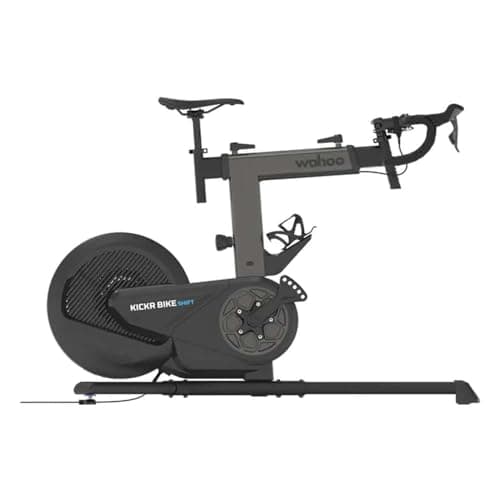 Wahoo Kickr Bike Shift The better machine on almost every specification that is not price: ±1%, belt drive, higher ceilings and real descent simulation. Buy it if the quiet and the accuracy are worth more than double the money. | The buy if you want a real smart bike, silent and accurate | 8.78.7 out of 10 | $2,381.52 · View on Amazon $2,699.99Save 12% #ad We may earn a commission · Price as of October 21, 2026 |
| 2 | 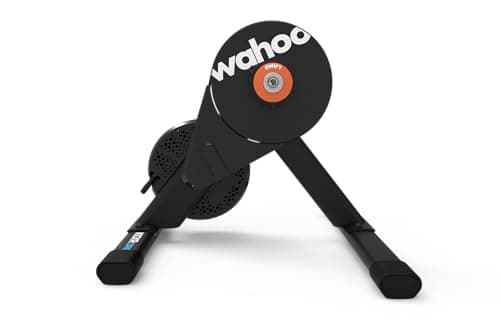 Wahoo Kickr Core 2 The honest third option: the same trainer that powers the Zwift Ride, bought alone, for a fraction of either bike — if you will keep mounting your own bike. | The engine inside the Zwift Ride bundle — and the cheap way out of this decision | 8.78.7 out of 10 | $549.99 · View on Amazon #ad We may earn a commission · Price as of October 21, 2026 |
| 3 | 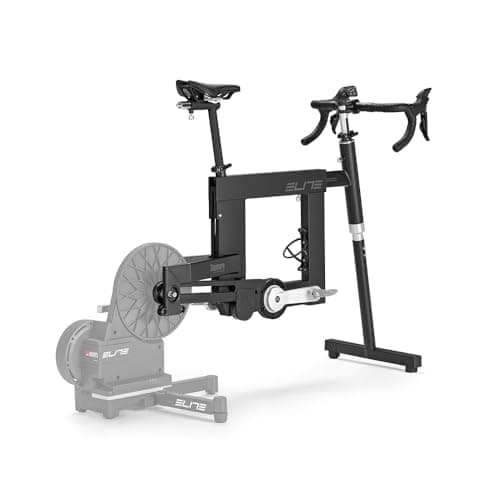 Elite Square The quiet frame, if the trainer you own says Elite on it. A middle path between the Zwift Ride's price and the Kickr Bike Shift's silence. | The third frame: belt drive, if you already own an Elite trainer | 8.08.0 out of 10 | $1,999.99 · View on Amazon #ad We may earn a commission · Price as of October 21, 2026 |
| 4 | 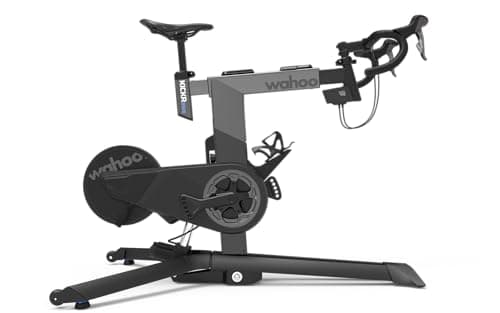 Wahoo Kickr Bike Pro Only worth considering if the tilting frame is specifically what you want. On every other axis it is a Kickr Bike Shift that costs considerably more. | The upgrade from the Shift: a frame that physically tilts | 8.58.5 out of 10 | $3,999.99 · View on Amazon #ad We may earn a commission · Price as of October 21, 2026 |
These two machines answer the same question with opposite philosophies. The Zwift Ride is a frame you bolt a Wahoo Kickr Core 2 into — Zwift sells the two together as the cheapest complete smart bike anyone makes. The Kickr Bike Shift is a finished machine with the resistance unit built in, a belt drive, no chain, and a flagship accuracy claim.
The headline gap is price, and it is large: the Shift costs well over double the Zwift Ride bundle. What follows is an honest account of what that money buys, and the two specifications where the cheap bike wins outright.
| Specification | Zwift Ride + Kickr Core 2 | Wahoo Kickr Bike Shift |
|---|---|---|
| Claimed power accuracy | ±2% | ±1% |
| Max resistance | 1,800 W | 2,200 W |
| Max simulated grade | 16% | 20% |
| Min simulated grade | -10% | -15% |
| Drivetrain | Real chain over the Zwift Cog | Belt drive, no chain |
| Resistance unit | 5.4 kg flywheel, electromagnetic | Electronic brake, no flywheel |
| Rider height range | 146-198 cm | 152-193 cm |
| Max rider weight | 120 kg (265 lb) | 113 kg (250 lb) |
| Crank lengths | 160, 165, 170, 172.5, 175 mm | 165, 167.5, 170, 172.5, 175 mm |
| Machine weight | 35.5 kg | 36 kg (79 lb) |
| Pedals included | Yes — flat pedals | No |
| Connectivity | WiFi, Bluetooth, ANT+ | WiFi, Bluetooth, ANT+, ANT+ FE-C |
| Wired Ethernet | Not published | Via Direct Connect, sold separately |
| Where you buy it | Direct from Zwift | Retail |
Where the cheap bike wins: fit
This is the one that should decide the purchase in a lot of households, and it goes the opposite way to everything else on the table. The Zwift Ride takes riders from 146 cm to 198 cm and up to 120 kg. The Kickr Bike Shift takes 152 cm to 193 cm and 113 kg. The cheapest bike in the class has the widest fit envelope in the class.
It also offers a 160 mm crank, which the Shift does not — the Shift starts at 165 mm. For a short rider, or a rider managing a knee, that single figure can be the whole decision. The Zwift Ride adds a 73 cm stepover, a 57.1-86.5 cm saddle height range and an 82.2-102.1 cm bar height range.
Per DC Rainmaker's hands-on, the V2 frame is where Zwift fixed this: the minimum rider height dropped from about 5 ft to 4 ft 10 in, the single 170 mm crank became five lengths from 160 to 175 mm, roughly 3 cm of extra fore-aft saddle adjustment arrived across four seatpost positions, and the minimum bar height came down about 4 cm. If a household has two riders of genuinely different sizes, buy the cheap one — it is also the right one.
Where the expensive bike wins: the drivetrain
The Kickr Bike Shift has no chain. It uses a belt drive and an electronic brake, so there is no flywheel, no cassette, nothing to lube and nothing to wear out. The Zwift Ride runs a real chain over the Zwift Cog, and that has two consequences, both documented by DC Rainmaker: you maintain and eventually replace the chain, which is an unusual type and size rather than a shelf item, and you hear it. DC Rainmaker describes the noise as greatly reduced with the newer Zwift Cog and still audible.
How much that matters depends on your room. In most pain caves the fan is comfortably the loudest thing present, which is why our quiet trainer roundup spends as much time on airflow as on hardware, and our guide to making a trainer quieter starts with the floor rather than the machine. But if you ride early in a shared apartment, or the bike lives in a bedroom, silence is a real feature — and here you are paying about more than twice as much for it.
Does ±1% versus ±2% actually matter?
For almost nobody, and it is worth being blunt about that. Training responds to repeatability, not absolute accuracy: if your trainer reads the same way every session, your intervals, your zones and your FTP test all work. The Kickr Core 2 is repeatable.
The gap starts to matter when the number has to travel. A coach reading your files against someone else's. A race category where power is scrutinized. Comparing indoor watts to a power meter on your outdoor bike. If none of those describe you, treat the accuracy line on the table as marketing and spend the money elsewhere. Our guide to smart trainer accuracy draws the line properly.
The ceilings deserve the same treatment with one exception. 1,800 W against 2,200 W is irrelevant to virtually every rider. The grade ceiling — 16% against 20% — is not, and it is weight-dependent: a heavier rider reaches a trainer's resistance limit at a lower simulated gradient, because the machine has to produce more force for the same slope. If you are a bigger rider who seeks out the steep stuff, that is the row to think hardest about. The descent figure (-10% against -15%) is the one almost nobody checks and nobody misses.
What you get in the box
Zwift lists the bundle as the Ride V2 frame, a Kickr Core 2 with the Zwift Cog already fitted, handlebars with integrated rechargeable shift and steer controllers, flat pedals, a charging cable, magnetic cable tidies and the assembly tool. The flat pedals are a small but genuine saving: both Wahoo smart bikes arrive without pedals.
Because the Zwift Ride runs a single Zwift Cog instead of a cassette, the gear range is software. There is no derailleur to index and no cassette to buy before your first ride. The Shift does the same thing with a configurable virtual drivetrain you can set to mirror the gearing of the bike you race on.
One durability note if you are shopping used: the V2 Zwift Ride added an extra internal seal to the controllers against sweat, which was the V1's documented failure mode. That is the specific question to ask a seller — and our sweat protection guide explains why electronics on a bike you sweat over fail the way they do.
The option neither company wants you to consider
Buy the Kickr Core 2 on its own and keep using your bike. It is the same trainer that powers the Zwift Ride, so the watts are identical, and on its own it costs a fraction of either machine here. Everything you give up is convenience and fit, not measurement.
The test is simple and personal: does the setup ritual actually cost you sessions? If your bike already lives on a trainer in a spare room and you never strip it, a smart bike is solving a problem you do not have. If you take the wheel off and put it back every time, or the bike has to come out of a living room, that friction is real and a smart bike removes it. We argue the whole thing out in smart bike vs smart trainer, and best smart bikes ranks the full field.
The verdict
The Kickr Bike Shift is the better machine, and the margin is clear on paper: a tighter accuracy claim, a belt drive instead of a chain, higher ceilings on both axes, and real descent simulation. If you have the budget and you want the finished article, buy it and stop reading.
But the Zwift Ride wins the purchase for more people, and not only on price. It fits shorter riders, taller riders and heavier riders than the Shift does, it offers a 160 mm crank the Shift cannot, and it includes pedals. What you accept in exchange is a chain you maintain and can hear, and one percentage point of claimed accuracy that will not change a single workout for most riders. At less than half the price, that is a straightforward trade.
Want the whole class compared?
See every smart bike rankedThe full reviews
Head to head
#1 · The buy if you want a real smart bike, silent and accurate
Wahoo Kickr Bike Shift
8.78.7 out of 10$2,699.99Save 12%
#ad We may earn a commission · Price as of October 21, 2026
The better machine on almost every specification that is not price: ±1%, belt drive, higher ceilings and real descent simulation. Buy it if the quiet and the accuracy are worth more than double the money.
- Type
- Complete smart bike, no bike required
- Claimed accuracy
- ±1%
- Max resistance
- 2,200 W
- Simulated grade
- +20% / -15%
- Drivetrain
- Belt drive, virtual shifting, no flywheel (electronic brake)
- Rider height range
- 152-193 cm (5 ft to 6 ft 4 in)
- Max rider weight
- 113 kg (250 lb)
- Crank lengths
- 165, 167.5, 170, 172.5, 175 mm
- Weight
- 36 kg (79 lb)
- Connectivity
- ANT+, ANT+ FE-C, Bluetooth, WiFi
What we'd praise
- ±1% claimed against the Zwift Ride bundle's ±2% — the only genuine measurement gap between these two machines
- Belt drive and no chain: nothing to lube, nothing to wear out, and the quieter machine by a wide margin
- Higher ceilings on both axes — 2,200 W and a 20% climb, against 1,800 W and 16%
- Simulates descents to -15%, which the Zwift Ride's Kickr Core 2 only does to -10%
- Five-point tool-free fit adjustment with a guided setup app, so it is genuinely shareable between riders
- Onboard WiFi, ANT+ FE-C and Bluetooth, with wired LAN available through Wahoo's Direct Connect adapter
What we'd flag
- Costs well over double the Zwift Ride bundle, which is the whole argument against it
- Narrower fit envelope at both ends: 152-193 cm against 146-198 cm, and 113 kg against 120 kg
- No tilting frame — grade is resistance only, which is the Kickr Bike Pro's headline feature and not this bike's
- Pedals are not included, so budget for those on top
- Wired Ethernet needs the Direct Connect adapter, sold separately
- It is furniture: 36 kg, single-purpose, and not something you move between rooms
The Kickr Bike Shift is what the smart bike category looks like when the engineering is finished. Wahoo publishes ±1%, a 2,200 W ceiling, a +20% / -15% grade range, and a belt drive with no flywheel at all — resistance comes from an electronic brake, which is why there is nothing in it to maintain and almost nothing to hear.
The daily experience that money buys is specific. You do not lube anything. You do not replace a chain. The loudest object in the room is your fan, by a distance. And the five-point fit is tool-free and app-guided, so two riders of different sizes can share the machine without a session turning into a bike fit.
The honest caveats are fit envelope and tilt. Wahoo rates it for 152-193 cm riders and 113 kg, both narrower than the cheaper Zwift Ride. And the frame does not tilt — grade is simulated with resistance only. If you want the physical pitch, that is the Kickr Bike Pro, and our Kickr Bike Shift review and Kickr Bike Pro review cover both.
#2 · The engine inside the Zwift Ride bundle — and the cheap way out of this decision
Wahoo Kickr Core 2
8.78.7 out of 10#ad We may earn a commission · Price as of October 21, 2026
The honest third option: the same trainer that powers the Zwift Ride, bought alone, for a fraction of either bike — if you will keep mounting your own bike.
- Type
- Direct drive, electromagnetic
- Claimed accuracy
- ±2%
- Max resistance
- 1,800 W
- Simulated grade
- +16% / -10%
- Flywheel
- 5.4 kg (12 lb)
- Connectivity
- WiFi, Bluetooth, ANT+ FE-C
What we'd praise
- This is the trainer Zwift bundles with the Ride frame, so its specifications are the Zwift Ride's specifications
- Race Mode pushes data to the app faster than the original Core, so surges register almost immediately
- Kickr Bridge relays a heart rate strap through the trainer, freeing a Bluetooth channel on an Apple TV
- Bought on its own it costs a small fraction of either smart bike here
- Sold either with the Zwift Cog and Click or with an 11-speed cassette, so virtual shifting is optional
What we'd flag
- ±2% claimed rather than ±1% — the measurement gap that follows the Zwift Ride bundle around
- 1,800 W and a 16% ceiling are the lowest figures in this comparison
- You keep the setup ritual a smart bike exists to remove: wheel off, bike on, bike off again
- No fit adjustment at all — you ride your own bike's fit, good or bad
Before committing to either machine on this page, price this. The Kickr Core 2 is the trainer inside the Zwift Ride bundle, so every power figure quoted for the Zwift Ride is really a Core 2 figure: ±2%, 1,800 W, +16% / -10%, a 5.4 kg flywheel, with WiFi, Bluetooth and ANT+ FE-C.
Bought on its own it costs a fraction of a smart bike, and what you give up is convenience and fit rather than watts. If your bike already lives on a trainer in a spare room and you do not strip it between sessions, this is probably the purchase you should actually make. Our Kickr Core 2 review has the detail, and smart bike vs smart trainer argues the whole question out.
#3 · The third frame: belt drive, if you already own an Elite trainer
Elite Square
8.08.0 out of 10#ad We may earn a commission · Price as of October 21, 2026
The quiet frame, if the trainer you own says Elite on it. A middle path between the Zwift Ride's price and the Kickr Bike Shift's silence.
- Type
- Smart bike frame — Elite trainer required, not included
- Drivetrain
- Belt drive, single sprocket, virtual shifting
- Rider range
- 152-198 cm; 110 kg limit (per DC Rainmaker)
- Crank lengths
- 165, 167.5, 170, 172.5, 175 mm
- Weight
- 23 kg with an Avanti trainer fitted
- Power
- Own battery, 80 hours, no mains outlet
What we'd praise
- Belt drive and a single sprocket — DC Rainmaker calls it virtually silent, which is the Zwift Ride's weakest point
- Mechanical shifters with real lever feel, and configurable gear profiles in Elite's app
- Five crank lengths and a wide saddle and setback range
- Runs 80 hours on its own battery, so the frame needs no outlet
What we'd flag
- Built around Elite trainers: DC Rainmaker reported third-party support was withdrawn after launch, and the later firmware announcement carries no version, date or independent test we could verify
- No trainer and no pedals included, so the real cost is the frame plus an Elite trainer
- 110 kg rider limit — the lowest in this comparison
- No gear indicator in Zwift, and DC Rainmaker found shifts smoothed rather than instant
The Square answers the main criticism of the Zwift Ride — the chain — without going all the way to Kickr Bike Shift money. It is a frame with a belt drive and a single sprocket, and you bolt your own direct-drive trainer into the back of it.
The condition is strict, and it is the reason this is a third option rather than a recommendation. Elite's compatibility list is its own range, and DC Rainmaker reports that the third-party trainer support Elite marketed at launch was withdrawn. Treat a non-Elite trainer as unproven. If you own an Elite Avanti, Rivo or Justo, this is the cheapest silent route into the category. If you own a Wahoo or a Tacx, it is not an option at all.
#4 · The upgrade from the Shift: a frame that physically tilts
Wahoo Kickr Bike Pro
8.58.5 out of 10#ad We may earn a commission · Price as of October 21, 2026
Only worth considering if the tilting frame is specifically what you want. On every other axis it is a Kickr Bike Shift that costs considerably more.
- Type
- Complete smart bike, no bike required
- Claimed accuracy
- ±1%
- Headline feature
- Tilting frame — physical incline and descent
- Drivetrain
- Belt drive, virtual shifting
- Fit adjustment
- Five-point, tool-free
- Connectivity
- WiFi, Bluetooth, ANT+
What we'd praise
- The frame actually pitches, so climbs and descents change your position rather than just your resistance
- Same ±1% claim and the same belt drive as the Shift
- Configurable virtual drivetrain and tool-free fit adjustment carried over
- The flagship if the physical sensation of gradient is the thing you are buying
What we'd flag
- Several times the price of the Shift for one feature, and multiples of the Zwift Ride bundle
- The tilt is the only substantial difference from the Shift — the watts are identical
- Heavier and more permanent still
- Pedals not included here either
We include the Pro because buyers comparing the Zwift Ride and the Kickr Bike Shift often end up looking at it, and the comparison is simpler than it appears: the Pro is the Shift with a frame that tilts. Same ±1% claim, same belt drive, same fit system.
If climbing in a position that actually changes is the experience you want to buy, nothing else here does it. If not, the money is better spent on the Shift plus everything else a pain cave needs. Our Kickr Bike Pro review and best smart bikes put it in context.
Good questions
Frequently asked questions
Is the Zwift Ride as good as the Wahoo Kickr Bike Shift?
Not on specification. The Kickr Bike Shift claims plus or minus 1% against the Zwift Ride bundle's plus or minus 2%, it uses a belt drive instead of a chain, and it reaches 2,200 W and a 20% simulated grade against 1,800 W and 16%. The Zwift Ride wins on price, on fit range and on included pedals. For most riders the Zwift Ride is the better purchase and the Kickr Bike Shift is the better machine.
Which smart bike fits more riders, the Zwift Ride or the Kickr Bike Shift?
The Zwift Ride. Zwift publishes a 146-198 cm rider height range and a 120 kg weight limit, against Wahoo's 152-193 cm and 113 kg for the Kickr Bike Shift. The Zwift Ride also offers a 160 mm crank, which the Shift does not — the Shift's shortest crank is 165 mm. If a household includes a very short, very tall or heavier rider, the cheaper bike is also the correct one.
Does the Zwift Ride have a chain?
Yes. The Zwift Ride runs a real chain over the Zwift Cog fitted to its Kickr Core 2, so it needs lubricating and eventually replacing, and the chain is an unusual type rather than a shelf item. The Kickr Bike Shift uses a belt drive with no chain and no flywheel at all. DC Rainmaker describes the Zwift Ride's drivetrain noise as greatly reduced with the newer Cog and still audible.
Is plus or minus 2% accuracy good enough for Zwift?
Yes, for training and for most racing. Training responds to repeatability rather than absolute accuracy: the same trainer reading the same way every session gives you valid intervals, zones and FTP tests. The gap matters when your numbers have to be compared to someone else's data or to a power meter on your outdoor bike.
Can you buy the Zwift Ride from Amazon?
No. Zwift sells the Ride directly rather than through the retailers we link to, which is why this page shows no live price for it — check Zwift's own store for the current figure. The Wahoo Kickr Bike Shift, the Kickr Core 2 that powers the Zwift Ride, the Elite Square frame and the Kickr Bike Pro are all sold at retail.
Should I just buy a Kickr Core 2 instead of a smart bike?
Possibly. The Kickr Core 2 is the trainer inside the Zwift Ride bundle, so the power measurement is identical, and on its own it costs a fraction of either smart bike. What you give up is fit adjustment and the walk-up-and-ride convenience. The honest test is whether the setup ritual costs you sessions — if your bike already lives on a trainer and never comes off, a smart bike solves a problem you do not have.
How we sourced this
- Wahoo — KICKR BIKE SHIFT specifications and price (manufacturer)
- the5krunner — Wahoo Kickr Bike Shift full specification sheet (independent)
- Zwift — Zwift Ride with KICKR CORE 2 specifications, bundle contents and current price (Zwift US store)
- DC Rainmaker — Zwift Ride V2 hands-on: fit changes, crank lengths, controller sealing (independent)
- Wahoo — KICKR CORE 2 specifications (manufacturer)
- Wahoo — KICKR BIKE PRO specifications (manufacturer)
- Elite — Square specifications, fit ranges and battery life (manufacturer)
- DC Rainmaker — Elite Square in-depth review: rider limits, shifting, noise, third-party trainer support (independent)
Keep going