Head to Head
Kickr Core 2 vs Kickr v6
The 2026 Core 2 took the v6's connectivity and kept the lower price. What the v6 still has is a tighter accuracy claim, a heavier flywheel and a handle — here is whether any of that is worth the gap.
The short answer
Quick picks
| # | Product | Best for | Score | Price |
|---|---|---|---|---|
| 1 | 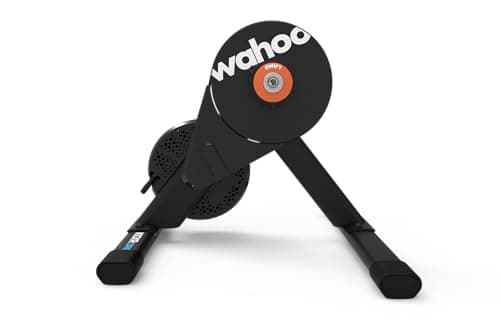 Wahoo Kickr Core 2 The buyer-first answer. The 2026 update gave the Core 2 the v6's connectivity for a lot less money, and what you give up is a percentage point of claimed accuracy and some ceilings you will never reach. | The pick for almost everyone in this comparison | 8.98.9 out of 10 | $549.99 · View on Amazon #ad We may earn a commission · Price as of October 27, 2026 |
| 2 | 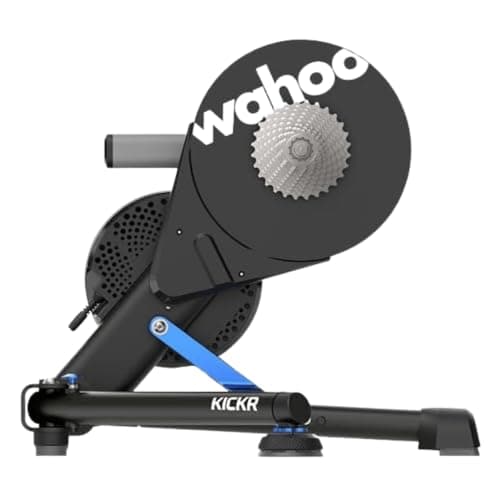 Wahoo Kickr v6 Still the better trainer on paper, and still the one to buy if the tighter claim or the heavier flywheel matters to you — but the Core 2 has made it a much harder sell. | The buy if you want the tighter claim and the heavier flywheel | 8.88.8 out of 10 | $849.99 · View on Amazon #ad We may earn a commission · Price as of October 27, 2026 |
| 3 | 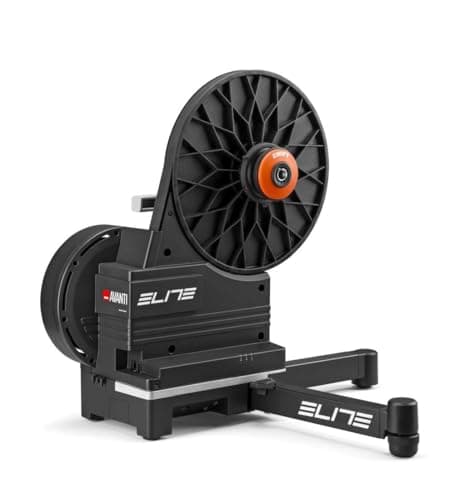 Elite Avanti The reason this is not purely a Wahoo decision: the same ±1% claim and onboard Ethernet, for less than the v6 — with the lightest flywheel of the three. | The cross-shop that claims ±1% for less than the v6 | 8.58.5 out of 10 | $769.99 · View on Amazon #ad We may earn a commission · Price as of October 27, 2026 |
| 4 | 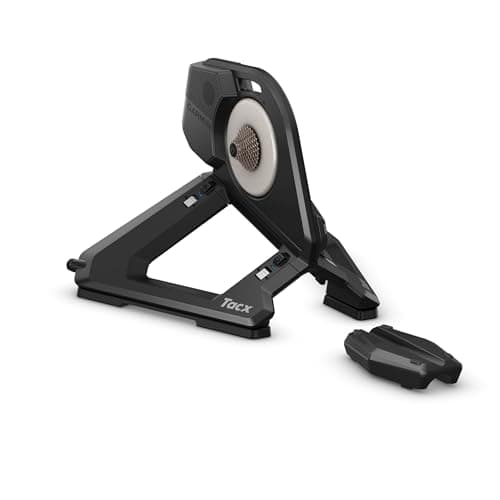 Garmin Tacx Neo 3M Only relevant if this comparison has convinced you that ride feel is what you are buying. Then it is the trainer that answers it properly, at a price neither Kickr asks. | The step up if neither Wahoo is enough | 8.78.7 out of 10 | $1,799.99 · View on Amazon #ad We may earn a commission · Price as of October 27, 2026 |
For most of the last four years this was a simple question with an expensive answer. The Kickr Core was the cheap Kickr: no WiFi, slower data, fewer features, and a price that reflected it. The v6 was the one to buy if you could.
The 2026 Core 2 broke that. Per DC Rainmaker's in-depth review, the changes from the original Core are WiFi, Race Mode, Sensor Hub bridging, secure Bluetooth pairing, new status LEDs and flat legs — and the core mechanical design is essentially unchanged. Read that list again: almost every item on it is a thing people used to buy a v6 for.
| Specification | Kickr Core 2 | Kickr v6 |
|---|---|---|
| Claimed power accuracy | Under ±2% | ±1% |
| Max resistance | 1,800 W | 2,200 W |
| Max simulated grade | 16% | 20% |
| Flywheel | 11.9 lb / 5.4 kg | 16 lb |
| Onboard WiFi | Yes | Yes |
| Bluetooth and ANT+ FE-C | Yes | Yes |
| Race Mode | Yes — 10 Hz over WiFi | Yes |
| Wired Ethernet | Not published | Via Wahoo Direct Connect, sold separately |
| Sensor bridging | Yes — Sensor Hub relays a strap | Not verifiable from an accessible Wahoo page |
| Flexible feet | No | AXIS action feet |
| Carry handle | No | Yes |
| Virtual shifting | Zwift Cog and Click version sold directly | Cog and Click as a separate upgrade kit |
| Cassette | You supply and fit it (or buy the Cog version) | You supply and fit it |
The accuracy gap, honestly
Wahoo publishes ±1% for the v6 and under ±2% for the Core 2. That is a real difference in what the manufacturer is willing to stand behind, and it is the only difference on the table that is actually about measurement.
It is also almost certainly irrelevant to you. Training responds to repeatability, not absolute accuracy: the same trainer reading the same way every session gives you valid intervals, valid zones and a valid FTP test. DC Rainmaker tested two Core 2 units — a loaner and one bought separately — found them performing identically, and saw them stay within roughly ±2% of reference power meters across ERG and simulation rides, reading a couple of watts low in one session, which he described as expected.
The gap starts to matter when the number has to travel: a coach comparing your files to someone else's, a race category where power is scrutinized, or lining your indoor numbers up with a power meter on your outdoor bike. If none of that is you, treat the accuracy row as a specification rather than a decision. Our smart trainer accuracy guide draws the line properly, and smart trainer vs power meter covers what happens when the two disagree.
Flywheel mass is the real difference
16 lb against 11.9 lb. This is the gap that a rider might actually feel, and it has nothing to do with watts.
A heavier flywheel stores more energy, so it carries you through the dead spot in the pedal stroke more smoothly and feels more like momentum on the road. DC Rainmaker rates the v6's inertia better than the Core 2's and adds the important caveat: some riders will not notice the difference.
Who does notice? Riders who do a lot of low-cadence, high-torque work, where the dead spot is most exposed. Riders who come to indoor training from a lot of outdoor riding and are sensitive to the feel. And anyone who has ridden both. Who does not? Almost everyone doing structured ERG mode intervals, where the trainer is holding a target and the flywheel is not the thing you are paying attention to.
If flywheel feel is genuinely your worry, note that spending more inside Wahoo's range is not the biggest available fix — a motor-driven trainer is. That is the Tacx Neo 3M, which drives the flywheel on descents rather than coasting, and it is a different budget.
The ceilings almost nobody reaches
2,200 W against 1,800 W is the easiest row on the table to dismiss. If you can put 1,800 W through a trainer, you already know which one you want.
The 20% versus 16% grade ceiling deserves more respect, because it is weight-dependent. A trainer simulating a gradient has to produce force proportional to rider weight, so a heavier rider hits the resistance limit at a lower simulated slope than a light one. A 150 lb rider will likely never find the Core 2's ceiling. A 220 lb rider riding the steep Zwift climbs might. If that describes you, that single row is a legitimate reason to buy the v6 — and our bike trainer weight limits guide covers the related specification people forget to check.
The things that are not specifications
The handle. The v6 has one, the Core 2 does not. This sounds like nothing until you have carried a direct-drive trainer up a flight of stairs by the frame. If the trainer lives in a shared room and gets moved, it is worth more than any row above it.
AXIS action feet.The v6 ships with flexible feet that allow a small amount of side-to-side movement; the Core 2 does not. DC Rainmaker describes the v6's movement as barely noticeable, so treat it as a small comfort feature rather than the frame movement a Neo 3M or a Kickr Move offers.
Virtual shifting. The Core 2 is sold directly in a Zwift Cog and Click version, which means no cassette to buy, index or match to your drivetrain. On the v6, Cog and Click is a separate upgrade kit. One caveat applies to both: Click shifting officially works in Zwift only, and other apps run normally but without the virtual gears. Our Zwift Cog vs cassette guide explains which one you actually want, and best cassettes for smart trainers covers the version where you fit your own.
Calibration.One practical note from DC Rainmaker's Core 2 testing: some units need a hidden Pro Spindown calibration that has to be requested from Wahoo support. Neither trainer needs routine calibration the way an older wheel-on unit did, but if your numbers look wrong out of the box, that is the thing to ask about before returning it. Our calibration guide covers the normal procedure.
What about the Elite option?
This is not purely a Wahoo decision. The Elite Avanti claims the same ±1% as the v6, simulates 18%, reaches 2,100 W at 40 km/h, and has ANT+, Bluetooth, WiFi and Ethernet onboard rather than as an accessory — for less than the v6.
Its compromise is the flywheel, at 4 kg, which is lighter than either Wahoo. So the three-way shape is clean: the Core 2 is the value buy, the Avanti is the cheapest ±1% claim, and the v6 is the one with mass. We run the closest of those directly in Elite Avanti vs Kickr Core 2, and best smart trainers ranks the whole field.
The verdict
Buy the Core 2. It has the radios, the data rate, the bridging and the virtual shifting, it tested identically across two units, and the money you save is better spent on the room than on the trainer: a serious fan, a mat and a screen you can read will change more about your winter than a percentage point of claimed tolerance. Both trainers run every platform, including the one that currently charges nothing — Zwift vs MyWhoosh.
Buy the v6if you are heavy enough to find the 16% ceiling, if you have ridden a heavy flywheel and want that feel, if your data has to be comparable to other riders', or if the trainer gets carried. Those are four real reasons, and if none of them is yours, the gap is money you do not need to spend.
Want the whole field compared?
See every smart trainer rankedThe full reviews
Head to head
#1 · The pick for almost everyone in this comparison
Wahoo Kickr Core 2
8.98.9 out of 10#ad We may earn a commission · Price as of October 27, 2026
The buyer-first answer. The 2026 update gave the Core 2 the v6's connectivity for a lot less money, and what you give up is a percentage point of claimed accuracy and some ceilings you will never reach.
- Type
- Direct drive, electromagnetic
- Claimed accuracy
- Under ±2%
- Max resistance
- 1,800 W
- Max simulated grade
- 16%
- Flywheel
- 11.9 lb / 5.4 kg
- Connectivity
- WiFi, Bluetooth, ANT+ FE-C
- Race Mode
- Yes — 10 Hz power over WiFi
- Sensor bridging
- Yes — relays a strap through the trainer
What we'd praise
- The 2026 generation closed almost the whole gap to the v6: WiFi, Race Mode, sensor bridging and secure Bluetooth pairing all arrived here
- DC Rainmaker, who tested two separate units, found them performing identically and inside roughly ±2% against reference power meters
- Reaches an ERG setpoint in about two seconds in a 30/30 test and holds it, per the same review
- Sold in a Zwift Cog and Click version, so virtual shifting is in the box rather than a separate kit
- Costs a large fraction less than the v6 for a trainer that rides the same way
What we'd flag
- Under ±2% claimed rather than the v6's ±1% — the one specification gap that is genuinely a measurement gap
- 1,800 W and a 16% grade ceiling, against 2,200 W and 20%
- No carry handle and no flexible feet, both of which the v6 has
- The lighter 11.9 lb flywheel gives less inertia than the v6's 16 lb; DC Rainmaker rates the v6 better here and says some riders will not notice
- Virtual shifting on the Cog and Click version officially works in Zwift only
- Some units need a hidden Pro Spindown calibration that has to be requested from Wahoo support
The whole reason this comparison is now interesting is that the Core 2 stopped being the stripped-out Kickr. The 2026 generation added onboard WiFi, Race Mode (10 Hz power to the app), sensor bridging that relays a heart rate strap through the trainer, secure Bluetooth pairing and new status LEDs. Those were the reasons to pay up for a v6.
DC Rainmaker's verdict after testing two separate Core 2 units is the sentence to hold on to: there is very little the v6 can do that the Core 2 cannot. Both units performed identically, stayed inside roughly ±2% against reference power meters, and hit an ERG setpoint in about two seconds.
The honest cons are the claimed tolerance, the ceilings, the lighter flywheel and the missing handle. None of those are nothing — but none of them change a workout for most riders, which is why this is our pick. Our full Kickr Core 2 review goes through it in detail.
#2 · The buy if you want the tighter claim and the heavier flywheel
Wahoo Kickr v6
8.88.8 out of 10#ad We may earn a commission · Price as of October 27, 2026
Still the better trainer on paper, and still the one to buy if the tighter claim or the heavier flywheel matters to you — but the Core 2 has made it a much harder sell.
- Type
- Direct drive, electromagnetic
- Claimed accuracy
- ±1%
- Max resistance
- 2,200 W
- Max simulated grade
- 20%
- Flywheel
- 16 lb
- Connectivity
- WiFi, Bluetooth, ANT+ FE-C
- Wired option
- Ethernet via Wahoo Direct Connect
- Frame
- AXIS action feet, carry handle
What we'd praise
- ±1% claimed, the tightest figure Wahoo publishes for a trainer rather than a smart bike
- 16 lb flywheel against the Core 2's 11.9 lb — DC Rainmaker rates the v6's inertia better
- Higher ceilings on both axes: 2,200 W and a 20% simulated climb
- AXIS action feet allow a small amount of side-to-side movement the Core 2 cannot
- A carry handle, which sounds trivial until you move a 47 lb trainer between rooms
- Wired Ethernet is available through Wahoo's Direct Connect adapter
What we'd flag
- Costs substantially more than the Core 2 for a trainer DC Rainmaker says does very little the Core 2 cannot
- The ±1% versus under ±2% gap is invisible to a rider training to their own numbers
- The 2,200 W and 20% ceilings are irrelevant to almost everyone who buys this trainer
- Zwift Cog and Click is an extra upgrade kit here, not something the standard listing includes
- The Direct Connect Ethernet adapter is a separate purchase
- Same drivetrain chores as any direct-drive trainer: you supply and fit the cassette
The v6 has been the default recommendation in this category for years, and the specification sheet explains why: ±1% claimed, 2,200 W, a 20% simulated climb, a 16 lb flywheel, AXIS action feet and a handle. It is the complete version of the Kickr idea.
What has changed is not the v6. It is that the Core 2 arrived with the same radios, the same Race Mode and the same bridging, which leaves the v6 defending a price gap with flywheel mass, two ceilings and one percentage point of claimed tolerance.
That is a real list, and for some riders it is the right one. A heavier rider who rides steep simulated gradients runs into a resistance limit sooner than a light one, so the 20% figure is not purely marketing. And flywheel inertia is a feel thing rather than a watts thing — see our Kickr v6 review and how accurate smart trainers really are for where each figure stops mattering.
#3 · The cross-shop that claims ±1% for less than the v6
Elite Avanti
8.58.5 out of 10#ad We may earn a commission · Price as of October 27, 2026
The reason this is not purely a Wahoo decision: the same ±1% claim and onboard Ethernet, for less than the v6 — with the lightest flywheel of the three.
- Type
- Direct drive, electromagnetic
- Claimed accuracy
- ±1% (optical torque sensor)
- Max resistance
- 2,100 W at 40 km/h
- Max simulated grade
- 18%
- Flywheel
- 4 kg
- Connectivity
- ANT+, Bluetooth, WiFi, Ethernet
What we'd praise
- Claims the same ±1% as the Kickr v6 and sits between the two Wahoos on price
- Onboard Ethernet rather than an Ethernet accessory, which is the connection that never drops
- The current listing is the Zwift Ready version, so virtual shifting is part of the package
- An 18% grade ceiling — closer to the v6 than to the Core 2
What we'd flag
- A 4 kg flywheel, the lightest here, so inertia is the compromise
- Elite's US support and firmware cadence are a step behind Wahoo's
- Thinner independent testing record than either Kickr
- Resistance is quoted at a specific road speed (2,100 W at 40 km/h), which is not directly comparable to Wahoo's flat figures
If the ±1% claim is what you are buying, Elite sells it for less than Wahoo does. The Avanti uses an optical torque sensor, publishes ±1%, reaches 2,100 W at 40 km/h, simulates 18%, and has ANT+, Bluetooth, WiFi and Ethernet built in rather than as an accessory.
The compromise is the 4 kg flywheel, which is the lightest number in this comparison. If you came to this page because the Core 2's inertia worried you, the Avanti is not the fix — the v6 is. If you came because you want the tighter claim without the Wahoo premium, this is the trainer to read next: Elite Avanti review, and Elite Avanti vs Kickr Core 2 runs it directly against our pick.
#4 · The step up if neither Wahoo is enough
Garmin Tacx Neo 3M
8.78.7 out of 10#ad We may earn a commission · Price as of October 27, 2026
Only relevant if this comparison has convinced you that ride feel is what you are buying. Then it is the trainer that answers it properly, at a price neither Kickr asks.
- Type
- Direct drive, motor-driven (no calibration)
- Claimed accuracy
- ±1%
- Headline feature
- Multidirectional movement built into the frame
- Road feel
- Simulates surfaces; descent drive
- Power
- Can run unplugged for basic use
- Connectivity
- ANT+, Bluetooth, WiFi
What we'd praise
- Needs no calibration at all, because the motor is the measuring device
- Drives the flywheel on descents instead of coasting, which neither Kickr does
- Built-in side-to-side movement rather than flexible feet
- Road surface simulation — cobbles and gravel are felt, not just drawn
What we'd flag
- Roughly double the v6 and several times the Core 2 — a different budget conversation entirely
- Heavy, bulky and genuinely permanent in a room
- Garmin's firmware and app ecosystem is a separate world from Wahoo's
- The features that justify it are feel features, not watts features
We include the Neo 3M because riders who talk themselves out of the Core 2 on flywheel inertia usually end up here rather than on the v6. The Neo is motor-driven, which means it never needs calibrating, it can drive the flywheel on a descent, and the movement is in the frame rather than in rubber feet.
It is also a completely different amount of money. If the honest reason you are reading this page is “will the cheaper Wahoo feel bad”, the answer in our Kickr v6 vs Tacx Neo 3M comparison is no — and the Neo is the upgrade you buy when feel, not watts, is the thing you want. Our Tacx Neo 3M review has the full picture.
Good questions
Frequently asked questions
Is the Kickr Core 2 as good as the Kickr v6?
Very nearly. The 2026 Core 2 added onboard WiFi, Race Mode, sensor bridging and secure Bluetooth pairing, which were the main reasons to pay for a v6. DC Rainmaker, who tested two separate Core 2 units, concluded there is very little the v6 can do that the Core 2 cannot. The v6 keeps a tighter accuracy claim of plus or minus 1% against the Core 2's under 2%, a 16 lb flywheel against 11.9 lb, higher ceilings of 2,200 W and 20%, flexible feet and a carry handle.
What is the difference between the Kickr Core 2 and the Kickr v6?
Five things. Claimed accuracy (plus or minus 1% on the v6, under 2% on the Core 2), flywheel mass (16 lb versus 11.9 lb), ceilings (2,200 W and 20% versus 1,800 W and 16%), frame hardware (the v6 has AXIS flexible feet and a carry handle, the Core 2 has neither), and wired Ethernet, which is available on the v6 through Wahoo's Direct Connect adapter. Both have onboard WiFi, Bluetooth, ANT+ FE-C and Race Mode.
Does the Kickr Core 2 have WiFi?
Yes. Onboard WiFi is one of the headline changes from the original Kickr Core, along with Race Mode, which transmits power at 10 Hz over WiFi, and sensor bridging that relays a heart rate strap through the trainer. Those three features are the reason the value argument shifted toward the Core 2 in 2026.
Is plus or minus 2% accurate enough for a smart trainer?
For training, yes. What matters for intervals, zones and FTP testing is repeatability — the same trainer reading the same way every session — and DC Rainmaker measured two Core 2 units performing identically and inside roughly 2% of reference power meters. The tighter claim matters when your numbers have to be compared to another rider's data, to a race category, or to a power meter on your outdoor bike.
Does flywheel weight actually matter on a smart trainer?
It changes how the trainer feels, not what it measures. A heavier flywheel stores more energy and carries you through the dead spot in the pedal stroke more smoothly. The v6's 16 lb flywheel gives better inertia than the Core 2's 11.9 lb, and DC Rainmaker says some riders will not notice the difference. Low-cadence, high-torque work is where it shows up most; structured ERG intervals are where it shows up least.
Can you use virtual shifting on both the Kickr Core 2 and the v6?
Yes, but they are packaged differently. The Core 2 is sold in a Zwift Cog and Click version, so no cassette is needed. On the v6, the Cog and Click is a separate upgrade kit, and Wahoo lists that kit as compatible with the v6, Core and Move. On both trainers, Click shifting officially works in Zwift only — other apps still run workouts, just without the virtual gears.
Which Wahoo trainer should a heavier rider buy?
The v6, if simulated gradient matters to you. A trainer has to produce force proportional to rider weight to simulate a slope, so a heavier rider reaches the resistance ceiling at a lower gradient than a lighter one. The v6's 20% and 2,200 W give more headroom than the Core 2's 16% and 1,800 W. Check the published maximum rider weight for either trainer separately, because that is a different specification.
How we sourced this
- Wahoo — indoor cycling trainers, specifications and features (manufacturer)
- Wahoo — KICKR CORE 2 specifications (manufacturer)
- DC Rainmaker — Wahoo KICKR CORE 2 in-depth review: two units tested, accuracy, Race Mode, Sensor Hub, v6 comparison (independent)
- Wahoo — Zwift Click and Zwift Cog upgrade kit compatibility (manufacturer)
- Elite — interactive trainer range specifications (manufacturer)
- Cyclingnews — Wahoo Kickr Core 2 smart trainer review (independent)
- BikeRadar — Wahoo Kickr Core 2 review (independent)
Keep going