Trainers
Wahoo Kickr Core Alternatives, Ranked
The Kickr Core 2 is the default mid-price smart trainer, so the alternatives have to beat a specific set of published numbers. Here is which ones actually do, and which trade one specification for another.
The short answer
Quick picks
| # | Product | Best for | Score | Price |
|---|---|---|---|---|
| 1 | 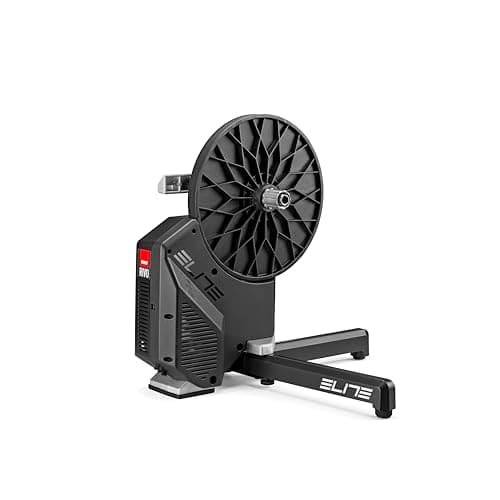 Elite Rivo For the rider who wants the Kickr Core 2's job done by a different brand: a lighter direct-drive trainer with a steeper gradient ceiling and WiFi, at a wider and estimated accuracy figure - and check both live prices, because Wahoo discounts the Core hard. | Best Kickr Core alternative overall | 8.28.2 out of 10 | $549.99 · View on Amazon #ad We may earn a commission · Price as of November 22, 2026 |
| 2 | 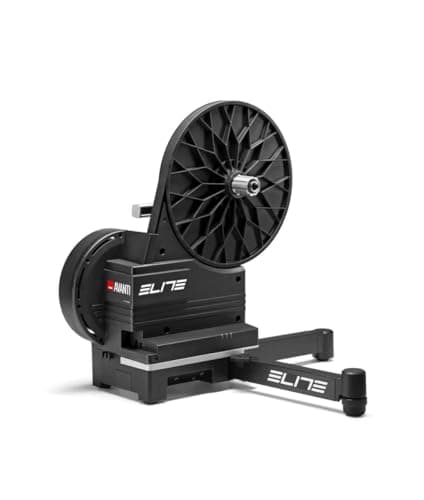 Elite Avanti For the rider whose real objection to the Core 2 is its ±2% accuracy: an optical torque sensor claiming ±1%, more resistance, more gradient and an Ethernet port — for more money. | Best alternative if you can spend more than the Core costs | 8.88.8 out of 10 | $749.99 · View on Amazon #ad We may earn a commission · Price as of November 22, 2026 |
| 3 | 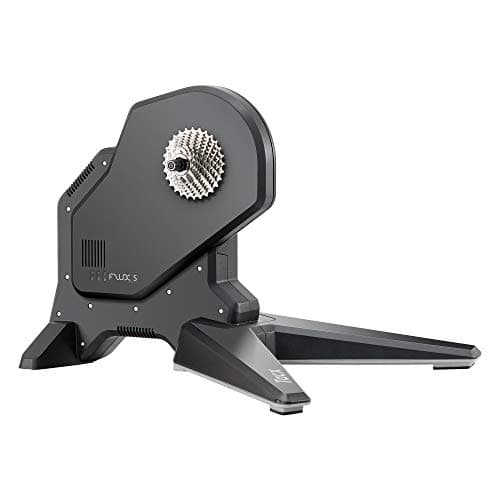 Tacx Flux S For the rider who specifically wants flywheel inertia rather than specifications: a real 6.7 kg flywheel and a known quantity, at a wider accuracy figure and lower ceilings than the Kickr. | Best alternative if you want a real physical flywheel | 7.07.0 out of 10 | $723.89 · View on Amazon #ad We may earn a commission · Price as of November 22, 2026 |
| 4 | 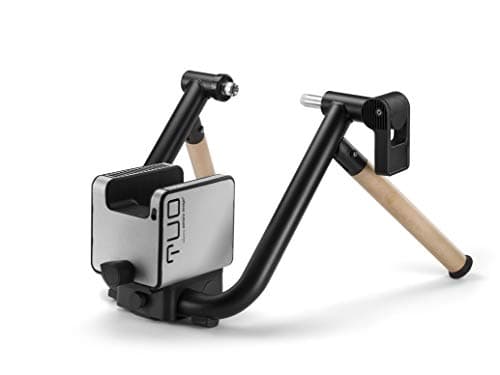 Elite Tuo The budget pick: if the objection to the Kickr Core 2 is simply its price, this is the cheapest trainer we rank that still lets Zwift control the resistance. | Budget pick: the cheapest alternative if price is the real objection | 7.17.1 out of 10 | $162.49 · View on Amazon #ad We may earn a commission · Price as of November 22, 2026 |
The Kickr Core 2 is the trainer most people end up buying, which makes it the trainer most people look for alternatives to. The useful way to do that is not to list rivals but to write down what the Core 2 actually publishes and then see who beats it: ±2% claimed accuracy, 1,800 W of resistance, a 16% gradient ceiling, a 5.4 kg flywheel, and WiFi.
Nothing on this page beats all five. Each pick wins on some of them and loses on others, and the point of the page is to tell you which trade you are making.
Why look past the Kickr Core 2 at all
Four honest reasons, and one bad one.
Gradient.16% is the Core 2's ceiling, and the steepest climbs in Zwift and Rouvy exceed it. When a trainer runs out of gradient it does not warn you — the climb simply stops getting harder. Both Elite trainers here publish 18%.
Accuracy. ±2% is good, not class-leading. If you also ride outdoors with a power meter and want the two numbers to reconcile, ±1% is worth paying for — and the Avanti offers it, as does the Kickr v6.
Weight and storage.If the trainer has to be moved regularly, the Rivo's 10 kg is a genuine daily improvement.
Price. If the Core 2 is simply too much, the honest alternative is a cheaper trainer with fewer capabilities rather than a direct-drive bargain, because there is not one.
The bad reason is brand preference on its own. Wahoo's app, firmware record and support are genuinely good, and switching brands to save a small amount usually costs more in connection headaches than it saves. The best Wahoo Kickr ranks the range if the answer turns out to be a different Kickr instead.
How we ranked them
Against the Core 2's own published figures, in this order: claimed accuracy and whether the power is measured or estimated, which is the distinction that matters most and the one marketing material blurs; resistance and gradient ceilings; connectivity, where WiFi and Ethernet are real improvements over Bluetooth; and value including the cassette, which every direct-drive trainer here needs and none includes. Every number is the manufacturer's own; how we review explains the method.
| Trainer | Format | Claimed accuracy | Max resistance | Max gradient | WiFi |
|---|---|---|---|---|---|
| Wahoo Kickr Core 2 (the benchmark) | Direct drive | ±2% | 1,800 W | 16% | Yes |
| Elite Rivo | Direct drive | ±2.5%, estimated | Not published | 18% | Yes |
| Elite Avanti | Direct drive | ±1%, optical torque | 2,100 W at 40 km/h | 18% | Yes + Ethernet |
| Tacx Flux S | Direct drive | ±3% | 1,500 W | 10% | No |
| Elite Tuo | Wheel-on, controllable | ±2.5% | 1,300 W | 10% | No |
Estimated power against measured power
This is the single most important line on the page and it is easy to miss on a spec sheet. A trainer that measures power has a sensor in the drive path — a strain gauge or, on the Avanti, an optical torque sensor — reading the actual force you apply. A trainer that estimates power infers it from how much current its electromagnet is drawing and how fast the flywheel is turning, against a model of itself.
Estimated power can be perfectly consistent, and consistency is what training against your own numbers depends on. What it is less good at is agreeing with another device. So if your use is "follow a Zwift plan and get fitter," the Rivo's estimated ±2.5% is fine. If your use is "my indoor and outdoor numbers must match," you want a measured trainer, and that means the Avanti or a Kickr.
Smart trainer vs power meter is the page that works through which number you should be trusting in the first place.
What this page is not
It is not the alternatives page for the top of the Wahoo range. If you were looking at a Kickr v6 or a Kickr Move rather than a Core 2, the competitive set is different — Tacx Neo, Elite Justo, Elite Square — and Wahoo Kickr alternativesis the page for that. The two pages deliberately overlap on the Elite range, because Elite competes at both price points; this one starts from the Core 2's numbers rather than the v6's.
It is also not a page about whether to buy a smart trainer at all. If that is still open, do I need a smart trainer and how much does a smart trainer cost come first.
The verdict
Buy the Elite Rivoif you want a Core 2 alternative in the Core 2's slot and you value an 18% gradient and a 10 kg trainer more than one percentage point of estimated accuracy — while checking whether a discounted Core 2 has undercut it today. Buy the Elite Avanti if accuracy is the actual objection: ±1% from a measured optical torque sensor, more resistance, more gradient and an Ethernet port, for more money — and compare it against the Kickr v6 rather than the Core 2 while you are there. Buy the Tacx Flux S only if you specifically want a heavy physical flywheel and ride flat routes. Buy the Elite Tuo — the budget pick — if the price is the whole problem, accepting that it is wheel-on and much louder.
And if none of those trades appeals, the honest answer may be that the Core 2 is simply the right trainer, or that the Kickr v6 above it is. Kickr Core 2 vs Kickr v6 settles that one.
Still comparing?
See every smart trainer we rankTwo neighbors worth reading before you commit: the best budget smart trainers covers the band just below the Core 2, and the best smart trainers under $1,000 is where the Avanti and the Kickr v6 compete directly.
The full reviews
Every pick, in detail
#1 · Best Kickr Core alternative overall
Elite Rivo
8.28.2 out of 10#ad We may earn a commission · Price as of November 22, 2026
For the rider who wants the Kickr Core 2's job done by a different brand: a lighter direct-drive trainer with a steeper gradient ceiling and WiFi, at a wider and estimated accuracy figure - and check both live prices, because Wahoo discounts the Core hard.
- Type
- Direct drive, electromagnetic
- Weight
- 10 kg
- Claimed accuracy
- ±2.5%, estimated power
- Max gradient
- 18%
- Connectivity
- Bluetooth, WiFi, Zwift protocol
- Flywheel
- Electromagnetic resistance, no large physical flywheel
What we'd praise
- Sits in the Kickr Core 2's slot at the same list price, which is the whole reason this page exists
- An 18% gradient ceiling against the Core 2's 16%, so steep virtual climbs keep getting harder
- WiFi plus native Zwift protocol support, so it connects without a dongle or a phone relay
- 10 kg, which is genuinely easier to move and store than most direct-drive trainers
- Direct drive, so no trainer tire, no tire slip and no wheel-on calibration drift
What we'd flag
- ±2.5% and, importantly, estimated rather than directly measured power
- That is a wider tolerance than the Core 2's ±2% — the Elite wins on gradient, not accuracy
- No large physical flywheel, so the coast-down feel differs from a Kickr's
- Launched recently, so the long-term reliability record does not exist yet
- Cassette still not included, exactly as with the Kickr
The Rivo is the closest thing to a straight swap. It carries the same list price as the Core 2, it is direct drive, it has WiFi and native Zwift protocol support, and it publishes an 18% gradient ceiling against the Kickr's 16%. At 10 kg it is also materially easier to move, which matters if the trainer has to come out of a cupboard twice a week.
One timing note that matters more than usual right now: Wahoo discounts the Kickr line aggressively around Black Friday, and Elite does not discount the Rivo nearly as often. So although these two sit at the same list price, a promoted Core 2 can be meaningfully cheaper on any given day. Read the live prices in the table above before you decide, and our Black Friday deals page tracks which of these actually get discounted.
Here is the specification that decides whether this is an upgrade or a sidestep, and we are not going to bury it: Elite quotes ±2.5% and describes the power as estimated. The Core 2 claims ±2%. So the Rivo is better on gradient and connectivity, and worse on the number a trainer exists to produce. If your training is interval work in Zwift and TrainerRoad, both are inside the band those plans assume. If you compare indoor watts with an outdoor power meter, the Kickr is the safer choice. How accurate are smart trainers explains what estimated power actually means.
The Elite Rivo review has the detail, and Kickr Core 2 vs Elite Rivo is the head-to-head this card is summarising.
#2 · Best alternative if you can spend more than the Core costs
Elite Avanti
8.88.8 out of 10#ad We may earn a commission · Price as of November 22, 2026
For the rider whose real objection to the Core 2 is its ±2% accuracy: an optical torque sensor claiming ±1%, more resistance, more gradient and an Ethernet port — for more money.
- Type
- Direct drive, electromagnetic
- Claimed accuracy
- ±1% (optical torque sensor)
- Max resistance
- 2,100 W at 40 km/h
- Max gradient
- 18%
- Flywheel
- 4 kg
- Connectivity
- ANT+, Bluetooth, WiFi, Ethernet, Zwift
- Weight
- 13 kg
What we'd praise
- ±1% from an optical torque sensor — a tighter published figure than the Kickr Core 2's ±2%
- An actual Ethernet port, which is the most reliable connection any trainer offers
- 2,100 W and an 18% gradient, both above the Core 2's published ceilings
- Every protocol at once: ANT+, Bluetooth, WiFi, Ethernet and Zwift
- Directly measured rather than estimated power, unlike the Rivo at the lower price
What we'd flag
- Costs meaningfully more than a Kickr Core 2, so it is not a like-for-like alternative
- At that money it is competing with the Kickr v6, not the Core 2
- A 4 kg flywheel is light; the inertia is electromagnetically simulated rather than physical
- 13 kg and a wide footprint — less portable than the Rivo
- Cassette not included
If you came to this page because the Core 2's ±2% bothers you rather than its price, the Avanti is the answer. Elite claims ±1% from an optical torque sensor, which is a tighter published figure than the Core 2 and a measured rather than estimated one. It also publishes 2,100 W and an 18% gradient, both above the Kickr's numbers.
The feature that gets overlooked is the Ethernet port. WiFi is already a large improvement over Bluetooth for trainer connections, and a wired connection removes the remaining variable entirely — no congestion, no interference, no dropped session twenty minutes into an interval set. Our connection troubleshooting guide exists because of how common that failure is.
The honest caveat is price positioning: at this money the Avanti is up against the Kickr v6, not the Core 2, so compare it there. Elite Avanti vs Kickr Core 2 makes the comparison directly, and the Avanti review covers the flywheel question.
#3 · Best alternative if you want a real physical flywheel
Tacx Flux S
7.07.0 out of 10#ad We may earn a commission · Price as of November 22, 2026
For the rider who specifically wants flywheel inertia rather than specifications: a real 6.7 kg flywheel and a known quantity, at a wider accuracy figure and lower ceilings than the Kickr.
- Type
- Direct drive, electromagnetic
- Claimed accuracy
- ±3%
- Max resistance
- 1,500 W
- Max gradient
- 10%
- Flywheel
- 6.7 kg physical, ~25 kg simulated inertia
- Connectivity
- ANT+ FE-C, Bluetooth
What we'd praise
- A 6.7 kg physical flywheel with roughly 25 kg of simulated inertia — a heavier mass than the Core 2's
- That mass produces a coast-down feel the lighter Elite trainers do not replicate
- A long, well-understood product history with years of firmware behind it
- Full ANT+ FE-C and Bluetooth control for Zwift and TrainerRoad
- Direct drive, so there is no trainer tire and no tire-pressure calibration
What we'd flag
- ±3% is the widest tolerance on this page, and worse than the Core 2's ±2%
- A 10% gradient ceiling, well below the Core 2's 16%
- 1,500 W against the Core 2's 1,800 W
- No WiFi — Bluetooth and ANT+ only, which is a step backwards from a current Kickr
- Needs calibrating, which the Neo models in the same brand do not
The Flux S is on this page for one reason: it is the only alternative here with a substantial physical flywheel. The Core 2 runs a 5.4 kg flywheel and both Elite trainers simulate inertia electromagnetically from a much lighter mass. The Flux S has 6.7 kg of real spinning metal and Tacx quotes roughly 25 kg of simulated inertia on top. Riders who notice coast-down feel tend to notice this.
Everything else is a step down from a Core 2 and we will not pretend otherwise: ±3% against ±2%, 1,500 W against 1,800 W, a 10% gradient ceiling against 16%, and no WiFi at all. It also needs calibrating.
So this is a narrow recommendation — it is the right alternative if flywheel feel is genuinely what you want and you ride flat routes with structured intervals. The Flux S review has the long version, and the Tacx roundup places it against the Neo models.
#4 · Budget pick: the cheapest alternative if price is the real objection
Elite Tuo
7.17.1 out of 10#ad We may earn a commission · Price as of November 22, 2026
The budget pick: if the objection to the Kickr Core 2 is simply its price, this is the cheapest trainer we rank that still lets Zwift control the resistance.
- Type
- Wheel-on, controllable
- Claimed accuracy
- ±2.5%
- Max resistance
- 1,300 W
- Max gradient
- 10%
- Zwift
- Full resistance control
- Connectivity
- BT, ANT+ FE-C
What we'd praise
- A fraction of the Core 2's price while still giving Zwift full resistance control
- Full ERG mode, so structured workouts run properly rather than by feel
- Your rear wheel stays on, so there is no cassette to buy — a real saving on top of the price
- ±2.5% is a published tolerance, which is more than most cheap trainers offer
- Light, foldable and genuinely easy to store between sessions
What we'd flag
- Wheel-on, so tire wear, tire slip and pressure-dependent calibration all return
- Noticeably louder than any direct-drive trainer, including the Core 2
- 1,300 W and 10% gradient are both well below the Core 2's ceilings
- A trainer tire becomes a near-essential extra purchase
- This is a cheaper trainer, not an equivalent one, and we are ranking it as such
Some readers arriving at "Kickr Core alternatives" want a different brand at the same price. Others want to spend much less. The Tuo is for the second group, and it is the cheapest trainer we rank that an app can genuinely control — set a 250 W interval and it holds it.
The saving is bigger than the price gap suggests, because a wheel-on trainer needs no cassette and the Kickr does. Against that, you take on the whole wheel-on package: tire wear against the drum, tire slip under hard efforts, calibration that drifts with tire pressure, and considerably more noise. Trainer tires under $50 covers the extra purchase that follows.
If this is the direction you are heading, bike trainers under $500 is the band this sits in and explains why nothing direct-drive lives there, and the Elite Tuo review is the full assessment.
Good questions
Frequently asked questions
What is the best alternative to a Wahoo Kickr Core?
The Elite Rivo. It sits at the Kickr Core 2's price, it is direct drive, it has WiFi and native Zwift protocol support, it publishes an 18% gradient ceiling against the Kickr's 16%, and at 10 kg it is easier to move. The honest catch is accuracy: Elite quotes plus or minus 2.5% and describes the power as estimated, where the Core 2 claims plus or minus 2% and measures it. If accuracy matters more than gradient, the Elite Avanti claims plus or minus 1% for more money.
Is there a cheaper alternative to the Wahoo Kickr Core?
Yes, but not a direct-drive one. The Elite Tuo costs a fraction of the Core 2's price and still gives Zwift full resistance control with ERG mode, and because it is wheel-on there is no cassette to buy either. What you take on is tire wear, tire slip, calibration that drifts with tire pressure, considerably more noise, and much lower ceilings - 1,300 W and a 10% gradient. There is no direct-drive trainer we rank below the Core 2's price band.
What does estimated power mean on a smart trainer?
It means the trainer infers your power from how much current its electromagnet draws and how fast the flywheel is turning, against an internal model, rather than reading the actual force with a sensor in the drive path. Estimated power can be very consistent, which is all that training against your own numbers requires. Where it is weaker is agreement with another device - so if you want your indoor watts to reconcile with an outdoor power meter, choose a trainer that measures rather than estimates.
Does the Elite Rivo beat the Wahoo Kickr Core 2?
On some published figures, yes, and on the most important one, no. The Rivo wins on gradient ceiling (18% against 16%), on weight (10 kg, so it is much easier to store) and ties on WiFi. The Core 2 wins on power accuracy, claiming plus or minus 2% measured against the Rivo's plus or minus 2.5% estimated, and it has a longer reliability record because the Rivo launched recently. For a Zwift-only rider the Rivo is a legitimate swap; for someone reconciling indoor and outdoor power, the Kickr is safer.
Do Kickr Core alternatives need a cassette too?
Every direct-drive alternative on this page does, and none of them includes one - exactly like the Kickr. That means the Elite Rivo, the Elite Avanti and the Tacx Flux S all need a cassette matched to your drivetrain's speed count and brand, fitted with a chain whip and a lockring tool. The one exception is the Elite Tuo, which is wheel-on: your rear wheel stays on the bike, so no cassette is needed, though a trainer tire becomes a sensible purchase instead.
Is this the same as the Wahoo Kickr alternatives page?
No, and the difference matters. This page starts from the Kickr Core 2's published numbers - plus or minus 2%, 1,800 W, a 16% gradient and WiFi - so the competitive set is mid-price direct-drive trainers. Our Wahoo Kickr alternatives page starts from the top of the range, the Kickr v6 and Kickr Move, where the rivals are the Tacx Neo, the Elite Justo and the Elite Square. The two pages overlap on the Elite range because Elite competes at both price points.
How we sourced this
- Wahoo — Kickr Core 2 smart trainer product page (benchmark figures)
- Elite — Rivo interactive trainer product page
- Elite — Avanti interactive trainer product page (optical torque sensor, resistance, connectivity)
- Elite — initial setup, WiFi use and firmware updates for Avanti, Justo 2 and Rivo trainers
- Elite — Tuo interactive trainer product page
- BikeRadar — Tacx Flux S smart trainer review
- BikeRadar — Wahoo Kickr Core 2 review
Keep going