Trainers
The Best Tacx Trainers, Ranked
Garmin's Tacx range runs from a set of rollers to a trainer that moves under you. Ranked on published accuracy, gradient and calibration behavior - with the one specification that splits the range in half.
The short answer
Quick picks
| # | Product | Best for | Score | Price |
|---|---|---|---|---|
| 1 | 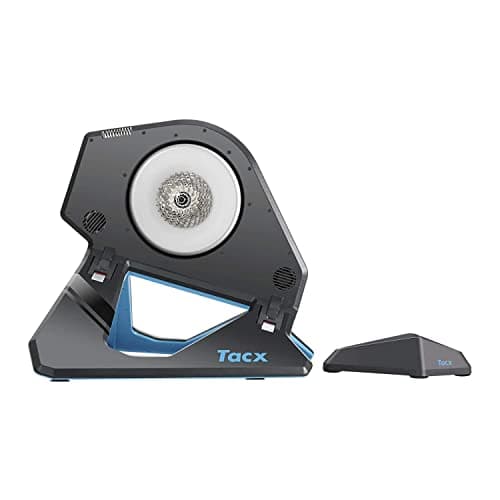 Garmin Tacx Neo 2T For the rider who wants the Tacx engineering story without the flagship price: ±1%, a 25% gradient ceiling, no calibration and no belt, at roughly half what the Neo 3M costs. | Best Tacx trainer for most riders | 9.29.2 out of 10 | $899.99 · View on Amazon #ad We may earn a commission · Price as of November 22, 2026 |
| 2 | 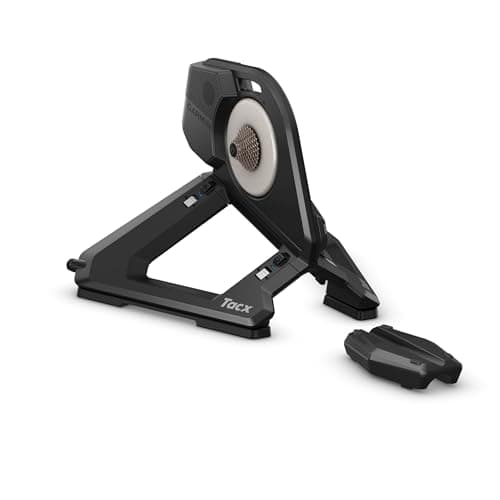 Garmin Tacx Neo 3M For the rider who rides indoors most of the year and wants movement without a platform: everything the Neo 2T does, plus multidirectional movement and surface simulation built into the frame. | Best Tacx trainer overall, if the budget allows | 9.09.0 out of 10 | $1,799.99 · View on Amazon #ad We may earn a commission · Price as of November 22, 2026 |
| 3 | 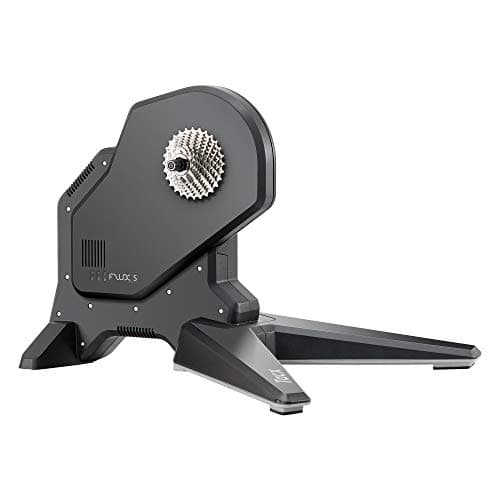 Tacx Flux S For the rider who wants direct drive and a Tacx badge at the lowest price: a proper flywheel and full app control, with a ±3% tolerance you should know about before you buy. | Budget pick: the cheapest Tacx direct-drive trainer | 7.67.6 out of 10 | $723.89 · View on Amazon #ad We may earn a commission · Price as of November 22, 2026 |
| 4 | 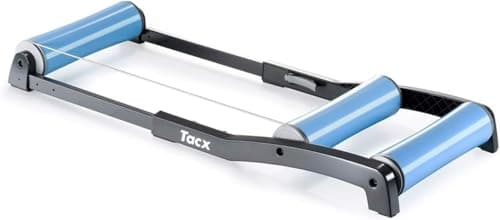 Tacx Antares For the rider who wants Tacx road feel and bike-handling work for very little: excellent rollers, with no power, no resistance and no app control at all. | Cheapest way to ride a Tacx indoors — and not a smart trainer | 6.26.2 out of 10 | $199.99 · View on Amazon #ad We may earn a commission · Price as of November 22, 2026 |
One specification splits the Tacx range cleanly in half, and it is not price. Both Neo models use a direct magnetic drive with no belt and no physical flywheel, which is why neither needs calibrating and both claim ±1%. Everything else Tacx sells works the conventional way. Decide which side of that line you want to be on and the rest of the choice gets simple.
A naming note, since it causes confusion: the brand is now Garmin Tacx, and the current trainers are listed under Garmin while older models still carry the Tacx name alone. It is the same product line.
How we ranked them
Published accuracy first — ±1% on both Neos, ±3% on the Flux S, none at all on the Antares — because a trainer is a measuring instrument before it is anything else. Then gradient ceiling, where the Neo's 25% against the Flux S's 10% is the widest gap in any range we cover. Then whether it needs calibrating, which is a real quality-of-life difference over a winter. Then noise and value.Every number here is Garmin's or Tacx's own published figure; we have not lab-tested these trainers, and how we review explains what that means.
| Model | Format | Claimed accuracy | Max gradient | Calibration | Power data |
|---|---|---|---|---|---|
| Tacx Neo 2T | Direct drive, direct magnetic | ±1% | 25% | None required | Yes |
| Tacx Neo 3M | Direct drive, motor-driven | ±1% | 25% | None required | Yes |
| Tacx Flux S | Direct drive, electromagnetic | ±3% | 10% | Required | Yes |
| Tacx Antares | Classic rollers | No power measurement | n/a | n/a | None |
Why no Neo needs calibrating
On a conventional trainer, a belt and a brake apply resistance and a strain gauge somewhere in the drive path estimates how much power you produced. Temperature, belt tension and wear all move that estimate, which is why you are told to spin up and coast down before a session.
The Neo inverts it. The resistance is generated by a motor, and the current flowing through that motor isthe power measurement — there is no belt, no physical flywheel and nothing in between to drift. That is the mechanism behind all three of the Neo's headline claims at once: ±1% accuracy, no calibration routine, and a noise floor low enough that your chain becomes the loudest thing in the room. Our calibration guide covers what the Flux S needs instead.
The 25% gradient ceiling, and whether you will ever use it
25% is the steepest simulated gradient published by any trainer we rank, against 20% for the top Wahoo trainers and 10% for the Flux S. Most riders will never ask for it. Where it shows up is on the steepest virtual climbs — the walls in Zwift and Rouvy that briefly exceed 15% — and the symptom of running out of gradient is not an error message: the climb simply stops getting harder, and your effort stops matching the picture on screen.
If you ride flat routes and do structured intervals, the Flux S's 10% is genuinely enough. If you chase climbs, it is the specification that will annoy you first. ERG mode explained covers the other half of how a trainer applies resistance.
Tacx against the rest of the market
The Neo 2T's closest competitor is the Wahoo Kickr v6, which matches the ±1% claim and adds WiFi but gives up five points of gradient and needs calibrating. Kickr v6 vs Tacx Neo 3M and Kickr vs Tacx Neo 2T are the two head-to-heads, and the best Wahoo Kickr is the equivalent page for that range.
At the Flux S's price the market is crowded, and the ±3% figure is its weak point against trainers claiming ±2% or better for similar money — the main smart trainer roundup puts them all in one table, and Tacx Neo alternatives covers what else does what a Neo does.
The verdict
Buy the Tacx Neo 2T if you want the best Tacx trainer at a sane price: the ±1% claim, the 25% ceiling, no calibration and almost no noise. Buy the Neo 3M if you ride indoors most of the year and want the movement and the road-feel features built in rather than bolted under. Buy the Flux S if direct drive at the lowest price is the priority and ±3% is a tolerance you can live with. Buy the Antares only if what you actually want is rollers — it is excellent at that and nothing else.
Comparing across brands?
See every smart trainer we rankTwo neighbors worth reading before you commit: the best quiet smart trainers, where the Neo design is hard to beat, and the best smart trainers under $1,000, which is the band the Neo 2T and the Flux S both sit inside.
The full reviews
Every pick, in detail
#1 · Best Tacx trainer for most riders
Garmin Tacx Neo 2T
9.29.2 out of 10#ad We may earn a commission · Price as of November 22, 2026
For the rider who wants the Tacx engineering story without the flagship price: ±1%, a 25% gradient ceiling, no calibration and no belt, at roughly half what the Neo 3M costs.
- Type
- Direct drive
- Drive
- Direct magnetic — no belt, no physical flywheel
- Claimed accuracy
- ±1%
- Max gradient
- 25%
- Calibration
- None required
- Mains power
- Only for descent simulation
What we'd praise
- ±1% claimed accuracy with no calibration ever required — the motor is the measuring device
- A 25% simulated gradient, the steepest ceiling of any trainer we rank
- No belt and no physical flywheel, which is why it is one of the quietest trainers made
- Runs without mains power for normal riding; the plug is only needed for descent simulation
- Nothing to wear out in the drive path, so the long-term reliability story is unusually simple
What we'd flag
- No movement in the frame — the Neo 3M is the model that adds that, for a lot more money
- Heavy, and the folding legs do not make it easy to carry
- Still needs a cassette matched to your drivetrain, which is not included
- The virtual flywheel feel divides riders: some find it uncannily good, others find it synthetic
- An older model in the range, so firmware attention will eventually move on
The Neo 2T is the Tacx we would buy. The whole range is built around one idea — a direct magnetic drive with no belt and no physical flywheel — and the 2T is the cheapest trainer that uses it. The consequences are a 25% simulated gradient, which is the steepest figure published by anything we rank, a ±1% accuracy claim, and no calibration routine at all, because the motor generating the resistance is also the instrument measuring it.
That design also makes it exceptionally quiet. There is no belt to whine and no flywheel spinning in a housing; the noise you hear is your own drivetrain. Our quiet trainer roundup ranks on that specifically, and how to make a bike trainer quieter covers what is left once the trainer itself is silent.
Two honest notes. The virtual flywheel feel is a genuine matter of taste — read the Neo 2T review before you commit — and the 2T has no movement in the frame, which is exactly the gap the Neo 3M fills. Tacx Neo 2T vs Neo 3M is the direct comparison.
#2 · Best Tacx trainer overall, if the budget allows
Garmin Tacx Neo 3M
9.09.0 out of 10#ad We may earn a commission · Price as of November 22, 2026
For the rider who rides indoors most of the year and wants movement without a platform: everything the Neo 2T does, plus multidirectional movement and surface simulation built into the frame.
- Type
- Direct drive, motor-driven
- Movement
- Multidirectional movement built into the frame
- Claimed accuracy
- ±1%
- Calibration
- None required — the motor is the measuring device
- Road feel
- Surface simulation and a descent drive
- Footprint
- No platform needed — the movement is internal
What we'd praise
- Multidirectional movement built into the frame, so no rocker plate is needed or wanted
- Same ±1% claim and same no-calibration design as the Neo 2T
- Surface simulation sends cobbles and gravel through the frame rather than the screen
- A descent drive that actually turns the cassette on a downhill, which few trainers do
- The movement is internal, so the footprint stays the size of a trainer rather than a platform
What we'd flag
- Roughly double the Neo 2T for movement and road-feel features rather than better numbers
- Heavy and expensive enough that it is a permanent installation, not a seasonal one
- Surface simulation is a novelty for some riders and genuinely useful to very few
- Needs mains power for the features that justify the price
- Cassette still not included
The Neo 3M is the top of the Tacx range, and what the extra money buys is movement. The frame itself moves multidirectionally as you ride, which means the thing most direct-drive owners eventually buy — a rocker plate — is already inside the product, and the footprint stays trainer-sized instead of growing a platform underneath it.
The other additions are road feel rather than performance. Surface simulation vibrates the frame to match the virtual surface, and the descent drive spins the cassette on a downhill so the bike does not simply go dead. Neither makes you faster. Both make a long session feel less like sitting still. Our rocker plate roundup is the cheaper route to the movement half of that, if that is all you want.
The honest framing: the 3M is the best Tacx, and the 2T is the best Tacx to buy. The published accuracy and the calibration-free design are identical, so you are paying for comfort and immersion. The Neo 3M review has the full picture.
#3 · Budget pick: the cheapest Tacx direct-drive trainer
Tacx Flux S
7.67.6 out of 10#ad We may earn a commission · Price as of November 22, 2026
For the rider who wants direct drive and a Tacx badge at the lowest price: a proper flywheel and full app control, with a ±3% tolerance you should know about before you buy.
- Type
- Direct drive, electromagnetic
- Claimed accuracy
- ±3%
- Max resistance
- 1,500 W
- Max gradient
- 10%
- Flywheel
- 6.7 kg physical, ~25 kg simulated inertia
- Connectivity
- ANT+ FE-C, Bluetooth
What we'd praise
- The cheapest route into a direct-drive Tacx, by a wide margin
- A real 6.7 kg flywheel with roughly 25 kg of simulated inertia, so the coast-down feels natural
- Full ANT+ FE-C and Bluetooth control, so Zwift and TrainerRoad drive it properly
- No trainer tire, no tire wear and no wheel-on slip
- Simple, long-established hardware with years of firmware behind it
What we'd flag
- ±3% is the widest published tolerance of anything on this page, and three times the Neo's
- 10% gradient is a hard ceiling that the steeper Zwift climbs will hit
- 1,500 W is enough for intervals but not for a serious standing sprint
- It does need calibration, unlike both Neo models
- Audibly louder than a Neo because it has a belt and a physical flywheel
The Flux S is the budget pick here and the only Tacx direct-drive trainer that is not a Neo. It works the conventional way — a belt, an electromagnetic brake and a 6.7 kg physical flywheel that Tacx says simulates about 25 kg of inertia — and it does the two things that matter most: it holds a target wattage in ERG mode, and it reports power to Zwift over ANT+ FE-C or Bluetooth.
The number to take seriously is ±3%. That is wider than the ±2% band most mid-price trainers claim and three times the Neo's figure, and it means a 250 W effort may be reported anywhere from about 242 W to 258 W. For tracking your own progress on one trainer, that is survivable. For comparing against an outdoor power meter, it is not. How accurate are smart trainers explains the difference.
It also needs calibrating, which neither Neo does — our calibration guide covers the routine. The Flux S review has the long version, and if the Flux S is at the top of your budget, the budget smart trainer roundup ranks what else that money buys.
#4 · Cheapest way to ride a Tacx indoors — and not a smart trainer
Tacx Antares
6.26.2 out of 10#ad We may earn a commission · Price as of November 22, 2026
For the rider who wants Tacx road feel and bike-handling work for very little: excellent rollers, with no power, no resistance and no app control at all.
- Type
- Classic rollers, no resistance unit
- App control
- No
- Resistance levels
- 0
- Rollers
- Conical, 100-110 mm drums
- Folded size
- 800 x 470 x 135 mm (31.5 x 18.5 x 5.3 in)
- Power data
- None
What we'd praise
- A fraction of the price of anything else on this page
- Nothing clamps to the bike, so any bike goes on and comes off in seconds
- Conical drums self-center the bike, which is the detail that makes rollers learnable
- Folds to 31.5 x 18.5 x 5.3 in and stores under a bed or behind a door
- Genuinely improves balance and pedalling smoothness in a way no fixed trainer does
What we'd flag
- No resistance unit and no resistance levels — your gears are the only adjustment
- No power data at all, so Zwift needs a separate sensor to see anything
- No app control, so structured workouts and ERG mode are off the table
- A learning curve, and a real risk of riding off the side in the first few sessions
- Not a substitute for a smart trainer, and we are not going to present it as one
The Antares is on this page because it is a Tacx and people search for it, not because it competes with the trainers above. It is a set of classic rollers: three drums in a folding frame, no resistance unit, no electronics and no power measurement. You ride on top of it and you balance.
What it does well, no smart trainer does at all. Rollers teach a smooth pedal stroke and real bike handling because nothing is holding the bike up for you, and the Antares makes that approachable with conical drums that gently push the bike back toward the center. Folded, it is flatter than a laptop bag. Our rollers roundup covers the format properly, and smart trainer vs rollers is the honest comparison.
Be clear about what you are not getting: no watts, no ERG mode, no Zwift resistance. To use it with Zwift at all you need a cadence or speed sensor or a power meter. If what you want is a controllable trainer at a low price, bike trainers under $500 is the right page.
Good questions
Frequently asked questions
Which Tacx trainer should I buy?
The Garmin Tacx Neo 2T is the best Tacx trainer for most riders. It claims plus or minus 1% accuracy, simulates gradients up to 25%, never needs calibrating, and has no belt or physical flywheel, which makes it one of the quietest trainers available. The Neo 3M is the better trainer outright because it adds multidirectional movement and surface simulation, but it costs roughly double for features that do not change the numbers. The Flux S is the cheapest direct-drive Tacx, at a wider plus or minus 3% tolerance.
Why does a Tacx Neo not need calibration?
Because the motor that creates the resistance is also the measuring device. On a conventional trainer, a belt and brake apply resistance and a strain gauge estimates your power, and that estimate drifts with temperature and belt wear - hence the spin-down routine. The Neo has no belt and no physical flywheel, so the current through its motor is a direct measurement with nothing in between to drift. The Flux S, which is a conventional electromagnetic trainer, does need calibrating.
What is the difference between the Tacx Neo 2T and the Neo 3M?
Movement and road feel, not numbers. Both claim plus or minus 1% accuracy, both simulate up to a 25% gradient and neither needs calibration. The Neo 3M adds multidirectional movement built into the frame, so it needs no rocker plate, plus surface simulation that vibrates the frame to match the virtual road and a descent drive that keeps the cassette turning downhill. If you want the performance, buy the 2T; if you want the experience, buy the 3M.
Is the Tacx Flux S accurate enough?
For tracking your own training on one trainer, yes. Tacx publishes plus or minus 3%, which means a 250 W effort may be reported anywhere from roughly 242 W to 258 W - but because your FTP test and your intervals happen on the same trainer, that error largely cancels out of your own numbers. Where plus or minus 3% does cost you is comparability: it is too wide to reconcile cleanly against an outdoor power meter or another rider's figures.
Is the Tacx Antares a smart trainer?
No. The Antares is a set of classic rollers with no resistance unit, no electronics and no power measurement at all. Your gears are the only resistance adjustment, and Zwift cannot see anything from it unless you add a separate speed, cadence or power sensor. It is very good at what it is for - balance, pedalling smoothness and real bike handling - but it is not a substitute for a controllable trainer.
Is Tacx the same as Garmin now?
Yes. Tacx is a Garmin brand, which is why the current trainers are listed as Garmin Tacx Neo 2T and Garmin Tacx Neo 3M while older models such as the Flux S and the Antares still appear under the Tacx name alone. It is one product line with one support channel, and specifications for the current models are published on Garmin's own product pages.
How we sourced this
- Garmin — Tacx Neo 2T smart trainer product page
- Garmin — Tacx Neo 2T support and specifications
- Cyclingnews — Garmin launches Tacx Neo 3M smart trainer with integrated motion plates
- OutdoorGearLab — Garmin Tacx Neo 3M review
- BikeRadar — Tacx Flux S smart trainer review (accuracy, flywheel, gradient)
- road.cc — Tacx Flux S smart trainer review
- BikeTiresDirect — Garmin Tacx Antares rollers listing (drum sizes, folded dimensions)
- Zwift Insider — Tacx Neo 2T review
Keep going