Trainers
Tacx Neo Alternatives, Ranked
The Neo is the one trainer with no belt and no flywheel, and that is why people love it. Here is which alternatives match its published numbers, which one fixes the thing it has never had, and what each asks you to give up.

The short answer
Quick picks
| # | Product | Best for | Score | Price |
|---|---|---|---|---|
| 1 | 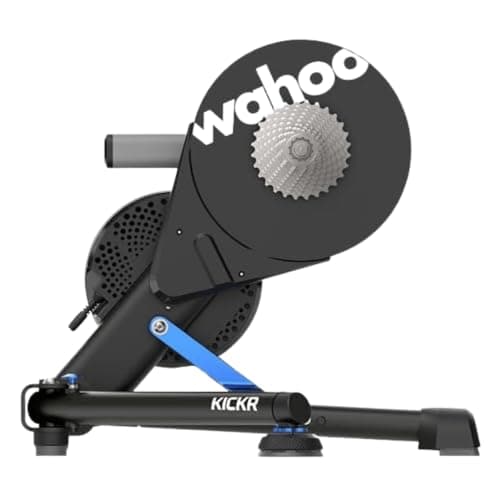 Wahoo Kickr v6 Best for the rider who wants Neo-class measurement and resistance plus the WiFi no Neo has — at the cost of the motor-driven ride feel. | Best Tacx Neo alternative overall | 8.88.8 out of 10 | |
| 2 | 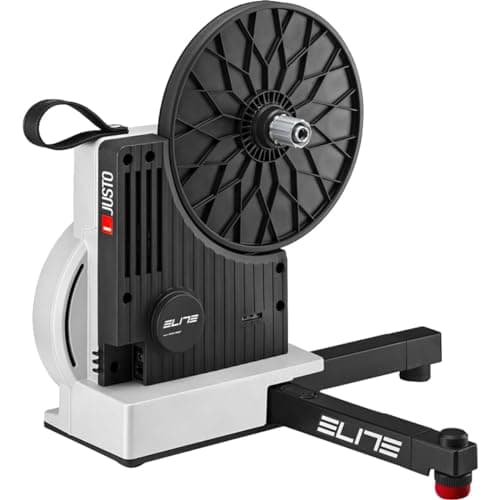 Elite Justo Best for the rider who wants a flagship with more resistance and nearly as much gradient as a Neo, from a different brand. | Best for resistance and gradient headroom | 8.78.7 out of 10 | $1,049.00 · View on Amazon #ad We may earn a commission · Price as of November 22, 2026 |
| 3 | 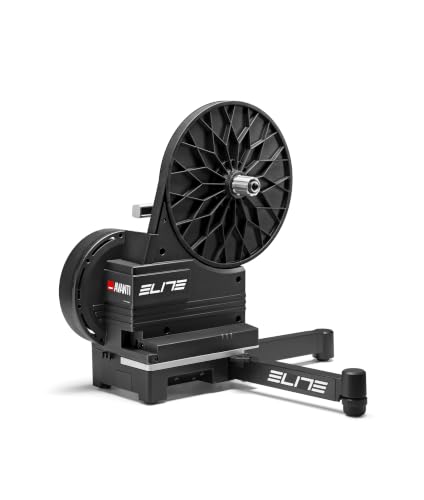 Elite Avanti Zwift Ready (Cog and Click included) Best for the rider who wants Neo-class accuracy and better connectivity for a lot less money, and can live with a light flywheel. | Best alternative that costs meaningfully less | 8.68.6 out of 10 | $769.99 · View on Amazon #ad We may earn a commission · Price as of November 22, 2026 |
| 4 | 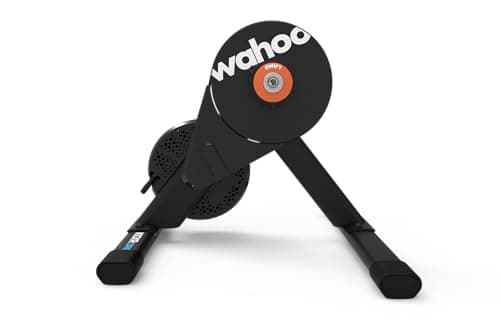 Wahoo Kickr Core 2 Budget pick: if the honest answer to 'why not a Neo' is the price, this is the trainer that gives up the least to halve it. | Budget pick: the Neo alternative that halves the price | 8.78.7 out of 10 | |
| 5 | 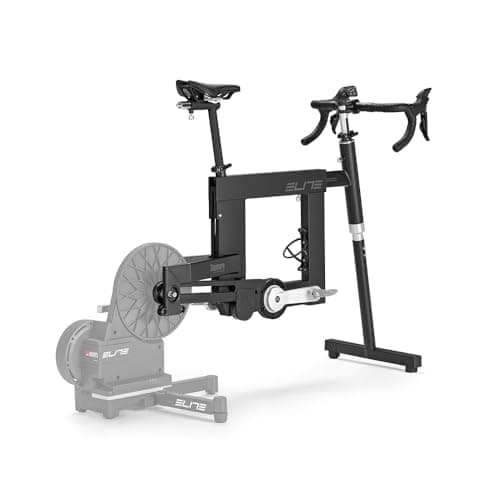 Elite Square Best for the rider whose shortlist was the Neo Bike, not the Neo trainer — the same idea without a bike in it. | Best alternative to a Tacx Neo Bike | 8.58.5 out of 10 | $1,999.99 · View on Amazon #ad We may earn a commission · Price as of November 22, 2026 |
The Garmin Tacx Neo is not a trainer people look past casually, so this page starts by saying what it is known for — in Garmin's own published figures, not ours. The Neo 2Tclaims ±1% accuracy, holds 2,200 W of resistance, simulates gradients to 25%, and publishes a 125 kg (275 lb) rider limit, the highest direct-drive figure in our registry. The Neo 3Mmatches every one of those and adds 5 cm motion plates, a carry handle, an 11-speed cassette and a second Bluetooth channel.
But the specification that actually defines a Neo is structural: there is no belt and no physical flywheel. Inertia is produced by a motor, which is why a Neo can drive the cassette forward on a virtual descent, reproduce cobbles and gravel as vibration through the pedals, and keep riding with the power cable out. That combination does not exist anywhere else at any price, and no page of alternatives should pretend otherwise.
What the Neo has never had is WiFi. Both Neos talk to one device over Bluetooth, and that link across a room is the most common cause of mid-ride dropouts in indoor cycling. For a lot of riders, that — or the price — is the entire reason they are reading this page.
Work out which Neo property you are replacing
No single alternative matches all of them, so decide which one you actually care about before reading the ranking.
Measured ±1% accuracy. Matched by the Kickr v6, the Elite Justo and the Elite Avanti. The Kickr Core 2 publishes ±2%, which is a real but small step down — smaller than the day-to-day variation in your own legs. How accurate are smart trainers explains what these percentage claims describe.
Resistance and gradient ceilings.The Neo's 2,200 W is matched by the Kickr v6 and beaten by the Justo's 2,300 W. Its 25% gradient ceiling is the steepest here; the Justo gets to 24%, the v6 to 20%, the Avanti to 18% and the Core 2 to 16%. If you ride Zwift's named climbs or you are a heavier rider — where the same gradient demands more watts — that gap is worth having.
Motor-driven road feel and the descent drive. Not replaceable. Nothing else on this page simulates inertia electronically, drives the cassette on a descent, or reproduces road surfaces. If that is why you want a Neo, buy a Neo — and Tacx Neo 3M vs 2T is the page that decides which one.
The 125 kg rider limit.Also not matched: every Wahoo here publishes 250 lb (113 kg) and Elite publishes nothing at all for the Avanti. The best bike trainers for heavy riders collects the published figures with their sources.
Running unplugged. A Neo rides without mains power, losing only the descent drive. Every alternative here needs the cable.
| Trainer | Claimed accuracy | Max resistance | Max gradient | WiFi |
|---|---|---|---|---|
| Garmin Tacx Neo 2T (the reference) | ±1%, measured | 2,200 W | 25% | No |
| Garmin Tacx Neo 3M (the reference) | ±1%, measured | 2,200 W | 25% | No |
| Wahoo Kickr v6 | ±1%, measured | 2,200 W | 20% | Yes |
| Elite Justo | ±1%, measured (optical) | 2,300 W at 40 km/h | 24% | No |
| Elite Avanti Zwift Ready | ±1%, measured (optical) | 2,100 W at 40 km/h | 18% | Yes, plus Ethernet |
| Wahoo Kickr Core 2 | ±2%, measured | 1,800 W | 16% | Yes |
The one thing every alternative here does better
Weight and portability. The Neo 2T is 21.5 kg with no carry handle, and the 3M is 23.6 kg with one. The Elite Avanti is 13 kg. If your trainer shares a room with anything else, or has to move for guests, that difference is felt every week in a way a gradient ceiling never is.
Cassettes are worth a line too. The Neo 2T ships without one, as do the Kickr v6 and the Core 2 in their standard versions. The Neo 3M includes an 11-speed cassette, and the Avanti Zwift Ready includes the Zwift Cog and Click so the question disappears entirely — Zwift Cog vs cassette explains that trade, and the cassette roundup covers what to buy if you go the conventional route.
What about the other direction?
If you arrived here from the Wahoo side of the fence rather than the Garmin side, we wrote that page too: Wahoo Kickr alternativestakes the Kickr's published numbers and names the trainers that match each one — and the Neo 2T is its top pick, for the same reasons the v6 is the top pick here. The two pages disagree on purpose, because the right answer depends on which property you are protecting.
For the whole field on specifications rather than brand-by-brand, the best smart trainers is the roundup, and the best smart trainers under $1,000 covers the band three of these five picks sit inside.
The verdict
Wahoo Kickr v6 if you want Neo-class measurement and resistance plus the WiFi the Neo lacks, and you can accept a physical flywheel instead of a simulated one. Elite Justo if peak resistance and gradient headroom are what you are chasing, and you do not care about WiFi. Elite Avanti Zwift Ready if you want the ±1% claim and the most reliable connection on this page for a lot less money. Wahoo Kickr Core 2as the budget pick, if the real reason you are here is the Neo's price. Elite Square if the Neo you were pricing was the Neo Bike.
And if what you want is the motor, the descent drive and the road-surface simulation: none of these replace it. Buy the Neo.
Sticking with a Neo?
Compare the Neo 3M against the 2TIf the conclusion is that you want a Tacx after all, just not this one, the best Tacx trainers ranks the range from the Flux S up to the Neo 3M and explains the one specification that splits it in half.
The full reviews
Every pick, in detail
#1 · Best Tacx Neo alternative overall
Wahoo Kickr v6
8.88.8 out of 10Best for the rider who wants Neo-class measurement and resistance plus the WiFi no Neo has — at the cost of the motor-driven ride feel.
- Type
- Direct drive, belt-driven flywheel
- Claimed accuracy
- ±1%
- Max resistance
- 2,200 W
- Max gradient
- 20%
- Flywheel
- 16 lb physical
- Connectivity
- WiFi, Bluetooth, ANT+ FE-C
- Rider limit
- 250 lb (113 kg)
What we'd praise
- Matches the Neo's ±1% claim and its 2,200 W resistance ceiling exactly
- Onboard WiFi, which neither the Neo 2T nor the Neo 3M has — the Neo's one real gap
- A 16 lb physical flywheel, the heaviest conventional flywheel in this registry
- Wahoo's firmware support record is the longest in the category, and the Kickr ecosystem (Climb, Headwind) only works with it
What we'd flag
- A 20% gradient ceiling against the Neo's 25%
- No motor, so no descent drive and no road-surface simulation — the two things Neo owners rate most
- A 250 lb rider limit, 25 lb below the Neo's published 125 kg
- Needs mains power to do anything, where a Neo rides unplugged
- No cassette in the box, same as the Neo 2T
If you are looking past the Neo for reasons other than price, the Kickr v6 is the trainer that meets it where it counts. Both publish ±1% claimed accuracy and 2,200 W of resistance, so nothing about the measurement or the ceiling is a downgrade. What the v6 adds is the thing Garmin has never put in a Neo: onboard WiFi. A trainer on WiFi talks to Zwift over your home network and updates its own firmware; a Neo talks to one device over Bluetooth across a room, which is the most common cause of mid-ride dropouts in indoor cycling.
Be honest about what you lose, because it is the Neo's whole personality. The Neo has no belt and no physical flywheel — inertia is simulated by a motor, which is what produces the settled feel through the dead spot that Neo owners describe, drives the cassette forward on a virtual descent, and reproduces cobbles and gravel as vibration through the pedals. The v6 does none of that. It has a very good 16 lb flywheel instead, and five fewer points of gradient ceiling.
Wahoo Kickr v6 vs Tacx Neo 2T is the direct head-to-head, and Kickr v6 vs Tacx Neo 3M runs it against the current Neo.
#2 · Best for resistance and gradient headroom
Elite Justo
8.78.7 out of 10#ad We may earn a commission · Price as of November 22, 2026
Best for the rider who wants a flagship with more resistance and nearly as much gradient as a Neo, from a different brand.
- Type
- Direct drive, electromagnetic
- Claimed accuracy
- ±1% (optical torque sensor)
- Max resistance
- 2,300 W at 40 km/h
- Max gradient
- 24%
- Flywheel
- 6.2 kg
- Connectivity
- ANT+ FE-C, Bluetooth
What we'd praise
- 2,300 W at 40 km/h — the highest published resistance figure in this registry, above the Neo's 2,200 W
- A 24% gradient ceiling, within a point of the Neo's 25% and above every Wahoo
- ±1% from an optical torque sensor rather than a strain gauge
- The closest thing to a Neo on paper from a brand that is not Garmin
What we'd flag
- No WiFi, so it does not fix the Neo's biggest practical weakness
- Priced at or above a Neo 2T, so it is not a saving
- A 6.2 kg physical flywheel rather than the Neo's motor-simulated inertia — a different feel, not a matched one
- Superseded by the Justo 2, which is the version that adds WiFi; expect thinner stock and less firmware attention
On a specification sheet, the Justo is the closest any non-Garmin trainer gets to a Neo. It publishes 2,300 W at 40 km/h and a 24% gradient ceiling — more resistance than the Neo and within one point of its gradient — and it measures with an optical torque sensor to a claimed ±1%.
Two caveats keep it at second place. The first is that it does not solve what most people are actually looking past the Neo for: the Justo has no WiFi either, so if dropouts are the complaint, this is not the answer. The second is lifecycle — the Justo 2 is the version Elite added WiFi to, which means the original is the one being cleared. That can be an advantage on price and a disadvantage on firmware and stock, and the gap on the day is what the decision turns on.
Our Elite Justo review covers the trainer, and Elite Justo vs Wahoo Kickr v6 is the comparison that decides between the two picks above this line.
#3 · Best alternative that costs meaningfully less
Elite Avanti Zwift Ready (Cog and Click included)
8.68.6 out of 10#ad We may earn a commission · Price as of November 22, 2026
Best for the rider who wants Neo-class accuracy and better connectivity for a lot less money, and can live with a light flywheel.
- In the box
- Zwift Cog and Zwift Click, per the listing
- Claimed accuracy
- ±1% (optical torque sensor)
- Max resistance
- 2,100 W at 40 km/h
- Max gradient
- 18%
- Connectivity
- ANT+, Bluetooth, WiFi, Ethernet, Zwift
- Weight
- 13 kg
- Cassette
- Not needed if you run the Cog
What we'd praise
- Keeps the ±1% claim at well under Neo money
- WiFi and an Ethernet port — the most reliable connection of any trainer here, and something no Neo offers
- Zwift Cog and Click in the box, so there is no cassette to source at all (the Neo 2T ships without one)
- 13 kg against the Neo 2T's 21.5 kg, so it is a trainer you can actually move
What we'd flag
- A 4 kg flywheel, by far the lightest here — the clearest thing you give up against a Neo
- An 18% gradient ceiling against the Neo's 25%, and 2,100 W against 2,200 W
- Elite does not publish a rider weight limit for the Avanti, so heavier riders cannot check it
- Virtual shifting only pays off in apps that support it
This is the alternative that changes the budget rather than the brand. The Avanti publishes the same ±1% claimed accuracy as a Neo from an optical torque sensor, at well under the price of one, and it beats every Neo on connectivity: WiFi and an Ethernet port, which removes wireless from the equation entirely. This version also includes the Zwift Cog and Click, so unlike a Neo 2T there is no cassette to buy and no freehub standard to check.
The compromise is inertia. A 4 kg flywheel is the lightest number on this page and the Neo's simulated flywheel is the heaviest sensation in indoor cycling, so this is the pick where the ride feel is genuinely different rather than merely different-but-equal. If low-cadence torque work is a big part of your training, spend up. If your riding is endurance and ERG intervals, you will struggle to justify the gap.
Our Elite Avanti review covers it on its own, and Elite Avanti vs Kickr Core 2 is the comparison at this price.
#4 · Budget pick: the Neo alternative that halves the price
Wahoo Kickr Core 2
8.78.7 out of 10Budget pick: if the honest answer to 'why not a Neo' is the price, this is the trainer that gives up the least to halve it.
- Type
- Direct drive, electromagnetic
- Claimed accuracy
- ±2%
- Max resistance
- 1,800 W
- Max gradient
- 16%
- Flywheel
- 5.4 kg
- Connectivity
- WiFi, Bluetooth, ANT+ FE-C
- Rider limit
- 250 lb (113 kg)
What we'd praise
- Roughly half a Neo 2T, which leaves real money for a fan, a mat, a cassette and a screen
- Onboard WiFi plus Bluetooth and ANT+ — the same radio set as the Kickr v6
- ±2% measured power is comparable enough for group rides and most race series
- The most widely owned direct-drive trainer, so help and spares are easy to find
What we'd flag
- ±2% rather than ±1%, and 1,800 W rather than 2,200 W
- A 16% gradient ceiling, the lowest of the direct-drive picks here
- No motor, so none of the Neo's descent drive or road-surface simulation
- No cassette in the box unless you buy the Zwift Cog version
A good number of people searching for Neo alternatives are really asking whether they need to spend Neo money. The Core 2 is the best answer to that question. It measures power at a claimed ±2%, carries WiFi, Bluetooth and ANT+, runs a 5.4 kg flywheel, and costs roughly half a Neo 2T.
Read the gap honestly. You give up one point of accuracy claim, 400 W of resistance, nine points of gradient ceiling, and the Neo's motor — so no descent drive, no road-surface vibration and a physical rather than simulated flywheel. None of that shows up in a race result. What it changes is how the ride feels and how steep a climb you can simulate before the trainer runs out.
Our Kickr Core 2 review covers it, and Kickr Core vs Tacx Neo 2T is the head-to-head.
#5 · Best alternative to a Tacx Neo Bike
Elite Square
8.58.5 out of 10#ad We may earn a commission · Price as of November 22, 2026
Best for the rider whose shortlist was the Neo Bike, not the Neo trainer — the same idea without a bike in it.
- Type
- Smart bike
- Claimed accuracy
- ±1%
- Shifting
- Electronic, configurable gearing
- Bike required
- None — it replaces the bike
- Connectivity
- ANT+, Bluetooth, WiFi
- Cassette
- Not applicable
What we'd praise
- The registry's answer for anyone cross-shopping a Tacx Neo Bike rather than a Neo trainer
- ±1% claimed accuracy with electronic shifting and configurable gearing
- WiFi, Bluetooth and ANT+, so connection reliability is not the Neo Bike's Bluetooth story
- No cassette, no axle standard, no wear on a bike you actually ride outside
What we'd flag
- A smart bike is a much larger purchase and a permanent object in the room
- No road feel from your own bike, because your own bike is not involved
- Fit has to be dialed in on the unit rather than copied from a bike you already ride
- Overkill if what you were looking at was a Neo trainer rather than a Neo Bike
Autocomplete for "tacx neo alternatives" surfaces "tacx neo bike plus alternatives" alongside it, and that is a different product and a different budget. If what you were pricing was Garmin's smart bike rather than its trainer, the Elite Square is the registry equivalent: a complete bike with electronic shifting, configurable gearing, a ±1% accuracy claim, and WiFi alongside Bluetooth and ANT+.
The arguments for and against a smart bike are the same whoever builds it. In favor: no cassette, no axle standard, no drivetrain wear, and a fit you set once. Against: it is a large permanent object, it costs considerably more than any trainer on this page, and you lose the feel of your own bike. The best smart bikes ranks the category and smart bike vs smart trainer is the decision to make before shopping either.
Good questions
Frequently asked questions
What is the best alternative to a Tacx Neo?
The Wahoo Kickr v6 for most riders. It matches the Neo's published ±1% claimed accuracy and 2,200 W of resistance, and adds onboard WiFi, which neither the Neo 2T nor the Neo 3M has. What it cannot match is the Neo's motor-driven inertia, its descent drive, its road-surface simulation or its 125 kg rider limit, and its gradient ceiling is 20% against the Neo's 25%.
Is there a Tacx Neo alternative with WiFi?
Yes, and it is the main reason to look at one. The Wahoo Kickr v6 and Kickr Core 2 both have onboard WiFi, and the Elite Avanti adds WiFi plus an Ethernet port, which is the most reliable connection of any trainer in this registry. No Tacx Neo has WiFi; both Neos pair to one device over Bluetooth.
Which trainer has more resistance than a Tacx Neo?
The Elite Justo, which publishes 2,300 W at 40 km/h against the Neo's 2,200 W. Its gradient ceiling is 24%, just below the Neo's 25%. The Wahoo Kickr v6 matches the Neo's 2,200 W but simulates to 20%. Note that the Justo is superseded by the Justo 2, the version that adds WiFi.
What is the cheapest decent Tacx Neo alternative?
The Wahoo Kickr Core 2, at roughly half the price of a Neo 2T. It publishes ±2% measured accuracy, 1,800 W, a 16% gradient ceiling and a 5.4 kg flywheel, with WiFi, Bluetooth and ANT+. The accuracy gap is smaller than most riders' day-to-day variation; the real losses are resistance headroom, gradient ceiling and the Neo's motor-driven ride feel.
Can anything replicate the Tacx Neo's road feel?
No, not in this registry. The Neo has no belt and no physical flywheel — inertia is produced by a motor, which is also what lets it drive the cassette forward on a virtual descent, reproduce road surfaces as vibration through the pedals, and keep riding unplugged. The best conventional alternative is a heavy physical flywheel, such as the Kickr v6's 16 lb, which feels steady but different. If the motor is what you want, buy a Neo.
Are there alternatives to the Tacx Neo Bike?
Yes, but it is a smart bike rather than a trainer, and a much larger purchase. The Elite Square is the closest equivalent in this registry: a complete bike with electronic shifting, configurable gearing, a ±1% accuracy claim and WiFi, Bluetooth and ANT+. Read smart bike versus smart trainer first, because the decision is about whether your own bike is involved at all.
How we sourced this
- Zwift Insider — Tacx NEO 2T review (±1%, 2,200 W, 25% gradient, 125 kg limit, unplugged operation, 21.5 kg)
- Garmin — Tacx NEO 3M Owner's Manual, Specifications (125 kg maximum rider weight)
- Wahoo — KICKR V6 product page (±1%, 2,200 W, 20% gradient, 16 lb flywheel, WiFi)
- Elite — Justo smart trainer specifications (optical torque sensor ±1%, 2,300 W at 40 km/h, 24%, 6.2 kg flywheel)
- Elite — Avanti smart trainer specifications (±1% optical, 2,100 W at 40 km/h, 18%, WiFi and Ethernet, 13 kg)
- Wahoo — KICKR CORE compatibility and specification article (±2%, 1,800 W, 16%, 250 lb)
Keep going