Head to Head
Elite Justo vs Wahoo Kickr v6
Two trainers claiming the same accuracy at very different prices. The decision comes down to WiFi, flywheel mass and how much gradient you will ever use.

The short answer
Quick picks
| # | Product | Best for | Score | Price |
|---|---|---|---|---|
| 1 | 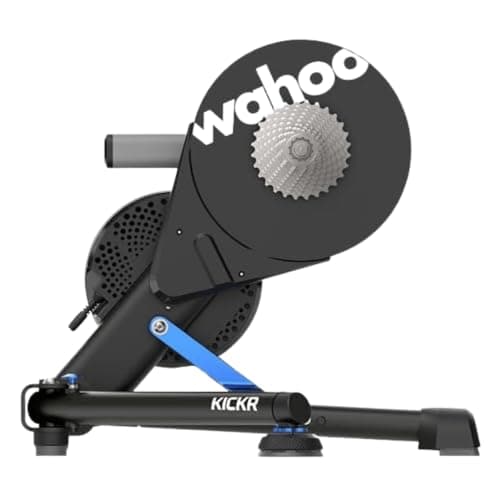 Wahoo Kickr v6 The better trainer, and the gap is almost entirely WiFi plus a heavier flywheel — decide whether those two things are worth the price difference to you. | Best overall: WiFi and the heavier flywheel | 9.09.0 out of 10 | $849.99 · View on Amazon #ad We may earn a commission · Price as of October 21, 2026 |
| 2 | 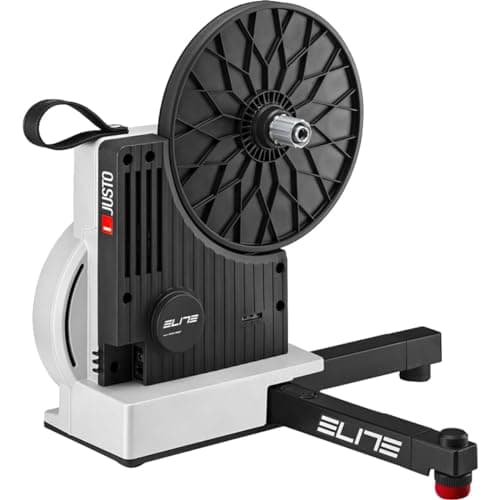 Elite Justo The value answer: the same ±1% claim and a higher gradient ceiling for less money, if you can live without WiFi. | Best value: the same ±1% claim for less | 8.78.7 out of 10 | $1,049.00 · View on Amazon #ad We may earn a commission · Price as of October 21, 2026 |
| 3 | 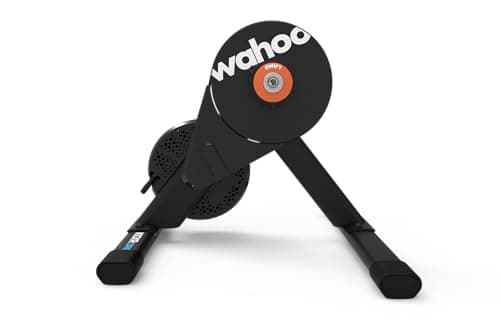 Wahoo Kickr Core 2 The question neither flagship wants you to ask: do you need ±1% and a 2,200 W ceiling, or do you need WiFi and a trainer that is quiet and accurate enough? | The cross-shop most buyers should make | 8.58.5 out of 10 | $549.99 · View on Amazon #ad We may earn a commission · Price as of October 21, 2026 |
This is the top-of-market comparison most buyers actually run, because the Justo is the only mainstream trainer that claims the flagship accuracy figure at a non-flagship price. Now that Wahoo has discontinued the Kickr Move, the v6 is the Wahoo flagship still in production, which makes this the live version of the question.
Where they genuinely differ
WiFi. The v6 has it; the Justo does not. This is the single biggest practical difference and the reason the Justo 2 exists. A WiFi trainer talks to Zwift over your home network rather than over a Bluetooth link that has to survive a phone in your pocket, a microwave and a laptop lid. If you have ever lost an interval to a dropout, you know what this is worth — smart trainer not connecting to Zwift exists because of exactly this problem.
Flywheel mass.16 lb on the v6 against 6.2 kg on the Justo. More stored energy means a more settled feel at steady state and a less abrupt transition when you stop pedaling. Neither is unpleasant, but the v6 is the smoother of the two.
Gradient and resistance ceilings.Here the Justo wins: 24% against 20%, and 2,300 W at 40 km/h against 2,200 W. Be honest about whether you will ever use either. Most riders never see a 20% simulated gradient outside a Zwift Alpe climb, and very few sustain 2,200 W.
Lifecycle. The Justo has been superseded by the Justo 2; the v6 has not been replaced. That is the whole reason the Justo is cheap, and it is also the reason its firmware attention will taper first.
| Specification | Elite Justo | Wahoo Kickr v6 |
|---|---|---|
| Claimed accuracy | ±1% (optical torque sensor) | ±1% |
| Max resistance | 2,300 W at 40 km/h | 2,200 W |
| Max gradient | 24% | 20% |
| Flywheel | 6.2 kg | 16 lb |
| WiFi | No | Yes |
| Bluetooth / ANT+ FE-C | Yes / Yes | Yes / Yes |
| Movement | Lateral frame flex | Axis feet (flex, no fore-aft) |
| Cassette included | No | No |
| Current generation | Superseded by Justo 2 | Current Wahoo flagship |
What is the same, and why it matters
Both are direct-drive electromagnetic trainers with no tire in the power path, both claim ±1%, both broadcast Bluetooth and ANT+ FE-C, and both ship without a cassette — budget for one, and check your drivetrain against our cassette guide or consider the Zwift Cog route instead.
Both are also heavy, permanent installations. Neither folds away, neither is pleasant to move, and both want a mat under them. If your pain cave is a corner of a flat that has to be cleared on weekends, that is a consideration before the specification sheet is.
On the ±1% claim itself
Both numbers are manufacturer claims, not measurements we have taken. They are also claims about different hardware: Elite's comes from an optical torque sensor, Wahoo's from its own strain-gauge measurement. In practice a ±1% trainer and a ±1% power meter will still disagree by a few watts, which is normal rather than a fault — how accurate are smart trainers explains why, and calibration covers what you can actually control.
Our call
For a rider buying one trainer to keep for five years, the v6 is the better purchase: WiFi is a genuine reliability upgrade, the flywheel is better, and it is the model still being supported. For a rider whose Bluetooth setup is already rock solid and whose budget is the binding constraint, the Justo is a legitimately excellent trainer at a price the v6 will not match.
And if neither price is comfortable, the honest answer is the Kickr Core 2, which has the WiFi the Justo lacks and the support the Justo is losing, at ±2% instead of ±1%.
Want the whole field?
See every smart trainer rankedThe full reviews
Head to head
#1 · Best overall: WiFi and the heavier flywheel
Wahoo Kickr v6
9.09.0 out of 10#ad We may earn a commission · Price as of October 21, 2026
The better trainer, and the gap is almost entirely WiFi plus a heavier flywheel — decide whether those two things are worth the price difference to you.
- Type
- Direct drive, electromagnetic
- Claimed accuracy
- ±1%
- Max resistance
- 2,200 W
- Max gradient
- 20%
- Flywheel
- 16 lb
- Connectivity
- WiFi, Bluetooth, ANT+ FE-C
What we'd praise
- Onboard WiFi, which removes the single most common cause of mid-ride dropouts
- 16 lb flywheel — the heaviest here, and the reason it settles so well at steady state
- Wahoo's app and firmware support is the strongest in the category
- Pairs with the Kickr Climb and Headwind if you want to extend the setup later
- Still Wahoo's flagship in production now that the Kickr Move has been discontinued
What we'd flag
- The most expensive of the two, usually by a wide margin
- 20% gradient ceiling is lower than the Justo's 24%
- Ships without a cassette
- Axis feet flex, but there is no fore-aft movement like a rail or motion plates
The v6 is the trainer the rest of the category is measured against, and in this matchup it wins on two specific things rather than on a general sense of quality. The first is onboard WiFi. Bluetooth dropouts mid-interval are the most common complaint in indoor cycling, and a trainer that talks to Zwift over your home network simply does not have that failure mode.
The second is the flywheel. At 16 lb it is heavier than the Justo's 6.2 kg, and the practical effect is how the trainer behaves when you stop pedaling for a second or surge out of the saddle: more stored energy, less abruptness.
Everything else is close. Both claim ±1%. The v6 is quoted at 2,200 W and 20% gradient; the Justo at 2,300 W at 40 km/h and 24%. Our Kickr v6 review covers the platform in full.
#2 · Best value: the same ±1% claim for less
Elite Justo
8.78.7 out of 10#ad We may earn a commission · Price as of October 21, 2026
The value answer: the same ±1% claim and a higher gradient ceiling for less money, if you can live without WiFi.
- Type
- Direct drive, electromagnetic
- Claimed accuracy
- ±1% (optical torque sensor)
- Max resistance
- 2,300 W at 40 km/h
- Max gradient
- 24%
- Flywheel
- 6.2 kg
- Connectivity
- ANT+ FE-C, Bluetooth
What we'd praise
- ±1% from a real optical torque sensor, at a price well below the Wahoo
- 24% gradient ceiling, four points higher than the v6 and second only to the Tacx Neo in the mainstream field
- Lateral frame flex takes the hard edge off a fixed trainer without a rail or motion plates
- 2,300 W is quoted with the 40 km/h qualifier, which is the honest way to publish a resistance figure
- The discount created by the Justo 2's arrival is the whole reason this is competitive
What we'd flag
- No WiFi — the single biggest omission, and the reason the Justo 2 exists
- Elite's app ecosystem is weaker than Wahoo's
- Lighter 6.2 kg flywheel settles less than the v6 at steady state
- Superseded by the Justo 2, so firmware attention will taper over time
The Justo is the cheapest honest route to a ±1%flagship-class trainer, and the claim is backed by a real optical torque sensor rather than a power curve. On paper it beats the v6 on two numbers: 2,300 W at 40 km/h against 2,200 W, and a 24% gradient ceiling against 20%.
The thing it does not have is WiFi, and that is not a small omission. It is the reason the Justo 2 exists, and it is the main practical difference you will feel in use, because Bluetooth is the layer that drops. If your setup already runs over ANT+ with a good dongle, that matters much less.
The second consideration is lifecycle. The Justo has been superseded, which is exactly why its price is attractive — and also why firmware attention will taper. Our Elite Justo review goes into the detail.
#3 · The cross-shop most buyers should make
Wahoo Kickr Core 2
8.58.5 out of 10#ad We may earn a commission · Price as of October 21, 2026
The question neither flagship wants you to ask: do you need ±1% and a 2,200 W ceiling, or do you need WiFi and a trainer that is quiet and accurate enough?
- Type
- Direct drive, electromagnetic
- Claimed accuracy
- ±2%
- Max resistance
- 1,800 W
- Max gradient
- 16%
- Flywheel
- 5.4 kg
- Connectivity
- WiFi, Bluetooth, ANT+ FE-C
What we'd praise
- Has the WiFi the Justo lacks, at a price well below both flagships
- ±2% is more than accurate enough for every form of structured training
- Same Wahoo app and firmware support as the v6
- The trainer most indoor riders should actually own
What we'd flag
- 1,800 W and a 16% gradient ceiling — lower than both flagships, and sprinters will find the ceiling
- 5.4 kg flywheel, the lightest here
- ±2% rather than ±1%, which matters if you race on a platform that scrutinises files
- Ships without a cassette unless you buy the Zwift Cog version
Before you choose between two flagships, it is worth being honest about whether you need one. The Core 2 has the WiFi the Justo lacks, costs substantially less than either, and claims ±2% — which is well inside what structured training requires.
What you give up is headroom: 1,800 W and a 16% gradient ceiling, against 2,200 W / 20% on the v6 and 2,300 W / 24% on the Justo. A heavy sprinter will find that ceiling; most riders never will.
If you race on a platform that scrutinises power files, buy a ±1% trainer. If you train, the Core 2 is the one we would buy. Our Kickr Core 2 review has the full picture, and best smart trainers ranks the category.
Good questions
Frequently asked questions
Is the Elite Justo better than the Wahoo Kickr v6?
On paper the Justo wins on gradient (24% vs 20%) and resistance (2,300 W at 40 km/h vs 2,200 W), and both claim plus or minus 1%. In use the Kickr v6 is the better trainer because it has onboard WiFi and a heavier 16 lb flywheel. The Justo is the better value, especially since the Justo 2 arrived and discounted it.
Does the Elite Justo have WiFi?
No. The Justo connects over Bluetooth and ANT+ FE-C only. The absence of WiFi is the single biggest difference from the Kickr v6 and the main reason Elite released the Justo 2.
Which trainer is more accurate, the Justo or the Kickr v6?
Both manufacturers claim plus or minus 1%. Elite's claim comes from an optical torque sensor; Wahoo's comes from its own strain-gauge measurement. These are published claims rather than figures we have measured, and in normal use neither trainer will match a power meter exactly.
Is the Elite Justo discontinued?
It has been superseded by the Elite Justo 2 rather than withdrawn, and retail stock is still available. That is why the price is attractive, and it is also why firmware attention for the original Justo will taper over time.
Do I need a 2,200 W trainer?
Almost certainly not. Very few riders sustain anything close to 2,200 W, and the ceiling only matters during short sprints. The gradient ceiling is the more commonly hit limit, and even then 20% is steeper than most simulated climbs you will ride.
What about the Wahoo Kickr Core 2 instead?
It is the cross-shop worth making. The Core 2 has the WiFi the Justo lacks and the Wahoo firmware support the Justo is losing, at a much lower price, with plus or minus 2% accuracy, 1,800 W resistance and a 16% gradient ceiling. If you train rather than race, that specification is usually enough.
How we sourced this
Keep going