Trainers
The Best Smart Trainers Under $1,000, Ranked
A thousand dollars buys a flagship trainer or a whole pain cave. This page ranks the trainers that fit inside the band on published specifications, and is honest about which choice leaves room for the fan.

The short answer
Quick picks
| # | Product | Best for | Score | Price |
|---|---|---|---|---|
| 1 | 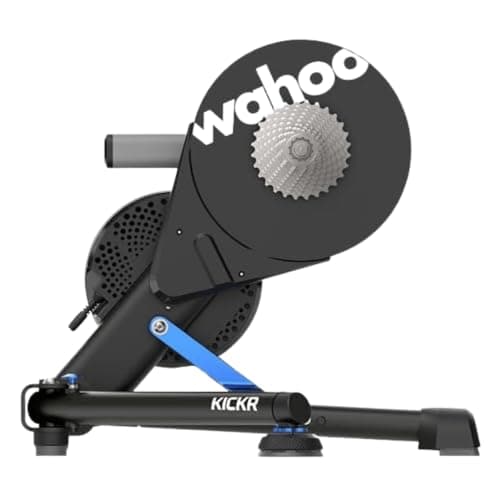 Wahoo Kickr v6 Best for the rider who wants a trainer with nothing left to prove and does not need it to also be cheap. | Best overall under $1,000 | 8.88.8 out of 10 | |
| 2 | 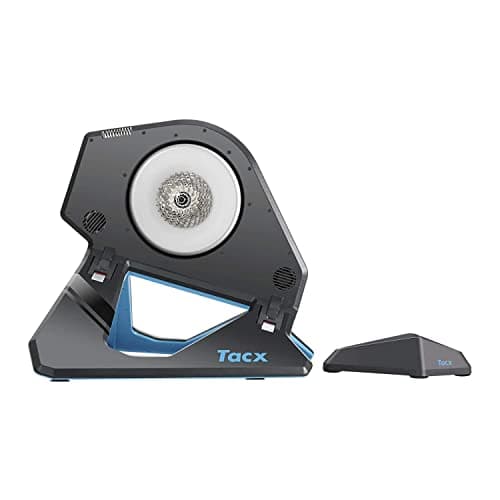 Garmin Tacx Neo 2T Best for the rider who cares how the trainer feels under load more than how quickly it connects. | Best road feel and highest ceilings in the band | 8.98.9 out of 10 | $899.99 · View on Amazon #ad We may earn a commission · Price as of November 22, 2026 |
| 3 | 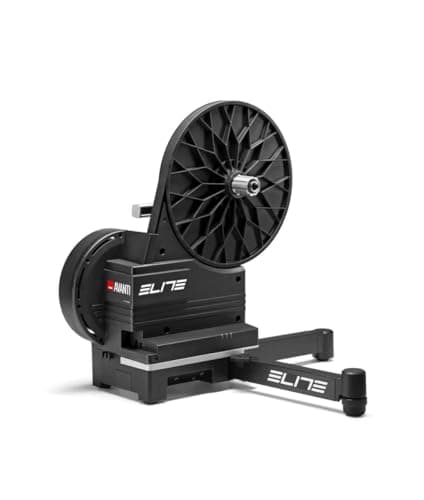 Elite Avanti Best for the rider whose indoor frustration is dropouts rather than feel — this is the only trainer here with a network port. | Best connectivity in the band | 8.58.5 out of 10 | $749.99 · View on Amazon #ad We may earn a commission · Price as of November 22, 2026 |
| 4 | 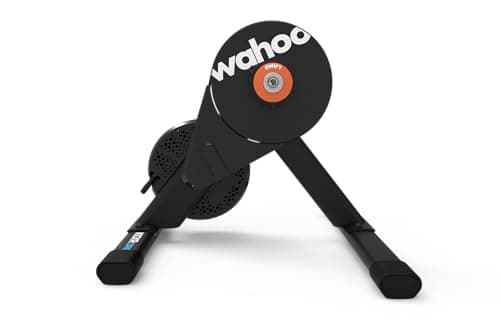 Wahoo Kickr Core 2 Best for the rider building a whole pain cave rather than buying a single object — it leaves half the band intact. | Best value in the band | 8.78.7 out of 10 | |
| 5 | 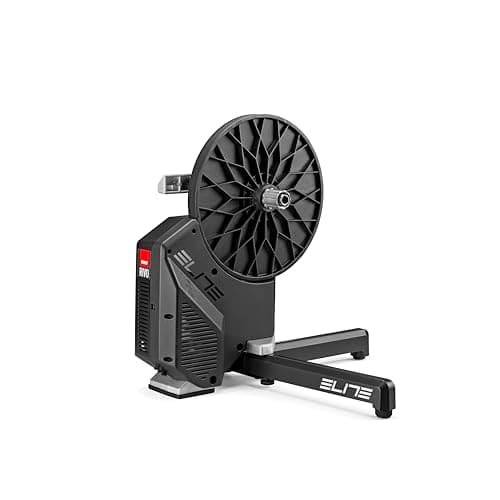 Elite Rivo Budget pick: direct drive, WiFi and an 18% ceiling for a fraction of the band, if your watts never need to match anyone else's. | Budget pick: cheapest direct drive in the band | 8.38.3 out of 10 | $549.99 · View on Amazon #ad We may earn a commission · Price as of November 22, 2026 |
A thousand dollars is the most interesting number in indoor cycling, because it is the point where the question changes. Below it you are asking what you have to give up. At it, you are not giving up much at all — every trainer on this page except one measures power, four of the five are direct drive, and three publish accuracy claims that no amount of extra money improves on. The real question becomes whether to spend the band on a trainer or on a room.
That is the decision this page is built around. Prices move, so the figures live in the comparison table above and carry the date the price layer last refreshed them rather than being written into the text. Everything below is published specification.
What a thousand dollars buys at the top of the band
At the top you get flagship specifications. The v6 and the Neo 2T both publish ±1% claimed accuracy and 2,200 W of resistance; the Neo goes to 25% gradient against the v6's 20%. Those are the numbers that stop mattering above this band, which is the point — spending more than a thousand dollars on a trainer buys built-in movement, a smart bike, or a cassette in the box, not better measurement.
The two differ on one axis that is easy to under-weight: the v6 has onboard WiFi and the Neo does not. A trainer on WiFi talks to the app over your home network; a trainer on Bluetooth talks to one device across a room, and that link is the single most common cause of mid-ride dropouts. If your frustration with indoor riding has ever been a disconnection rather than a feeling, that is the specification to buy on.
What it buys at the bottom of the band
At the bottom the picture is better than it was two years ago. The Core 2 publishes measured ±2% power with WiFi, Bluetooth and ANT+, and the Rivo publishes direct drive and WiFi with estimated ±2.5% power. Both are real trainers. Both leave money on the table, and what that money buys is the part of indoor cycling most people under-fund: a fan, a mat, a cassette and a screen.
Our honest view: a rider who spends the whole band on a trainer and rides it in a hot room without a fan has made a worse purchase than a rider who bought the Core 2 and built the room around it. What a Zwift setup actually costs breaks the whole room down.
| Trainer | Claimed accuracy | Max resistance | Max gradient | Radios |
|---|---|---|---|---|
| Wahoo Kickr v6 | ±1%, measured | 2,200 W | 20% | WiFi, Bluetooth, ANT+ |
| Garmin Tacx Neo 2T | ±1%, measured | 2,200 W | 25% | Bluetooth, ANT+ |
| Elite Avanti | ±1%, measured (optical) | 2,100 W at 40 km/h | 18% | WiFi, Ethernet, Bluetooth, ANT+ |
| Wahoo Kickr Core 2 | ±2%, measured | 1,800 W | 16% | WiFi, Bluetooth, ANT+ |
| Elite Rivo | ±2.5%, estimated | 2,000 W at 40 km/h | 18% | WiFi, Bluetooth |
Measured or estimated is the one line that matters
Four of these five trainers measure power with a strain gauge or an optical torque sensor. The Rivo estimates it from motor current and a model, and Elite says so on its own specification sheet. The practical difference is not precision, it is comparability: an estimated figure is consistent with itself, which is all your own training needs, but it is not reliably consistent with another rider's trainer or with an outdoor power meter.
So the rule is simple. If nobody else will ever read your watts, estimated power is a fair trade for the money. If you race, join performance-verified events, or train to an FTP measured outdoors, buy a trainer that measures. How accurate are smart trainers explains what the percentage claims actually describe.
The verdict
Wahoo Kickr v6 if you want the band spent on the best trainer that fits in it. Garmin Tacx Neo 2T if ride feel and the 25% ceiling matter more to you than WiFi. Elite Avanti if dropouts are your actual complaint — the Ethernet port is unique here. Wahoo Kickr Core 2 if the thousand dollars has to build a room, not buy an object. Elite Rivo as the budget pick, if your numbers are only ever yours.
Budget flexible?
See every smart trainer, ranked on the specsThe full reviews
Every pick, in detail
#1 · Best overall under $1,000
Wahoo Kickr v6
8.88.8 out of 10Best for the rider who wants a trainer with nothing left to prove and does not need it to also be cheap.
- Type
- Direct drive
- Claimed accuracy
- ±1%
- Max resistance
- 2,200 W
- Max gradient
- 20%
- Flywheel
- 16 lb
- Connectivity
- WiFi, Bluetooth, ANT+ FE-C
- Rider limit
- 250 lb (113 kg)
What we'd praise
- ±1% measured accuracy, 2,200 W and a 20% ceiling — flagship numbers inside the band
- A 16 lb flywheel, the heaviest here, and the steadiest feel at low cadence
- WiFi, Bluetooth and ANT+, so it pairs with every platform without a dongle
- Wahoo's firmware support record is the longest in the category
What we'd flag
- Sits near the top of the band, so there is little left over for the room
- No cassette in the box
- Heavy and not a trainer you will move between rooms willingly
Under a thousand dollars, the v6 is the trainer that stops the conversation. It publishes every number you would look for at any price: ±1% measured accuracy, 2,200 W of resistance, a 20% gradient ceiling, a 16 lb flywheel, and all three radios. There is no specification on this page where a more expensive trainer would clearly beat it except built-in movement, which is a comfort feature rather than a performance one.
The argument against it is simple arithmetic: it uses most of the band. If the trainer is going into a room that still needs a fan, a mat and a screen, the Core 2 lower down this page leaves room for all three. Our Wahoo Kickr v6 review covers it on its own, and Kickr Core 2 vs Kickr v6 is the head-to-head that most buyers in this band actually need.
#2 · Best road feel and highest ceilings in the band
Garmin Tacx Neo 2T
8.98.9 out of 10#ad We may earn a commission · Price as of November 22, 2026
Best for the rider who cares how the trainer feels under load more than how quickly it connects.
- Type
- Direct drive, motor-driven
- Claimed accuracy
- ±1%
- Max resistance
- 2,200 W
- Max gradient
- 25%
- Flywheel
- Virtual — no physical flywheel
- Rider limit
- 125 kg (275 lb)
- Connectivity
- Bluetooth, ANT+ (no WiFi)
What we'd praise
- A 25% gradient ceiling, the steepest here, and 2,200 W of resistance
- Motor-driven descent drive and road-surface simulation that nothing else in the band has
- The highest rider limit of any direct-drive trainer in our registry at 125 kg
- Runs unplugged for normal riding, losing only the descent drive
What we'd flag
- No WiFi at all, which is the one modern convenience it misses
- Usually the most expensive trainer that still fits inside the band
- No cassette in the box, and a 21.5 kg unit weight
The Neo is a different kind of machine from everything else in this band. There is no belt and no physical flywheel; inertia is simulated by a motor, which is what produces the settled feel through the dead spot that Neo owners talk about, and which also lets the trainer drive the cassette forward on a virtual descent. It reproduces cobbles and gravel as vibration through the pedals.
Its omission is WiFi, and that is a real one in 2026 — a Bluetooth link from a trainer to a tablet across a room is the most common source of dropouts in indoor cycling. If connection reliability is what frustrates you, buy the v6 or the Avanti. If ride feel is what you are buying, nothing else here is close. Our Tacx Neo 2T review has the detail.
#3 · Best connectivity in the band
Elite Avanti
8.58.5 out of 10#ad We may earn a commission · Price as of November 22, 2026
Best for the rider whose indoor frustration is dropouts rather than feel — this is the only trainer here with a network port.
- Type
- Direct drive, electromagnetic
- Claimed accuracy
- ±1% (optical torque sensor)
- Max resistance
- 2,100 W at 40 km/h
- Max gradient
- 18%
- Flywheel
- 4 kg
- Connectivity
- ANT+, Bluetooth, WiFi, Ethernet, Zwift
- Weight
- 13 kg
What we'd praise
- Ethernet as well as WiFi — the most reliable connection of any trainer on this page
- ±1% measured accuracy from an optical torque sensor, at well under the v6 and the Neo
- 13 kg, so it is the one ±1% trainer here you can move without resenting it
- 2,100 W at 40 km/h and an 18% ceiling cover almost every Zwift route
What we'd flag
- A 4 kg flywheel, the lightest here, which reads as less settled at low cadence
- Elite does not publish a rider weight limit for it
- No cassette included unless you buy the Zwift Ready version
The Avanti is the quiet value play in this band. It publishes ±1% from an optical torque sensor, which is the same claimed figure as the v6 and the Neo, and it does it for meaningfully less. It is also the only trainer on this page with an Ethernet port, which removes wireless from the equation entirely — no dropouts, no interference, no pairing queue.
The compromise is the flywheel: 4 kg, against the v6's 16 lb and the Neo's simulated 125 kg. That is the specification you feel at low cadence on a climb, and it is the honest reason it ranks third here rather than first. Our Elite Avanti review covers it, and Elite Avanti vs Kickr Core 2 is the comparison this band turns on.
#4 · Best value in the band
Wahoo Kickr Core 2
8.78.7 out of 10Best for the rider building a whole pain cave rather than buying a single object — it leaves half the band intact.
- Type
- Direct drive, electromagnetic
- Claimed accuracy
- ±2%
- Max resistance
- 1,800 W
- Max gradient
- 16%
- Flywheel
- 5.4 kg
- Connectivity
- WiFi, Bluetooth, ANT+ FE-C
- Rider limit
- 250 lb (113 kg)
What we'd praise
- Roughly half the band, which leaves room for a fan, a mat, a cassette and a screen
- Onboard WiFi plus Bluetooth and ANT+, the same radio set as the v6
- Measured ±2% power — comparable enough for group rides and most race series
- The most widely owned direct-drive trainer, so help is easy to find
What we'd flag
- ±2% rather than ±1%, and 1,800 W rather than 2,200 W
- 16% gradient ceiling, the lowest of the direct-drive picks here
- No cassette in the box unless you buy the Zwift Cog version
If you think of the thousand dollars as a room budget rather than a trainer budget, the Core 2 wins outright. It uses about half of it and gives up surprisingly little: measured power at ±2%, onboard WiFi, Bluetooth and ANT+, and a 5.4 kg flywheel. The remainder buys a fan, a mat, a cassette and a screen — all four of which change your indoor riding more than one point of accuracy does.
The specification to check against your own riding is the 16% gradient ceiling. It is below Zwift's steepest pitches, so if you deliberately ride the Alpe repeatedly you will notice; for everyone else it is theoretical. Our Kickr Core 2 review covers the trainer in full.
#5 · Budget pick: cheapest direct drive in the band
Elite Rivo
8.38.3 out of 10#ad We may earn a commission · Price as of November 22, 2026
Budget pick: direct drive, WiFi and an 18% ceiling for a fraction of the band, if your watts never need to match anyone else's.
- Type
- Direct drive, electromagnetic
- Claimed accuracy
- ±2.5%, estimated power
- Max resistance
- 2,000 W at 40 km/h
- Max gradient
- 18%
- Connectivity
- Bluetooth, WiFi, Zwift protocol
- Weight
- 10 kg, folds
- Rider limit
- 110 kg (242 lb)
What we'd praise
- Uses less than half the band and still gives you direct drive and onboard WiFi
- An 18% gradient ceiling, higher than the Core 2's 16%
- 10 kg and folds — the only trainer here that genuinely stores away
- Supports Zwift Cog and Click, so the cassette question can be skipped
What we'd flag
- Estimates power at ±2.5% rather than measuring it — the one real compromise
- No ANT+ radio at all
- A 4 kg flywheel and the lowest rider limit here at 110 kg
The budget pick, and the right answer for a specific rider: someone whose training is their own. The Rivo estimates power at ±2.5% rather than measuring it, which Elite publishes plainly. For zones, intervals and a season-long fitness trend that is consistent enough. For racing other people, or following a plan built on an outdoor power meter's FTP, it is not.
Everything else about it is remarkable for the money: direct drive, onboard WiFi, an 18% gradient ceiling, Zwift Cog support, and a 10 kg folding frame. Our Elite Rivo review is the long version, and the budget trainer roundup is where to go if a thousand dollars is more than you want to spend.
Good questions
Frequently asked questions
What is the best smart trainer under $1,000?
The Wahoo Kickr v6. Inside the band it publishes the strongest overall specification set: ±1% measured accuracy, 2,200 W of resistance, a 20% gradient ceiling, a 16 lb flywheel, and WiFi, Bluetooth and ANT+. The Garmin Tacx Neo 2T is the alternative if ride feel and its 25% ceiling matter more than WiFi, and the Elite Rivo is the budget pick.
Do you need to spend $1,000 on a smart trainer?
No. The Wahoo Kickr Core 2 uses about half the band and still publishes measured ±2% power with WiFi, Bluetooth and ANT+, and the Elite Rivo brings direct drive and WiFi for less again. What more money buys inside this band is accuracy from ±2% to ±1%, resistance from 1,800 W to 2,200 W, gradient from 16% to 25%, and flywheel mass. None of those change whether a workout works.
Which trainer under $1,000 has the best road feel?
The Garmin Tacx Neo 2T. It has no physical flywheel at all — inertia is simulated by a motor, which also drives the cassette forward on virtual descents and reproduces road surfaces as vibration through the pedals. The Wahoo Kickr v6's 16 lb physical flywheel is the best of the conventional designs here.
Is a trainer with estimated power worth buying?
For training that is only ever compared with itself, yes. The Elite Rivo estimates power within a published ±2.5%, which holds your zones, intervals and fitness trend together. It is the wrong choice if you race other riders, enter performance-verified events, or follow a plan built from an FTP measured on an outdoor power meter, because an estimated number is consistent with itself rather than with other devices.
Do these trainers include a cassette?
None of the five includes a conventional cassette as standard. The Elite Rivo and the Wahoo Kickr Core 2 both support running a Zwift Cog instead, which removes the drivetrain-matching question entirely, and Wahoo and Elite both sell Cog-equipped versions. Otherwise you need a cassette that matches your speed count, brand and freehub standard.
How we sourced this
- Wahoo — KICKR V6 product page (±1%, 2,200 W, 20% gradient, 16 lb flywheel, WiFi)
- Zwift Insider — Tacx NEO 2T review (±1%, 2,200 W, 25% gradient, 125 kg limit, unplugged operation)
- Elite — Avanti smart trainer specifications (optical torque sensor ±1%, 2,100 W at 40 km/h, 18%, Ethernet)
- Wahoo — KICKR CORE compatibility and specification article (±2%, 1,800 W, 16%, 250 lb)
- Elite — Rivo smart trainer specifications (estimated power ±2.5%, 18% gradient, WiFi, 10 kg)
Keep going