Trainer Review
Elite Tuo Review: Is the Cheapest Smart Trainer Enough?
The Tuo is the lowest-priced trainer we would call a smart trainer at all, because it is the lowest-priced one an app can actually control. Here is what Elite published, what it costs you, and who should buy it.
The short answer
Quick picks
| # | Product | Best for | Score | Price |
|---|---|---|---|---|
| 1 | 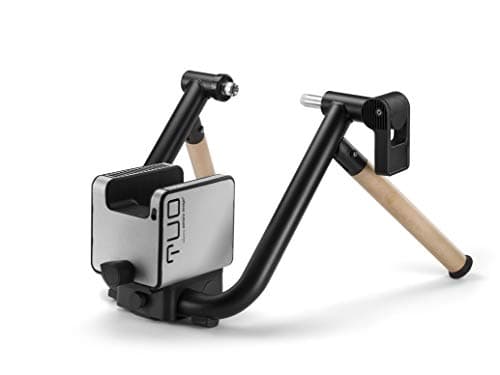 Elite Tuo Best for the rider who wants real app-controlled resistance at the lowest price, and will accept a tire in the loop to get it. | Best for a first controllable trainer | 7.87.8 out of 10 | $162.49 · View on Amazon #ad We may earn a commission · Price as of November 22, 2026 |
| 2 | 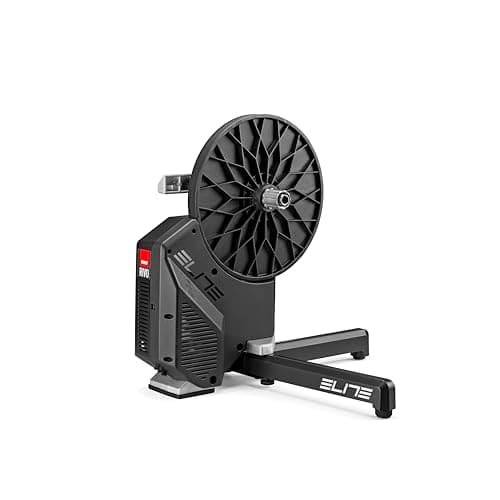 Elite Rivo The upgrade the Tuo points at: the same accuracy claim, far more ceiling, and no tire in the drivetrain. | Best step up from the Tuo | 8.58.5 out of 10 | $549.99 · View on Amazon #ad We may earn a commission · Price as of November 22, 2026 |
| 3 | 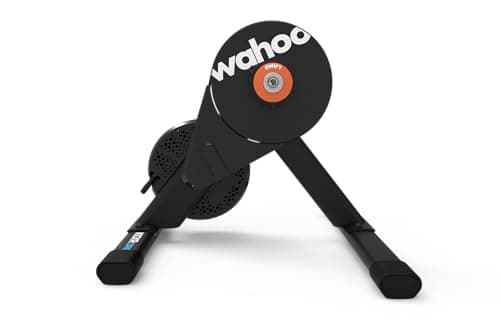 Wahoo Kickr Core 2 The trainer to buy instead of a Tuo if your watts have to be comparable to other riders' or to an outdoor meter. | Best if you need measured power | 8.68.6 out of 10 | |
| 4 | 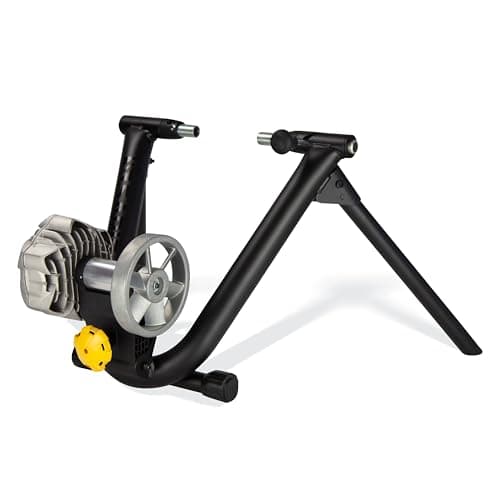 Saris Fluid2 Budget pick: cheaper than the Tuo and far tougher, but it gives up the one feature that makes the Tuo worth buying. | Budget pick: cheaper, but not controllable | 7.57.5 out of 10 |
There are two kinds of cheap indoor trainer and the difference between them matters more than anything else on the spec sheet. The first kind just adds resistance: you pedal, it gets harder as you go faster, and that is the end of the conversation. The second kind lets the app set the resistance, which is what makes a Zwift climb feel like a climb and lets a structured workout hold 230 W while you fade. The Tuo is the cheapest trainer in our registry in the second category.
That is the whole reason to care about it, and the rest of this review is about what Elite gave up to get the price there — because quite a lot was given up, and all of it is published.
The 10% gradient ceiling is the real limit
Elite publishes a maximum simulated gradient of 10% and maximum resistance of 1,300 W. Those two figures are related: a trainer simulates a gradient by applying resistance, and once it runs out of resistance the hill stops getting steeper no matter what the app says.
In practice this means Zwift's rolling routes feel correct and its steep climbs do not. Ride anything above 10% and the Tuo holds at its ceiling while your on-screen avatar continues up a wall — the effort stops tracking the terrain. For a rider doing endurance rides, group rides on flat routes and ERG workouts, that is a non-event. For a rider who wants to climb Zwift's named mountains, it is the single reason to spend more. Compare that against the Rivo's 18%, the Kickr Core 2's 16% or a flagship's 20 to 25%: the smart trainer roundup lists every published ceiling.
±2.5% and what it is actually good for
Elite claims ±2.5% accuracy. Set against a flagship's ±1%, that sounds like a significant gap, and whether it is depends entirely on one question: does anyone else ever read your numbers?
If the answer is no, a ±2.5% trainer is perfectly good training equipment. It is consistent with itself, which means your zones hold, your intervals are repeatable and your fitness trend over a winter is real. If the answer is yes — Zwift races, performance-verified events, a plan built from an FTP you measured on an outdoor power meter — then you want a trainer whose figure is measured rather than derived, and the Tuo is the wrong purchase. How accurate are smart trainers explains what these percentage claims describe and why a wheel-on trainer has an extra variable in the chain.
The tire is the part nobody mentions
A wheel-on trainer presses a roller against your rear tire, and that introduces three ongoing obligations that a direct-drive trainer does not have.
Pressure, every ride. The power a wheel-on trainer reports depends on how hard the roller is pressed into the tire and how inflated that tire is. Change either and the same effort produces a different number, which is why wheel-on trainers ask for a consistent pressure and a consistent roller tension. It takes thirty seconds and it is not optional if you want your numbers to mean anything week to week.
Wear. A road tire on a roller wears quickly and sheds black dust. The usual answer is a dedicated trainer tire, which is harder-compound and built for the heat — see the trainer tire roundup and do I need a trainer tire for whether it is worth it on a trainer at this price.
Noise. Elite does not publish a decibel figure for the Tuo, so we will not invent one. What is true of every wheel-on trainer is that the loudest thing in the system is rubber on a steel roller, not the resistance unit — which is why the quietest trainers are all direct-drive, and why an apartment rider should think hard before buying any wheel-on unit. How to make a bike trainer quieter covers what actually helps.
What it gets right, and the one spec that surprises people
Two things. First, setup: the bike goes on with its own wheel, so there is no cassette to match, no freehub standard to look up, no lockring tool and nothing to buy on arrival. For a first trainer, deleting that whole category of problem is worth real money — it is the most common reason a first direct-drive purchase goes back. Zwift Cog vs cassette is what you would be reading instead.
Second, radios. The Tuo has both Bluetooth and ANT+ FE-C. That is better coverage than the Elite Rivo, which costs more and has no ANT+ at all. If you run Zwift on a Windows or macOS machine with a USB stick, or you own ANT+ sensors already, that is a genuine point in the Tuo's favor. ANT+ vs Bluetooth for Zwift explains which protocol to use on each platform.
One gap worth naming: Elite does not publish a rider weight limit for the Tuo. We list it as not published rather than guessing, and bike trainer weight limits records every figure that makers do publish, with its source.
| Elite Tuo | Elite Rivo | Wahoo Kickr Core 2 | Saris Fluid2 | |
|---|---|---|---|---|
| Type | Wheel-on | Direct drive | Direct drive | Wheel-on, fluid |
| App-controlled | Yes | Yes | Yes | No |
| Claimed accuracy | ±2.5% | ±2.5%, estimated | ±2%, measured | No power data |
| Max resistance | 1,300 W | 2,000 W at 40 km/h | 1,800 W | Fluid curve |
| Max gradient | 10% | 18% | 16% | n/a |
| Radios | Bluetooth, ANT+ FE-C | Bluetooth, WiFi | WiFi, Bluetooth, ANT+ | None |
| Cassette needed | No | Yes, or Zwift Cog | Yes, or Zwift Cog | No |
| Published rider limit | Not published | 110 kg / 242 lb | 250 lb / 113 kg | 300 lb, rider and bike |
Who should buy the Elite Tuo
Buy it if you want to find out whether indoor training suits you without committing direct-drive money; if your rides are endurance, ERG workouts and flat group rides rather than mountain climbs; if the trainer has to pack away between sessions; or if you specifically need ANT+ and are looking at the Rivo, which does not have it.
Skip itif you race or ride performance-verified events, because ±2.5% is the wrong side of the line; if you intend to ride Zwift's steep climbs, because 10% is a hard ceiling; if the trainer lives in an apartment, because a tire on a roller is the loudest thing in indoor cycling; or if you already know you will upgrade, in which case the Rivo costs less than the Tuo plus the Rivo.
Still deciding?
Compare the Tuo against every wheel-on trainerThe full reviews
Every pick, in detail
#1 · Best for a first controllable trainer
Elite Tuo
7.87.8 out of 10#ad We may earn a commission · Price as of November 22, 2026
Best for the rider who wants real app-controlled resistance at the lowest price, and will accept a tire in the loop to get it.
- Type
- Wheel-on, controllable
- Claimed accuracy
- ±2.5%
- Max resistance
- 1,300 W
- Max gradient
- 10%
- Zwift
- Full resistance control
- Connectivity
- Bluetooth, ANT+ FE-C
- Rider limit
- Not published by Elite
What we'd praise
- Full app-controlled resistance, so Zwift climbs get harder and ERG workouts hold a target
- Both Bluetooth and ANT+ FE-C, so it pairs on a tablet or a PC without a thought
- Wheel-on, so there is no cassette to match, no freehub standard to check and no lockring tool
- Folds small and weighs little — it genuinely lives in a cupboard between rides
What we'd flag
- A 10% gradient ceiling, which is the lowest of any controllable trainer we rank
- 1,300 W of maximum resistance, roughly half of a flagship's figure
- Tire wear, roller noise and a tire-pressure routine before every ride
- Elite does not publish a rider weight limit for it
The Tuo is the trainer we keep recommending to people who are not sure indoor cycling will stick. It is a wheel-on unit, which means your rear wheel stays on the bike and a roller presses against the tire — and crucially it is controllable, so Zwift can change the resistance as the road tilts and hold a target wattage in a structured workout. That is the line that separates a smart trainer from a lump of magnetic resistance, and the Tuo is the cheapest side of it we would put a bike on.
Elite publishes ±2.5% accuracy, 1,300 W of maximum resistance and a 10% gradient ceiling, with ANT+ FE-C and Bluetooth. Those are modest numbers and the page below is honest about where they bite. What they buy is a setup that takes two minutes and asks nothing at all about your drivetrain.
#2 · Best step up from the Tuo
Elite Rivo
8.58.5 out of 10#ad We may earn a commission · Price as of November 22, 2026
The upgrade the Tuo points at: the same accuracy claim, far more ceiling, and no tire in the drivetrain.
- Type
- Direct drive, electromagnetic
- Claimed accuracy
- ±2.5%, estimated power
- Max resistance
- 2,000 W at 40 km/h
- Max gradient
- 18%
- Connectivity
- Bluetooth, WiFi, Zwift protocol
- Weight
- 10 kg, folds
- Rider limit
- 110 kg (242 lb)
What we'd praise
- Direct drive, so the tire leaves the equation entirely — no wear, no pressure routine, far less noise
- An 18% gradient ceiling against the Tuo's 10%, and 2,000 W against 1,300 W
- Onboard WiFi, which the Tuo does not have
- Still folds, and still weighs only 10 kg
What we'd flag
- Costs substantially more than the Tuo
- No ANT+ radio at all, where the Tuo has ANT+ FE-C
- Estimates power rather than measuring it, at the same ±2.5% headline as the Tuo
If this review talks you out of a wheel-on trainer, the Rivo is where the money goes next. It is the cheapest direct-drive trainer we know of, which removes the three recurring annoyances of the Tuo in one purchase: tire wear, the pressure check, and the noise of rubber on a roller. It also nearly doubles the resistance ceiling and raises the gradient ceiling from 10% to 18%.
What it does not improve is the accuracy claim — both publish ±2.5%, and the Rivo's is explicitly estimated rather than measured. It also drops ANT+ entirely, which the Tuo has. Our Elite Rivo review covers it in full.
#3 · Best if you need measured power
Wahoo Kickr Core 2
8.68.6 out of 10The trainer to buy instead of a Tuo if your watts have to be comparable to other riders' or to an outdoor meter.
- Type
- Direct drive, electromagnetic
- Claimed accuracy
- ±2%, measured
- Max resistance
- 1,800 W
- Max gradient
- 16%
- Flywheel
- 5.4 kg
- Connectivity
- WiFi, Bluetooth, ANT+ FE-C
- Rider limit
- 250 lb (113 kg)
What we'd praise
- Measures power at a claimed ±2% rather than estimating it — the figure that makes watts comparable
- WiFi, Bluetooth and ANT+, so it will pair with anything you own now or later
- A 16% gradient ceiling and 1,800 W, both well above the Tuo
- A published rider limit, which Elite does not provide for the Tuo
What we'd flag
- Several times the price of the Tuo
- No cassette in the box unless you buy the Zwift Cog version
- Heavier, and it does not pack away
The Tuo's real ceiling is not the 10% gradient, it is the ±2.5% claim. If you plan to race on Zwift, join events where other people see your numbers, or train to an FTP you measured outdoors, you want a trainer that measures power rather than deriving it. The Core 2 is the cheapest one in this registry that does.
It also has every radio — WiFi, Bluetooth and ANT+ — and a published 250 lb rider limit, which Elite does not provide for the Tuo. Our Kickr Core 2 review covers the trainer, and the best smart trainers for beginners places both in the first-purchase field.
#4 · Budget pick: cheaper, but not controllable
Saris Fluid2
7.57.5 out of 10Budget pick: cheaper than the Tuo and far tougher, but it gives up the one feature that makes the Tuo worth buying.
- Type
- Wheel-on, fluid resistance
- Published limit
- 300 lb (136 kg) — rider and bike combined
- Resistance
- Fluid curve, not app-controlled
- Noise
- 69 dB at 20 mph (Saris)
- Power data
- None in the box
- Dropouts
- 120, 130, 135 mm QR; thru-axle adapter sold separately
What we'd praise
- Cheaper than the Tuo, with no electronics to fail and nothing to charge
- The highest published weight limit of any trainer in this registry at 300 lb rider and bike
- Wide-stance folding steel frame with a long production history
- Fluid resistance builds smoothly with speed, which many riders prefer to feel
What we'd flag
- Not controllable: no app can change the resistance, so there is no ERG mode and no automatic climb
- No power data at all — Zwift needs a speed sensor and estimates your watts from a curve
- Saris publishes 69 dB at 20 mph, the loudest figure on this page
- Thru-axle bikes need the separate adapter
The Fluid2 is the trainer below the Tuo, and it is worth understanding exactly what the extra money on a Tuo buys: app control. The Fluid2 is a fluid trainer, so resistance builds with wheel speed along a fixed curve and nothing can change it. Zwift will still work — it reads a speed sensor and estimates your power from the trainer's published curve — but climbs will not get harder and an ERG workout cannot hold a target.
In exchange you get the toughest frame here, no electronics to fail, and by far the highest published weight limit in this registry at 300 lb for rider and bike combined. For a heavier rider on a tight budget, that combination is genuinely the right answer. The best bike trainers for heavy riders explains why.
Good questions
Frequently asked questions
Is the Elite Tuo a real smart trainer?
Yes, in the sense that matters: an app can control its resistance. Zwift changes the Tuo's resistance as the gradient changes and can hold a target wattage in an ERG workout, over Bluetooth or ANT+ FE-C. That is what separates it from a fluid or magnetic trainer like the Saris Fluid2, where resistance follows a fixed curve and no app can alter it.
What is the Elite Tuo's maximum gradient?
Elite publishes 10%, with maximum resistance of 1,300 W. The two are linked, because a trainer simulates a gradient by applying resistance. In practice Zwift's rolling routes feel right and its steep climbs do not — above 10% the trainer holds at its ceiling while the on-screen gradient keeps rising.
Is the Elite Tuo accurate enough for Zwift?
For riding and training on Zwift, yes. Elite claims ±2.5%, which is consistent enough that your zones, intervals and season-long fitness trend all hold together. It is not the right trainer for Zwift racing or performance-verified events, where your numbers are compared against other riders' hardware, and it is not the right trainer if your plan is built on an FTP measured with an outdoor power meter.
Does the Elite Tuo need a cassette or a trainer tire?
No cassette — it is a wheel-on trainer, so your rear wheel stays on the bike and your drivetrain is irrelevant. A trainer tire is optional but worth considering: a road tire on a steel roller wears fast and sheds dust, while a harder-compound trainer tire is built for the heat. Either way, keep tire pressure and roller tension consistent, because the power figure depends on both.
Should I buy the Elite Tuo or the Elite Rivo?
The Rivo if you can afford it. It is direct drive, so the tire leaves the system entirely — no wear, no pressure routine and far less noise — and it publishes 2,000 W and an 18% gradient ceiling against the Tuo's 1,300 W and 10%. The Tuo keeps two advantages: it costs much less, and it has ANT+ FE-C, which the Rivo does not have at all.
How we sourced this
- Elite — Tuo smart trainer specifications (±2.5%, 1,300 W, 10% gradient, ANT+ FE-C and Bluetooth)
- Elite — Rivo smart trainer specifications (estimated power ±2.5%, 2,000 W at 40 km/h, 18% gradient, WiFi)
- Wahoo — KICKR CORE compatibility and specification article (±2%, 1,800 W, 16%, 250 lb)
- Saris — Fluid2 trainer product page (300 lb rider and bike, 69 dB at 20 mph)
- Zwift Support — Pairing devices and sensors, supported connection types by platform
Keep going