Trainer Review
Zwift Hub Review
The trainer that broke the price of direct drive, then quietly disappeared. Here is what it did, why it is gone, and what to do if someone offers you one.

For about eighteen months the Zwift Hub was the most disruptive product in indoor cycling. It was a competent direct-drive trainer, it came with a cassette fitted, and it undercut everything. The Hub One went a step further and removed the cassette from the equation entirely: a single 14-tooth Zwift Cog on the freehub and a wireless Click controller in your hand, giving 24 virtual gears with over 700% of range, on any bike with an 8- to 12-speed drivetrain.
It is no longer made. Zwift discontinued the Hub line after resolving a patent dispute with Wahoo, and the two companies now collaborate — the Cog-and-Click idea lives on inside Wahoo's range rather than as a Zwift product. Since people still shop for Hubs, and plenty of good ones are still in circulation, this review covers both the trainer and the decision.
What happened to the Zwift Hub
The short version: Wahoo alleged patent infringement, the dispute was resolved, and the outcome was a partnership rather than a continued rivalry. The Hub Classic was withdrawn, the Hub One followed, and the Cog-and-Click virtual shifting system reappeared as a Wahoo product — first as the Kickr Core Zwift One and now as the Kickr Core 2 with Zwift Cog.
Why this matters to a buyer: a discontinued trainer from a company whose actual business is software is a genuinely different proposition from a discontinued trainer from a hardware company. Spares, warranty service and long-term firmware attention are all uncertain. The hardware works today; the question is what happens in three years if a freehub bearing goes.
Virtual shifting: the idea worth understanding
This was the Hub One's real contribution, and it is worth explaining properly because it is now spreading across the category.
A normal direct-drive trainer needs a cassette that matches your bike's drivetrain. Get it wrong — an 11-speed chain on a 12-speed cassette, a SRAM XDR body when you need Shimano — and shifting is poor and wear is fast. Our cassette guide exists because this trips up a large number of first-time buyers.
Virtual shifting deletes the problem. One 14-tooth sprocket sits on the freehub, your chain runs on it in a straight line, and gear changes happen in software when you press the Click: the trainer simply changes its resistance to simulate the ratio. The upsides are real — no cassette to buy, no compatibility question, no chain crossover noise, no derailleur adjustment, and a bike that can be swapped in and out in a minute regardless of what it runs.
The trade-off is that you are shifting a game rather than a bicycle, and the feel is different: instant, silent and slightly abstract. Some riders love it. Riders who use their indoor setup to rehearse real shifting patterns do not.
| Zwift Hub One | Kickr Core 2 (Zwift Cog) | Elite Rivo | |
|---|---|---|---|
| Type | Direct drive | Direct drive | Direct drive |
| Claimed accuracy | ±2.5% | ±2% | ±2.5% (estimated) |
| Max resistance | 1,800 W | 1,800 W | 2,000 W at 40 km/h |
| Max gradient | 16% | 16% | 18% |
| Flywheel | 4.7 kg | 5.4 kg | 4 kg |
| Onboard WiFi | No | Yes | Yes |
| Virtual shifting | Zwift Cog and Click | Zwift Cog and Click | Zwift Cog and Click |
| Currently produced | No | Yes | Yes |
| Warranty support | Effectively none | Full | Full |
How it actually rides
Better than the price suggested, which was the whole point. The 4.7 kg flywheel is respectable for the tier — heavier than the 4 kg Elite Rivo, lighter than the Kickr Core 2's 5.4 kg — and flywheel mass is what carries your momentum through the dead spots of the pedal stroke. It feels like a proper direct-drive trainer, because it is one.
Noise is a non-issue, as on every direct-drive trainer, because the tire is out of the equation. With a single cog and a straight chain line, drivetrain noise is arguably lower than on a cassette-equipped trainer. A mat is still worth having for sweat and vibration.
The 1,800 W ceiling and 16% gradient limit are identical to the Kickr Core 2's and are not a practical constraint for most riders — 16% is steeper than most of what Zwift throws at you, and most people run trainer difficulty below 100% anyway.
±2.5% and what it costs you
Two and a half percent is about six watts at 250. For your own structured training that is immaterial: training runs on repeatability, so a trainer that reads consistently gives you correctly graded intervals and an honest fitness trend regardless of the absolute offset. Our accuracy guide makes that case at length.
It costs you when your number has to be compared with someone else's — racing on Zwift against riders on ±1% hardware, or following a plan built on an FTP measured outdoors with a power meter. There is a certain irony in a Zwift-branded trainer being a mediocre choice for Zwift racing, but that is where the figure lands.
Buying one used: what to check
Confirm which version it is. The Hub Classic came with a conventional cassette; the Hub One came with the Cog and Click. A Hub One without its Click is a much less useful object, because that is the shifter — check it is included and that it pairs.
Listen to it under load for bearing noise, which is the usual failure on any direct-drive trainer. Run a spindown if you can. Confirm the power supply is present. And price it as a product with no warranty behind it, because that is what it is.
Who should buy it
Buy a used Hub if it is cheap, you want the least complicated setup available, and you are comfortable owning an orphaned product. It genuinely is a good trainer, and the setup simplicity is still its strongest feature.
Buy the Kickr Core 2 with Zwift Cog otherwise. It is the same idea, better executed, still made, and it adds the WiFi that removes the most common cause of indoor training frustration. Our best trainer for Zwift guide covers the wider field, and best budget smart trainers ranks the tier the Hub competed in.
Buying for Zwift?
See the current best trainers for ZwiftThe full reviews
Every pick, in detail
The trainer under review
Zwift Hub One
7.37.3 out of 10
A genuinely good trainer that no longer exists as a product. Worth buying cheaply and secondhand with eyes open; not worth paying near-new money for.
- Type
- Direct drive, electromagnetic
- Claimed accuracy
- ±2.5%
- Max resistance
- 1,800 W
- Max gradient
- 16%
- Flywheel
- 4.7 kg
- Drivetrain
- Zwift Cog single 14T sprocket + Click virtual shifter
What we'd praise
- Virtual shifting with the Zwift Cog and Click removed the cassette question entirely — any 8- to 12-speed bike fits
- Priced lower than anything else offering direct drive at launch, which is what made it disruptive
- 4.7 kg flywheel is respectable for its tier and the ride feel holds up
- Setup was genuinely the simplest in the category — no cassette to buy or match
What we'd flag
- Discontinued. No longer produced, so any purchase is used or old stock
- ±2.5% is loose by current standards, and it was loose then
- No WiFi, so control runs over Bluetooth or ANT+
- Zwift's virtual shifting has moved on; long-term firmware attention is not guaranteed
- Support and warranty on a discontinued product from a software company is a real risk
The Zwift Hub did something the trainer industry did not expect: it sold a competent direct-drive trainer with a cassette included at a price the established brands were charging for wheel-on units. The Hub One went further, replacing the cassette with a single 14-tooth Zwift Cog and handing gear selection to a wireless Click controller — 24 virtual gears with over 700% range, from any bike with an 8- to 12-speed drivetrain.
It was discontinued following the resolution of a patent dispute with Wahoo, and the two companies now collaborate instead. What replaced it is, functionally, the trainer below.
What replaced it
Wahoo Kickr Core 2 with Zwift Cog
9.09.0 out of 10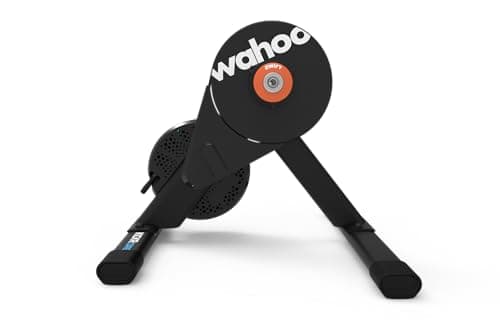
#ad We may earn a commission · Price as of October 22, 2026
The Hub's idea, built by the company that now owns it: virtual shifting, WiFi and a heavier flywheel on a trainer you can still get support for.
- Type
- Direct drive, electromagnetic
- Claimed accuracy
- ±2%
- Max resistance
- 1,800 W
- Max gradient
- 16%
- Flywheel
- 5.4 kg
- Connectivity
- WiFi, Bluetooth, ANT+ FE-C
What we'd praise
- The same virtual-shifting idea — Zwift Cog and Click in the box — on hardware that is still made
- Onboard WiFi, which the Hub never had and which removes the most common cause of dropouts
- ±2% rather than ±2.5%, and a heavier 5.4 kg flywheel
- Race Mode transmits power at 10 Hz, which matters if you race on Zwift
- A warranty from a company that still sells trainers
What we'd flag
- Costs more than a used Hub, sometimes considerably more
- Same 1,800 W and 16% ceilings as the Hub — this is not a performance upgrade
- Fixed frame with no movement of any kind
If what appealed about the Hub One was virtual shifting and a simple setup, this is where that product line went. The Cog and Click come in the box, the flywheel is heavier, the accuracy claim is tighter, and the trainer has WiFi. Full detail in our Kickr Core 2 review.
Good questions
Frequently asked questions
Why was the Zwift Hub discontinued?
Zwift withdrew the Hub line after resolving a patent infringement dispute with Wahoo, and the two companies moved to collaborating instead of competing. The Cog-and-Click virtual shifting system reappeared inside Wahoo's range — first as the Kickr Core Zwift One, and now as the Kickr Core 2 with Zwift Cog.
Is the Zwift Hub still worth buying in 2026?
Only used, and only cheaply. The hardware is a competent direct-drive trainer with a 4.7 kg flywheel and virtual shifting that still works. What you give up is warranty, spares and any guarantee of continued firmware attention, so price it as an orphaned product rather than a current one.
What is the difference between the Zwift Hub Classic and the Hub One?
The Hub Classic shipped with a conventional cassette and shifted with your bike's own gears. The Hub One replaced that with a single 14-tooth Zwift Cog on the freehub plus a wireless Click controller, giving 24 virtual gears in software with over 700% range and fitting almost any 8- to 12-speed bike without a cassette match.
What replaced the Zwift Hub?
The Wahoo Kickr Core 2 with Zwift Cog. It carries the same virtual shifting concept, the same 1,800 W and 16% ceilings, a heavier 5.4 kg flywheel, a tighter ±2% accuracy claim, and onboard WiFi that the Hub never had — along with a warranty from a company still making trainers.
How accurate is the Zwift Hub?
Zwift claimed ±2.5%, roughly six watts at 250 W. That is perfectly adequate for your own structured training, because training runs on repeatability rather than absolute truth. It is a weak figure for Zwift racing against riders on ±1% trainers, or for matching an outdoor power meter.
Does the Zwift Hub work without the Click?
The Hub One needs the Click, because the Click is the shifter — with a single 14-tooth cog on the freehub, gear changes happen only in software. A Hub One sold without its Click is significantly less useful, so confirm it is included and pairs before buying secondhand.
How we sourced this
- Zwift discontinues Hub Classic as Wahoo drops Kickr Core price (Cyclingnews)
- Zwift Hub One release: Zwift Cog and Click virtual shifting (Zwift Insider)
- Zwift Hub One in-depth review (DC Rainmaker)
- Wahoo and Zwift collaborate on Kickr Core Zwift One (BikeRadar)
- Zwift support: virtual shifting, Cog and Click, supported trainers
Keep going