Watts
The Best Garmin Power Meters, Ranked
Garmin sells one power meter in six boxes. The two letters pick your cleats, the number picks how many legs it measures, and the last digit picks the battery - here is how to read it, and which Rally to buy.
The short answer
Quick picks
| # | Product | Best for | Score | Price |
|---|---|---|---|---|
| 1 | 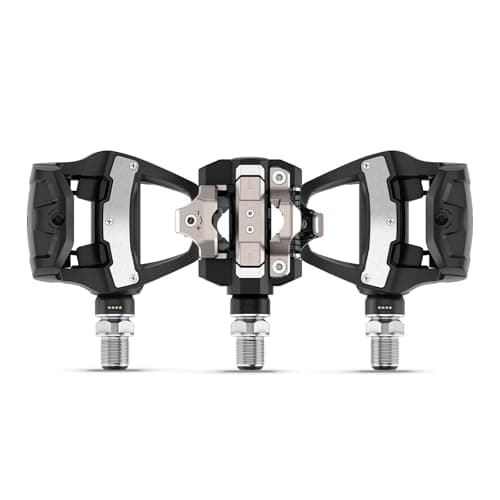 Garmin Rally RS210 For the rider on Shimano road shoes who wants everything Garmin measures: dual-sensing ±1% power with a 90-hour rechargeable battery, in the cleat system most road riders already own. | Best Garmin power meter overall | 9.09.0 out of 10 | $799.99 · View on Amazon $1,199.99Save 33% #ad We may earn a commission · Price as of November 22, 2026 |
| 2 | 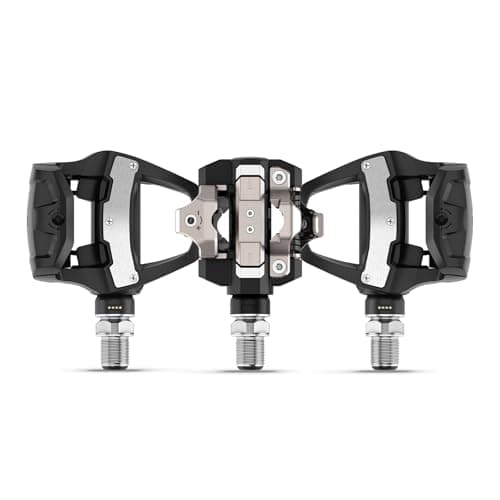 Garmin Rally RK210 For the rider already on Look Keo cleats: the RS210 with a different pedal body, and a universal spindle that can be converted to Shimano or SPD later. | Best Garmin power meter for Look Keo cleats | 9.09.0 out of 10 | |
| 3 | 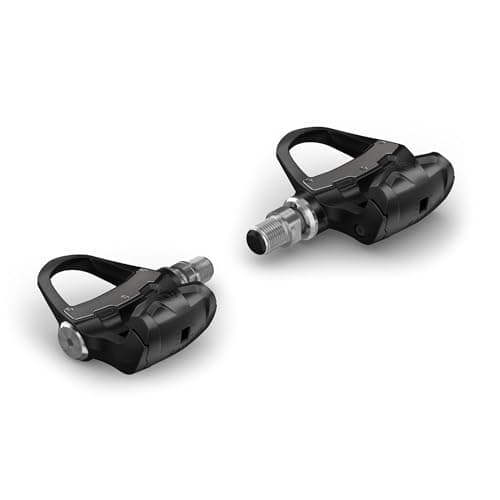 Garmin Rally RK200 For the rider who would rather carry spare coin cells than a charging cable: dual-sided ±1% power on Look Keo, for less than the rechargeable generation costs. | Best Garmin power meter if you refuse to charge a pedal | 8.78.7 out of 10 | $649.99 · View on Amazon #ad We may earn a commission · Price as of November 22, 2026 |
| 4 | Garmin Rally RS110 The budget pick and the right Garmin power meter for most riders: the same ±1% rechargeable platform as the RS210, measuring one leg and doubling it. | Budget pick: the cheapest Garmin power meter worth owning | 8.48.4 out of 10 | |
| 5 | 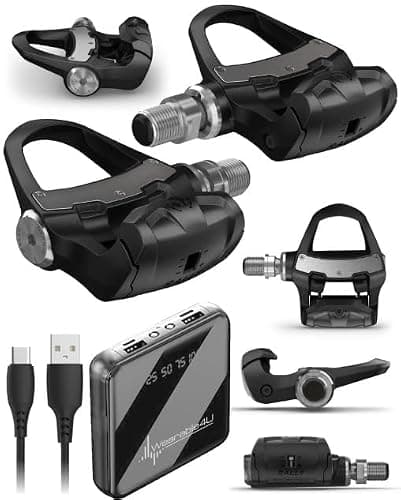 Garmin Rally RK100 For the Look Keo rider who wants Garmin power with no charging cable in their life: single-sided ±1% measurement and roughly 120 hours from replaceable cells. | Cheapest Garmin entry if your shoes are Look Keo | 8.28.2 out of 10 | $499.99 · View on Amazon #ad We may earn a commission · Price as of November 22, 2026 |
Garmin does not really sell six power meters. It sells one measuring platform and then changes three things: the pedal body, how many legs it measures, and the battery. Once you can read the model name, the whole range collapses into a single decision tree — and the Rally names are unusually logical about it.
How to read a Rally model name
The two letters are the cleat system. RS is Shimano SPD-SL road, RK is Look Keo road, XC is two-bolt SPD for off-road shoes. This is the part that has to match the shoes you own, and it is the only part that affects whether you can ride the thing at all.
The first digit is how many legs it measures. A 1 means single-sensing: one pedal measures, the figure is doubled, and left/right balance is unavailable. A 2 means dual-sensing: each pedal measures its own leg.
The last digit is the battery generation.Models ending in 0 (RK100, RK200) use replaceable coin cells. Models ending in 10 (RS110, RK210) use a sealed rechargeable pack with Garmin's quoted 90 hours and a 15-minute fast charge.
So an RS210 is a Shimano-cleat, dual-sensing, rechargeable Rally; an RK100 is a Look Keo, single-sensing, coin-cell Rally. The ±1% accuracy claim does not change anywhere in the range.
How we ranked them
Accuracy is not a differentiator here — Garmin publishes ±1% across the line — so the ranking runs on data depth (dual-sensing against doubled), then battery arrangement and what it does to your week, then what it costs for the capability. Cleat system is deliberately not a ranking factor, because it is not a quality question: whichever letters match your shoes is the right answer. Every figure below is Garmin's own published specification; how we review explains the method.
| Model | Cleats | Sensing | Claimed accuracy | Battery | Convertible |
|---|---|---|---|---|---|
| Rally RS210 | Shimano SPD-SL | Dual-sensing | ±1% | Rechargeable, ~90 h | Yes, body kit |
| Rally RK210 | Look Keo | Dual-sensing | ±1% | Rechargeable, ~90 h | Yes, body kit |
| Rally RK200 | Look Keo | Dual-sided | ±1% | LR44 coin cells | Yes, body kit |
| Rally RS110 | Shimano SPD-SL | Single-sensing | ±1% | Rechargeable, ~90 h | Yes, body kit |
| Rally RK100 | Look Keo | Single-sided | ±1% | Coin cells, ~120 h | Yes, body kit |
Dual-sensing: who actually needs it
Dual-sensing doubles the sensor count and raises the price meaningfully, so it is worth being precise about what it buys. A single-sensing meter measures your left leg and multiplies by two. If your legs are balanced, that is correct. If you are 53/47, your total is roughly 6% off — and crucially, it is off by the same amount every ride, so your training progression stays valid even while your absolute number does not.
That means dual-sensing matters in three cases: you are returning from a one-sided injury and want to see the imbalance close, you are doing bike-fit work where the balance figure is the output, or you compare absolute watts with other riders and need the number to be right rather than consistent. Outside those, single-sensing is the better buy and the money is better spent elsewhere. Single vs dual-sided power meters is the long version.
Coin cells against rechargeable, honestly
This is the most underrated decision in the range. A rechargeable Rally gives you 90 hours and a 15-minute top-up, and it never asks you to find a specific battery — but it is a sealed pack, so its life is finite and it is one more cable in a house that already has too many.
A coin-cell Rally gives you up to roughly 120 hours on the RK100, needs no charging habit, and is fixable anywhere in the world for the price of a coffee. The costs are a consumable to keep stocked and battery doors that are easy to overtighten. If you tour, travel with the bike, or know you will not charge things, the coin-cell models are the better engineering choice rather than the older one. How long do power meter batteries last has the detail.
Where Garmin is the wrong answer
If your budget stops below the RS110, there is no Garmin for you and we would rather say so — power meters under $200 is the band where that becomes crankset territory and no pedal exists. If you want dual-sided power for less than the Rally 210 series, the Favero range is the direct rival: the best Favero power meters and Favero Assioma vs Garmin Rally both cover it. And if you want a crank-based meter instead of pedals, the crank roundup is the other format.
One real advantage Garmin has that the spec sheet does not show: if you already ride a Garmin Edge and live in Garmin Connect, a Rally is the only power meter where the firmware updates, the pedal-smoothness metrics and the cycling dynamics all land in the same app you already use.
The verdict
Buy the Rally RS210 if your shoes are Shimano and you want the complete picture — dual-sensing, rechargeable, ±1%. Buy the RK210 if your shoes are Look Keo; it is the identical power meter with a different body. Buy the RS110 if you want the sensible one: it is the budget pick, it reads to the same ±1% on the leg it measures, and it is the Rally we would put on most bikes. Buy the RK200 or the RK100 if a coin cell beats a charging cable in your life, with the RK100 carrying the longest claimed runtime in the range.
Open to other brands?
See every power meter we rankTwo neighbors worth reading before you commit: the best power meter pedals ranks the Rally line against Favero and Wahoo, and power meter pedals vs cranks is the format decision that comes first.
The full reviews
Every pick, in detail
#1 · Best Garmin power meter overall
Garmin Rally RS210
9.09.0 out of 10$1,199.99Save 33%
#ad We may earn a commission · Price as of November 22, 2026
For the rider on Shimano road shoes who wants everything Garmin measures: dual-sensing ±1% power with a 90-hour rechargeable battery, in the cleat system most road riders already own.
- Type
- Dual-sensing pedal power meter
- Claimed accuracy
- ±1%
- Battery
- Rechargeable lithium-ion, up to 90 hours
- Quick charge
- 15 minutes for about 12 hours of riding
- Cleat system
- Shimano SPD-SL (RS body)
- Weight
- 312 g the pair
- Connectivity
- ANT+, Bluetooth, Secure Bluetooth
- Water rating
- IPX7
What we'd praise
- True dual-sensing — each pedal measures its own leg, so left/right balance is real data
- ±1% claimed accuracy, the figure Garmin publishes across the Rally line
- Rechargeable, with 90 hours a charge and a 15-minute top-up worth about 12 hours
- Shimano SPD-SL, which is the most common road cleat on the most common road shoes
- Moves between bikes with a pedal wrench — nothing about your drivetrain matters
What we'd flag
- The most expensive Garmin power meter here, and dual-sensing is a want more often than a need
- Rechargeable means a charging cable and a habit, where a coin cell means neither
- The RS body is Shimano-only out of the box; converting costs a body kit
- Pedal-based meters add stack height, which a bike fit should account for
- 312 g the pair is heavier than the race pedals most riders take off to fit these
The RS210 is the Rally we would buy. It is dual-sensing, which means each pedal measures its own leg independently rather than measuring the left and doubling it, and it uses the newer rechargeable battery with Garmin's quoted 90 hours a charge and a 15-minute quick charge worth roughly 12 hours of riding. The RS body takes Shimano SPD-SL cleats, which is what most road shoes in a group ride are set up for.
Dual-sensing is the thing worth understanding before you pay for it. A single-sensing meter measures your left leg and multiplies by two, so your total is only as accurate as your legs are balanced — and the resulting error is a property of you, not of the device, which is why no manufacturer can publish it. Single vs dual-sided power meters works through whether that matters for your riding.
The practical appeal of any pedal meter is transferability: a pedal wrench, five minutes, and your power meter is on a different bike, with no bottom bracket standard or crank length to match. Our Rally RS review and the pedal roundup cover the format against the rest of the market.
#2 · Best Garmin power meter for Look Keo cleats
Garmin Rally RK210
9.09.0 out of 10For the rider already on Look Keo cleats: the RS210 with a different pedal body, and a universal spindle that can be converted to Shimano or SPD later.
- Type
- Dual-sensing pedal power meter
- Cleat system
- Look Keo (RK body)
- Claimed accuracy
- ±1%
- Battery
- Sealed rechargeable, up to 90 h
- Fast charge
- 15 minutes for about 12 hours of riding
- Weight
- 312 g the pair
- Water rating
- IPX7
- Convertible
- Universal spindle — RS, RK and XC bodies
What we'd praise
- The same dual-sensing ±1% platform as the RS210, on a Look Keo cleat
- Universal spindle: the same pedals can be converted to SPD-SL or SPD with a body kit
- 90-hour rechargeable battery with the 15-minute fast charge
- Look Keo is the cheapest cleat system to replace, and the cleats are everywhere
- IPX7 and 312 g the pair, matching the RS210 exactly
What we'd flag
- Priced alongside the RS210, so the choice is cleats rather than capability
- Look Keo cleats wear faster than SPD-SL for most riders
- Conversion kits are an extra purchase, not an included accessory
- Same charging-habit trade-off as every rechargeable Rally
- Dual-sensing is still more data than most riders will act on
The RK210 and the RS210 are the same power meter. The spindle, the electronics, the ±1% claim, the 90-hour battery, the 312 g weight and the IPX7 rating are identical; what changes is the pedal body, and therefore the cleat on the bottom of your shoe. If you are already on Look Keo, this is your version.
The feature worth knowing about is the universal spindle. Garmin builds the RS, RK and XC bodies around one spindle, so a set of Rally pedals can be converted between road Shimano, Look Keo and two-bolt SPD with a body kit rather than a new power meter. That is genuinely useful if you suspect you might switch shoes, or move these pedals to a gravel bike one day. Our power meter pedals and cleats guide goes through the compatibility.
The RK210 review has the full detail, and Rally RS200 vs RK200 is the same cleat decision one generation back.
#3 · Best Garmin power meter if you refuse to charge a pedal
Garmin Rally RK200
8.78.7 out of 10#ad We may earn a commission · Price as of November 22, 2026
For the rider who would rather carry spare coin cells than a charging cable: dual-sided ±1% power on Look Keo, for less than the rechargeable generation costs.
- Cleat system
- Look Keo (RK body)
- Sided
- Dual-sided
- Claimed accuracy
- ±1%
- Battery
- Coin cell (LR44)
- Connectivity
- BT, ANT+
- Convertible
- To SPD-SL or SPD via a body kit
What we'd praise
- Dual-sided ±1% measurement at less than the 210-series price
- Coin cells, so there is no charging habit and no sealed battery to age out
- A dead battery is a two-dollar fix anywhere in the world, mid-tour included
- Convertible to SPD-SL or SPD with a body kit, like the rest of the Rally line
- The cheapest dual-sided Garmin power meter we rank
What we'd flag
- LR44 cells are a consumable you have to keep in a drawer
- No fast charge and no 90-hour rechargeable convenience
- The battery doors are the part people most often overtighten or lose
- An older generation, so firmware attention will move to the 210 series first
- Priced above the single-sensing 110 models, so the saving against a 210 is smaller than it looks
The RK200 is the previous-generation dual-sided Rally, and the difference from the RK210 is the battery. It runs on LR44 coin cells instead of a sealed rechargeable pack, which some riders consider a downgrade and others consider the whole reason to buy it.
The case for coin cells is simple: nothing to charge, nothing that ages out, and a dead battery that is a two-dollar fix from any hardware shop rather than a cable you forgot to pack. On a long tour or a trip abroad, that is a real advantage. How long do power meter batteries last compares the two approaches properly.
The case against is that you are buying an older platform at a price not far below the newer one. The RK200 review has the detail, and Favero Assioma vs Garmin Rally is the cross-brand version of this decision.
#4 · Budget pick: the cheapest Garmin power meter worth owning
Garmin Rally RS110
8.48.4 out of 10The budget pick and the right Garmin power meter for most riders: the same ±1% rechargeable platform as the RS210, measuring one leg and doubling it.
- Type
- Single-sensing pedal power meter
- Measures
- Left pedal only, doubled; right pedal is a dummy
- Claimed accuracy
- ±1%
- Battery
- Rechargeable, up to 90 hours
- Weight
- 320 g the pair
- Cleat system
- Shimano SPD-SL (RS body)
What we'd praise
- The same ±1% claim and the same rechargeable platform as the RS210, for substantially less
- Shimano SPD-SL, so it fits the road shoes most riders already own
- Transfers between bikes in minutes with a pedal wrench
- Your total watts are measured, not estimated from speed or heart rate
- Garmin's cheapest route into Rally data, Connect and Edge integration
What we'd flag
- Single-sensing: it measures the left leg and doubles it, so balance data is unavailable
- No upgrade path to dual-sensing — you buy a second sensing pedal set, not an add-on
- The right pedal is a dummy, so you are carrying weight that measures nothing
- Still needs charging, with no coin-cell fallback
- Any left-right imbalance you have is silently baked into every number it reports
This is the budget pick, and for most riders it is also the correct pick. The RS110 shares the RS210's ±1% claim, its rechargeable 90-hour battery and its SPD-SL body. What it gives up is the right-hand sensor: it measures your left leg and doubles the figure.
Here is the honest accounting of what that costs. Your total power number is accurate to the extent that your legs are balanced, and most riders are within a few percent most of the time. You lose left/right balance as a metric, and you lose the ability to detect a developing imbalance after an injury. You do not lose consistency — the number reads the same way every ride, which is what training with power actually depends on.
The single-sided roundup covers the trade in depth, power meters under $200 is the band below where no pedal exists at all, and best budget power meters ranks this against the cheaper cranksets.
#5 · Cheapest Garmin entry if your shoes are Look Keo
Garmin Rally RK100
8.28.2 out of 10#ad We may earn a commission · Price as of November 22, 2026
For the Look Keo rider who wants Garmin power with no charging cable in their life: single-sided ±1% measurement and roughly 120 hours from replaceable cells.
- Type
- Single-sided pedal
- Claimed accuracy
- ±1%
- Battery
- Replaceable cells, ~120 hours
- Cleat system
- Look Keo compatible
- Install
- Pedal wrench, minutes
- Connectivity
- BT, ANT+
What we'd praise
- Roughly 120 hours from replaceable cells, the longest claimed runtime in the Rally line
- No charging at all — spare cells live in a saddle bag and weigh nothing
- ±1% claimed accuracy, the same figure as every Rally above it
- Look Keo cleats are cheap and widely stocked
- Convertible to another cleat body later, like the rest of the range
What we'd flag
- Single-sided, with the same doubling caveat as the RS110
- Coin cells are a consumable, and the battery doors are easy to overtighten
- No fast charge and no rechargeable convenience
- An older generation than the 110/210 series
- The right pedal measures nothing, as on every single-sided pedal meter
The RK100 is the RS110's Look Keo sibling with the older battery arrangement, and the runtime is the headline: Garmin quotes roughly 120 hours from replaceable cells, which is the longest claimed figure anywhere in the Rally range. For a rider doing six hours a week that is most of a winter, and when it runs out you change a cell rather than find a cable.
Everything else follows the single-sided pattern: ±1% claimed accuracy on the leg it measures, one sensing pedal and one dummy, and a straightforward pedal-wrench install. Our installation guide covers the torque and the pairing, and connecting a power meter to Zwift covers the indoor side.
If you want to put it against the cheaper non-Garmin options, Garmin Rally alternatives is the page for that, and the best Favero power meters is the closest direct rival range.
Good questions
Frequently asked questions
Which Garmin power meter should I buy?
The Garmin Rally RS210 is the best Garmin power meter overall: dual-sensing, plus or minus 1% claimed accuracy, a rechargeable battery good for about 90 hours with a 15-minute fast charge, on Shimano SPD-SL cleats. For most riders the Rally RS110 is the better buy - the same platform and the same plus or minus 1% claim, measuring the left leg and doubling it, for substantially less. If your shoes use Look Keo cleats, buy the RK210 or RK100 instead; they are the same meters with a different pedal body.
What do the letters and numbers in Garmin Rally names mean?
The two letters are the cleat system: RS is Shimano SPD-SL, RK is Look Keo, XC is two-bolt SPD. The first digit is how many legs it measures - 1 for single-sensing, which doubles one leg, and 2 for dual-sensing, where each pedal measures its own leg. The last digit is the battery: models ending in 0, such as the RK100 and RK200, use replaceable coin cells, while models ending in 10, such as the RS110 and RK210, use a sealed rechargeable pack. The plus or minus 1% accuracy claim is the same across the whole range.
Is the Garmin Rally RS210 worth it over the RS110?
Only if you need left/right balance. Both claim plus or minus 1% accuracy and both use the same rechargeable platform; the RS210 adds a sensor in the right pedal so each leg is measured independently. That is worth paying for if you are rehabilitating a one-sided injury, doing bike-fit work, or comparing absolute watts with other riders. If you are training against your own numbers week to week, the RS110's doubled figure is consistent, which is what training with power actually relies on.
Can you change the cleat system on Garmin Rally pedals?
Yes. Garmin builds the RS, RK and XC pedal bodies around a universal spindle, so a set of Rally pedals can be converted between Shimano SPD-SL, Look Keo and two-bolt SPD with a body conversion kit rather than a whole new power meter. The kit is a separate purchase. This is a genuine advantage if you think you might change shoes or move the pedals onto a gravel or mountain bike later.
How long do Garmin Rally batteries last?
It depends on the generation. The rechargeable models - RS110, RS210, RK210 - are quoted at up to 90 hours per charge, with a 15-minute fast charge worth about 12 hours of riding. The coin-cell models are quoted higher: Garmin lists roughly 120 hours for the RK100 on replaceable cells. The coin-cell versions never need a cable and can be fixed anywhere, which is why they remain the better choice for touring and travel.
Do Garmin Rally pedals work with Zwift?
Yes. Every Rally broadcasts over both ANT+ and Bluetooth, so Zwift can read power from them on a PC, a Mac, an Apple TV, a tablet or a phone. Indoors they are normally paired as the power source while a smart trainer handles resistance, which is also the arrangement that lets your indoor and outdoor power numbers come from the same instrument. Our guide to connecting a power meter to Zwift covers the pairing order.
How we sourced this
- Garmin — Rally RS200 / RS100 series product page
- Garmin — Rally RK series product page
- Garmin — Rally 210 / 110 series product page
- Garmin — Rally RS/RK owner's manual (battery, accuracy, pedal body conversion)
- road.cc — Garmin Rally RS210 dual-sensing power meter pedals review
- the5krunner — Garmin Rally 210 / 110 review and buyer's guide
Keep going