Watts
The Best Power Meters Under $200, Ranked
Under $200 the power meter market changes shape completely: no pedals, no Favero, no Garmin, and in most cases no published accuracy figure. Here is what is genuinely available, ranked on what each maker will actually commit to.
The short answer
Quick picks
| # | Product | Best for | Score | Price |
|---|---|---|---|---|
| 1 | 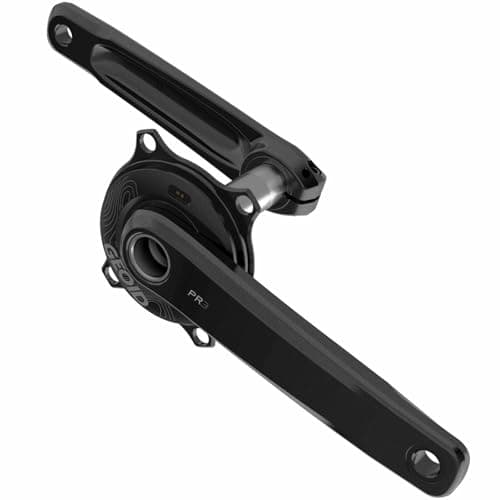 GEOID PM500 Power Meter Crankset The best power meter under $200 for most riders: a complete crankset, a published ±1.5% tolerance and roughly 300 hours of battery — on the understanding that no independent test of it exists. | Best overall under $200 | 7.27.2 out of 10 | |
| 2 | 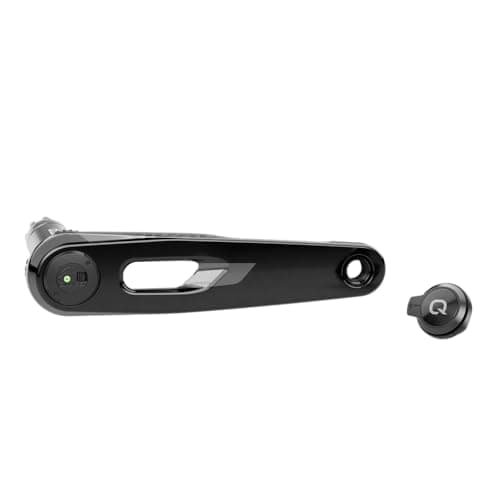 SRAM Rival Power Meter Spindle The obvious pick if your bike already runs SRAM DUB: a brand-name spindle swap that keeps your chainrings, with the same unpublished-tolerance caveat we apply to everything in the band. | Best if your bike is already SRAM DUB | 7.17.1 out of 10 | $195.00 · View on Amazon #ad We may earn a commission · Price as of November 22, 2026 |
| 3 | 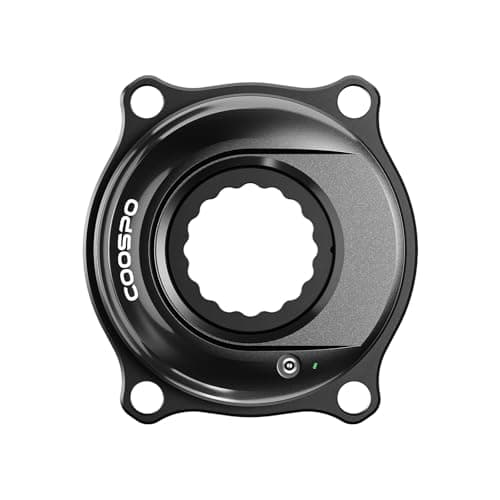 CooSpo S10 Power Meter Crankset The floor of the entire category: real measured watts for very little money, with no published tolerance to hold anyone to. | Budget pick — cheapest measured watts of any kind | 6.46.4 out of 10 |
Price bands usually shuffle the ranking. This one changes the product category. Above $350 you are choosing between formats — pedals, crank arms, cranksets, spiders — on accuracy, transferability and which drivetrain you run. Under $200, three of those four formats simply do not exist, and the question becomes something much blunter: who will put a number in writing?
That is what this page ranks on. Not features, not weight, not app design. What the maker publishes, and whether anyone independent has checked it.
What $200 rules out
Every pedal. There is no power meter pedal anywhere near this band. The cheapest single-sided pedal we rank sits comfortably above $350, and dual-sided pedals start higher still. That matters because pedals are the format most riders should buy: they move between bikes in minutes, they need no bottom bracket knowledge and they are the easiest thing to sell on. The power meter pedal roundup covers that market, and pedals under $500 is the cheapest band in which pedals exist at all.
Almost every established brand.Favero, Garmin, 4iiii, Quarq and Shimano have nothing under $200. The single exception is SRAM's Rival spindle, and it only fits a DUB bottom bracket. Everything else in the band comes from a direct-to-consumer brand with no long service record, which is a real risk rather than snobbery: a power meter is a sensor you intend to trust for years.
Dual-sided measurement. Nothing here measures both legs. Two picks measure the whole crankset, one measures the left leg and doubles it. If you know you have a significant imbalance — or want to know whether you do — dual-sided power meters start a long way above this page.
The accuracy question, said plainly
Every reputable power meter publishes a tolerance: Favero and Garmin state ±1%, 4iiii states ±1%, and that figure is the manufacturer committing to how far from true the reading may sit. In this band, GEOID publishes ±1.5%. For the CooSpo S10 we could not find a clearly published tolerance, and for the SRAM Rival spindle SRAM's pages render their specifications through scripts in a way we could not verify from an accessible source.
We are not going to pretend that absence is fine, and we are also not going to claim those units are inaccurate — we have not tested them and nobody we can cite has published a test either. What we can tell you is what the gap costs you in practice.
A power meter has two jobs. The first is consistency: reading the same way today as last month, so your training load and your progress mean something. An unverified meter can be perfectly good at this, and if your use is "am I fitter than in October" it may be all you need. The second job is comparability: producing a number another rider, a coach or a race organizer would recognize. That job needs a tolerance someone stands behind, and this band mostly cannot do it. How accurate are power meters goes through what each claim means.
How we ranked them
Published tolerance first, because it is the specification that defines the product, and a maker that publishes one has committed to something a maker that does not has avoided. Then install reality — what has to come off your bike, what standard it must match, and what you lose in the process. Then what you keep: a spindle swap that retains your chainrings is cheaper in real terms than a crankset that discards them. Then battery and connectivity, both of which are solved across the band — all three picks do Bluetooth and ANT+.
We have not tested any of these three. Every figure here is the manufacturer's own, labeled as such, and where a tolerance is unpublished we say so instead of substituting a plausible number. Our how we review page explains the method.
| Product | Format | Published tolerance | Measures | Fitment |
|---|---|---|---|---|
| GEOID PM500 | Complete crankset | ±1.5% (manufacturer) | Whole crankset | Check bottom bracket standard |
| SRAM Rival Power Spindle | Left arm + spindle | Not verifiable | Left leg, doubled | SRAM DUB only |
| CooSpo S10 | Complete crankset | Not clearly published | Whole crankset | 110 BCD, 4-bolt |
| For reference: Favero Assioma Uno | Pedal | ±1% | Left leg, doubled | Any bike, 3-bolt cleat |
The bottom bracket conversation nobody warns you about
Two of the three picks here replace your crankset, and that is where a cheap power meter turns into an afternoon. A crankset has to match the bottom bracket in your frame — DUB, BSA, BB86, T47, PF30 and others are not interchangeable without the right adapter — and it has to use chainrings with a bolt pattern that matches, which for the CooSpo means 110 BCD four-bolt.
Before you order anything in this band, find out three things: your bottom bracket standard, your current crank length, and your chainring bolt pattern. The first is usually printed in your frame's specification sheet; the second is stamped on the inside of the crank arm; the third you can count. Getting any of them wrong turns a $180 purchase into a $180 purchase plus a bottom bracket, a tool and a bike shop visit. Our installation guide walks through the checks in order.
The question to ask before you buy any of this
If you train indoors and ride outdoors casually, you may already own a power meter. A modern smart trainer measures power to a published tolerance — ±1% to ±2.5% depending on the model — and feeds it to Zwift, TrainerRoad and your training log without you buying anything. Smart trainer vs power meter is the page that works through which one your riding actually calls for, and are power meters worth it is the honest version of the question.
A power meter under $200 makes sense in two situations. The first: you ride outdoors and want your outdoor efforts measured rather than estimated, and you cannot justify a $400 set of pedals. The second: you want a single consistent number across indoor and outdoor riding, and your trainer and your road bike currently disagree. Both are real. "I want a power meter because serious riders have one" is not, and in this band it is the fastest route to a sensor you quietly stop trusting.
When to stretch past the band
The jump worth considering is to a pedal. It roughly doubles the spend and changes three things at once: a verified ±1% tolerance, the ability to move the meter to any bike you own in about ten minutes, and a resale market that actually exists. If there is any chance you will own a second bike — a gravel bike, a winter bike, a bike your partner rides — that transferability is worth more than the $200 you saved.
One step below that, the budget power meter roundupspans the $200 to $500 range where a single-sided pedal and a brand-name crank arm both appear, and the Magene PES P505 crankset sits just above this band as the cheapest crankset we rank from a maker with a real product history. If the honest answer is "wait two months and buy pedals," that is a perfectly good answer, and it is one we would rather give you than sell you a tolerance nobody publishes.
The verdict
Buy the GEOID PM500 if you want the best power meter under $200 and your bottom bracket cooperates: it is the only one in the band that publishes a tolerance, it is a complete crankset so nothing has to be matched, and roughly 300 hours of battery is a season. Buy the SRAM Rival Power Meter Spindle if your bike is DUB — the install is trivial by comparison, you keep your chainrings, and it is the one brand on this page already on your bike. Buy the CooSpo S10 if the alternative is riding with no power data at all.
And if you ride indoors on a smart trainer and outdoors three times a year, buy nothing. Your trainer is already measuring watts to a published figure, and that is the better number.
Budget a little more flexible?
See every power meter we rankTwo neighbors worth reading before you commit: the best single-sided power meters covers the doubling trade-off in detail, and power meter pedals vs cranks is the format decision this band makes for you.
The full reviews
Every pick, in detail
#1 · Best overall under $200
GEOID PM500 Power Meter Crankset
7.27.2 out of 10The best power meter under $200 for most riders: a complete crankset, a published ±1.5% tolerance and roughly 300 hours of battery — on the understanding that no independent test of it exists.
- Type
- Complete crankset with integrated meter
- Claimed accuracy
- ±1.5% (manufacturer)
- Battery
- Rechargeable, ~300 hours claimed
- Weight
- Around 680 g
- Install
- Full crankset swap
- Connectivity
- Bluetooth, ANT+
What we'd praise
- The only pick in this band with a published accuracy tolerance — GEOID states ±1.5%
- A complete crankset rather than a single arm, so nothing has to match your existing crank
- Around 300 hours on a rechargeable cell, which is a season for most riders
- Bluetooth and ANT+, so it pairs with a head unit, a watch, a phone and Zwift
- Fits the brief exactly: a measured number, outdoors, for well under $200
What we'd flag
- ±1.5% is wider than the ±1% the established brands publish, and there is no third-party verification we can cite
- A direct-mount crankset must match your bottom bracket standard — get this wrong and nothing fits
- Little long-term reliability record next to Favero, Garmin or 4iiii
- Your original crankset comes off and has no further use, which is real money thrown away on a good bike
- No dual-sided option and no upgrade path within the product
In a band where most of the hardware publishes no accuracy figure at all, GEOID publishes one: ±1.5%. That single fact is why this ranks first. A power meter is a measuring instrument, and the specification you are actually buying is the tolerance — without it you have a number with no contract behind it.
What you get for the money is a complete crankset with the strain gauges built in, so there is no arm to match, no bonded pod and no pairing of parts from two makers. It broadcasts over Bluetooth and ANT+, which covers every head unit, watch and training app that reads power, including Zwift. GEOID claims around 300 hours from a rechargeable cell, which for a rider doing eight hours a week is most of a winter.
Two honest cautions. The first is verification: ±1.5% is a manufacturer claim and we have found no independent test of this unit to cite, which is a meaningfully weaker position than Favero or Garmin, whose numbers have been checked publicly for years. The second is fitment — a direct-mount crankset has to match your bottom bracket, so identify your standard before you order rather than after. Our power meter installation guide covers the checks, and how accurate are power meters explains what a ±1.5% claim does and does not promise you.
#2 · Best if your bike is already SRAM DUB
SRAM Rival Power Meter Spindle
7.17.1 out of 10#ad We may earn a commission · Price as of November 22, 2026
The obvious pick if your bike already runs SRAM DUB: a brand-name spindle swap that keeps your chainrings, with the same unpublished-tolerance caveat we apply to everything in the band.
- Type
- Left crank arm with power meter spindle
- Interface
- DUB spindle
- Crank length
- 165 mm as listed
- Measurement
- Single-sided, doubled
- Fit
- SRAM DUB cranksets
- Published tolerance
- Not verifiable in an accessible spec sheet
What we'd praise
- The only pick in the band from a drivetrain manufacturer you already trust on your own bike
- One arm and a spindle rather than a whole crankset — the least invasive installation here
- No bonded pod on the arm, so there is nothing to catch on a frame, a bag or a shoe
- Stays inside the SRAM AXS ecosystem for firmware and app support
- Keeps your chainrings, which on a SRAM AXS bike is a large part of the crankset's value
What we'd flag
- SRAM's model pages render specifications through scripts and we could not verify a published accuracy tolerance to cite
- DUB-only: no use on a Shimano or non-DUB bottom bracket without a wider rebuild
- Listed at 165 mm, shorter than most riders run — check the length against your current crank carefully
- Single-sided and doubled, so a left-right imbalance is invisible to it
- No upgrade path to dual-sided measurement later
If your bike is already SRAM DUB, this is the tidiest route to power in the band. You replace one crank arm and the spindle, keep your chainrings and your bottom bracket, and leave the rest of the drivetrain untouched. On a SRAM AXS bike, keeping the chainrings is worth meaningful money on its own — they are a large part of what a crankset costs.
It is also the only pick here from a company whose parts are already on your bike, which is not a small thing in a band otherwise populated by brands with no service history. Firmware and app support live inside the SRAM AXS ecosystem you may already be using for shifting.
We rank it just behind the GEOID for one specific reason: SRAM's model pages render their specifications through scripts and we could not verify a published accuracy tolerance for this unit from an accessible source. That is not a claim it is inaccurate — it is a refusal to quote a figure we cannot stand behind. Note too that it is single-sided and doubles your left leg, which single vs dual-sided power meters explains the consequences of, and that it is listed at 165 mm — measure your current crank before ordering.
#3 · Budget pick — cheapest measured watts of any kind
CooSpo S10 Power Meter Crankset
6.46.4 out of 10The floor of the entire category: real measured watts for very little money, with no published tolerance to hold anyone to.
- Type
- Crankset with integrated meter
- Claimed accuracy
- Not clearly published
- Chainring fitment
- 110 BCD, 4-bolt
- Crank lengths
- 160 - 172.5 mm
- Install
- Full crankset swap
- Connectivity
- Bluetooth, ANT+
What we'd praise
- The lowest price at which a genuine strain-gauge power number exists at all
- Standard 110 BCD four-bolt fitment covers a lot of modern road cranks
- A broad crank-length range including shorter 160 mm options, which taller-geared riders rarely find cheap
- Bluetooth and ANT+, so nothing about the pairing is unusual
- Half the price of everything else in the band, which makes it the honest budget pick
What we'd flag
- We could not find a clearly published accuracy tolerance, which is the strongest reason for caution on this page
- No independent verification record we can cite, and no meaningful reliability history
- A crankset swap means the bottom bracket standard has to be checked carefully
- Nothing here is transferable between bikes the way a pedal is
- If it drifts, you will have no reference to notice it against unless you also ride a smart trainer
The S10 answers exactly one question: what is the least you can spend and still see a measured power number rather than an estimate? It is a complete 110 BCD four-bolt crankset with the electronics inside, broadcasting over Bluetooth and ANT+ to anything that reads power.
We include it because it is real hardware at a real price, and pretending the bottom of the market does not exist would be dishonest about what $100 buys. We rank it last because we could not find a clearly published accuracy tolerance for it, and that is the one specification a measuring instrument has to have. A power number with no stated tolerance is a reading, not a measurement.
So the use case is narrow and genuine: buy it if the alternative is no power meter at all, and treat the number as a training signal for your own progress rather than a figure you compare with other riders. If you already ride indoors on a smart trainer that publishes a tolerance, you have a reference to sanity-check it against, which makes this a much safer purchase than it looks.
Good questions
Frequently asked questions
What is the best power meter under $200?
The GEOID PM500 crankset. It is the only power meter we rank in this band that publishes an accuracy tolerance - GEOID states plus or minus 1.5% - and it is a complete crankset, so nothing has to be matched to your existing crank. It claims roughly 300 hours from a rechargeable battery and broadcasts over both Bluetooth and ANT+. If your bike runs a SRAM DUB bottom bracket, the SRAM Rival Power Meter Spindle is the better install because you keep your chainrings.
Are cheap power meters accurate?
Some may be; the problem is that most under $200 do not publish a tolerance, so there is nothing to hold them to. Established brands state plus or minus 1%, and GEOID states plus or minus 1.5% in this band, but for the CooSpo S10 we could not find a clearly published figure and SRAM's specification pages were not verifiable from an accessible source. A cheap meter can still be consistent enough to track your own progress. What it cannot reliably do is produce a number comparable with another rider's.
Can you get power meter pedals under $200?
No. The cheapest single-sided power meter pedals we rank sit comfortably above $350, and dual-sided sets start higher again. Under $200 the only formats available are a complete crankset or a crank arm and spindle swap, both of which must match your bottom bracket and neither of which transfers between bikes the way pedals do. If pedal transferability matters to you, the honest advice is to save for the next band up.
Do I need a power meter if I have a smart trainer?
Not for indoor riding. A modern smart trainer measures power to a published tolerance - typically plus or minus 1% to plus or minus 2.5% depending on the model - and sends it straight to Zwift, TrainerRoad and your training log. A power meter earns its place when you ride outdoors and want those efforts measured rather than estimated, or when you want one consistent number across indoor and outdoor riding.
What do I need to check before buying a crankset power meter?
Three things: your bottom bracket standard (DUB, BSA, BB86, T47 and others are not interchangeable), your current crank length (stamped on the inside of the arm), and your chainring bolt pattern if the meter comes without rings - the CooSpo S10, for example, is 110 BCD four-bolt. Getting any of them wrong turns a cheap power meter into a cheap power meter plus a bottom bracket, a tool and a shop visit.
Is a single-sided power meter good enough?
For most riders, yes. A single-sided meter measures one leg and doubles it, so your total is accurate only to the extent that your legs are balanced - and the resulting error is a property of you rather than of the device, which is why no maker can publish it. It is consistent for tracking your own training load. It is not the right tool if you specifically want to measure or correct a left-right imbalance.
How we sourced this
Keep going