Head to Head
Elite Rivo vs Elite Justo
Elite's entry trainer and its flagship, about double the price apart. The flagship measures power properly and has the heavier flywheel. The cheap one has WiFi, and the flagship does not.

The short answer
Quick picks
| # | Product | Best for | Score | Price |
|---|---|---|---|---|
| 1 | 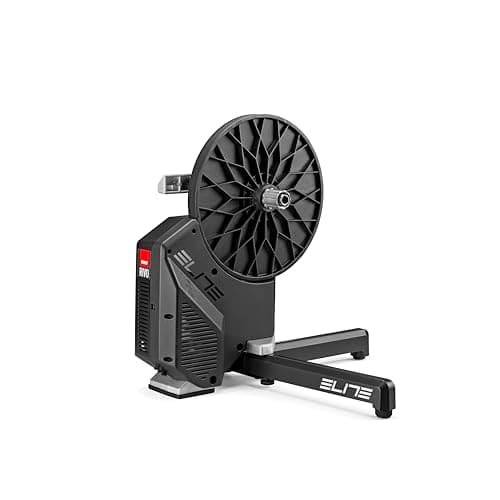 Elite Rivo The better buy for most riders, and the strange one to recommend: it is the cheaper trainer, and it is also the one with WiFi. What you give up is a measured watt. | The pick unless you specifically need a measured watt | 8.38.3 out of 10 | $549.99 · View on Amazon #ad We may earn a commission · Price as of November 22, 2026 |
| 2 | 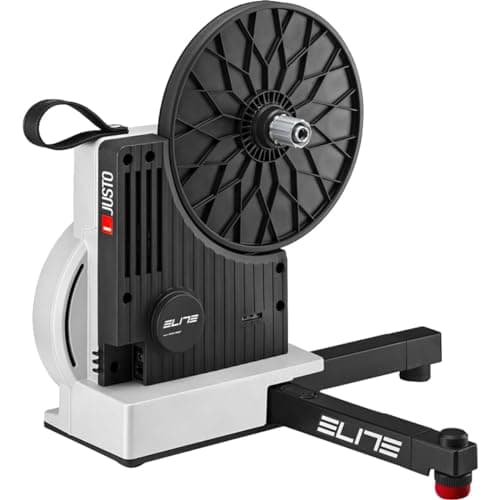 Elite Justo The better trainer, and the harder purchase: a measured ±1%, the heavier flywheel and a 24% ceiling, missing the one radio the cheaper model has. | The buy if you want a measured ±1% watt and the heavier flywheel | 8.68.6 out of 10 | $1,049.00 · View on Amazon #ad We may earn a commission · Price as of November 22, 2026 |
| 3 | 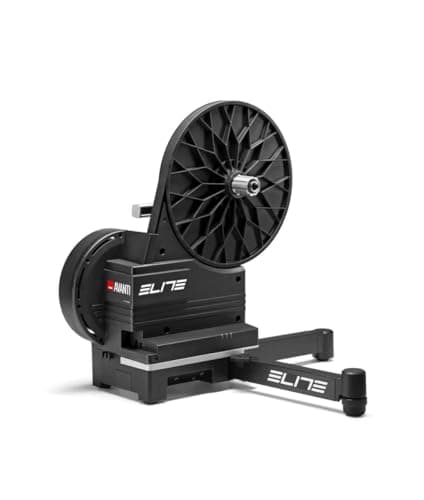 Elite Avanti If this comparison has made you want the Justo's measurement and the Rivo's WiFi, this is the trainer that has both — at the cost of the Justo's flywheel and gradient. | The trainer that resolves this whole dilemma | 8.68.6 out of 10 | $749.99 · View on Amazon #ad We may earn a commission · Price as of November 22, 2026 |
| 4 | 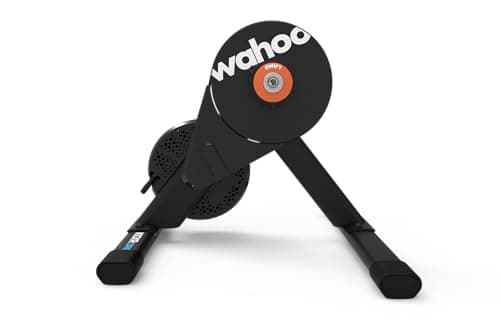 Wahoo Kickr Core 2 Worth pricing before you commit to either Elite: a heavier flywheel than the Rivo and the Avanti, WiFi, and the best support record of the four. | The cross-shop from outside Elite's range | 8.98.9 out of 10 |
This is the cleanest ladder comparison Elite offers, and it has an unusual shape. Normally the expensive trainer wins every row and you decide whether the margin is worth it. Here the cheaper trainer wins one row outright, and it happens to be the row that affects your riding most often.
| Specification | Elite Rivo | Elite Justo |
|---|---|---|
| Power measurement | Estimated | Optical torque sensor — measured |
| Claimed accuracy | ±2.5% | ±1% |
| Max resistance | 2,000 W at 40 km/h | 2,300 W at 40 km/h |
| Max gradient | 18% | 24% |
| Flywheel | 4 kg | 6.2 kg |
| Onboard WiFi | Yes | No |
| Bluetooth | Yes | Yes |
| ANT+ FE-C | No | Yes |
| Zwift protocol | Yes | Via Bluetooth |
| Position in range | Entry direct drive | Flagship (superseded by the Justo 2) |
Estimated versus measured: the real difference
The accuracy row is usually the least useful line on a trainer spec sheet, because for training what matters is repeatability rather than absolute accuracy. This is the exception, and the reason is the word before the number.
The Justo has an optical torque sensor. It measures the force going through the drivetrain and publishes ±1%. The Rivo has no torque sensor: it calculates power from what it knows about the resistance unit, and publishes ±2.5%.
An estimate is still perfectly usable. If you train to your own numbers — intervals, zones, an FTP test, this week against last week — the same trainer with the same algorithm is internally consistent, which is all a training plan requires. An estimate becomes a problem when the number has to travel: to a coach reading your file against someone else's, to a race category, or next to a power meter on your outdoor bike. Our guide to smart trainer accuracy draws that line, and smart trainer vs power meter covers what happens when two devices disagree.
The WiFi inversion, and why it matters more than it sounds
The Rivo has onboard WiFi. The Justo does not. This is not a rounding error in Elite's range — it is the reason the Justo 2 exists.
Two practical consequences. First, connection competition. Every Bluetooth device in your pain cave is contending for a limited number of channels, and on an Apple TV that limit is the single most common cause of a lost session. A trainer on WiFi is a trainer that has removed itself from that queue — which is exactly the problem our trainer not connecting guide spends most of its length on, and ANT+ vs Bluetooth for Zwift explains protocol by protocol.
Second, firmware. A WiFi trainer updates itself quietly over the network. A Bluetooth-only trainer updates through a phone app, standing next to it, which means in practice that a lot of them simply do not get updated.
The Justo answers back with ANT+ FE-C, which the Rivo lacks. If you control your trainer from an older Garmin or Wahoo head unit rather than an app, that is a genuine point in the Justo's favor — but for the large majority running Zwift on a tablet, Apple TV or computer, WiFi is worth more.
Flywheel mass, honestly
6.2 kg against 4 kg. This is the Justo's clearest and least arguable win, and it has nothing to do with watts.
A heavier flywheel stores more energy, so it carries you through the dead spot in the pedal stroke more smoothly and feels closer to a bike rolling on a road. 2.2 kg is a meaningful difference in a class where the whole spread is about 3 kg.
Who notices? Riders doing low-cadence, high-torque work, where the dead spot is most exposed, and riders coming from a lot of outdoor riding who are sensitive to feel. Who does not? Anyone spending most of their indoor time in ERG mode, where the trainer holds a target and the flywheel is simply not the thing you are paying attention to.
The ceilings
2,300 W against 2,000 W is the easiest row to dismiss. If you can put 2,000 W through a trainer, you are not reading a buying guide to find out which one to get.
24% against 18% deserves more respect, because gradient ceilings are weight-dependent. A trainer simulating a slope has to produce force proportional to rider weight, so a heavier rider meets the resistance limit at a lower simulated gradient than a lighter one. A 150 lb rider will not find the Rivo's 18%. A 220 lb rider who seeks out the steep stuff might. If that is you, this is the row to weigh, along with the published rider weight limit, which is a separate specification — bike trainer weight limits covers it.
Worth noting: the Justo's 24% is higher than the Wahoo Kickr v6's 20%, which makes it the highest gradient ceiling in this whole comparison and one of the highest at any price.
One thing to know about where the Justo sits
Elite has since introduced the Justo 2, and the headline change was exactly the gap this page keeps returning to: WiFi. That has two implications for a buyer.
The good one is price. A flagship that has been superseded is the flagship that gets discounted, which is why a Justo can sometimes be found close to mid-range money — and at that price a measured ±1% and 6.2 kg of flywheel is a lot of trainer.
The caution is lifecycle. A superseded model gets less firmware attention and less stock over time. We are not going to tell you a current-generation trainer is a bad buy; we are telling you to check the price gap on the day, because that gap is what this decision actually turns on.
The verdict
Most riders should buy the Rivo. The ceilings it gives up are ceilings you will not reach, the flywheel difference matters most in a kind of riding many people never do, and the thing it has that the Justo does not — WiFi — is the one that affects whether your session starts on time. That is a lot of trainer for roughly half the money.
Buy the Justo if you want power measured rather than estimated, if you are heavy enough to meet an 18% ceiling, if a heavier flywheel is something you have ridden and wanted, or if you control the trainer from an ANT+ head unit.
Buy the Avanti if reading this has made you want the sensor and the WiFi together, and price the Kickr Core 2 before committing to any of them — it has a heavier flywheel than either the Rivo or the Avanti, WiFi, and the better support record.
One thing neither Elite does is move. If you ride long indoors and comfort rather than watts is what limits you, that is a separate purchase — rocker plates and rocker feet covers what a platform under the trainer actually changes, and what it does not.
Want the whole field?
See every smart trainer rankedThe full reviews
Head to head
#1 · The pick unless you specifically need a measured watt
Elite Rivo
8.38.3 out of 10#ad We may earn a commission · Price as of November 22, 2026
The better buy for most riders, and the strange one to recommend: it is the cheaper trainer, and it is also the one with WiFi. What you give up is a measured watt.
- Type
- Direct drive, electromagnetic
- Claimed accuracy
- ±2.5%, estimated power
- Max resistance
- 2,000 W at 40 km/h
- Max gradient
- 18%
- Flywheel
- 4 kg
- Connectivity
- Bluetooth, WiFi, Zwift protocol
What we'd praise
- Has onboard WiFi, which the Justo does not — the cheaper trainer here carries the newer radio
- A firmware update over WiFi happens without a phone in the loop, and a WiFi connection does not compete with your sensors for Bluetooth channels
- Reaches 2,000 W at 40 km/h and simulates 18%, both of which are beyond what the overwhelming majority of riders will ever ask for
- Costs a large fraction less than the Justo, and the gap is bigger than the specification gap
- Zwift protocol support, so it is a current-generation trainer rather than a run-out model
What we'd flag
- ±2.5% and, more importantly, ESTIMATED power rather than measured — there is no torque sensor in it
- A 4 kg flywheel against the Justo's 6.2 kg, so less inertia through the dead spot of the pedal stroke
- 18% and 2,000 W are the lower ceilings of the two, and gradient ceilings are weight-dependent
- No ANT+, so an older head unit that only speaks ANT+ FE-C cannot control it
- Thinner independent testing record than the Justo, which has been reviewed for years
The Rivo is Elite's entry direct-drive trainer, and the reason it wins this comparison for most people is that the money gap is much larger than the experience gap. It reaches 2,000 W at 40 km/h and simulates 18%, numbers almost nobody reading this will reach, and it has onboard WiFi, which the flagship Justo does not.
That inversion is the single most useful fact on this page. WiFi is not a luxury on an indoor trainer — it takes the trainer out of the Bluetooth queue that your heart rate strap, your cadence sensor and your tablet are already fighting over, and it makes firmware updates something that happens rather than something you schedule.
The real compromise is the word estimated. The Rivo calculates power rather than measuring torque, with a published ±2.5%. For training to your own numbers that is consistent and fine. For anything that has to be comparable to another device, it is the thing you are giving up. Our Elite Rivo review covers it in full.
#2 · The buy if you want a measured ±1% watt and the heavier flywheel
Elite Justo
8.68.6 out of 10#ad We may earn a commission · Price as of November 22, 2026
The better trainer, and the harder purchase: a measured ±1%, the heavier flywheel and a 24% ceiling, missing the one radio the cheaper model has.
- Type
- Direct drive, electromagnetic
- Claimed accuracy
- ±1% (optical torque sensor)
- Max resistance
- 2,300 W at 40 km/h
- Max gradient
- 24%
- Flywheel
- 6.2 kg
- Connectivity
- ANT+ FE-C, Bluetooth
What we'd praise
- ±1% from an optical torque sensor — power is measured rather than estimated, which is the real difference between these two trainers
- 6.2 kg flywheel against the Rivo's 4 kg, so noticeably more inertia and a more road-like feel
- A 24% gradient ceiling, the highest of any trainer in this comparison and higher than Wahoo's flagship
- 2,300 W at 40 km/h, so sprint headroom is simply not a question
- ANT+ FE-C as well as Bluetooth, so an older Garmin or Wahoo head unit can control it
- Years of independent reviews behind it, including DC Rainmaker and Cyclingnews coverage
What we'd flag
- No onboard WiFi — the cheaper Rivo has it and this does not, which is the reason the Justo 2 exists
- Costs roughly double the Rivo for a measured watt and 2.2 kg of extra flywheel
- Without WiFi, the trainer is another Bluetooth device competing with your strap and your sensors
- Firmware updates go through a phone rather than happening quietly over the network
- Heavier and bulkier than the Rivo, which matters if the trainer shares a room
On the specifications that describe a trainer's job, the Justo wins almost everything. An optical torque sensor and a published ±1% instead of an estimate. A 6.2 kg flywheel instead of 4. A 24% gradient ceiling, which is higher than the Wahoo Kickr v6 manages. 2,300 W at 40 km/h.
The one thing it does not have is WiFi, and that absence is well documented — it is precisely why Elite introduced the Justo 2. On a trainer that is otherwise a flagship, being the Bluetooth device in a crowded room is a real daily annoyance rather than a spec-sheet footnote, especially on an Apple TV where channels are scarce.
So the Justo is the trainer to buy if you specifically want measurement and mass. It is not the trainer to buy because it is the more expensive one. Our Elite Justo review has the detail, and Elite Justo vs Wahoo Kickr v6 runs it against the obvious rival at that price.
#3 · The trainer that resolves this whole dilemma
Elite Avanti
8.68.6 out of 10#ad We may earn a commission · Price as of November 22, 2026
If this comparison has made you want the Justo's measurement and the Rivo's WiFi, this is the trainer that has both — at the cost of the Justo's flywheel and gradient.
- Type
- Direct drive, electromagnetic
- Claimed accuracy
- ±1% (optical torque sensor)
- Max resistance
- 2,100 W at 40 km/h
- Max gradient
- 18%
- Flywheel
- 4 kg
- Connectivity
- ANT+, Bluetooth, WiFi, Ethernet
What we'd praise
- The only trainer in this comparison with BOTH a measured ±1% optical torque sensor and onboard WiFi — it is the answer to the Rivo-versus-Justo trade
- Onboard Ethernet as well as WiFi, which is the connection that never drops
- Sits between the Rivo and the Justo on price rather than above both
- ANT+ as well as Bluetooth, so older head units work
What we'd flag
- A 4 kg flywheel, the same as the Rivo — this fixes the measurement question, not the inertia one
- 18% gradient ceiling rather than the Justo's 24%
- 2,100 W at 40 km/h, between the two but closer to the Rivo
- Newer, so the independent testing record is thinner than the Justo's
Read the two trainers above and a specific frustration emerges: the cheap one has the radio you want and the expensive one has the sensor you want. The Avanti is Elite's answer to exactly that. A measured ±1% optical torque sensor, plus ANT+, Bluetooth, WiFi and Ethernet.
What it does not inherit is the Justo's mass. The flywheel is 4 kg, the same as the Rivo, and the gradient ceiling is 18% rather than 24%. So the Avanti resolves the measurement-versus-connectivity trade and leaves the feel question open.
We compare it both ways: Elite Avanti vs Elite Rivo is the narrower question of what the torque sensor and the extra radios are worth, and Elite Avanti vs Kickr Core 2 puts it against the trainer it actually competes with on price.
#4 · The cross-shop from outside Elite's range
Wahoo Kickr Core 2
8.98.9 out of 10Worth pricing before you commit to either Elite: a heavier flywheel than the Rivo and the Avanti, WiFi, and the best support record of the four.
- Type
- Direct drive, electromagnetic
- Claimed accuracy
- Under ±2%
- Max resistance
- 1,800 W
- Max simulated grade
- 16%
- Flywheel
- 11.9 lb / 5.4 kg
- Connectivity
- WiFi, Bluetooth, ANT+ FE-C
What we'd praise
- A 5.4 kg flywheel — heavier than either the Rivo or the Avanti, and close to the Justo's 6.2 kg
- WiFi, Race Mode at 10 Hz and sensor bridging that relays a heart rate strap through the trainer
- Sold in a Zwift Cog and Click version, so virtual shifting needs no cassette purchase
- Wahoo's US support and firmware cadence are a step ahead of Elite's
- DC Rainmaker tested two units and found them performing identically within roughly ±2%
What we'd flag
- Under ±2% claimed, so it does not solve the measurement question the Justo does
- 1,800 W and a 16% ceiling are the lowest figures in this comparison
- No carry handle and no flexible feet
- Virtual shifting with the Click officially works in Zwift only
Nobody should buy an Elite trainer without pricing this one. The Core 2 sits in the same bracket as the Rivo and Avanti, carries a 5.4 kg flywheel that beats both of them, has WiFi, Race Mode and sensor bridging, and comes from the company with the better support record in the US.
Where it loses to the Justo is measurement: under ±2% rather than a measured ±1%. Where it loses to all three Elites is ceilings, at 1,800 W and 16%. Our Kickr Core 2 vs Kickr v6 covers the Wahoo-internal version of this same decision, and best smart trainers ranks the whole field.
Good questions
Frequently asked questions
Is the Elite Rivo or the Elite Justo better?
The Justo is the better trainer and the Rivo is the better buy for most riders. The Justo measures power with an optical torque sensor to a published plus or minus 1%, carries a 6.2 kg flywheel and simulates 24% gradients. The Rivo estimates power at plus or minus 2.5% with a 4 kg flywheel and an 18% ceiling — but it has onboard WiFi, which the Justo does not, and it costs roughly half as much.
Does the Elite Justo have WiFi?
No. The Justo connects over ANT+ FE-C and Bluetooth only, and the cheaper Elite Rivo is the one with onboard WiFi. That gap is the main reason Elite introduced the Justo 2. On a trainer at flagship price it is a real daily annoyance, because the trainer then competes with your heart rate strap and sensors for Bluetooth channels — a problem that is worst on an Apple TV.
What does estimated power mean on the Elite Rivo?
It means there is no torque sensor. The Rivo calculates power from what it knows about its resistance unit and publishes plus or minus 2.5%, where the Justo measures force through the drivetrain with an optical torque sensor and publishes plus or minus 1%. An estimate is internally consistent, so intervals, zones and FTP tests all work. It becomes a limitation when the number has to be compared with another device or another rider's data.
Is a 4 kg flywheel enough for indoor training?
Yes for most riding, and it is the clearest thing the Justo's 6.2 kg buys you. A heavier flywheel stores more energy and carries you through the dead spot in the pedal stroke more smoothly, which is most noticeable in low-cadence, high-torque work and least noticeable in ERG-mode intervals where the trainer is holding a target. If flywheel feel is your priority, note that the Wahoo Kickr Core 2 carries 5.4 kg at a similar price to the Rivo.
Which Elite trainer has both a torque sensor and WiFi?
The Elite Avanti. It publishes a measured plus or minus 1% from an optical torque sensor and carries ANT+, Bluetooth, WiFi and Ethernet, and it sits between the Rivo and the Justo on price. What it does not inherit is the Justo's mass: the flywheel is 4 kg, the same as the Rivo, and the gradient ceiling is 18% rather than 24%.
Should I buy an Elite Justo now that the Justo 2 exists?
Check the price gap on the day, because that is what the decision turns on. A superseded flagship is the one that gets discounted, and a measured plus or minus 1% with a 6.2 kg flywheel at mid-range money is a lot of trainer. The caution is lifecycle: an older model gets less firmware attention and thinner stock over time. The Justo 2's headline change was adding the WiFi the original lacks.
Does the Elite Rivo work with Zwift?
Yes. The Rivo supports Bluetooth and the Zwift protocol as well as WiFi, so it pairs and is controlled normally. The one thing it lacks is ANT+, so if you drive your trainer from an older Garmin or Wahoo head unit rather than an app, the Justo is the one that speaks that protocol.
How we sourced this
- Elite — Rivo technical specifications (manufacturer)
- Elite — interactive trainer range specifications (manufacturer)
- Elite — Justo 2 specifications (manufacturer; the generation that added WiFi)
- Elite knowledge base — WiFi setup and automatic firmware updates on Avanti, Justo 2 and Rivo
- DC Rainmaker — Elite Justo smart trainer in-depth review (independent)
- Cyclingnews — Elite Justo 2 smart trainer review (independent)
- Wahoo — KICKR CORE 2 specifications (manufacturer, cross-shop)
Keep going