Trainer Review
Elite Suito Review
The direct-drive trainer you can actually put away. Four years on, the portability still has no real rival — and almost everything else has been beaten.
Most direct-drive trainers assume you have a room. They are heavy, awkwardly shaped, and once assembled they stay where they are. The Elite Suito was built on the opposite assumption: that a lot of people ride indoors in a space that has to become a living room again by seven o'clock. It folds, it has a sensible carry shape, and it weighs what one person can lift.
That premise still holds. What has changed is the competition around it. When the Suito launched, ±2.5% and a 15% gradient ceiling were reasonable for the money and WiFi did not exist below the flagships. Neither of those things is true now, and an honest review has to start there.
Suito or Suito-T? The only difference is the cassette
This trips people up constantly. The Suito ships with a cassette already fitted; the Suito-T is the same trainer supplied bare, on the assumption you have a cassette or want to choose your own. Everything mechanical and electronic is identical.
Buy the -T only if you already own a spare cassette that matches your drivetrain, or if you specifically want a 12-speed setup the bundled 11-speed does not cover. Otherwise the standard Suito is the simpler purchase, because a cassette plus the tools to fit it erases most of the price difference. Our cassette guide covers matching one to your chain, and it matters more than people expect — an 11-speed chain on a 12-speed cassette will shift badly and wear fast.
The optical torque sensor, and what ±2.5% means
The Suito measures power with an optical torque sensor rather than inferring it purely from a resistance model. That is a meaningful architectural point in its favor — there is a real measurement happening in the load path — and Elite claims ±2.5% for the result.
Two and a half percent is about six watts at 250. For your own structured training that is immaterial, because training runs on repeatability: if the trainer reads the same way every session, your zones are internally consistent, your intervals are graded correctly against each other, and your fitness trend is honest. Our accuracy guide is the long version of that argument, and it is the most useful thing an indoor rider can understand.
Where it costs you is comparison. Racing on Zwift against riders on ±1% hardware, or following a plan built around an FTP measured outdoors on a power meter, both put your number next to someone else's. It is also, plainly, the loosest claim in the current mid-tier: the Core 2 says ±2%, the Neo 2T and Kickr v6 say ±1%.
| Elite Suito | Elite Rivo | Kickr Core 2 | Kickr v6 | |
|---|---|---|---|---|
| Type | Direct drive | Direct drive | Direct drive | Direct drive |
| Claimed accuracy | ±2.5% | ±2.5% (estimated) | ±2% | ±1% |
| Max resistance | 1,900 W at 40 km/h | 2,000 W at 40 km/h | 1,800 W | 2,200 W |
| Max gradient | 15% | 18% | 16% | 20% |
| Flywheel | 3.5 kg | 4 kg | 5.4 kg | 16 lb |
| Onboard WiFi | No | Yes | Yes | Yes |
| ANT+ FE-C | Yes | No | Yes | Yes |
| Folds for storage | Yes | Yes | No | No |
| Cassette included | Suito yes, Suito-T no | Version dependent | Version dependent | No |
The 15% ceiling is the specification that actually bites
We normally argue that gradient ceilings are marketing. On the Suito, this is the one case where the number is low enough to be worth a second look: 15% is the bottom of the current field, and Zwift does contain climbs that exceed it.
In practice most riders never meet the limit, because trainer difficulty is usually set below 100%, which scales the simulated gradient down. At 50% difficulty a virtual 20% ramp asks the trainer for 10%, comfortably inside the Suito's range. What actually happens when you exceed it is not a failure — the trainer simply stops getting harder, so a very steep section feels flatter than it should rather than throwing an error.
If you specifically ride the steep Zwift climbs at full difficulty, that matters. If you do structured work and endurance rides, it never will.
The 3.5 kg flywheel is what you will feel
This, not the accuracy figure, is the specification most riders notice from the saddle. Flywheel mass carries your momentum through the dead spots at the top and bottom of the pedal stroke. At 3.5 kg the Suito is light — lighter than the Kickr Core 2's 5.4 kg and far below a flagship's 16 lb — and the result is a slightly more stop-start feel, particularly at low cadence and high torque.
It is not bad. It is still direct drive, and the jump from a wheel-on trainer to any direct-drive unit is much larger than the difference between two flywheel weights — our direct drive vs wheel-on comparison puts that in order. But if you grind big gears at 60 rpm you will notice more than someone spinning at 95. The upside of the low mass is the whole reason the trainer folds and carries.
Living with it
Setup is among the easiest in the category and the standard version arrives ready to ride. Noise is a non-issue — it is direct drive, so what you hear is your own drivetrain, which makes a clean chain the biggest single noise variable. Our quietest trainers ranking explains why the floor matters more than the trainer in a flat, and a mat should be on the list regardless.
The folding legs are the feature. Very few direct-drive trainers genuinely collapse and stand against a wall, and if your pain cave is also a dining room, that is not a nice-to-have — it is the difference between riding indoors and not. Our apartment setup guide is built around exactly that constraint.
Who should buy it
Buy the Suito if you need direct drive that packs away and you can find one at a discount or secondhand. That is a genuinely narrow requirement and the Suito is genuinely good at it.
Buy something else at full price. Elite's own Rivo is the cheaper, newer answer with WiFi and virtual shifting; the Kickr Core 2 is the heavier, better-connected one. Both are current products with reliable stock, which a four-year-old trainer from a since-refreshed range is not. The budget tier covers the full set of alternatives.
Shopping the mid-range?
See the current field rankedThe full reviews
Every pick, in detail
The trainer under review
Elite Suito-T
7.47.4 out of 10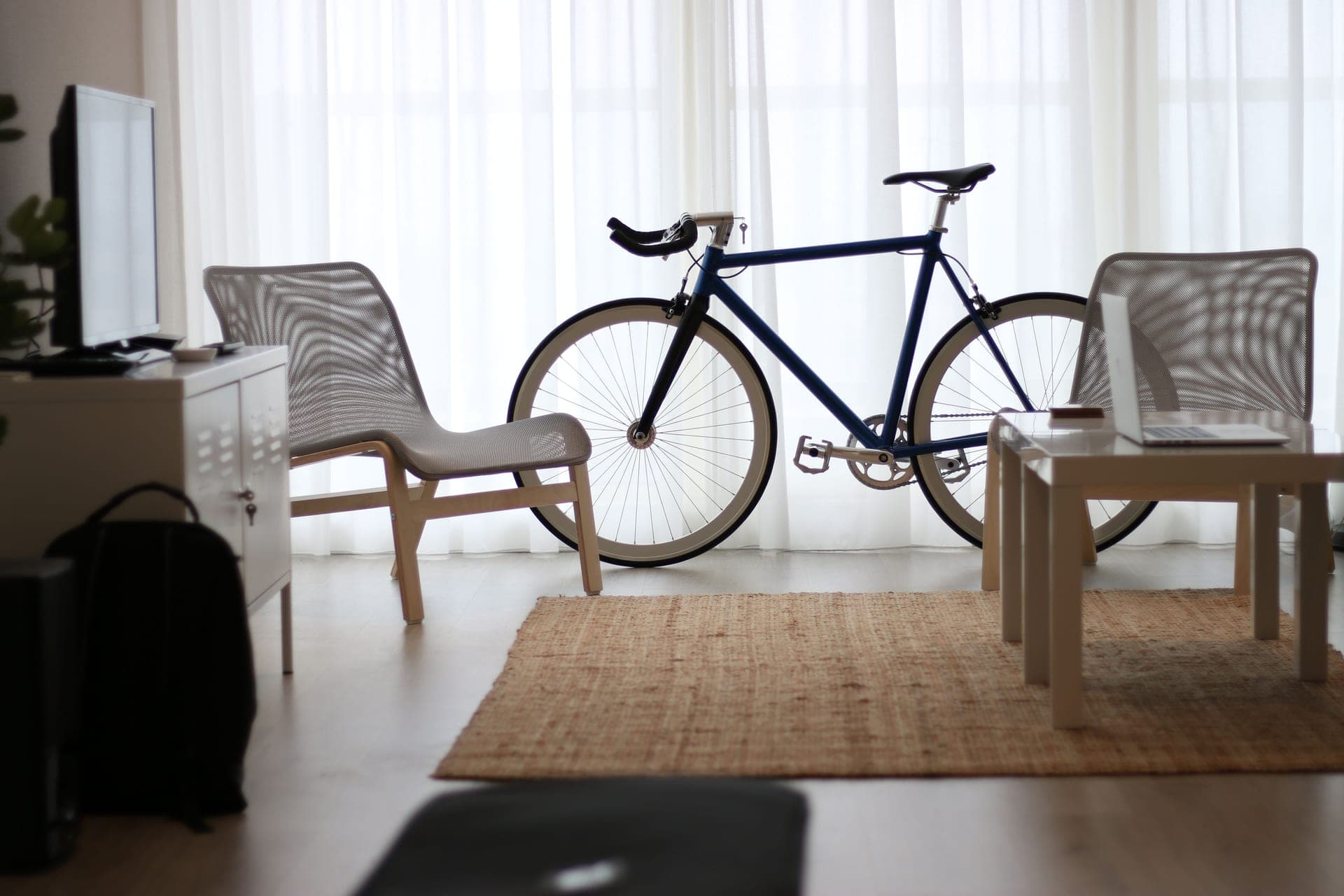
A well-judged, genuinely portable mid-tier trainer that has been overtaken. Still a sound buy at a discount or secondhand; no longer the default recommendation at full price.
- Type
- Direct drive, electromagnetic
- Claimed accuracy
- ±2.5% (optical torque sensor)
- Max resistance
- 1,900 W at 40 km/h
- Max gradient
- 15%
- Flywheel
- 3.5 kg
- Connectivity
- ANT+ FE-C, Bluetooth
What we'd praise
- Folding legs and a genuinely portable frame — it stores against a wall, which few direct-drive trainers do
- An optical torque sensor rather than a pure resistance model, so power is measured rather than inferred
- Sets up in minutes; the Suito version ships with a cassette already fitted
- Quiet in the way every direct-drive trainer is quiet, because the tire is out of the equation
What we'd flag
- ±2.5% is the loosest accuracy claim among current mid-tier direct-drive trainers
- 15% gradient ceiling is the lowest in its class, and low enough that some Zwift climbs clip it
- 3.5 kg flywheel is light, and the road feel is correspondingly less settled
- No WiFi, which is now available a tier down
- Stock is patchy — Elite's current range has moved on to the Rivo and Avanti
The Suito arrived as the answer to a specific question — what is the least compromised direct-drive trainer that a person can actually pick up and put away — and it answered it well. Folding legs, a compact frame, an optical torque sensor doing the measuring, and a cassette in the box on the standard version.
What has changed is everything around it. The tier below now contains direct-drive trainers with WiFi, and the tier at the same money now contains trainers with heavier flywheels and tighter accuracy claims.
Buy this instead, in most cases
Wahoo Kickr Core 2
9.09.0 out of 10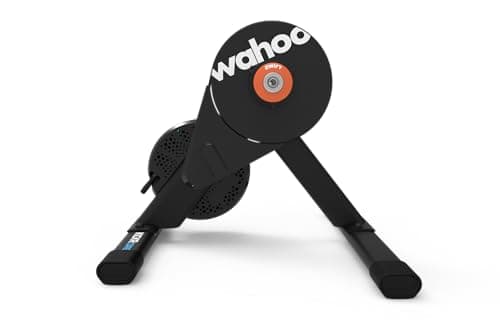
#ad We may earn a commission · Price as of October 21, 2026
The trainer the Suito used to be: the sensible mid-range default, now with the connectivity that used to cost flagship money.
- Type
- Direct drive, electromagnetic
- Claimed accuracy
- ±2%
- Max resistance
- 1,800 W
- Max gradient
- 16%
- Flywheel
- 5.4 kg
- Connectivity
- WiFi, Bluetooth, ANT+ FE-C
What we'd praise
- Onboard WiFi, which removes the single most common cause of dropouts and failed ERG sessions
- 5.4 kg flywheel against the Suito's 3.5 kg — a real difference in how settled the ride feels
- ±2% rather than ±2.5%, and measured by the trainer rather than modeled
- Currently in production and widely stocked, which the Suito is not
What we'd flag
- Bigger and heavier — it does not fold and it does not store easily
- Costs more than a discounted Suito
- No movement of any kind; the frame is fixed
If you are shopping the Suito new rather than picking one up cheaply, this is the honest alternative. It is heavier, better connected and tighter on accuracy, and it is the trainer most of this site's readers end up buying. Full detail in our Kickr Core 2 review.
Good questions
Frequently asked questions
What is the difference between the Elite Suito and the Suito-T?
Only the cassette. The Suito ships with a cassette already fitted; the Suito-T is the identical trainer supplied bare. Buy the -T only if you already own a matching cassette or specifically want a different speed count, because buying a cassette and the tools to fit it usually erases the price difference.
Is the Elite Suito accurate enough for training?
For your own structured training, yes. Elite claims ±2.5% from an optical torque sensor, which is roughly six watts at 250 W and consistent enough that your zones, intervals and fitness trend hold together. It is the loosest claim in the current mid-tier, so it is a weaker choice if your numbers need to match a racing field or an outdoor power meter.
Is the Elite Suito's 15% gradient limit a problem?
Rarely. Most riders run Zwift's trainer difficulty below 100%, which scales the simulated gradient down and keeps you well inside the limit. When you do exceed it the trainer simply stops getting harder rather than failing, so a very steep section feels flatter than it should. It only matters if you ride the steepest climbs at full difficulty.
Does the Elite Suito have WiFi?
No. It connects over ANT+ FE-C and Bluetooth. WiFi has since arrived at and below this price point — Elite's own Rivo has it, as does the Wahoo Kickr Core 2 — and it is the most useful thing missing from the Suito, because it removes the most common cause of dropouts and failed ERG sessions.
Is the Elite Suito still worth buying?
At a discount or secondhand, yes, especially if you need a direct-drive trainer that folds and stores. At full price, no — the Elite Rivo and the Wahoo Kickr Core 2 both beat it on connectivity and flywheel mass, and both are current products with reliable availability.
How heavy is the Elite Suito's flywheel?
3.5 kg, which is light for a direct-drive trainer. Flywheel mass is what carries your momentum through the dead spot of the pedal stroke, so the ride feels slightly less settled than heavier trainers, particularly at low cadence. That low mass is also what makes the trainer portable, which is the whole point of the design.
How we sourced this
Keep going