Pain Cave
Wahoo KICKR Headwind Alternatives, Ranked
The Headwind does two things: it moves a lot of air at the rider, and it changes its own speed from your ride data. Decide which of those you are paying for and the alternatives sort themselves out.
The short answer
Quick picks
| # | Product | Best for | Score | Price |
|---|---|---|---|---|
| 1 | 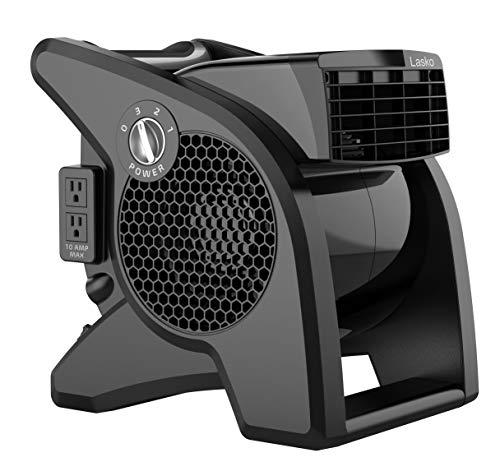 Lasko U15617 The honest answer for most riders looking at the Headwind's price: a high-velocity blower that puts a hard, aimable column of air on your chest for a fraction of the money, and gives up every connected feature to do it. | Best Headwind alternative overall | 8.68.6 out of 10 | |
| 2 | 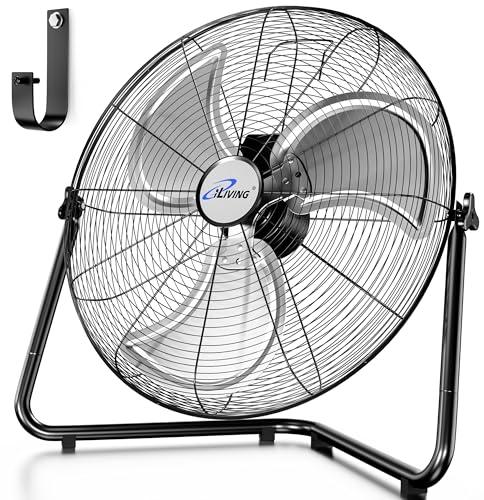 iLIVING 20-Inch Heavy Duty Floor & Wall Mount Fan The most air per dollar on this page, and the only pick that solves the pain cave's other problem at the same time: bolted to a wall it is permanently aimed at your chest and permanently out of your way. | Best airflow per dollar — and it gets off the floor | 8.58.5 out of 10 | $49.98 · View on Amazon #ad We may earn a commission · Price as of November 24, 2026 |
| 3 | 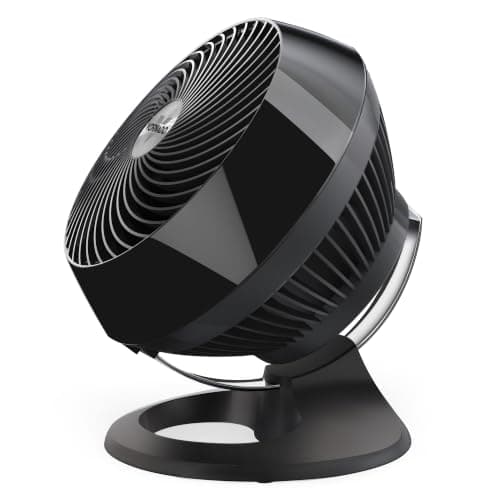 Vornado 660 The right alternative when the complaint is a hot, airless room rather than a hot rider: it keeps the whole space turning over instead of firing one column at your chest. | Best if the room, not the rider, is the problem | 7.97.9 out of 10 | |
| 4 | 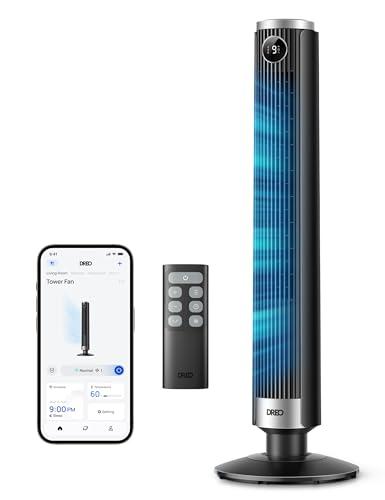 DREO Smart Tower Fan The pick for the rider whose real objection to a cheap fan is reaching down to change speed: app and voice control get you most of that convenience, but this is a tower fan and it does not move the air a blower does. | Closest thing to app control without the Headwind | 6.96.9 out of 10 | |
| 5 | 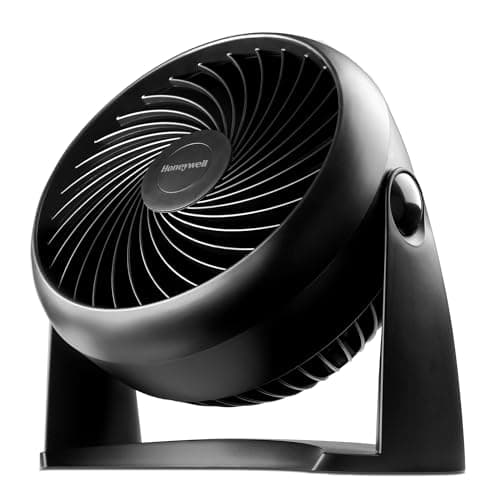 Honeywell HT-900 TurboForce The budget pick, and a genuinely sensible first move: for a tiny fraction of the Headwind's price it puts real moving air on your chest, and if you later upgrade it becomes the second fan. | Budget pick: the cheapest fan worth putting in front of a trainer | 7.47.4 out of 10 | $19.29 · View on Amazon #ad We may earn a commission · Price as of November 24, 2026 |
The Wahoo KICKR Headwind is the only mainstream fan designed specifically for a cyclist on an indoor trainer, and it is good at that job. Wahoo lists airflow of up to 30 mph (48 kph) in a column shaped for a rider, four manual speeds, and automatic modes that take heart rate or speed from your sensors — plus an Adaptive Cooling mode that ramps the fan up with power and down with heart rate. It pairs with Wahoo smart trainers, Wahoo TICKR and ANT+ heart rate monitors, and Wahoo RPM and ANT+ speed sensors, and it takes wireless software updates. None of that is marketing fluff; it works, and our Headwind review says so.
It also costs several times what a very good fan costs. That is the whole reason this page exists, and the useful question is not "what is cheaper" — almost everything is — but which of the Headwind's two jobs you are actually buying.
The Headwind does two separate things. Only one is replaceable cheaply.
Job one: move a lot of fast air at a rider.This is straightforward physics and a $50-90 high-velocity blower does it well. The Headwind's claimed 30 mph is genuinely strong, but a pivoting utility fan aimed correctly from a meter away is in the same conversation, and a 20-inch industrial fan moves far more total air. If this is what you want, you can have it for a fraction of the money with no real compromise beyond noise and looks.
Job two: change its own speed from your ride data. This is the part that is not available anywhere else at any price. The Headwind reads heart rate, speed or power off your sensors and trainer over Bluetooth and ANT+ and adjusts itself, which means the fan quietens during recovery and hits full speed when you do. Smart plugs and app-controlled fans get you remote control; they do not get you that. If the automation is the reason you are looking at the Headwind, buy the Headwind — every page on this site would rather tell you that than sell you a fan that disappoints you.
How we ranked them
Airflow at the rider first. Not total CFM, not room coverage — how much fast air a fan can put on a torso from roughly a meter away, which is the only thing that affects how an interval feels. A focused stream beats a bigger, slower one here, which is why a 20-inch drum fan and a tower fan with a higher spec sheet can both lose to a small blower.
Then aim and adjustability — whether the fan can be pointed at your chest from wherever it has to live, because a fan aimed at your shins is a fan doing a quarter of its job. Pivot range, mounting options and height all count here. Then smart features, scored honestly: one point for a fan with none, and no pick here scores above seven because none of them reads your ride data. Then value inside the category.
We have not tested these fans against each other with an anemometer, and every airflow figure on this page is the manufacturer's own published claim, labeled as such. No CFM number here is an independently measured result. How we review explains the method, and our full indoor cycling fan roundup ranks the category on its own terms rather than against the Headwind.
| Fan | Type | Published airflow claim | Speeds | Ramps with ride data? | Remote or app? |
|---|---|---|---|---|---|
| Wahoo KICKR Headwind (the original) | Smart directional fan | Up to 30 mph / 48 kph | 4 manual + auto modes | Yes - HR, speed, power | Yes (app + sensors) |
| Lasko U15617 | High-velocity blower | None published | 3 | No | No |
| iLIVING 20 in floor / wall mount | Industrial fan | 5,750 CFM (listing) | 3 | No | No |
| Vornado 660 | Whole-room circulator | Moves air up to 100 ft | 4 | No | No |
| DREO Smart Tower Fan | Smart tower fan | 28 ft/s (listing) | 9 + 4 modes | No | Yes (app + voice) |
| Honeywell HT-900 TurboForce | Compact turbo | Reaches up to 27 ft | 3 | No | No |
What no alternative gives you
Automatic speed from your ride data.Said once more because it is the only thing on this list you cannot buy around. A smart plug can turn a dumb fan on and off and can even step a three-speed fan if you wire it per speed, but nothing outside Wahoo's ecosystem reads your power or heart rate and adjusts a fan from it.
A shape designed for a bike.The Headwind's housing is 16 inches long, 12 wide and 19 high with the leg tucked, which puts the outlet at roughly the right height for a rider on a road bike without a crate under it. Every alternative here either needs something to stand on, needs wall mounting, or sprays a column that is the wrong shape for a person bent over a set of bars.
Trainer-ecosystem tidiness. If you already own a Wahoo trainer and a TICKR, the Headwind joins that system and is controlled from the same app. A third-party fan is one more thing with its own switch, or its own account.
What you gain by not buying the Headwind
Several hundred dollars, which buys real upgrades. At our last price check the gap between the Headwind and the Lasko was enough to cover a heart rate monitor under $100 and a trainer mat with change left over, and those two things change your indoor riding more than a fan that adjusts itself.
More air, if you want it. The industrial pick here has a far higher published CFM figure than anything Wahoo publishes for the Headwind, at under a fifth of the price. If your pain cave is a hot garage in July, raw volume of moving air matters more than automation.
A fan that is useful in the rest of the house. A Vornado circulator or a tower fan has a life outside the pain cave. A Headwind does not — it is a cycling accessory and it looks like one.
Where to put whichever fan you buy
This matters more than which model you choose, and it is free. Three rules we would hold to:
Get the outlet to chest height. Airflow across your torso and face is what drives evaporation; airflow across your calves does very little. A crate, a shelf, a trainer desk or a wall mount all work. This single change is worth more than one step up the fan hierarchy.
Aim it slightly up, from in front and to one side. Dead ahead at face height is unpleasant and dries your eyes out; from a front quarter, angled up at your chest, moves air over your torso, arms and head without blasting your eyeballs.
Keep it out of the sweat line. Sweat drips forward onto the floor, your frame and your stem, and a fan on the floor directly under your front wheel collects all of it. Bike trainer sweat protection covers the rest of that problem, which quietly destroys more indoor equipment than anything else.
The verdict
Buy the Lasko U15617if you want the Headwind's airflow and not its automation — it is the pick most riders reading this page should make. Buy the iLIVING 20-inch floor and wall mount fan if the pain cave is a garage or a basement, you can drill into a stud, and you would rather have the most air per dollar with the floor left clear. Buy the Vornado 660 if the problem is a hot, airless room rather than a hot rider. Buy the DREO Smart Tower Fan only if what you actually resent is reaching down to change speed, and accept that app control is not the same as a fan that follows your power. Buy the Honeywell HT-900 TurboForce if the budget is the budget — it is a real fan, it is cheap, and it is a sensible first move.
And if, after all that, job two is the one you care about: buy the Headwind. It is the only fan that does it, our review is positive about it, and a cheaper fan that leaves you reaching down mid-interval is not a saving.
Still deciding how much fan you need?
See every indoor cycling fan we rankThree neighbors worth reading before you commit: our Headwind review if you want the case for paying full price, the best Wahoo KICKR accessories if the Headwind was one item on a longer list, and pain cave setup ideas for where the fan fits in the room.
The full reviews
Every pick, in detail
#1 · Best Headwind alternative overall
Lasko U15617
8.68.6 out of 10The honest answer for most riders looking at the Headwind's price: a high-velocity blower that puts a hard, aimable column of air on your chest for a fraction of the money, and gives up every connected feature to do it.
- Type
- High-velocity blower
- Airflow
- Very high (focused stream)
- Speeds
- 3
- Smart control
- No
- Pivot
- Full 360 degrees, direct
- Best for
- Value high-airflow
What we'd praise
- A focused, high-velocity column of air, which is the one Headwind characteristic that actually matters on the bike
- Pivots a full 360 degrees, so you can aim it at your chest from the floor instead of settling for whatever angle the housing allows
- Three speeds, which in practice is all you use once you have found the one that matches your sweat rate
- A fraction of the Headwind's price at our last check, which is the entire reason this page exists
- Nothing to pair, update or re-pair — it is a motor and a switch
What we'd flag
- No connectivity of any kind: no Bluetooth, no ANT+, no ramping with heart rate, speed or power
- You get up mid-interval to change speed, or you leave it on one setting for the whole ride
- Loud at full speed in the way every high-velocity blower is loud — if you watch anything with dialogue, budget for headphones
- Utility-fan looks, which matters if the pain cave is in a living room rather than a garage
- Lasko publishes no CFM figure we could verify for this model, so we are not going to put a number on it
Strip the Headwind down to the thing that makes a difference to how you feel at threshold and you are left with a narrow, fast column of air aimed at your torso. That is what a high-velocity utility blower does, and the U15617 does it cheaply. It is the pick we would actually buy if the Headwind's price was the reason we were reading this page.
The pivot is the underrated part. A pedestal or tower fan aims where its housing lets it; this one rotates a full 360 degrees in its cradle, so it can sit on the floor to one side and still throw air up at your chest and face rather than at your shins. That single degree of freedom is most of what makes a cheap fan feel like it is doing the job, and it is also why a fan on a shelf behind you usually disappoints.
What you give up is everything on the connected side. There is no auto mode, so the fan does not notice when your heart rate climbs in the last two minutes of an interval — you do, and you either reach down or you live with it. It is also genuinely loud at speed three. If your pain cave shares a wall with someone, read our apartment indoor cycling setup guide before you buy any high-velocity fan, and cycling headphones under $100 if you want to keep hearing your workout audio over it.
#2 · Best airflow per dollar — and it gets off the floor
iLIVING 20-Inch Heavy Duty Floor & Wall Mount Fan
8.58.5 out of 10#ad We may earn a commission · Price as of November 24, 2026
The most air per dollar on this page, and the only pick that solves the pain cave's other problem at the same time: bolted to a wall it is permanently aimed at your chest and permanently out of your way.
- Type
- 20 in industrial floor / wall-mount fan
- Claimed airflow
- 5,750 CFM (per the listing)
- Power
- 120 W
- Speeds
- 3
- Mounting
- Floor or wall mount
- Listing
- UL listed (per the listing)
What we'd praise
- The highest claimed airflow figure of anything on this page by a wide margin — 5,750 CFM on the listing
- Mounts on a wall, which is the single best upgrade available to a cramped garage pain cave: it frees the floor and puts the air at torso height permanently
- Three speeds and a 120 W motor, so speed one is still a usable amount of air rather than a token setting
- Cheaper than every other full-size pick here at our last price check
- Metal construction that shrugs off a garage in a way plastic housings do not
What we'd flag
- No connectivity at all — same trade as every non-Wahoo fan on this page
- Loud. A 20-inch industrial fan at speed three is the loudest thing in this comparison and nothing about the design pretends otherwise
- Wall mounting needs a stud, a drill and a landlord who does not mind, so renters are back to using it on the floor
- Big: a 20-inch cage takes real floor space if you do not mount it
- The CFM figure is the manufacturer's own claim on the listing, not an independently measured result, and we have not tested it
This is the pick for the garage, the basement or the spare room where floor space is the constraint. It is an industrial 20-inch fan with a listed 5,750 CFM and a 120 W motor, and the important detail is in the name: floor and wall mount. Bolt it to a stud at chest height in front of the bike and you have solved aiming and storage in one move, for less money than any of the branded alternatives here.
It is worth being precise about what CFM does and does not tell you. CFM is total volume of air moved, not the velocity of the stream that reaches you, and a Headwind at 30 mph can feel more pointed at the rider than a much higher-CFM drum fan that sprays air everywhere. What a big slow-moving wall of air is very good at is stopping the room from turning into a sauna over an hour — which, in a closed garage in summer, is usually the actual problem. Our garage pain cave setup guide covers the rest of that fight.
The honest limits: it is the loudest thing here, wall mounting assumes you can drill into a stud, and the airflow number is iLIVING's own claim on the listing rather than an independently measured figure. We have not tested it and will not pretend otherwise.
#3 · Best if the room, not the rider, is the problem
Vornado 660
7.97.9 out of 10The right alternative when the complaint is a hot, airless room rather than a hot rider: it keeps the whole space turning over instead of firing one column at your chest.
- Type
- Whole-room air circulator
- Airflow
- Moves air up to 100 ft (claimed)
- Speeds
- 4
- Smart control
- No
- Adjustment
- Tilts 0 to 90 degrees
- Best for
- Hot, stuffy rooms
What we'd praise
- Circulates the whole room rather than drilling one stream at you, which is the right fix when the air itself has gone stale and warm
- Four speeds, and speed one is quiet enough to leave running while you watch something
- Tilts through 90 degrees, so it can be aimed at the ceiling to keep the room turning over or straight at the bike
- Much better looking and better built than a utility blower, which matters in a shared room
- Vornado's circulator design has been around long enough that the long-term reliability record is well established
What we'd flag
- No connectivity: no auto ramp, no app, no pairing to a trainer
- The stream that reaches your chest is softer than a high-velocity blower's — it is a different tool, not a cheaper Headwind
- The most expensive non-Wahoo pick here at our last check, and it is beaten on raw air by cheaper fans
- The 100 ft figure is a whole-room circulation claim, not a velocity measurement at the rider
- Only one unit of airflow adjustment matters on the bike and you still have to reach down to change it
There are two different indoor-cycling heat problems and they need different fans. One is evaporative: you need moving air across your skin so sweat can do its job. The other is environmental: a closed room with a person in it producing a couple of hundred watts of mechanical work and several times that in heat gets steadily warmer and more humid until nothing helps. A blower fixes the first. A circulator like the 660 fixes the second.
If you ride in a small closed room with the door shut and the problem is that minute 45 feels worse than minute 15 no matter how hard the fan blows, this is the pick — and the cheapest real fix of all is to open a door and let the 660 move air through the space. Riders in a basement or a garage in winter have the opposite problem, which garage heaters under $100 deals with.
The honest trade: per dollar it is beaten on raw airflow by both picks above it, and the "moves air up to 100 ft" figure is a circulation claim about a room, not a measurement of what hits your chest. If your complaint is specifically that you want more air on you, buy the Lasko or the iLIVING instead.
#4 · Closest thing to app control without the Headwind
DREO Smart Tower Fan
6.96.9 out of 10The pick for the rider whose real objection to a cheap fan is reaching down to change speed: app and voice control get you most of that convenience, but this is a tower fan and it does not move the air a blower does.
- Type
- Smart tower fan, 40-45 in adjustable height
- Claimed velocity
- 28 ft/s (per the listing)
- Speeds
- 9, plus 4 modes
- Control
- App and voice (per the listing)
- Oscillation
- 90 degrees
- Timer
- 12 hours
What we'd praise
- App and voice control, so you can change fan speed mid-interval without taking a hand off the bars — the nearest thing here to the Headwind's convenience
- Nine speeds rather than three, which means you can actually find the setting that matches a given session
- Adjustable 40-45 in height puts the outlet at torso height without a shelf or a crate
- A DC motor, so the low speeds are genuinely quiet rather than nominally quiet
- A 12-hour timer and four modes, which is useful if the fan lives in a room that is not only a pain cave
What we'd flag
- The smart part is scheduling, app and voice control — it does NOT ramp with your heart rate, speed or power the way the Headwind's auto modes do
- 28 ft/s works out to roughly 19 mph, well short of the Headwind's claimed 30 mph, and a tower's column is wide and soft rather than focused
- Voice control mid-effort means shouting at a speaker while breathing at threshold, which works less well than it sounds
- App control usually means an account, a 2.4 GHz network and a firmware update at the worst possible moment
- A tower fan is the wrong shape for a rider in an aero position: most of its column goes past you, not at you
Some people are not actually shopping for airflow. They are shopping for the thing the Headwind does that a $20 fan cannot: respond without being touched. If that is you, this is the closest you get without buying the Wahoo — nine speeds, four modes, app control and voice control, at roughly a third of the Headwind's price at our last check.
Be clear about the gap, because it is the whole reason the Headwind costs what it does. Wahoo's fan can take heart rate, speed or — in its Adaptive Cooling mode — power directly off your sensors and trainer and change its own speed from your ride data. A smart tower fan takes an instruction from an app or a voice assistant. Both save you the reach; only one of them notices the interval.
The physics are the other gap. The listing claims 28 ft/s, which is about 19 mph, against the Headwind's claimed 30 mph, and a tall narrow tower spreads that air over your whole body rather than concentrating it on your chest. If it is cooling you want rather than convenience, the Lasko above moves a lot more air for similar money. Our full Headwind review goes through the auto modes in detail.
#5 · Budget pick: the cheapest fan worth putting in front of a trainer
Honeywell HT-900 TurboForce
7.47.4 out of 10#ad We may earn a commission · Price as of November 24, 2026
The budget pick, and a genuinely sensible first move: for a tiny fraction of the Headwind's price it puts real moving air on your chest, and if you later upgrade it becomes the second fan.
- Type
- Compact turbo
- Airflow
- Reaches up to 27 ft (claimed)
- Speeds
- 3
- Smart control
- No
- Adjustment
- Pivots 90 degrees
- Best for
- Tight budgets
What we'd praise
- By far the cheapest pick here, and it is a real high-velocity design rather than a token desk fan
- Small enough to sit on a crate, a shelf or a trainer desk and still be aimed properly at your chest
- Pivots 90 degrees, so the aim problem is solvable even from an awkward position
- Cheap enough that buying two and pointing them at your torso from both sides is a legitimate strategy
- Ubiquitous and long-running, so replacement is trivial if the pain cave kills one
What we'd flag
- Small, so it cannot move the volume of air the full-size picks can — two of these still will not match the iLIVING
- No connectivity, no auto mode, no remote
- Noisy relative to its size, which is what a small high-velocity impeller sounds like
- All plastic, and it looks and feels like the price
- The 27 ft figure is a reach claim, not a velocity figure at the rider
If the honest version of your question is "how little can I spend and still stop dripping on the floor," this is the answer. The HT-900 is a small high-velocity design rather than an oscillating desk fan, and the difference is immediately obvious when you put it a meter from your chest.
The strategy we would actually suggest at this price: buy it, put it on a crate or a trainer desk so the outlet is at chest height, and ride a few sessions before deciding whether you need more. A surprising number of riders find that a small fan aimed correctly beats a big fan aimed at their knees, and you have then spent very little to find out. If it is not enough, the fan is cheap enough to keep as a second unit aimed at your other side.
The limits are the obvious ones. It cannot move the air a 20-inch industrial fan moves, it has no connectivity, and it is loud for its size. It also will not keep a closed room from getting hot over an hour — that is a circulator's job, and the Vornado above does it.
Good questions
Frequently asked questions
What is the best alternative to the Wahoo KICKR Headwind?
The Lasko U15617 high-velocity blower, for most riders. It puts a focused, aimable column of fast air on your chest - which is the Headwind feature that actually changes how an interval feels - at a small fraction of the price. If your pain cave is a garage, the iLIVING 20-inch floor and wall mount fan moves more air for less and can be bolted to a stud at chest height. The Honeywell HT-900 TurboForce is the budget pick.
Is there any fan that adjusts itself to your heart rate like the Headwind?
Not outside Wahoo's ecosystem, as far as we can establish. The Headwind takes heart rate, speed or power off your sensors and trainer over Bluetooth and ANT+ and changes its own fan speed, including an Adaptive Cooling mode that ramps up with power and down with heart rate. Smart plugs and app-controlled fans give you remote and scheduled control, which is a different thing. If the automation is why you are looking at the Headwind, buy the Headwind.
Is the Wahoo KICKR Headwind worth it?
It depends entirely on whether you use the auto modes. Wahoo lists up to 30 mph of airflow, four manual speeds and automatic modes driven by heart rate, speed or power, and the fan is genuinely built for a rider on a trainer rather than adapted to it. If you set a fan once and forget it, you are paying several times over for airflow you can buy cheaply. If you reach down to change fan speed two or three times a session and hate it, the Headwind is the only product that solves that.
Can you use a smart plug to make a cheap fan work like a Headwind?
Partly. A smart plug gets you voice and app control of on and off, and with a multi-speed fan wired per speed you can approximate steps. What it cannot do is read your power or heart rate and respond to it, because the plug has no connection to your trainer or sensors. So a smart plug plus a high-velocity blower is a good value setup for remote control, and not a substitute for the Headwind's automatic modes.
How much airflow do you actually need for indoor cycling?
More than a desk fan and less than you might think, provided it is aimed correctly. Getting the outlet to chest height and angling it up at your torso from a front quarter makes more difference than moving one step up the fan hierarchy, because evaporation happens across your torso and head rather than your legs. We have not measured these fans ourselves, and every airflow figure on this page is the manufacturer's own published claim.
Is a 20-inch industrial fan too much for a pain cave?
For airflow, no - for noise, possibly. A 20-inch industrial fan at full speed is the loudest option on this page by a clear margin, and in an apartment or a room with a thin wall that alone can rule it out. In a detached garage where nobody can hear it, it is the most air per dollar available and the wall-mount option solves the floor-space problem at the same time. Budget for headphones either way.
Does a fan replace a cooling towel or does it just move the sweat around?
A fan does the real work: sweat cools you by evaporating, and still air next to your skin becomes saturated so evaporation stops. Moving air clears that layer and restores the effect, which is why airflow helps more than ice water does. What a fan does not do is protect your bike and floor from the sweat that does land, which needs a mat and a frame cover.
How we sourced this
Keep going