The Pain Cave
The Best Garage Heaters Under $100, Ranked
Under $100 every heater is the same 1,500 W on a standard outlet, which means the wattage number tells you nothing. What separates them is whether they hold a temperature, where they put the heat, and whether they fit a garage that already contains a bike.
The short answer
Quick picks
| # | Product | Best for | Score | Price |
|---|---|---|---|---|
| 1 | 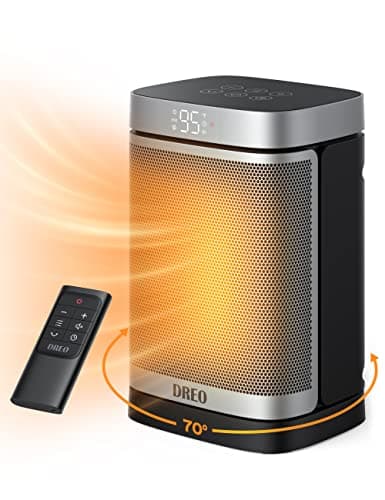 Dreo 1500 W Oscillating Ceramic Space Heater Best for the rider who wants the garage warm before the ride rather than during it — the timer and thermostat do that, and it is the cheapest pick here. | Best overall under $100, and the budget pick | 8.08.0 out of 10 | |
| 2 | 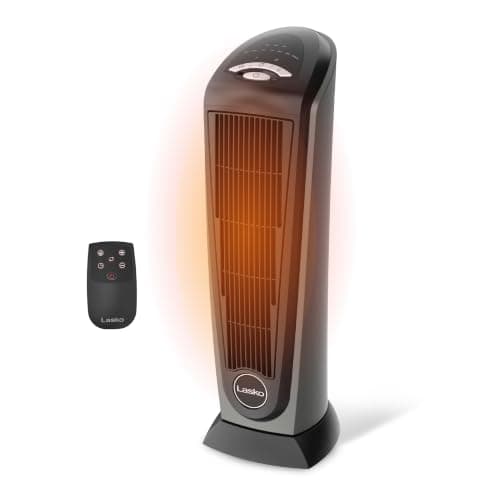 Lasko 751320 23-inch Ceramic Tower Heater Best where floor space is the constraint — a tall, narrow tower that throws warm air at riding height instead of at your feet. | Best for a tight corner and the longest throw | 7.87.8 out of 10 | |
| 3 | 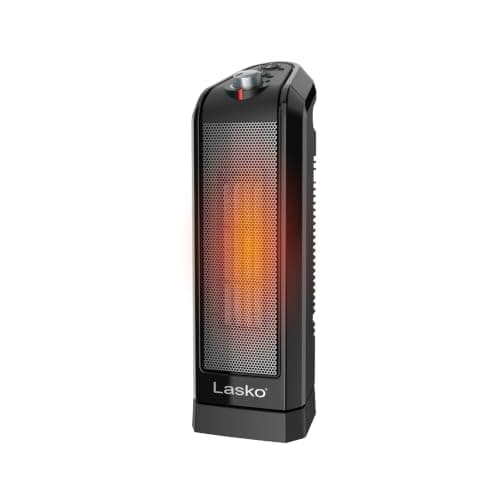 Lasko CT16450 16-inch Ceramic Console Heater Best when the heater has to live under something — stable, invisible, and the least convenient to operate. | Best for tucking under a bench or desk | 7.37.3 out of 10 |
A cold garage is the most common reason a winter training plan quietly dies, and a heater is a cheaper fix than a gym membership. But heater shopping under $100 is unusually confusing, because the number every listing shouts is the one number that is identical on all of them.
Why 1,500 W is on every box
A standard North American wall outlet is a 120 V circuit, and a portable appliance is designed to stay under 12.5 A on it. Multiply those out and you get 1,500 W, which is why every plug-in space heater sold for a garage is rated at 1,500 W — the Dreo, both Laskos, and every heater three times their price. Nobody is holding back extra heat for the premium models. The cap is the outlet.
That has two consequences. First, "1,500 W" is not a feature and you should ignore it when comparing. Second, there is a hard ceiling on what any of these can do: around 5,100 BTU per hour of heat, which is a space-heating appliance, not a garage-heating one. Getting more than that means a 240 V hard-wired unit, an electrician and several hundred dollars.
So the real question under $100 is not how much heat you get. It is what the heater does with it.
Convection or radiant — and why the band decides it for you
Convection heaters — all three picks here — warm the air and push it around the room with a fan. That works well in a sealed, insulated space and badly in a garage, because a garage door is essentially a large uninsulated panel with gaps around it, and warm air finds them. Heat the air in a leaky room and you are paying to warm the driveway.
Radiant heaters, the infrared kind, do something different: they heat objects and people directly in their line of sight, the way sunshine does. In a drafty garage that is the better physics, because it warms you whether or not the air stays put. The trade-off is directionality — you feel it where it is pointed and not elsewhere.
Here is the honest part. The radiant pick we rate highest for a garage sits just above this price band, which is why this page is all convection. If your garage is uninsulated and genuinely cold, read the full garage pain cave heater roundup before you commit to a sub-$100 unit; stretching slightly past the band buys you a different technology rather than a bigger number.
How we ranked them
Control first. Since output is fixed, the feature that changes your experience most is a thermostat and a timer — that is what makes pre-heating possible and stops the heater running flat out all evening. Shape second, because a pain cave garage has no spare floor and because heat delivered at torso height is worth more to a seated rider than heat at ankle height. Published specifications third: we rank what a maker actually states and say plainly where a figure comes from a retail listing instead. Then stability, which is not a spec sheet item but matters in a room where a bike gets lifted on and off a trainer every day.
We have not tested these heaters. Every figure here is the manufacturer's or the listing's own, labeled accordingly, and where no coverage area is published we do not invent one. Our how we review page explains the method.
| Heater | Type | Thermostat | Timer | Remote | Form |
|---|---|---|---|---|---|
| Dreo 1500 W Oscillating Ceramic | Ceramic convection | Yes | 1-12 h | Yes | Upright, 70° oscillation |
| Lasko 751320 tower | Ceramic convection | Adjustable thermostat | No | Yes | 23 in tower, narrow base |
| Lasko CT16450 console | Ceramic convection | Adjustable thermostat | No | No | 16 in low console |
Pre-heat, do not ride-heat
This is the single most useful habit in a cold pain cave, and it is why the timer outranks everything else on this page. A 1,500 W convection heater cannot win a fight against a garage while you are riding — and it does not need to, because a rider at any real intensity produces a lot of heat on their own. What you actually need is for the room to be tolerable for the first ten minutes, before your own output takes over.
So: run the heater for 30 to 60 minutes before you ride, with the door shut, and turn it down or off once you are warm. Then point your fan at yourself, because within fifteen minutes the problem reverses and you will want air moving, not heat. A rider who heats the room and runs a fan at the same time is paying twice to fight themselves. The timer on the Dreo exists precisely for this.
Safety, briefly and seriously
No combustion heaters in a closed garage.Propane and kerosene heaters are sold for garages and are genuinely dangerous when unvented, because incomplete combustion produces carbon monoxide — see the U.S. Consumer Product Safety Commission's guidance in our sources. A cyclist at threshold is moving an enormous volume of air through their lungs, which makes a rider the worst possible occupant of a room with a CO source in it. Every pick on this page is electric, deliberately.
Respect the circuit.A 1,500 W heater is most of a 15 A circuit by itself. Add a fan, a trainer, a laptop and a TV — and in a garage, often a freezer on the same run — and a tripped breaker mid-session is not a mystery.
Keep it out of the sweat zone. Sweat travels further sideways than people expect, and a heater is not an appliance you want salty water landing on. Put it upwind or far enough forward that the bike is between you and it.
What a cheap heater will not fix
It will not insulate your garage. A weatherstrip kit on the garage door and a cheap foam panel behind it will do more for a cold pain cave than any heater in this band, and cost less. It will not dry the room out either — a cold garage with a sweating rider in it is a condensation problem as much as a temperature one, which is worth knowing before you store a bike in there all winter.
And it will not make a 150 sq ft uninsulated double garage comfortable in hard frost. If that is your room, the honest options are a 240 V hard-wired heater, heating a smaller enclosed corner instead, or moving the trainer indoors. The garage pain cave setup guide covers flooring, damp, light and power alongside heat, and pain cave setup ideas is where to go if the room itself is still being planned.
The verdict
Buy the Dreo. In a band where every unit produces identical heat, the one with a thermostat and a timer is the one that changes how you train, and it happens to also be the cheapest — so it is both the top pick and the budget pick. Buy the Lasko 751320 if your garage has no spare floor and you would rather have warm air at riding height than a timer. Buy the Lasko CT16450 if the heater has to live under a bench and you will control it with a smart plug anyway.
And if your garage is genuinely cold rather than merely chilly, spend the extra and buy radiant instead of convection. That is a technology change, not an upgrade, and it is the one thing this price band cannot give you.
Garage properly cold?
See every garage heater, including radiantIf the garage is also where the trainer budget is tight, the best bike trainers under $200 ranks that band on the same principle as this page: once the headline number is fixed across every product, the thing worth paying for is the capability you cannot add later.
The full reviews
Every pick, in detail
#1 · Best overall under $100, and the budget pick
Dreo 1500 W Oscillating Ceramic Space Heater
8.08.0 out of 10Best for the rider who wants the garage warm before the ride rather than during it — the timer and thermostat do that, and it is the cheapest pick here.
- Type
- PTC ceramic convection, oscillating
- Rated output
- 1,500 W (per the listing)
- Oscillation
- 70 degrees
- Control
- Thermostat and remote
- Timer
- 1 to 12 hours
- Safety
- Overheat and tip-over protection, per the listing
- Supply
- 120 V standard outlet
What we'd praise
- A real thermostat, so it cycles to hold a temperature instead of running flat out until you turn it off
- A 1 to 12 hour timer, which is the single most useful feature on this page — set it to finish as you walk in
- 70 degrees of oscillation spreads the air rather than cooking one shin
- Remote control, so you are not getting off the bike to change anything
- The cheapest heater here, which makes it the budget pick as well as the top pick
What we'd flag
- Convection, not radiant: it heats air, and a garage leaks air
- We could not match this Amazon listing to a single model number on Dreo's own site, so the 1,500 W figure and the safety features are the listing's claims rather than a manufacturer spec sheet we could cite
- No published coverage area, so there is no honest way to say what size garage it suits
- 1,500 W is most of a 15 A circuit on its own, same as everything else here
Under $100 the heaters are all much the same lump of ceramic drawing the same 1,500 W, so the thing worth paying for is control — and this is the only pick here with both a thermostat and a timer. That combination is what turns a space heater into a pre-heater: set it for an hour, go and eat dinner, and walk into a garage that is already tolerable instead of standing in a cold one waiting.
The thermostat matters for the same reason. A heater without one runs at full output until you intervene, which in a small insulated space is wasteful and in a big leaky one is pointless. A thermostat cycles the element, holds a number and stops you cooking one end of the room.
One honesty note we will not bury: this is an Amazon listing we could not match to a single model number on Dreo's own product pages. The 1,500 W rating, the 70-degree oscillation, the timer range and the overheat and tip-over protection are all taken from the listing rather than from a manufacturer specification sheet we could cite. Everything else on this page is backed by a maker's own page, and that difference is why we say so here.
#2 · Best for a tight corner and the longest throw
Lasko 751320 23-inch Ceramic Tower Heater
7.87.8 out of 10Best where floor space is the constraint — a tall, narrow tower that throws warm air at riding height instead of at your feet.
- Type
- Ceramic convection tower, oscillating
- Rated output
- 1,500 W
- Height
- 23 in
- Oscillation
- Widespread, per Lasko
- Control
- Remote control included
- Footprint
- Tower — narrow base, vertical throw
- Supply
- 120 V standard outlet
What we'd praise
- A 23-inch tower on a narrow base — it takes up almost no floor in a garage already full of a bike and a trainer
- Pushes warm air out at torso height rather than at ankle height, which is where you actually are on a bike
- Remote included, and Lasko publishes the specification on its own product page
- Lasko's longest-running model; spares and replacements are easy to find
What we'd flag
- Convection again — it warms air, and a garage door leaks it
- No timer, so pre-heating means remembering to switch it on and off yourself
- Lasko publishes no coverage area, so there is no honest square-footage claim to make
- Taller units are easier to knock over in a room where you lift a bike on and off a trainer
The argument for a tower in a pain cave is geometry. A garage with a bike, a trainer, a fan, a mat and a bench does not have spare floor, and a 23-inch tower on a small base fits in the corner a console heater cannot. It also delivers air higher up, which is worth more than it sounds: on a bike your torso is a long way above the floor, and the cold you actually notice is at that height.
Against the Dreo, you lose the timer and gain reach and a published specification. Lasko documents this model on its own product page, which is more than the Dreo listing gives us, and the 751320 has been in production long enough to be a known quantity.
Height has one cost worth naming. In a room where you regularly lift a bike onto a trainer, a tall narrow appliance is the one most likely to get caught by a handlebar. Put it where the bike does not swing.
#3 · Best for tucking under a bench or desk
Lasko CT16450 16-inch Ceramic Console Heater
7.37.3 out of 10Best when the heater has to live under something — stable, invisible, and the least convenient to operate.
- Type
- Ceramic convection console, oscillating
- Rated output
- 1,500 W
- Height
- 16 in
- Oscillation
- Widespread, per Lasko
- Form
- Low console — sits under a desk or bench
- Supply
- 120 V standard outlet
What we'd praise
- Low and wide, so it slides under a workbench or a trainer desk and disappears
- Hard to knock over, which is the one advantage a short heater has in a room full of bikes
- Specified on Lasko's own product page, same as the tower
- Oscillates, so it is not aiming all 1,500 W at one spot on the floor
What we'd flag
- Warms the air at floor level first, which is the least useful place to put heat for a seated rider
- No timer and no remote — the least convenient control set on this page
- Convection, like both picks above it
- Barely cheaper than the better-controlled Dreo, which is why it ranks last
The console form has exactly two advantages and both are physical. It fits under a bench, a trainer desk or a shelf, which in a cramped garage can be the difference between owning a heater and tripping over one. And it is stable: a low wide box is the hardest thing here to knock over when a bike comes off the trainer sideways.
The trade is that heat starts at floor level and has to find its way up to you, and that you operate it by bending down. No timer, no remote. For a rider who pre-heats the room on a smart plug and never touches the heater again, none of that matters. For anyone else, the Dreo costs about the same and does more.
Good questions
Frequently asked questions
What is the best garage heater under $100?
The Dreo 1500 W Oscillating Ceramic. Every heater in this band draws the same 1,500 W from a standard 120 V outlet, so output is not a differentiator — control is, and the Dreo is the only pick here with both a thermostat and a 1 to 12 hour timer, which is what lets you pre-heat the garage before a ride. It is also the cheapest pick, so it doubles as the budget choice.
Why is every space heater 1,500 W?
Because of the outlet, not the heater. A standard North American circuit is 120 V and a portable appliance is designed to draw under 12.5 A, which multiplies out to about 1,500 W. That is the ceiling for anything you plug into a wall, which is why a $45 heater and a $300 one produce the same amount of heat — roughly 5,100 BTU per hour. More than that needs a 240 V hard-wired unit.
Is a radiant or a ceramic heater better for a garage?
Radiant, if your garage is drafty — and that is most garages. Radiant infrared heaters warm objects and people in their line of sight rather than warming air, so leaks around a garage door matter far less. Ceramic convection heaters warm the air and push it around, which works well in a sealed insulated space and poorly in a leaky one. Every heater under $100 in our registry is convection; the radiant pick sits just above the band.
Should I run the heater while I ride?
Usually not for long. A rider at any real intensity generates a lot of heat, so within about fifteen minutes you will want moving air rather than more warmth. The better approach is to run the heater for 30 to 60 minutes before the session with the door shut, then turn it down and point a fan at yourself. Running a heater and a fan simultaneously is paying twice to fight yourself.
Can I use a propane or kerosene heater in my garage pain cave?
Not while you are in there. Unvented combustion heaters produce carbon monoxide through incomplete combustion, and the U.S. Consumer Product Safety Commission documents the hazard. A cyclist at threshold is breathing an enormous volume of air, which makes a training room the worst possible place for a CO source. Every pick on this page is electric for that reason.
What else should I do to warm a cold garage?
Weatherstrip the garage door and add an insulating panel behind it — both cost less than any heater here and do more, because an uninsulated door is where most of the heat leaves. Also plan for condensation: a cold garage with a sweating rider in it is a damp problem as well as a temperature one, which matters if a bike lives in there all winter.
How we sourced this
- Dreo — space heater product range (manufacturer; we could not match the Amazon listing to a single model number)
- Lasko — 751320 23 in ceramic tower heater, 1,500 W with remote (manufacturer)
- Lasko — CT16450 16 in ceramic heater with console, 1,500 W (manufacturer)
- U.S. Consumer Product Safety Commission — carbon monoxide hazards from unvented combustion heaters
- U.S. Department of Energy — electric space heaters and circuit loading
Keep going