The Pain Cave
The Best Space Heaters for a Garage Pain Cave
A cold garage is the single most common reason a winter training plan dies in week two. Here is what to buy, why the wattage number is the same on every plug-in heater, and why you should heat the room before the ride rather than during it.
The short answer
Quick picks
| # | Product | Best for | Score | Price |
|---|---|---|---|---|
| 1 | 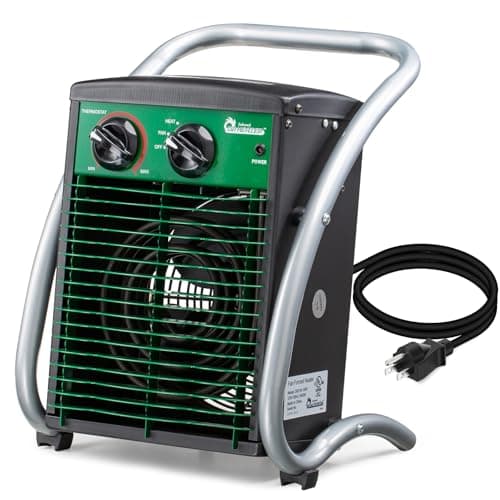 Dr. Infrared Heater DR218-1500W The right physics for the job: directional radiant heat on a normal outlet, built for a garage rather than a bedroom. Buy the 120 V version, and check the model number twice. | Best overall for a garage pain cave | 8.68.6 out of 10 | $100.74 · View on Amazon #ad We may earn a commission · Price as of November 22, 2026 |
| 2 | 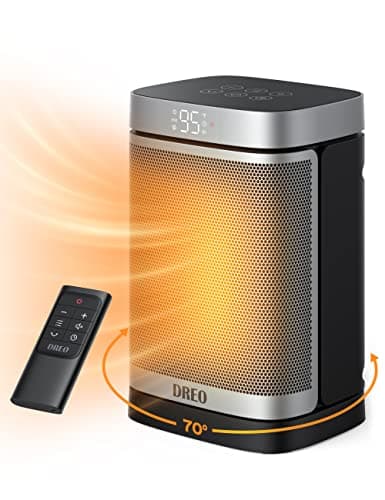 Dreo 1500 W Oscillating Ceramic Space Heater The pick if your pain cave is a spare room rather than a garage, or if the thermostat and timer matter more to you than the heating method. | Best cheap pre-heater with a thermostat and timer | 8.08.0 out of 10 | |
| 3 | 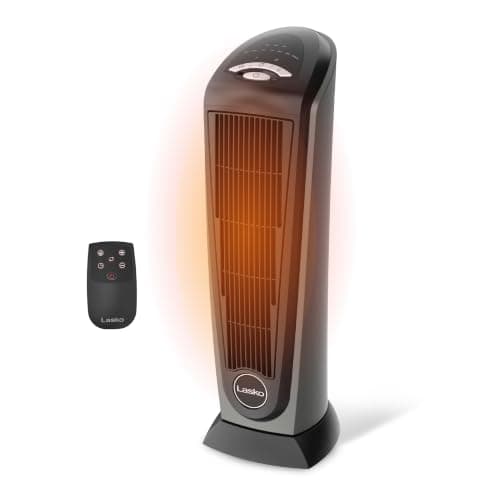 Lasko 751320 23-inch Ceramic Tower Heater The shape answer rather than the physics answer: if the only free space in your pain cave is a narrow corner, this is the 1,500 W unit that fits it. | Best tower for a tight corner | 7.87.8 out of 10 | |
| 4 | 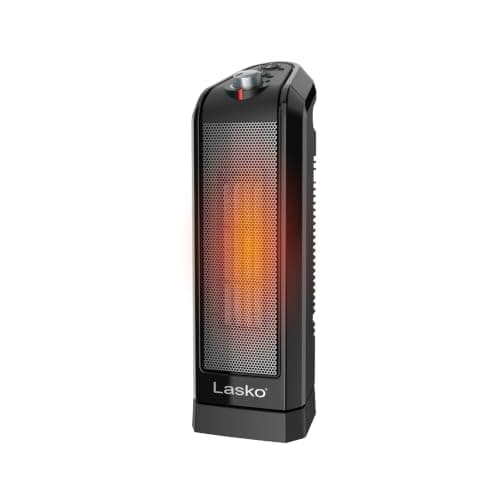 Lasko CT16450 16-inch Ceramic Console Heater The budget pick: the same 1,500 W as everything else, in the shape that fits under a desk, with the least control and the lowest heat throw. | Cheapest sensible pick | 7.37.3 out of 10 | |
| 5 | 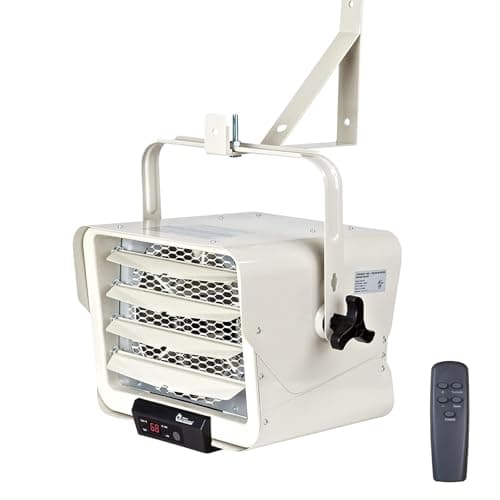 Dr. Infrared Heater DR-975 7,500 W 240 V The honest answer to a genuinely cold garage, and the wrong answer to everything else. Only buy it if the 240 V circuit already exists or you were going to add one anyway. | Best if you have, or will add, a 240 V circuit | 8.08.0 out of 10 | $240.00 · View on Amazon #ad We may earn a commission · Price as of November 22, 2026 |
A cold garage kills more winter training plans than a bad trainer ever has. The bike is fine, the app is fine, the plan is fine — but the first ten minutes are genuinely unpleasant, and after a week or two you stop going out there. Our garage pain cave setup guide covers the whole room; this page is about the heat specifically, because it is the part people get wrong in a way that costs money.
The one number that decides everything
A standard US household circuit will not give you more than about 1,500 W of heat from a plug-in appliance. That is roughly 12.5 A at 120 V, and about 5,100 BTU/h once you convert it (1,500 x 3.412).
Every single plug-in heater on this page, and every plug-in heater you will find anywhere, is at that same ceiling. The $45 one and the $105 one put out the same amount of heat. Anyone selling you more heat than that on a normal outlet is selling you a number that does not exist.
So price does not buy warmth here. What it buys is how the heat is delivered, how well you can control it, and what shape the box is. That is the whole basis of the ranking below.
How we ranked these
1. Heating method — radiant or convection. Radiant infrared warms surfaces and skin that it is pointed at. Convection warms air, which then has to fill a room. For a ten-minute pre-ride warm-up in a large cold space, radiant wins easily, because you are heating a rider rather than a garage. For a small sealed room, convection is fine.
2. Control — thermostat, timer, remote. The real failure mode is not a heater that is too weak. It is a heater that is still running twenty minutes into a session when you are already overheating and reaching for a fan. A timer solves that properly; a remote solves it lazily; nothing solves it if you have to get off the bike.
3. Shape and placement. A pain cave is a crowded room and the floor in front of the bike is usually taken by a mat and a desk. A tall tower uses a corner; a low console goes under a bench; a radiant unit wants to point at you. Heat that arrives at ankle height does the least for a cold rider.
4. Suitability for the actual environment. A garage floor is dusty, often damp, and traversed by a bike with a wheel coming off it. A plastic bedroom heater is not in its element there, and some of the picks below are honest about that.
| Pick | Method | Rated output | Supply | Control |
|---|---|---|---|---|
| Dr. Infrared DR218-1500W | Radiant infrared | 1,500 W | 120 V outlet | Basic |
| Dreo oscillating ceramic | Ceramic convection | 1,500 W (listing) | 120 V outlet | Thermostat, timer, remote |
| Lasko 751320 tower | Ceramic convection | 1,500 W | 120 V outlet | Remote |
| Lasko CT16450 console | Ceramic convection | 1,500 W | 120 V outlet | Basic |
| Dr. Infrared DR-975 | Hardwired shop heater | 7,500 W | 240 V hardwired | Built-in controls |
Pre-heat, do not ride-heat
This is the strategy that makes a cheap heater work, and it is worth more than the difference between any two picks above.
A rider on a trainer is a space heater. You convert most of your effort into waste heat, and a closed garage has nowhere to put it, so within about fifteen minutes the overwhelming majority of riders are too warm rather than too cold. That is why the heater's job is the first ten minutes, not the session.
So: switch it on, pointed at where you will be, while you change, fit the bike and pair your sensors. Dress in a layer you can shed. Then turn the heater off as you start riding and let the fan take over. Running a heater through a session is how you end up with a soaked floor, a sweat-destroyed bike and a workout you abandon — sweat protection covers the damage that causes.
One corollary: if you are choosing between a better heater and a better fan, buy the fan. You will spend fifty minutes of an hour wanting airflow and ten wanting warmth.
Safety, briefly and seriously
No combustion heaters in a closed garage. Propane and kerosene heaters are sold for garages and they are genuinely dangerous unvented, because incomplete combustion produces carbon monoxide. A cyclist at threshold is moving an enormous volume of air through their lungs, which makes a rider the worst possible occupant of a room with a CO source in it. Everything on this page is electric, and that is deliberate.
Keep it out of the sweat zone. Sweat goes further sideways than people expect, and an electric heater is an appliance you do not want salty water landing on. Put it upwind, behind you, or far enough forward that the bike is between you and it.
Respect the circuit. A 1,500 W heater is most of a 15 A circuit on its own. Add a fan, a laptop, a TV and a trainer and you are closer to the limit than you think — especially on a garage circuit that is also running a freezer. If a breaker trips mid-session, that is the reason.
Tip-over and overheat protection. Both are standard on current units and both are listed above where the listing states them. In a room where a bike gets lifted on and off a trainer, tip-over protection is not a theoretical feature.
What a heater will not fix
Three things, and they are all cheaper to solve than buying a bigger heater.
A cold concrete slab. An uninsulated floor pulls heat out of the room continuously, and it is also where your feet are. A trainer mat is the single most cost-effective thing you can put between you and a garage floor, and it also solves noise and sweat. If vibration through the slab is the other half of your complaint, the cheap end of rocker plates and rocker feet decouples the trainer from the floor for about the price of a tank of gas.
A draft under the garage door. A door sweep costs very little and stops the heater fighting a continuous supply of outside air. Heating a room with a gap at the bottom is the definition of wasted watts.
Cold hands and feet specifically. Extremities get cold because blood is going to your legs, not because the room is cold. Long-fingered gloves and a pair of shoe covers for the first fifteen minutes beat any amount of ambient heat, and they cost almost nothing.
So which one?
A garage, standard outlet, ten-minute pre-heat: the Dr. Infrared DR218-1500W. Right method, right environment, right supply.
A spare room or basement: the Dreo, because convection is fine in a small sealed space and the thermostat and timer are the best on this page.
A crowded room with only a corner free: the Lasko 751320 tower.
The lowest budget: the Lasko CT16450 — then spend what you saved on a mat.
A big, cold, permanent garage setup: the Dr. Infrared DR-975 on 240 V, and an electrician. Nothing on a household plug will do this job, and it is better to know that before you buy three heaters trying.
Heat is one piece of it.
Build the whole garage setup properlyIf a hundred dollars is the ceiling, the shape of the answer changes: the radiant pick above drops out on price and everything left is ceramic convection, which heats air that a garage door leaks. The best garage heaters under $100 ranks that band on the only things that separate them once output is fixed — thermostat, timer and where the heat actually lands.
The full reviews
Every pick, in detail
#1 · Best overall for a garage pain cave
Dr. Infrared Heater DR218-1500W
8.68.6 out of 10#ad We may earn a commission · Price as of November 22, 2026
The right physics for the job: directional radiant heat on a normal outlet, built for a garage rather than a bedroom. Buy the 120 V version, and check the model number twice.
- Type
- Infrared radiant, freestanding
- Rated output
- 1,500 W
- Supply
- 120 V, 60 Hz (standard outlet)
- Current draw
- About 12.5 A at 120 V (arithmetic, not a published figure)
- Heat equivalent
- About 5,100 BTU/h (1,500 W x 3.412)
- Coverage
- Up to about 150 sq ft, per retailer listings
- Safety
- Overheat protection, per the owner's manual
- Intended use
- Greenhouse, garage, workshop
What we'd praise
- Radiant infrared warms objects and skin directly rather than heating a whole volume of air, which is exactly what a ten-minute pre-ride warm-up needs
- Runs on a standard 120 V household outlet with no electrical work
- Built for garages and workshops rather than living rooms, so a dusty concrete floor is the intended environment
- Overheat protection is documented in the owner's manual
- Directional heat means you can point it at the bike and the rider rather than at the ceiling
What we'd flag
- There is a 3,000 W / 240 V version of the same DR218 family — check which one you are buying before you order, because the 240 V unit will not run on a normal outlet
- Freestanding: the listings we checked describe it as freestanding and we could not confirm a mounting bracket is included (Dr. Infrared's DR-238 is the model that includes wall and ceiling brackets)
- About 150 sq ft of coverage is one retailer's figure, not a manufacturer-published one, and a two-car garage is a lot bigger than that
- No thermostat sophistication or timer worth the name — this is a switch, not a climate system
- Radiant heat only warms what it is pointed at, so the far side of the garage stays cold
A garage pain cave has a specific heating problem, and it is not the one a living-room heater is designed for. You do not need the air in a two-car garage brought up to 68 °F. You need to not be miserable for the first ten minutes, after which you will produce more waste heat than any plug-in heater can.
Radiant infrared is the right tool for that, because it warms surfaces and skin directly instead of trying to raise the temperature of a large volume of cold air. Point it at where you will be sitting, run it while you change and set up the bike, and the first ten minutes stop being the reason you skip sessions. Our garage pain cave setup guide makes the same argument from the other direction.
Two warnings. First, the DR218 family includes a 3,000 W / 240 V unit — the owner's manual covers both — and that one needs a dedicated circuit, so confirm you are ordering the 1,500 W / 120 V version. Second, treat the coverage figure as a retailer claim rather than a tested one: at 1,500 W you have roughly 5,100 BTU/h to work with, and that is a pre-heater for a corner, not a furnace for a garage.
#2 · Best cheap pre-heater with a thermostat and timer
Dreo 1500 W Oscillating Ceramic Space Heater
8.08.0 out of 10The pick if your pain cave is a spare room rather than a garage, or if the thermostat and timer matter more to you than the heating method.
- Type
- PTC ceramic convection, oscillating
- Rated output
- 1,500 W (per the listing)
- Oscillation
- 70 degrees
- Control
- Thermostat and remote
- Timer
- 1 to 12 hours
- Safety
- Overheat and tip-over protection, per the listing
What we'd praise
- A real thermostat and a 1-to-12-hour timer, which is the feature that stops a heater running while you sweat
- Remote control, so you are not getting off the bike to turn it down
- Cheapest credible pick here by a wide margin
- Overheat and tip-over protection are both listed
- 70-degree oscillation spreads heat across a bike-and-trainer footprint rather than a single spot
What we'd flag
- We could not match this listing to a single model number on Dreo's own site, so every figure above is the listing's own claim rather than a manufacturer spec sheet we can cite
- Convection heats air, which is the slower and less efficient approach in a big cold garage — it suits a spare room better
- Oscillation is actively unhelpful if what you want is directional heat aimed at the bike
- A plastic-bodied room heater on a garage floor is not in its intended environment
- Same 1,500 W ceiling as everything else on a normal outlet — the cheaper price does not buy less heat, and the dearer picks do not buy more
This is the best-controlled heater on the page and the cheapest. A thermostat, a 1-to-12 hour timer and a remote between them solve the actual failure mode of heating a pain cave: leaving the heater running into a session where you are already overheating.
The honest caveat is identification. The listing describes a 1,500 W PTC ceramic heater with 70-degree oscillation, a thermostat, a remote, a 1-to-12 hour timer and overheat and tip-over protection, and we could not tie that to one model number on Dreo's own site. So we are reporting the listing's claims as the listing's claims — which is how we treat any figure we cannot trace to a manufacturer source.
The deeper point is the heating method. Convection warms air; in a sealed spare room that is fine and in a cold garage it is slow. If your bike lives in a bedroom or a basement, buy this one and spend the savings on a fan, because for most of the session the fan matters more than the heater.
#3 · Best tower for a tight corner
Lasko 751320 23-inch Ceramic Tower Heater
7.87.8 out of 10The shape answer rather than the physics answer: if the only free space in your pain cave is a narrow corner, this is the 1,500 W unit that fits it.
- Type
- Ceramic convection tower, oscillating
- Rated output
- 1,500 W
- Height
- 23 in
- Oscillation
- Widespread, per Lasko
- Control
- Remote control included
- Footprint
- Tower — narrow base, vertical throw
What we'd praise
- A tall, narrow footprint fits where a pain cave actually has room: in the corner beside the trainer rather than in front of it
- Vertical heat throw covers a standing rider and a seated one, not just ankle height
- Remote control, and a long-standing model with a very large ownership record behind it
- Among the cheapest 1,500 W units from a brand with a real service history
What we'd flag
- A tall tower on a narrow base is the easiest shape here to knock over in a room where you are moving a bike around
- Convection again, so the same slow-in-a-garage objection applies
- Oscillation cannot be aimed, so a lot of the output heats the room rather than the rider
- No timer on the model as listed, so turning it off is your job
Every plug-in heater on this page delivers the same 1,500 W, so after the heating method the next real variable is shape. A pain cave is a crowded room — bike, trainer, mat, fan, desk, screen — and the floor space in front of the bike is usually taken.
A 23-inch tower occupies a corner and throws heat up the height of a rider rather than across the floor. That is a genuine practical advantage over a console unit, and it is why this shape is worth considering even though the heating method is the slower one.
The trade is stability. A narrow-based tower in a room where you lift a bike on and off a trainer is the one most likely to get knocked, so put it behind you rather than in the walking line.
#4 · Cheapest sensible pick
Lasko CT16450 16-inch Ceramic Console Heater
7.37.3 out of 10The budget pick: the same 1,500 W as everything else, in the shape that fits under a desk, with the least control and the lowest heat throw.
- Type
- Ceramic convection console, oscillating
- Rated output
- 1,500 W
- Height
- 16 in
- Oscillation
- Widespread, per Lasko
- Form
- Low console — sits under a desk or bench
- Supply
- 120 V standard outlet
What we'd praise
- The lowest price on the page for a full 1,500 W from a known brand
- A low console shape tucks under a trainer desk or workbench, out of the way of a bike being moved
- Widespread oscillation covers a wider arc than a fixed unit at the same height
- Nothing to install and nothing to learn
What we'd flag
- Heat at 16 inches warms your legs and the floor, not your upper body, which is where cold actually bothers a rider
- Convection in a garage: slow, same as every other ceramic unit here
- Least controllable pick here — check the listing for current timer and thermostat details before assuming
- Low units collect dust and debris fastest, which matters on a garage floor
If the heater is a small part of a bigger pain cave budget and you just want the first ten minutes to be less grim, this does that for the least money. Same 1,500 W, same outlet, a shape that disappears under a desk.
The reason it is fourth is heat height. At 16 inches the output goes into your shins and the concrete. Cold hands and a cold chest are what actually make an early session unpleasant, and a low console is the worst shape on this page for both.
Spend the difference on the thing that does more for a cold garage than any heater: a decent trainer mat between you and the slab, which is where a surprising amount of the cold comes from.
#5 · Best if you have, or will add, a 240 V circuit
Dr. Infrared Heater DR-975 7,500 W 240 V
8.08.0 out of 10#ad We may earn a commission · Price as of November 22, 2026
The honest answer to a genuinely cold garage, and the wrong answer to everything else. Only buy it if the 240 V circuit already exists or you were going to add one anyway.
- Type
- Hardwired shop and garage heater
- Rated output
- 7,500 W
- Supply
- 240 V, hardwired
- Heat equivalent
- About 25,600 BTU/h (7,500 W x 3.412)
- Installation
- Hardwired — electrician work, not a plug
- Versus a 120 V unit
- Five times the rated output of any plug-in heater here
What we'd praise
- The only pick on this page that can actually warm a two-car garage rather than a corner of one
- Five times the rated output of every 120 V heater here, because it is not limited by a household outlet
- Hardwired and wall or ceiling mounted, so it is out of the way of bikes, mats and cables entirely
- Built for shops and garages, which is exactly the environment a garage pain cave is
What we'd flag
- Needs a 240 V circuit and an electrician — the install can cost more than the heater
- Hardwired means it is not portable and not something you take with you when you move
- Genuinely overkill if the goal is a ten-minute pre-ride warm-up, which is what most riders actually need
- Running 7,500 W is a real electricity bill, not a rounding error
- No use at all to anyone renting, or to anyone whose pain cave is a spare room
Everything above this is limited by the same thing: a 15 A household circuit will not give you more than about 1,500 W. If your garage is big, uninsulated and properly cold, no plug-in heater is going to fix it, and buying a nicer one will not change the physics.
A 240 V hardwired unit removes that ceiling. At 7,500 W you have roughly 25,600 BTU/h, which is five times what any plug-in heater on this page can deliver, and it mounts on a wall or ceiling out of the way of the bike.
We rank it last on value deliberately. It needs an electrician, the install can cost more than the heater, and for the ten-minute pre-heat most riders actually want it is enormous overkill. If you are building a permanent garage setup and the electrical work is already on the list, this is the right thing to put on the wall. If you are trying to get through one winter, it is not.
Good questions
Frequently asked questions
What is the best space heater for a garage pain cave?
The Dr. Infrared DR218-1500W, because radiant infrared warms you and the bike directly rather than trying to raise the air temperature of a whole cold garage, and it runs on a standard 120 V outlet. Check the model number before ordering: the same DR218 family includes a 3,000 W, 240 V version that needs a dedicated circuit.
How many watts do I need to heat a garage for indoor cycling?
More than a household outlet can give you, if the goal is heating the whole garage. A standard US circuit caps a plug-in heater at about 1,500 W, which is roughly 5,100 BTU per hour. That is enough to pre-heat the corner you ride in, not a two-car garage. Heating a large cold garage properly means a 240 V hardwired unit and an electrician.
Should I run a heater while I ride indoors?
No. A rider on a trainer produces a lot of waste heat and a closed garage has nowhere to put it, so most riders are too warm within about fifteen minutes. Use the heater while you change and set the bike up, dress in a layer you can shed, then switch it off as you start riding and let a fan take over. Running a heater through a session means a soaked floor and an abandoned workout.
Is a propane heater safe in a garage pain cave?
Not in a closed garage. Unvented combustion heaters produce carbon monoxide, and a cyclist riding hard is moving an enormous volume of air through their lungs, which makes a rider the worst possible occupant of a room with a CO source. Every pick on this page is electric for exactly that reason.
Infrared or ceramic heater for indoor cycling?
Infrared for a garage, ceramic for a small room. Radiant infrared warms the surfaces and skin it is pointed at, which is what a ten-minute pre-ride warm-up needs in a large cold space. Ceramic convection heats air, which works well in a sealed spare room and slowly in a garage. Both are capped at the same 1,500 W on a household outlet.
Do I need a heater or a fan for indoor cycling?
A fan, if you can only buy one. You will want warmth for the first ten minutes and airflow for the remaining fifty, and overheating degrades an indoor session far more than being briefly cold at the start. Buy the fan first, then add a heater for the pre-ride warm-up.
Will a space heater trip my garage circuit breaker?
It can. A 1,500 W heater draws about 12.5 A, which is most of a 15 A circuit on its own. Add a fan, a laptop, a TV and a trainer on the same circuit — plus whatever else lives in a garage, like a freezer — and you are close to the limit. If a breaker trips mid-session, that is almost always why.
How we sourced this
- Dr. Infrared Heater — DR218 owner's manual: 1,500 W / 120 V and 3,000 W / 240 V variants, overheat protection
- The Home Depot — Dr. Infrared DR218-1500W garage/workshop heater listing (retailer coverage figure)
- Lasko — 751320 23 in ceramic tower heater, 1,500 W with remote (manufacturer)
- Lasko — CT16450 16 in ceramic heater with console, 1,500 W (manufacturer)
- Dreo — space heater product range (manufacturer; we could not match the Amazon listing to a single model number)
- U.S. Consumer Product Safety Commission — carbon monoxide hazards from unvented combustion heaters
Keep going
Read these next
- Indoor SetupThe Garage Pain Cave Setup Guide
- AccessoriesThe Best Fans for Indoor Cycling
- AccessoriesThe Best Bike Trainer Mats
- AccessoriesBike Trainer Sweat Protection
- Indoor SetupThe Best Indoor Cycling Setup
- Indoor SetupThe Apartment Indoor Cycling Setup
- AccessoriesThe Indoor Cycling Accessories Checklist
- Indoor SetupPain Cave Setup Ideas