Pain Cave
The Best Cycling Headphones Under $100, Ranked
Under $100 you cannot buy bone conduction, so the question changes shape: open-ear earbuds that let you hear the room, or sealed buds that shut out a loud trainer. All three picks sit within about ten dollars of each other.
The short answer
Quick picks
| # | Product | Best for | Score | Price |
|---|---|---|---|---|
| 1 | 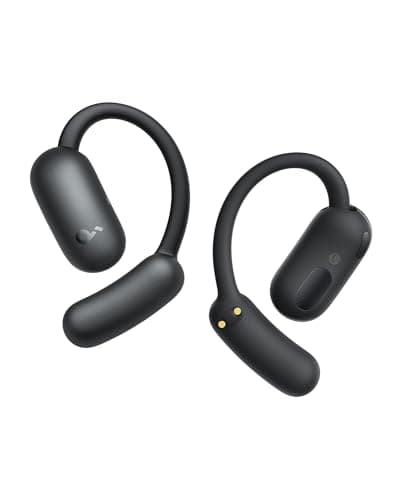 Soundcore AeroFit 2 For the indoor rider who wants to hear the room: the best open-ear pair under $100, with four-level adjustable hooks, a published IP55 rating and 10 hours a charge. | Best cycling headphones under $100 overall | 8.78.7 out of 10 | |
| 2 | 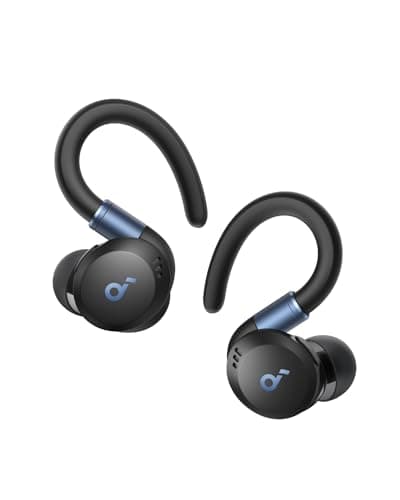 Soundcore Sport X20 The budget pick: the least expensive pair in the band and the only one with active noise cancelling, plus a transparency mode you can switch on the bud. | Budget pick: the cheapest pair here, and the only one with ANC | 8.28.2 out of 10 | |
| 3 | 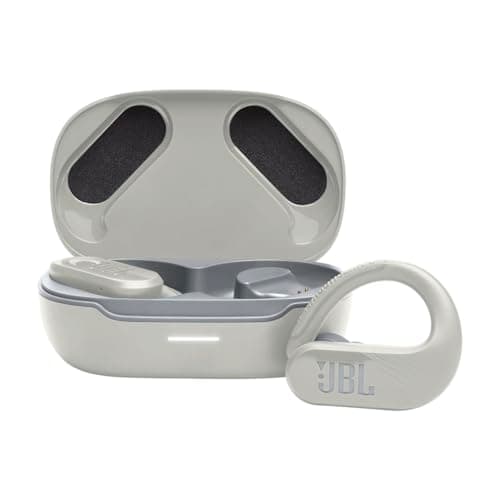 JBL Endurance Peak 3 For the rider who sweats heavily: the best published water rating in the band, with submersion testing reported by SoundGuys, at the cost of having no active noise cancelling at all. | Best water rating in the band | 8.18.1 out of 10 |
This band is not a cheaper version of the main headphone market — it is a different one. Every bone-conduction option sits above $100, which removes the format we normally recommend first for cycling, and it leaves a straight choice between open-ear earbuds and sealed in-ear ones.
The other thing worth knowing before you read on: all three picks here sit within about ten dollars of each other, and at the time of writing all three are discounted below their list prices. Price is not really the decision in this band. Ear type is.
What $100 rules out
Bone conduction, entirely. The Shokz OpenRun and OpenRun Pro 2 both sit above this ceiling, and nothing under $100 uses the format. That matters because bone conduction leaves the ear canal completely unobstructed — no pressure, no heat, no isolation — which is why it is the default recommendation for riders who go outdoors. Our main headphone roundup ranks those properly.
Premium ANC. The band includes one pair with active noise cancelling, and it is good for the money rather than class-leading. If you want ANC as the primary feature, the money starts above this page.
Any claim of audiophile sound. These are sweat-rated sports buds with 10 to 11 mm drivers and, in one case, no seal at all. They are for podcasts, music you know well, and the voice of a Zwift group ride. Nothing here is a listening purchase.
Open-ear against sealed: the actual decision
This is what the band comes down to, and the right answer depends on your room rather than your taste.
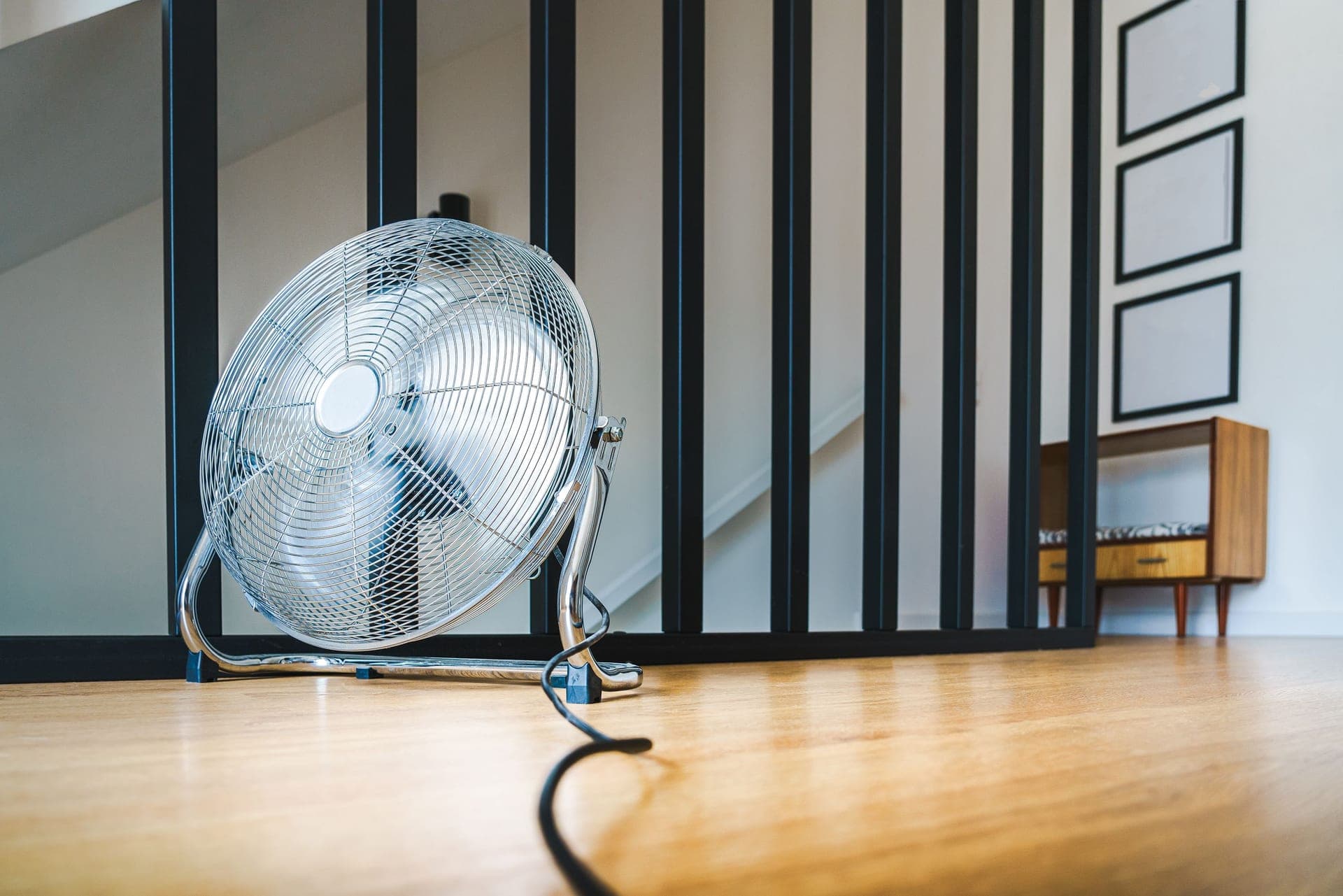
Open-ear leaves your canal clear. You hear your trainer change pitch, you hear someone walk in, and you avoid the heat and pressure that build in a sealed canal over a two-hour session. The cost is isolation: a wheel-on trainer and a box fan at full speed will genuinely compete with your music, because there is nothing between them and your eardrum.
Sealed gives you real bass, real isolation and — on the Sport X20 — active noise cancelling that makes a loud room disappear. The cost is a plug in your ear for the length of the ride, which traps heat and sweat and which some riders simply cannot tolerate. It is also a safety question the moment you take them outdoors.
A useful rule: if you ride a direct-drive trainer in a quiet room, go open-ear. If you ride a wheel-on trainer with a fan running, go sealed. The quiet trainer roundup is the other way to solve the same problem.
How we ranked them
Published sweat rating first, because sweat is what kills sports earbuds and an IP figure is a specification rather than a promise. Then fit security — specifically how much hook adjustment the maker publishes, since that is what decides whether a bud moves during an out-of-the-saddle effort. Then awareness, meaning how easily you can hear the room without taking anything out. Then value, which barely separates these three.
We have not lab-tested any of these. Battery and IP figures are the manufacturers' own unless marked otherwise; where SoundGuys has measured something that differs from the claim, we have used their figure and said so. How we review explains the method.
| Model | Ear type | Water rating | ANC | Battery (buds) | Total with case |
|---|---|---|---|---|---|
| Soundcore AeroFit 2 | Open-ear on hooks | IP55 (soundcore) | No | 10 h | 42 h |
| Soundcore Sport X20 | Sealed in-ear on hooks | IP68 per listing; not stated on product page | Yes | 12 h, 7 h with ANC | 48 h, 28 h with ANC |
| JBL Endurance Peak 3 | Sealed in-ear, PowerHook | IP68 (JBL) | No | 10 h claimed, 8 h 47 min measured by SoundGuys | Up to 50 h |
Read the IP rating, not the word "sport"
Every earbud sold for exercise is described as sweat-resistant. The published IP number is the only part of that which means anything, and the spread inside this band is wide: IP55 on the AeroFit 2 against IP68 on the JBL.
In plain terms, the first digit is dust and the second is water. A 5 means protected against water jets, which covers sweat comfortably. An 8 means submersion — SoundGuys report the JBL surviving 1.5 m for 30 minutes. For indoor cycling, a 5 is enough and an 8 is insurance. What catches people out is the case: the JBL buds are rated and the case is not, so a dripping bud going straight back into the case is the failure mode nobody warns you about.
One more honest note on the Sport X20: soundcore's product page states no water rating at all, while the retail listing and soundcore's own guides say IP68. We have reported both rather than picking the convenient one.
What to buy alongside them
If your reason for wanting sealed earbuds is that the room is loud, spend some of the money on the room instead. A trainer mat damps the vibration going into the floor, and fan placement matters more than fan size — the fan roundup covers that. Between the two, a quiet room and open-ear buds is a better setup than a loud room and ANC.
And if you want the audio to come from the right place at all, a tablet holder that puts the screen at eye level does more for an indoor session than any earbud on this page.
The verdict
Buy the Soundcore AeroFit 2 if your pain cave is reasonably quiet and you want to stay aware of the room — the four-level hooks and the published IP55 make it the most complete sub-$100 pair for indoor riding. Buy the Soundcore Sport X20 — the budget pick — if your trainer or fan is loud enough to drown out music, because it is the cheapest pair here and the only one with real ANC, and the transparency mode gives the awareness back on demand. Buy the JBL Endurance Peak 3 if you sweat heavily and want the strongest published water rating, and you can live without noise cancelling.
Can stretch past $100?
See every pair we rank, including bone conductionTwo neighbors worth reading before you commit: gifts for indoor cyclists covers the same price range from the other direction, and the accessories checklist puts headphones in order against everything else a pain cave needs.
The full reviews
Every pick, in detail
#1 · Best cycling headphones under $100 overall
Soundcore AeroFit 2
8.78.7 out of 10For the indoor rider who wants to hear the room: the best open-ear pair under $100, with four-level adjustable hooks, a published IP55 rating and 10 hours a charge.
- Type
- Open-ear earbuds on adjustable ear hooks
- Fit
- 4-level adjustable hooks, per soundcore
- Water resistance
- IP55 (soundcore)
- Battery
- 10 hours per charge, 42 hours with the case (soundcore)
- Quick charge
- 10 minutes for about 4 hours (soundcore)
- Drivers
- 20 x 11.5 mm racetrack drivers (soundcore)
- Bluetooth
- 5.4, multipoint, SBC/AAC/LDAC (soundcore)
What we'd praise
- Open-ear, so you hear the room, your trainer and anyone talking to you mid-session
- Four-level adjustable hooks, which is the feature that decides whether these stay put
- 10 hours a charge and 42 with the case — longer than any indoor session you will ride
- A published IP55 rating, which is a real sweat specification rather than a claim of toughness
- Bluetooth 5.4 with multipoint, so a phone and a tablet can both stay connected
What we'd flag
- Open-ear means no isolation at all — a loud wheel-on trainer will compete with your music
- Not bone conduction: nothing under $100 is, and the Shokz models sit above this band
- Bass is thin next to a sealed earbud, which is the physics of leaving your ear open
- IP55 is sweat-proof, not submersible — no rinsing these under a tap
- Ear hooks under a helmet strap is a fit question worth testing before a long outdoor ride
The AeroFit 2 wins this band because of what it does not do: it does not seal your ear canal. In a pain cave that matters more than audio quality. You can hear your trainer change pitch, you can hear a family member come in, and you are not riding in a sensory vacuum with your own heartbeat as the loudest thing in your head.
The specification that makes or breaks an open-ear earbud is the hook, because nothing is wedged into your ear holding it in place. Soundcore publishes four levels of hook adjustment, which is more than most, and it is why these stay put through out-of-the-saddle efforts. The published IP55 rating is the sweat figure — enough for indoor riding, not enough to rinse under a tap.
The trade is isolation and bass. Leaving the ear open means a loud wheel-on trainer or a box fan will genuinely compete with your music. Our main headphone roundup ranks the bone-conduction options that sit above this band, and how to make a bike trainer quieter attacks the problem from the other end.
#2 · Budget pick: the cheapest pair here, and the only one with ANC
Soundcore Sport X20
8.28.2 out of 10The budget pick: the least expensive pair in the band and the only one with active noise cancelling, plus a transparency mode you can switch on the bud.
- Type
- Sealed in-ear on rotatable, extendable hooks
- Fit
- Up to 30 degrees rotation and 4 mm extension, in four steps (soundcore)
- Noise control
- ANC and Transparency, switchable on the bud
- Battery
- 12 hours, or 7 hours with ANC on (soundcore)
- Total battery
- 48 hours, or 28 hours with ANC (soundcore)
- Drivers
- 11 mm dynamic (soundcore)
- Water resistance
- IP68 per the retail listing and soundcore's own guides; the product page states no rating
What we'd praise
- The cheapest pair in the band, and the only one with active noise cancelling
- Transparency mode switchable on the bud, so awareness is a tap away rather than a removal
- 12 hours a charge, or 7 with ANC running — still longer than any session
- Hooks that rotate up to 30 degrees and extend 4 mm in four steps, so the fit is genuinely tunable
- 11 mm drivers in a sealed canal, which is why these have real bass and the open-ear pair does not
What we'd flag
- Sealed in-ear traps heat and sweat in the canal, which is less comfortable over two hours
- soundcore's product page states no water rating even though the retail listing and its guides say IP68 — we flag the inconsistency rather than resolve it
- ANC on a stationary bike is solving a problem a fan creates, which a cheaper fan placement might fix
- Isolation is a safety issue if you ever take these outdoors on the road
- Pressure in the ear canal is a real objection for some riders and no spec sheet captures it
This is the budget pick, and it is an unusually easy one to recommend because it is also the only pair here with active noise cancelling. If your trainer is a wheel-on unit and your fan is a box fan on full, the open-ear argument falls apart — you simply cannot hear anything over it. The Sport X20 is the answer to that room: it seals the canal, cancels noise actively, and gives you a transparency mode you can switch on the bud when you need to hear someone.
The fit system is the part worth paying attention to: soundcore publishes hooks that rotate up to 30 degrees and extend 4 mm across four steps, which is a lot of adjustment for a sports earbud and the reason they stay in during a sprint. Battery is 12 hours, or 7 with ANC running.
One specification we will not paper over. soundcore's own product page states no water rating for these, while the retail listing and soundcore's support guides say IP68. That is an inconsistency in the manufacturer's own material, so treat the rating as probable rather than published, and do not go swimming in them. The sealed-canal comfort question is covered in the main headphone roundup.
#3 · Best water rating in the band
JBL Endurance Peak 3
8.18.1 out of 10For the rider who sweats heavily: the best published water rating in the band, with submersion testing reported by SoundGuys, at the cost of having no active noise cancelling at all.
- Type
- Sealed in-ear on PowerHook ear hooks
- Water resistance
- IP68 — SoundGuys report submersion to 1.5 m for 30 minutes; the case is not waterproof
- Battery
- 10 hours claimed; SoundGuys measured 8 h 47 min
- Total battery
- Up to 50 hours with the case (JBL)
- Drivers
- 10 mm dynamic
- Isolation
- Passive only — no ANC
- Awareness
- Ambient Aware and TalkThru modes in the JBL app
What we'd praise
- The strongest published water rating in the band at IP68, from a major audio brand
- SoundGuys report submersion to 1.5 m for 30 minutes, which is far beyond sweat-proof
- Up to 50 hours with the case, the longest total figure on this page
- PowerHook hooks that physically wrap the ear — the most secure fit of the three
- Ambient Aware and TalkThru in the JBL app, so some awareness is available without removing them
What we'd flag
- No active noise cancelling — isolation is passive only
- SoundGuys measured 8 h 47 min against JBL's 10-hour claim, so treat the figure as optimistic
- The case is not waterproof even though the buds are, which catches people out
- Sealed in-ear, with the same heat and canal-pressure objections as the Sport X20
- Priced close to the Sport X20, which adds real ANC for similar money
The reason to want the Endurance Peak 3 is the water rating. JBL publishes IP68 and SoundGuys report submersion to 1.5 m for half an hour — which for an indoor cyclist means sweat is simply not a consideration. The one catch is that the case is not waterproof even though the buds are, so do not put a dripping bud straight back in it.
The PowerHook design physically wraps the ear, which makes these the most secure fit of the three and the ones least likely to move during a standing effort. Total battery with the case is up to 50 hours, the highest figure on this page.
Two honest marks against. There is no ANC, only passive isolation plus Ambient Aware and TalkThru modes in the app. And SoundGuys measured 8 h 47 min against JBL's 10-hour claim, which is a real-world figure worth knowing rather than a reason not to buy — it is still more than any trainer session. Our gift roundup includes these for the same reason: they are hard to get wrong.
Good questions
Frequently asked questions
What are the best cycling headphones under $100?
The Soundcore AeroFit 2. They are open-ear buds on four-level adjustable hooks with a published IP55 sweat rating, 10 hours a charge and 42 hours with the case, which makes them the most complete sub-$100 pair for indoor riding. If your trainer and fan are loud, the Soundcore Sport X20 is the better buy and usually the cheapest of the three, because it is the only pair in the band with active noise cancelling. The JBL Endurance Peak 3 has the strongest published water rating at IP68.
Can you get bone conduction headphones under $100?
Not among the models we rank. Both Shokz options - the OpenRun and the OpenRun Pro 2 - sit above $100, and nothing under that ceiling uses bone conduction. That is the single most important thing to know about this band, because bone conduction is the format we normally recommend first for cycling: it leaves the ear canal completely clear, so there is no pressure, no trapped heat and no loss of awareness. Under $100 the nearest equivalent is an open-ear earbud on hooks.
Open-ear or sealed earbuds for indoor cycling?
It depends on how loud your room is rather than on personal taste. Open-ear buds leave your canal clear, so you hear your trainer and the people around you and nothing traps heat in your ear over a long session - but a wheel-on trainer with a fan running will compete with your music. Sealed buds give you real bass and real isolation, and in the Sport X20's case active noise cancelling, at the cost of a plug in your ear for the whole ride. Direct-drive trainer in a quiet room: open-ear. Wheel-on trainer with a fan: sealed.
What IP rating do you need for cycling headphones?
IPX4 or better is the usual floor for sweat, and the picks on this page run from IP55 to IP68. The first digit covers dust and the second covers water: a 5 means protection against water jets, which is comfortably enough for sweat, and an 8 means submersion - SoundGuys report the JBL Endurance Peak 3 surviving 1.5 m for 30 minutes. The detail that catches people out is that charging cases are usually not rated even when the buds are, so never put a dripping bud straight back into the case.
Do you need noise cancelling for indoor cycling?
Only if your room is loud, and it is worth fixing the room first. ANC on a stationary bike is mostly cancelling your own fan and your own trainer, both of which can be reduced more cheaply - a dense trainer mat cuts the vibration going into the floor, and moving a fan closer to you means it can run slower. If you ride a wheel-on trainer and need a strong fan, ANC genuinely helps, and the Soundcore Sport X20 is the only pair under $100 here that offers it.
How long do cycling earbuds need to last on a charge?
Longer than your longest session, with margin - which in practice means 8 hours or more, and all three picks here clear that. The figures to watch are the bud figure rather than the case total, and whether the claim has been independently measured: JBL claims 10 hours for the Endurance Peak 3 and SoundGuys measured 8 hours 47 minutes. Running ANC also costs runtime, which is why the Sport X20 drops from 12 hours to 7 with it switched on.
How we sourced this
- soundcore — AeroFit 2 open-ear earbuds product page (IP55, battery, drivers, Bluetooth)
- soundcore — Sport X20 earbuds product page (ANC, hook adjustment, battery)
- SoundGuys — Anker Soundcore AeroFit 2 review
- JBL — Endurance Peak 3 product page (IP68, battery, drivers)
- SoundGuys — JBL Endurance Peak 3 review (measured battery, submersion testing)
Keep going