The Supporting Cast
The Best Headphones for Indoor Cycling, Ranked
A trainer room is hot, loud and soaked in salt water — three things headphones are bad at. Here is what survives it, what blocks the fan, and what to ignore on the spec sheet.
The short answer
Quick picks
| # | Product | Best for | Score | Price |
|---|---|---|---|---|
| 1 | 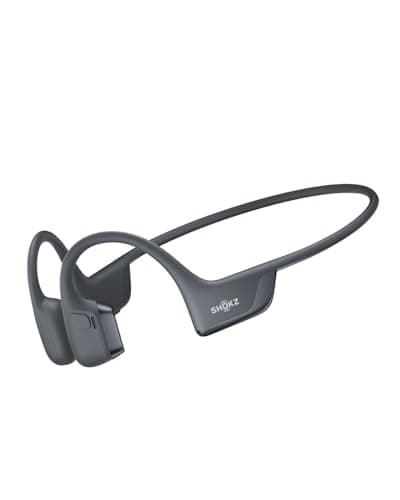 Shokz OpenRun Pro 2 The default answer indoors: open ears, nothing in the ear canal, and enough battery that you never think about it. Buy it unless your room is genuinely loud. | Best overall for the pain cave | 9.09.0 out of 10 | $179.95 · View on Amazon #ad We may earn a commission · Price as of September 17, 2026 |
| 2 | 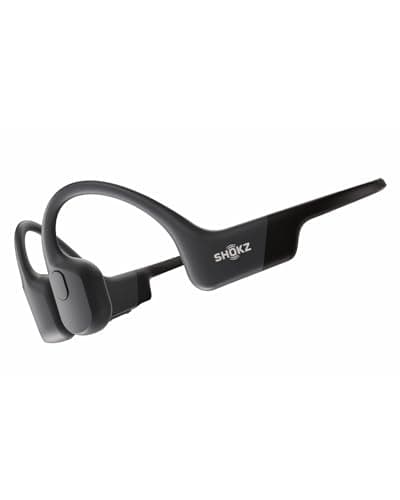 Shokz OpenRun The one to buy if you sweat hard: IP67 and washable, for less money than the Pro 2, with the same open-ear advantage indoors. | Best for sweat — the washable one | 8.88.8 out of 10 | $129.95 · View on Amazon #ad We may earn a commission · Price as of September 17, 2026 |
| 3 | 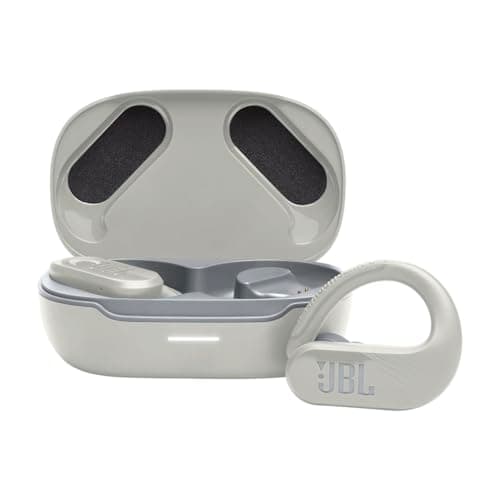 JBL Endurance Peak 3 The sweat-proof answer for a loud room: IP68, hooks that hold, and enough passive isolation that the fan stops winning — without paying for ANC. | Best sealed pick for a loud room | 8.48.4 out of 10 | |
| 4 | 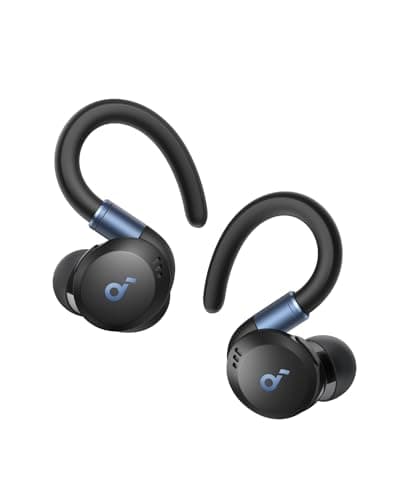 Soundcore Sport X20 Active noise cancelling and a hook that actually adjusts, for less than most trainer accessories. The right pick for a garage with a loud fan and a tight budget. | Best budget sealed pair with ANC | 8.38.3 out of 10 | |
| 5 | 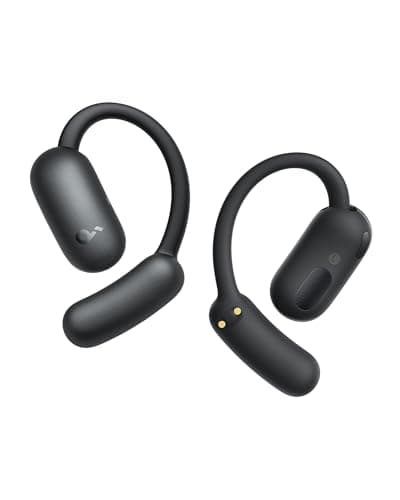 Soundcore AeroFit 2 Open-ear awareness at roughly half the money, with the audio compromise that implies. The adjustable hook is the feature that earns it a place. | Best budget open-ear | 8.18.1 out of 10 | |
| 6 | 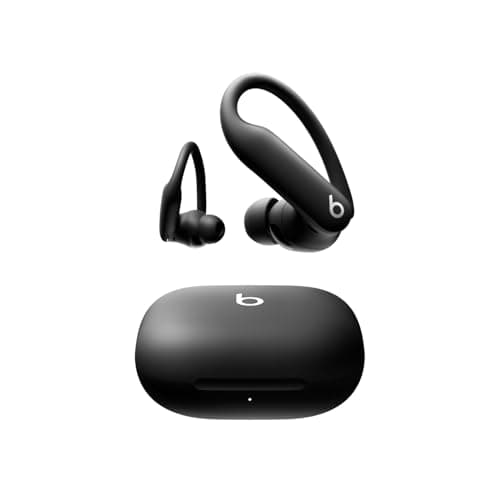 Beats Powerbeats Pro 2 Buy it for the ANC and the Apple integration, not for the heart rate sensor — and know that IPX4 is the least sweat-proof rating on this page. | Best real ANC — with one caveat | 7.67.6 out of 10 | $199.95 · View on Amazon $249.99Save 20% #ad We may earn a commission · Price as of September 17, 2026 |
Headphones are the accessory people buy for the pain cave without thinking about the pain cave. They pick whatever they already use for running, discover that the fan drowns half of it, that a sealed tip in a hot room turns the ear canal into a swamp, and that a rating which survives rain does not necessarily survive an hour of salt water dripping off a chin. The indoor problem is not the outdoor problem, and the right answer is often not the same pair.
The good news is that this is a cheap category with a clear decision inside it. Almost everything comes down to one question — do you want to hear the room or blot it out — and then to one specification, the water resistance rating, which is the number most likely to decide whether your purchase lasts a winter.
The pain cave is a hostile place for headphones
Four things are different indoors, and every one of them works against the pair you already own.
It is loud, and the noise is yours. The single highest-return purchase in an indoor setup is a high-airflow fan, and a fan that moves enough air to keep you cool moves enough air to be heard over everything you are listening to. Add the drivetrain, the trainer's own noise and, in a garage, an echo off bare walls. We do not publish decibel figures we have not measured, and we are not going to start here — but every rider who has trained behind a real wind fan knows the effect.
It is hot, and you are not moving through air. Outdoors, riding at speed cools you; indoors nothing does except the fan. Anything sealed into your ear canal is insulation in the one part of your body you cannot wipe down mid-interval.
You sweat in one place. Outdoors the sweat blows off you. Indoors it falls straight down, and it is salt water, which corrodes contacts and creeps into seams. This is why the IP rating matters more indoors than out, and why a rating good enough for a rain shower is not automatically good enough for you.
You are not wearing a helmet. That changes the shortlist in your favor. Every headband, over-ear pad and awkward hook that fails outdoors under a helmet strap is fair game indoors, which is exactly why bone conduction bands are so popular in trainer rooms.
Open-ear or sealed: the actual decision
Open-ear — bone conduction bands and the newer hooked open earbuds — leaves the ear canal empty. You hear your music and you also hear the fan, the family, the doorbell and the noise the bike makes when something is wrong. It is comfortable for hours, it never gets sweaty inside, and it is genuinely safer if you have small children or share the house. The cost is bass and volume: with no seal, low frequencies leak away, and against a loud fan you will find yourself pushing the volume up to a level that is not doing your hearing any favors.
Sealed — normal in-ear tips, with or without active noise cancelling — puts a plug in the leak. You get the bass back, you can listen at a lower volume because the fan is quieter, and structured sessions get easier to concentrate on. The costs are heat, sweat in the ear canal, and being cut off from the room. Passive isolation does most of the work here: SoundGuys measured the JBL pick removing roughly half the sound energy below 1 kHz and about three quarters above it, entirely without ANC.
A useful way to choose: if the thing that stops you enjoying a session is the fan, go sealed. If the thing that stops you is being cut off from the house, go open. And if you ride early in the morning while other people sleep, open-ear at a modest volume is the socially survivable option.
How we chose
We do not run an audio lab, and we say so on our how we choose our pickspage. For this roundup we worked from each manufacturer's published specification — water resistance rating, claimed battery, quick-charge figures, driver type, hook and fit adjustment — and from independent measurement by SoundGuys, who do run a lab, for the things a specification sheet will never tell you: measured battery life against the claim, how much noise a pair actually blocks, and whether the sound holds up. Where a figure is a manufacturer claim rather than an independent measurement, we say so in the row.
We then checked that every pick was genuinely in stock and buyable before featuring it, and ranked them on how well they fit a room with a bike, a fan and a puddle in it. Prices move constantly, so you will see today's live number or "check price" rather than a stale figure we typed in months ago.
What actually matters in a pair of trainer headphones
The IP rating, above everything.It is two digits: dust, then water. IPX4 is splash resistance — fine for a jog in drizzle, marginal for ninety minutes of dripping. IP55 is sweat and spray. IP67 and IP68 mean submersion, which in practice means you can rinse the salt off under a tap. Shokz's own range comparison illustrates the point neatly: the cheaper OpenRun is IP67 and washable while the flagship Pro 2 is IP55. Indoors, that ranking is inverted from the price list.
Isolation, in the direction you want it. Decide whether you are buying awareness or quiet, then buy the design that does it. Do not buy open-ear and then complain the fan is loud, and do not buy sealed ANC buds and then miss the doorbell.
Battery, measured against a session and not a week. Every pick here clears the longest ride you are going to do indoors. What matters more is how it charges: a band with 8 to 12 hours goes on a cable once a fortnight, while buds top up in a case between sessions. Both work. Quick-charge figures matter more than totals — five or ten minutes while you get changed is the realistic use case.
Multipoint, because the pain cave has two audio sources. The screen runs Zwift and the phone runs everything else. Multipoint holds both connections at once, so a call does not mean unpairing from the screen in front of you. All three of the cheaper picks here support it, as do both Shokz pairs.
Controls you can hit with wet hands.Physical buttons beat touch panels indoors, and it is not close. SoundGuys found the AeroFit 2's touch controls extremely sensitive, which is a fine trait on a desk and a bad one when you are adjusting a hook at 280 watts. Shokz's buttons draw the opposite complaint — SoundGuys noted they are hard to tell apart by feel.
The microphone, if you ride with other people.Group rides on Discord, a club session, a coach on a call — the mic matters, and it is where the open-ear pairs are weakest. SoundGuys rated the OpenRun Pro 2's mic sub-par. If half your indoor riding is social, test it before you commit to a season of it.
Fit under load, not fit on the sofa. Out of the saddle you rock the bike and your head moves. Hooks that rotate or extend, and bands that clamp, are the difference between forgetting about the headphones and reseating them every ten minutes.
| Pick | Design | Water resistance | Battery (claimed) | Best when |
|---|---|---|---|---|
| Shokz OpenRun Pro 2 | Open-ear band | IP55 | 12 h | You want to hear the room, and the fan is not brutal |
| Shokz OpenRun | Open-ear band | IP67, washable | 8 h | You sweat hard and want to rinse them off |
| JBL Endurance Peak 3 | Sealed, ear hooks | IP68 | 10 h (8 h 47 min measured) | The fan is loud and you do not want to pay for ANC |
| Soundcore Sport X20 | Sealed, adjustable hooks | IP68 per the listing | 12 h, 7 h with ANC | Loud garage, tight budget |
| Soundcore AeroFit 2 | Open-ear buds | IP55 | 10 h (42 h with case) | Open-ear on a budget, with a charging case |
| Beats Powerbeats Pro 2 | Sealed, ear hooks, ANC | IPX4 | 10 h, 8 h with ANC | Apple household, very loud room, ANC is the priority |
Bluetooth, Apple TV and the connection you already have trouble with
Indoor cycling is already a crowded radio environment: a trainer, a heart rate strap, maybe a cadence sensor, all fighting for the same 2.4 GHz band as your WiFi. Adding audio to that mix is usually fine, but there are two things worth knowing before you build a setup around it.
First, Apple TV. Zwift Insider is explicit that Apple TV allows only two Bluetooth device connections in the Zwift game itself, which a trainer and a heart rate monitor fill on their own. There are two established fixes, and they are the same ones we recommend elsewhere: a trainer connected over WiFi does not consume a Bluetooth slot at all, and the Zwift Companion app on your phone can bridge extra sensors over your network. Audio pairs at the tvOS level rather than in Zwift's pairing screen, and we have not seen an authoritative statement from Apple or Zwift on whether it competes for the same radio budget — so if you ride on Apple TV, pair your headphones first and then confirm your trainer and strap still connect before you plan a race around it.
Second, latency. Bluetooth audio arrives a fraction of a second late, which nobody notices in Zwift because nothing on screen depends on it, and everybody notices the moment they watch a film or a race broadcast on the same screen. If you train to video rather than to a game, check whether your TV offers an audio sync adjustment before you blame the headphones.
If dropouts are already your problem rather than a hypothetical one, the fix is usually the signal path and not the headphones — our trainer not connecting to Zwift guide works through it in order, and an ANT+ adapter sidesteps Bluetooth congestion entirely on a PC.
Do earbuds with a heart rate sensor replace a chest strap?
Not for indoor training, no. The Powerbeats Pro 2 is the highest-profile attempt — Apple documents sharing heart rate to HealthKit-enabled apps on iPhone, through the Beats app on Android, and to some gym equipment by making the earbuds discoverable as a sensor. It is a clever idea and it is not a training tool yet.
DC Rainmaker's February 2025 in-depth review is the most thorough public test of the feature. He reported over 90 minutes of troubleshooting to pair the sensor to apps including Zwift on iPhone and Mac, with about half the attempts seeing the sensor and the pairing then failing, before switching to Android where it worked immediately across multiple apps. Apple separately confirmed that you cannot listen to music from your iPhone while the earbuds are sharing heart rate with gym equipment — which, for a rider whose entire reason for wearing earbuds is the music, defeats the point. On an indoor trainer ride the reading also dropped out entirely during the harder intervals, and both earbuds have to be in for any reading at all.
A chest strap costs a fraction of a set of earbuds, pairs to everything, and does not stop working when you take an earbud out. Our heart rate monitor roundup covers the options, and the Polar H10 is the one researchers use as a reference. Buy headphones for audio and a strap for data.
Not sure what to buy first?
See the full accessories checklist, in priority orderSpeakers are still a perfectly good answer
Nothing here is compulsory. A speaker on a shelf costs less than any pick on this page, cannot fill with sweat, never needs charging mid-session and lets you hear the room by default. The reasons to wear something instead are specific: other people are asleep or working, you share the room, you want the workout cues and not the household, or your fan is loud enough that a speaker would have to be antisocial to beat it.
If you do go with a speaker, the same placement thinking applies as for the screen — keep it out of the sweat drip line and out of the fan blast, both of which are aimed straight ahead at whatever you have put in front of the bike. The pain cave setup ideas guide covers arranging the room around that.
Sweat, salt and making a pair last
Every set of headphones in a trainer room dies the same death: salt in the seams. Three habits extend their life more than any specification.
Wipe or rinse after every session, not weekly. Dried salt is abrasive and hygroscopic — it pulls moisture back in. An IP67 band like the OpenRun can go under a tap; an IP55 or IPX4 pair gets a damp cloth and a dry one.
Do not put wet earbuds into the case. Charging cases are almost never rated the way the buds are — JBL and Apple both exclude theirs — and a sealed box with salt water in it corrodes charging contacts fast. Dry the buds first.
Keep them out of the fan line and off the floor. The fan atomizes sweat and throws it at everything in front of the bike, which is also where you probably put your phone, your trainer desk and your headphone case. Move the case behind you.
What we would actually buy
For most indoor riders, the Shokz OpenRun Pro 2 — because comfort over two hours and hearing the house matter more than bass, and because the failure mode of open-ear (the fan is loud) is easier to live with than the failure mode of sealed (your ears cook). If you sweat heavily or you would rather rinse them under a tap than wipe them, take the cheaper Shokz OpenRun instead and enjoy the IP67 rating.
If your room is loud, seal your ears. The JBL Endurance Peak 3 is the pick we would take on durability, and the Soundcore Sport X20 is the one to take if the budget is doing the deciding and you want ANC. The Beats Powerbeats Pro 2 is the best-sounding, best-cancelling pair here and the one we would only buy for an Apple household that accepts IPX4 — and never for the heart rate sensor.
Whatever you choose, spend on the fan first. Heat ends more indoor sessions than boredom does, and the fan is the accessory that makes the headphones necessary in the first place — our accessories checklist puts the whole list in the order we would buy it.
The full reviews
Every pick, in detail
#1 · Best overall for the pain cave
Shokz OpenRun Pro 2
9.09.0 out of 10#ad We may earn a commission · Price as of September 17, 2026
The default answer indoors: open ears, nothing in the ear canal, and enough battery that you never think about it. Buy it unless your room is genuinely loud.
- Type
- Open-ear, worn round the back of the head
- Drivers
- DualPitch — a bone conduction driver plus an air conduction driver for bass
- Battery
- 12 hours claimed (Shokz)
- Quick charge
- 5 minutes for about 2.5 hours (Shokz)
- Water resistance
- IP55 — sweat and spray, not submersion
- Weight
- 30.3 g (SoundGuys)
- Bluetooth
- 5.3, with multipoint for two sources (SoundGuys)
What we'd praise
- Your ears stay completely open, so you hear the doorbell, the kids, the ERG beeps and the bike itself
- Nothing sits in the ear canal — no trapped heat, no sweat pooling, no pressure over a two-hour session
- Multipoint holds a TV or laptop and your phone at once, which is exactly the pain cave problem
- Twelve claimed hours is weeks of trainer sessions between charges, and USB-C replaced the old proprietary plug
What we'd flag
- It blocks nothing at all — a high-airflow fan will bury quiet passages and podcast voices
- Bone conduction gives up bass by design; SoundGuys found the range produces essentially no sub-bass
- The mic is the weak point — SoundGuys rated it sub-par, which matters if you ride group rides on Discord
- SoundGuys noted the band shifts during cycling and lifting, so expect to reseat it when you get out of the saddle
- IP55 is sweat-resistant, not washable — the cheaper OpenRun below is actually the tougher one
Indoors, the thing you are optimizing for is not sound quality. It is being able to ride for two hours with something on your head that does not fill with sweat, does not need reseating every ten minutes, and does not cut you off from the room your family is also in. The OpenRun Pro 2 wins on all three because it sits on your cheekbones and leaves the ear canal alone.
The Pro 2 is the generation where Shokz added an air conduction driver alongside the bone conduction one, and the difference is audible: there is finally some low end. It is still not a pair of sealed earbuds — SoundGuys, who measure this properly, describe the range as producing virtually no sub-bass — but for a training podcast, a Zwift race and the music you use to survive the last interval, it is comfortably enough.
Two honest limits. First, it isolates nothing, which is the whole point of the design and also its main weakness in a garage with a proper wind fan running at full tilt. Second, IP55 covers sweat and spray but does not make it washable, so wipe the band down after every session rather than rinsing it. If your room is loud or your sweat rate is heroic, the sealed picks further down this page are the better tools.
#2 · Best for sweat — the washable one
Shokz OpenRun
8.88.8 out of 10#ad We may earn a commission · Price as of September 17, 2026
The one to buy if you sweat hard: IP67 and washable, for less money than the Pro 2, with the same open-ear advantage indoors.
- Type
- Open-ear bone conduction
- Water resistance
- IP67 — Shokz calls it fully washable, not for swimming
- Battery
- 8 hours claimed (Shokz)
- Quick charge
- 10 minutes for about 1.5 hours (Shokz)
- Weight
- 26 g (SoundGuys)
- Bluetooth
- 5.1, with multipoint (SoundGuys)
- Charging
- Proprietary magnetic connector
What we'd praise
- IP67 is the highest sweat rating of any open-ear pick here — Shokz's own comparison calls this one fully washable
- Lighter than the Pro 2 and noticeably cheaper, with the same open-ear behavior
- Eight hours covers any indoor session you are realistically going to do
- Multipoint is here too, so the TV and the phone can both stay connected
What we'd flag
- The proprietary magnetic charger is a genuine annoyance — lose the cable and you are ordering a replacement
- Less bass than the Pro 2, and bone conduction was already the thin end of the market
- SoundGuys found sound changes with jaw movement and headset placement, which a hard effort supplies plenty of
- Glasses and the band compete for the same space above your ear
- No isolation, same as every open-ear design — the fan wins every argument
Sweat is the thing that kills headphones indoors, and it is not just water — it is salt, which corrodes contacts and eats adhesive. Shokz's own generational comparison puts the OpenRun at IP67 and describes it as fully washable, against IP55 on both the OpenRun Pro and the Pro 2. That is the rare case where the cheaper model in a range is the more durable one in the room you are buying it for.
Everything else is the familiar bone conduction trade. You give up bass and you gain the ability to hear a car pull into the garage, your training partner on the trainer next to you, and the small mechanical noises that tell you something is wrong with the bike. On a direct-drive trainer that last point is not trivial — a chain running on the wrong end of the cassette makes a noise you want to hear.
The charger is the real irritation. It is a proprietary magnetic plug rather than USB-C, so it lives in the drawer with the other cables you cannot replace at a gas station. Buy a spare with it if you travel.
#3 · Best sealed pick for a loud room
JBL Endurance Peak 3
8.48.4 out of 10The sweat-proof answer for a loud room: IP68, hooks that hold, and enough passive isolation that the fan stops winning — without paying for ANC.
- Type
- Sealed in-ear on PowerHook ear hooks
- Water resistance
- IP68 — SoundGuys report submersion to 1.5 m for 30 minutes; the case is not waterproof
- Battery
- 10 hours claimed; SoundGuys measured 8 h 47 min
- Total battery
- Up to 50 hours with the case (JBL)
- Drivers
- 10 mm dynamic
- Isolation
- Passive only — no ANC
- Awareness
- Ambient Aware and TalkThru modes in the JBL app
What we'd praise
- IP68 is the toughest sweat rating in this roundup — the thing most likely to kill an earbud indoors is the thing it is built for
- SoundGuys measured passive isolation at roughly 50% below 1 kHz and 75% above, which is a real dent in fan noise without ANC
- The bendable hook plus the TwistLock enhancer means it stays put when you rock the bike
- Ambient Aware gives the awareness back on demand, so you are not locked out of the room
What we'd flag
- SoundGuys measured 8 h 47 min against a 10-hour claim — still plenty indoors, but the claim is optimistic
- The tuning is heavily bass-boosted; SoundGuys called the low end quite overpowering out of the box
- The buds and the case are both large, and the case is not waterproof — do not put sweaty buds straight back in
- Sealed tips trap heat and sweat in the ear canal, which is the main reason riders drift back to open-ear
- No active noise cancelling at all, so a fan on its highest setting is reduced rather than removed
Every open-ear pick on this page loses the same argument: a fan you can actually train behind is loud, and open ears hear all of it. Sealing the ear canal is the cheap fix, and the Endurance Peak 3 is the pick that does it without falling apart in the process. IP68 is the highest rating here, and SoundGuys report it survives submersion to 1.5 m for half an hour — a comical overspec for a trainer, which is exactly what you want from something that will be soaked in salt water twice a week.
It has no ANC, and it does not need it as much as you would think. SoundGuys measured its passive isolation at roughly half the energy below 1 kHz and three quarters above, which takes the top off a fan without any battery cost. What it does cost you is heat: a sealed tip in a hot room is a small sauna, and some riders never get on with it. The Ambient Aware mode is the release valve when someone walks in.
The case is the part to be careful with. JBL does not extend the IP68 rating to it, so putting soaked earbuds into a sealed plastic box after a session is how you get a case that smells. Dry them on the trainer desk first, then put them away.
#4 · Best budget sealed pair with ANC
Soundcore Sport X20
8.38.3 out of 10Active noise cancelling and a hook that actually adjusts, for less than most trainer accessories. The right pick for a garage with a loud fan and a tight budget.
- Type
- Sealed in-ear on rotatable, extendable hooks
- Fit
- Up to 30 degrees rotation and 4 mm extension, in four steps (soundcore)
- Noise control
- ANC and Transparency, switchable on the bud
- Battery
- 12 hours, or 7 hours with ANC on (soundcore)
- Total battery
- 48 hours, or 28 hours with ANC (soundcore)
- Drivers
- 11 mm dynamic (soundcore)
- Water resistance
- IP68 per the retail listing and soundcore's own guides; the product page states no rating
What we'd praise
- The cheapest way here to put active noise cancelling between you and a fan motor
- Hooks rotate and extend, which is the difference between an earbud that stays in and one you keep pushing back
- Twelve hours with ANC off is a month of trainer sessions
- Transparency mode is one button away when you need to hear the room again
What we'd flag
- ANC costs you battery: soundcore's own figures drop from 12 hours to 7 with it on
- ANC of any price works best on low, steady sound — a fan's motor rumble goes, the airflow hiss largely does not
- The IP rating is inconsistent between soundcore's product page, its guides and the retail listing, so treat it as sweat-proof rather than dive-proof
- Sealed tips in a hot room, again: heat and sweat in the ear canal is the cost of the isolation
- Nothing about the sound is remarkable — this is a fit-and-durability pick, not an audio one
This is the budget answer to the loud-room problem. The hook rotates up to 30 degrees and extends 4 mm across four steps, which sounds like marketing until you have spent an hour reseating an earbud that does not fit your ear. Combined with the seal, it is the pick that asks least of you mid-session.
Set expectations on the ANC. Active cancelling is at its best against low, steady noise, and a pain cave fan produces exactly that in its motor plus a lot of broadband hiss in the airflow that no earbud at this price fully removes. What you get is the rumble taken out and the hiss reduced by the seal — enough that you can drop the volume, which is the real health benefit. Turning ANC on also cuts the claimed battery from 12 hours to 7, which still comfortably covers a week of riding.
One inconsistency worth flagging because we would rather say it than paper over it: soundcore's product page for the X20 does not state an IP rating, while its own guides and the retail listing both say IP68 and some listings say IPX7. Treat it as thoroughly sweat-proof and do not go swimming with it.
#5 · Best budget open-ear
Soundcore AeroFit 2
8.18.1 out of 10Open-ear awareness at roughly half the money, with the audio compromise that implies. The adjustable hook is the feature that earns it a place.
- Type
- Open-ear earbuds on adjustable ear hooks
- Fit
- 4-level adjustable hooks, per soundcore
- Water resistance
- IP55 (soundcore)
- Battery
- 10 hours per charge, 42 hours with the case (soundcore)
- Quick charge
- 10 minutes for about 4 hours (soundcore)
- Drivers
- 20 x 11.5 mm racetrack drivers (soundcore)
- Bluetooth
- 5.4, multipoint, SBC/AAC/LDAC (soundcore)
What we'd praise
- The cheapest open-ear design here that comes from a company publishing real specifications
- The hook adjusts through four positions, which moves the driver closer to or further from the ear canal
- A charging case means the buds top up between sessions instead of on a cable overnight
- Multipoint and LDAC on Android, which is more connectivity than the Shokz pairs offer
What we'd flag
- SoundGuys scored the audio poorly and found the open design simply cannot produce a satisfying amount of low end
- SoundGuys also found the touch controls extremely sensitive — a problem when you adjust the fit mid-interval with wet hands
- IP55 is a step down from the original AeroFit's IPX7, so it is less sweat-tolerant than the model it replaced
- Two buds and a case is three things to lose in a garage, against one band you put on a hook
- No isolation, and less presence against fan noise than a bone conduction band pressed to your cheekbone
If you want your ears open and you do not want to spend Shokz money, this is the pick. The adjustable hook is the genuinely useful part: four positions that move the driver relative to your ear canal, which is how an open-ear bud claws back a little of the volume and body it loses by not sealing.
Be clear-eyed about the sound. SoundGuys measure headphones for a living and were blunt about this one — the open design cannot produce a satisfying amount of low end, and the bass boost preset trades treble to get some back. For voices, structured workout cues and background music while you hold tempo, that is fine. For the kind of session you get through on music alone, the sealed picks below do more work for you.
The other trade is format. A band goes on a hook by the bike and is never lost; two buds and a case is a thing you will eventually leave somewhere. And IP55, while adequate, is a step back from the IPX7 of the original AeroFit — worth knowing if you are the rider whose mat needs wringing out after an hour.
#6 · Best real ANC — with one caveat
Beats Powerbeats Pro 2
7.67.6 out of 10$249.99Save 20%
#ad We may earn a commission · Price as of September 17, 2026
Buy it for the ANC and the Apple integration, not for the heart rate sensor — and know that IPX4 is the least sweat-proof rating on this page.
- Type
- Sealed in-ear with secure-fit ear hooks
- Noise control
- Adaptive ANC and Transparency, Apple H2 chip
- Water resistance
- IPX4 — splash resistant; the case is not water resistant (Apple)
- Battery
- 10 hours per bud, 8 hours with ANC on (Apple)
- Total battery
- 45 hours, or 36 hours with ANC (Apple)
- Quick charge
- 5 minutes for about 1.5 hours (Apple)
- Weight
- 8.7 g per earbud (Apple)
- Heart rate
- Optical sensor, shared to HealthKit-enabled apps and some equipment
What we'd praise
- The only pick here with proper adaptive ANC — the one that will genuinely bury a fan at full tilt
- Ear hooks and a sealed fit that stays put through sprints and out-of-the-saddle efforts
- Instant pairing and handoff across an Apple household, including Apple TV, which is the common Zwift setup
- Eight hours per bud with ANC running is more than any indoor session needs
What we'd flag
- IPX4 is the weakest sweat rating in this roundup — splash resistance is a different thing from an hour of dripping salt water
- The heart rate sensor is not a chest strap replacement: DC Rainmaker's testing found that on Apple devices, across apps including Zwift, about half the time it would see the sensor and pairing would then fail
- Apple confirms you cannot listen to music from your iPhone while the earbuds are sharing heart rate with gym equipment
- DC Rainmaker's indoor trainer test showed the heart rate dropping out entirely during hard intervals, and both buds must be worn for any reading
- The most expensive pick here, and much of what you are paying for is the part that works least well indoors
If your pain cave is genuinely loud — a garage, a fan on maximum, a partner watching television through the wall — this is the pick that solves it, because it is the only one here with adaptive active noise cancelling from a company that is good at it. In an Apple household it is also the least friction: it pairs to the iPhone, the iPad and the Apple TV without ceremony, and Apple TV is how an enormous number of people run Zwift.
The heart rate sensor is the reason many cyclists look at these, so here is the honest version. Apple documents that you can share heart rate to HealthKit-enabled apps and to some gym equipment by making the earbuds discoverable. DC Rainmaker tested exactly that in February 2025 and reported spending over 90 minutes troubleshooting on Apple devices across apps including Zwift, finding that about half the time it would see the sensor but the pairing would then fail; on Android it worked immediately. Apple also confirms you cannot play music from your iPhone while broadcasting heart rate to equipment. In the same review, an indoor trainer ride showed the reading dropping out entirely during the hard intervals.
So treat the heart rate feature as a bonus that may or may not work with your setup, and keep a real chest strap for training data. The other thing to weigh is IPX4. That is splash resistance, and a trainer session is a sustained soak — the sealed picks above are rated for far more.
Good questions
Frequently asked questions
Are bone conduction headphones loud enough over a fan?
Usually, but not always. Bone conduction leaves your ear canal open, so a high-airflow fan is heard at full strength alongside your audio, and you compensate with volume. For podcasts, workout cues and background music it is fine. If you train behind a big fan on its highest setting and find yourself at maximum volume, that is the signal to switch to a sealed pair rather than to buy a louder open-ear pair.
What IP rating do I need for indoor cycling?
IP55 is the practical minimum and IP67 or IP68 is what you want if you sweat heavily, because those ratings survive submersion and let you rinse the salt off. IPX4 means splash resistance, which is designed for rain rather than an hour of sweat dripping in one place. Note that charging cases are usually not rated at all, even when the earbuds are.
Open-ear or noise cancelling for a trainer?
Open-ear if being cut off from the house is the problem: nothing in the ear canal, no trapped heat, and you hear the room. Sealed or noise cancelling if the fan is the problem: you get bass back and can listen at a lower volume. Passive isolation from a sealed tip does most of the work — SoundGuys measured the JBL Endurance Peak 3 removing roughly half the noise energy below 1 kHz without any ANC at all.
Can I use the heart rate sensor in earbuds for Zwift?
Treat it as unreliable. Apple documents heart rate sharing from Powerbeats Pro 2 to HealthKit-enabled apps and some gym equipment, but DC Rainmaker's testing found that on Apple devices, across apps including Zwift, roughly half the time it would see the sensor and the pairing would then fail, while Android worked immediately. Apple also confirms you cannot play music from your iPhone while the earbuds share heart rate with equipment. A chest strap remains the right tool for training data.
Will Bluetooth headphones interfere with my trainer or heart rate strap?
Usually not, but the radio environment indoors is crowded. The specific limit to know is that Apple TV allows only two Bluetooth device connections inside Zwift, which a trainer and a strap fill on their own. A trainer connected over WiFi does not use a Bluetooth slot, and the Zwift Companion app can bridge extra sensors over your network. Pair your audio first, then confirm your sensors still connect.
How much battery life do I need for indoor cycling?
Less than you think — every pick in this roundup covers the longest indoor session most people ride. What matters more is charging behavior: quick-charge figures of five to ten minutes while you get changed, and whether the pair lives on a cable or in a case. A band with 8 to 12 hours needs charging roughly every fortnight of normal training.
Do sealed earbuds get uncomfortable on a long trainer ride?
For some riders, yes. A sealed tip is insulation in a hot ear canal, and indoors you have none of the airflow you get outdoors to help. If you have ever taken earbuds out an hour into a session because your ears felt wet or hot, that is the reason, and open-ear designs solve it outright.
Are wired headphones a better option indoors?
They are a legitimate option, since you are stationary and latency-free audio is genuinely useful if you watch video while you ride. The catch is the cable: it has to run from a screen or a phone to your head past moving handlebars and a fan, and it is one more thing to catch. Most riders find wireless worth the trade indoors, but wired is not the wrong answer.
How we sourced this
- Shokz OpenRun Pro 2 product page — battery, DualPitch drivers, quick charge (Shokz)
- Shokz OpenRun product page — IP67, 8-hour battery, quick charge (Shokz)
- OpenRun vs OpenRun Pro vs OpenRun Pro 2 — manufacturer comparison of IP ratings, battery and charging (Shokz)
- Shokz OpenRun Pro 2 review — measured weight, Bluetooth 5.3, multipoint, mic (SoundGuys)
- Shokz OpenRun review — weight, IP67, multipoint and the sub-bass limitation (SoundGuys)
- soundcore AeroFit 2 product page — IP55, battery, drivers, adjustable hooks (Anker)
- Anker Soundcore AeroFit 2 review — audio scoring, touch controls, IP55 (SoundGuys)
- soundcore Sport X20 product page — ANC battery figures, hook adjustment, drivers (Anker)
- JBL Endurance Peak 3 review — measured battery life and isolation figures, IP68 (SoundGuys)
- JBL Endurance Peak 3 product page — IP68, PowerHook, 50-hour total playback (JBL)
- Powerbeats Pro 2 — battery, IPX4, ANC and H2 chip (Beats by Dre)
- Share Powerbeats Pro 2 heart rate data with third-party workout apps or equipment (Apple Support)
- Beats Powerbeats Pro 2 heart rate in-depth review — Zwift pairing failures, interval dropouts (DC Rainmaker)
- Apple TV's two-device Bluetooth limit and the WiFi trainer workaround (Zwift Insider)
- Using the Zwift Companion App as a Bridge (Zwift Support)
Keep going